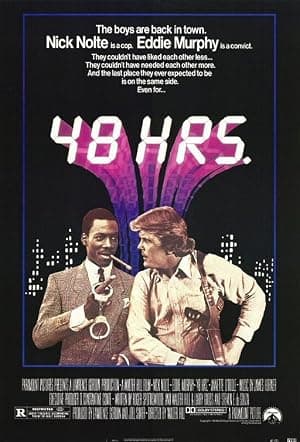
The setup
Forget elaborate setups — 48 Hrs. hooks you with a simple, combustible idea: a rule-bending cop borrows a convict for forty-eight hours to catch two very dangerous men. It’s sharp, brisk and wired to the odd-couple engine that keeps the film moving. This is Walter Hill’s lean, impatient take on the buddy picture, with Jack Cates at the wheel.
THE MOVIE
Jack Cates is still the reason this movie works
If you remember 48 Hrs. at all, you probably remember the friction — the gruff cop who wants answers fast and the loud, unbelievably alive convict who shows him how to get them. The movie’s engine is that enforced partnership: Nick Nolte’s Jack Cates borrows Eddie Murphy’s Reggie Hammond for a two-day parole window so he can sniff out two violent escapees and the leads who shelter them.
That premise is not coy. Albert Ganz and Billy Bear break out, then get involved in the killing of police officers, and Cates — short of leads and short on patience — hands Reggie a 48-hour release to help locate them. It’s a practical, high-stakes setup that turns procedural urgency into personal pressure.
Walter Hill directs with the kind of no-nonsense economy the story asks for: short, muscular, and fast. The film runs for just 96 minutes and wastes almost none of it — because, like Cates, 48 Hrs. prefers action over explanation.
THE SETUP
The idea that sets 48 Hrs. in motion
The central idea is almost clinical in its clarity: a cop needs street knowledge he doesn’t have, so he borrows it from a man who normally wears orange. Jack Cates arranges a temporary, time-limited parole — Reggie is freed for a single 48-hour window — to track the criminals’ contacts and safe houses.
That short leash changes everything. Sixty minutes of exposition would have killed the momentum; here, everything is compressed into a tight, ticking structure. The parole isn’t just a plot convenience — it’s the film’s rhythm: fast, urgent, and unforgiving of wasted time.
Because the fugitives remain mobile and the window is literal, the story keeps nudging characters into corners. Decisions have to be pragmatic: bend procedure, call in favours, lie when it helps. It’s the kind of pressure that produces both comedy and conflict — and makes the odd-couple pairing feel necessary rather than gimmicky.
So the setup works because it’s simple and unforgiving. It forces two very different people into close quarters and asks them to do useful work together before the clock runs out. That’s both the joke and the engine.
THE CHARACTER
Why Jack Cates matters
Jack Cates matters because he’s not a polished moral lecture; he’s a cop with an edge who will bend rules to solve a problem. The film gives you a man whose primary job is to find killers, and who’s prepared to short-circuit red tape when the usual routes are exhausted.
That hard edge is why the partnership feels combustible. Cates and Reggie begin with mutual distrust — differences of method, background and temperament — and the movie stages their friction so cooperation feels earned rather than imposed.
Importantly, Cates is practical. His choices aren’t themed speeches about justice; they’re responses to real pressure. That keeps the film kinetic: his willingness to bend procedure sets up both conflict with other officers and the grudging, pragmatic teamwork with Reggie that drives the plot forward.
And because Cates isn’t sanctimonious, the movie can play with moral texture without getting didactic. He’s a cop who wants results; the film asks whether that makes him heroic, reckless — or both.
THE PERFORMANCE
Why Eddie Murphy's performance matters
One concrete piece of evidence: Eddie Murphy’s work on 48 Hrs. earned him a Golden Globe nomination for New Star of the Year. That alone tells you the film rested a lot on the newcomer’s presence.
Murphy’s Reggie is the counterweight to Cates’s blunt force. The movie needs a foil who can talk, charm and complicate — someone who skews the dynamic away from simple buddy bromance and toward genuine collision.
Because the role functions as both comic spark and practical collaborator, Murphy’s arrival shifts the film’s energy. Reggie isn’t there just for jokes; he’s a resource Cates can’t do without, and that structural necessity gives the performance shape beyond stand-up flashes.
So whether you’re watching for laughs or for the chemistry that pushes the plot, Murphy’s part matters because it makes the partnership feel alive and useful, not merely decorative.
UNDER THE SURFACE
48 Hrs. has more on its mind than the plot suggests
On the surface it’s an action-comedy; underneath is a tidy study in odd-couple mechanics. The buddy pairing is the movie’s real engine: forced together, both men reveal how different lifestyles produce different problem-solving strategies.
Race and cultural friction are embedded in that pairing. The enforced partnership crosses racial and cultural lines in ways that create moments of genuine tension and, occasionally, blunt humour. The film stages those differences plainly rather than eliding them, which makes the conversations — and the compromises — feel consequential.
There’s also the question of law versus pragmatic justice. Cates bends rules not for thrills but because the system as-written can’t always reach the killers he’s chasing. The film doesn’t sermonise so much as set up choices and watch how characters live with them.
Finally, the constant time pressure — the 48-hour clock — shapes everything. It makes stakes immediate and keeps moral debates from becoming abstract. When the clock ticks, decisions matter more.
THE FILMMAKING
How 48 Hrs. was put together
You can feel the production’s no-fuss posture in the way the film moves: it keeps scenes tight and shots functional, which suits a story that’s about timing and pressure. Ric Waite is credited as cinematographer, and production notes point to Kodak 93 high-speed stock being used for many night and interior setups to keep lighting lean and production moving.
That practical approach isn’t accidental. Editors Freeman Davies, Mark Warner and Billy Weber share cutting duties on a film that needs rhythm to sell both jokes and chases. The editing choices help the movie oscillate cleanly between comedic beats and action urgency.
John Vallone is credited as production designer, an acknowledgment that the film’s physical world had to be convincing without calling attention to itself. The movie’s look and pace feel like deliberate decisions to privilege story propulsion over stylistic flourish.
In short: the filmmaking choices favour efficiency. That economy keeps the film compact and gives the performances and the premise room to do the heavy lifting.
PURE 80S
48 Hrs. could not belong to any other decade
48 Hrs. arrived in 1982 at a moment when audiences were receptive to action with a wink — and Hollywood was willing to gamble on that mix. The film gets tucked into history as an early, influential example of the modern buddy-cop template that became more visible across the decade.
It’s also a product of its production timetable. Paramount rushed the picture in 1982 with a planned December release, which is part of why the film feels brisk and tightly plotted: studio scheduling and market appetite pushed for speed and clarity.
The fact that principal photography ran from May to August of 1982 — and that the film opened in December of the same year — underlines how quickly projects moved when the studio wanted a holiday-season offering. That compact schedule shaped the film’s directness.
And even the music got noticed: the Los Angeles Film Critics Association awarded the film Best Music in 1982 to James Horner and The BusBoys, a reminder that the film’s energy was a composite of choices across the production.
WATCHING IT NOW
What has aged — and what hasn't
If you’re wondering whether 48 Hrs. still plays, one practical indicator is that Paramount has invested in restorations and new home-video transfers — including a 4K film transfer — and has marketed the title as an early example of the buddy-cop action-comedy mix and a career-launching role for Eddie Murphy.
Those restorations matter because they keep the movie accessible in its intended form: the studio’s willingness to re-present the film shows there’s an audience for its particular blend of brisk plotting and character friction. That makes revisiting it easier than it once was.
But restorations don’t rewrite what the film is. Its strengths remain structural: a tight runtime, a clear premise and a central pairing designed to spark. When those elements land, the film still works as a piece of entertainment in short sittings.
So the question of ageing is practical: if you enjoy lean, character-driven action comedies and want to see a formative example of the buddy-cop mix, the restored editions make 48 Hrs. easy to re-watch.
THE LEGACY
Why 48 Hrs. still matters
There are a few clear markers of the film’s continued footprint. It returned for a sequel in 1990, reuniting Walter Hill with Nelson and Murphy, which suggests the pairing had enough commercial life to revisit.
Eddie Murphy’s breakout recognition is another anchor: his Golden Globe nomination for New Star of the Year is a documented accolade tied to this film, and the Los Angeles Film Critics Association honoured James Horner and The BusBoys with Best Music in 1982, which underlines how the film’s energy extended beyond performances into its soundtrack.
Interest in the film’s score persisted: Intrada Records issued a world-premiere commercial CD of James Horner’s score in 2011, a limited-edition release that highlights continued curiosity from collectors and fans.
Taken together, these facts show a film that keeps getting packaged, listened to and referenced — not because it’s untouchable, but because its combination of premise, casting and brisk filmmaking left enough behind to matter to later audiences and curators.
THE VERDICT
Does 48 Hrs. still hold up?
Yes — with a clear rider. 48 Hrs. works when you watch it for what it is: a compact, time-pressured buddy-action movie that trades in friction and pragmatism rather than moral sermonising. The premise is economical: Jack Cates arranges a 48-hour release so Reggie Hammond can use his knowledge to help find the escaped killers, and the clock is the film’s organising device.
That time-limited parole turns every scene into a decision under pressure. The fugitives’ mobility and the ticking window mean the movie rarely allows characters to luxuriate in exposition; moments have to pull weight. That keeps the pace tight and the strange friendship between Cates and Reggie believable — they cooperate because they must, not because they immediately like each other.
The film’s clear strengths are its structure and its central pairing. Jack Cates is a rule-bender who wants results; Reggie is the streetwise foil who can deliver information and attitude. Contemporary responses singled out the leads’ chemistry, and Murphy’s Golden Globe nomination reminds us the film introduced a major new presence to American cinema.
So should you watch it today? If you want a lean, character-driven action-comedy that helped shape the buddy-cop template and you’re curious about early Eddie Murphy or Walter Hill’s brisk style, yes. Watch it as a neat, aggressive piece of filmmaking that knows its limits — and uses them. If you want a reinvention of the genre or a film that reads comfortably through modern sensibilities without some of its period friction, temper expectations accordingly.
Either way, 48 Hrs. still has a useful answer to the question it posed in 1982: when the clock is running and people you trust are thin on the ground, what will you do to catch the bad men? It’s not a moral treatise. It’s a two-day plan that’s handsome in its efficiency.
Share this movie
Keep watching
More movies from the 80s
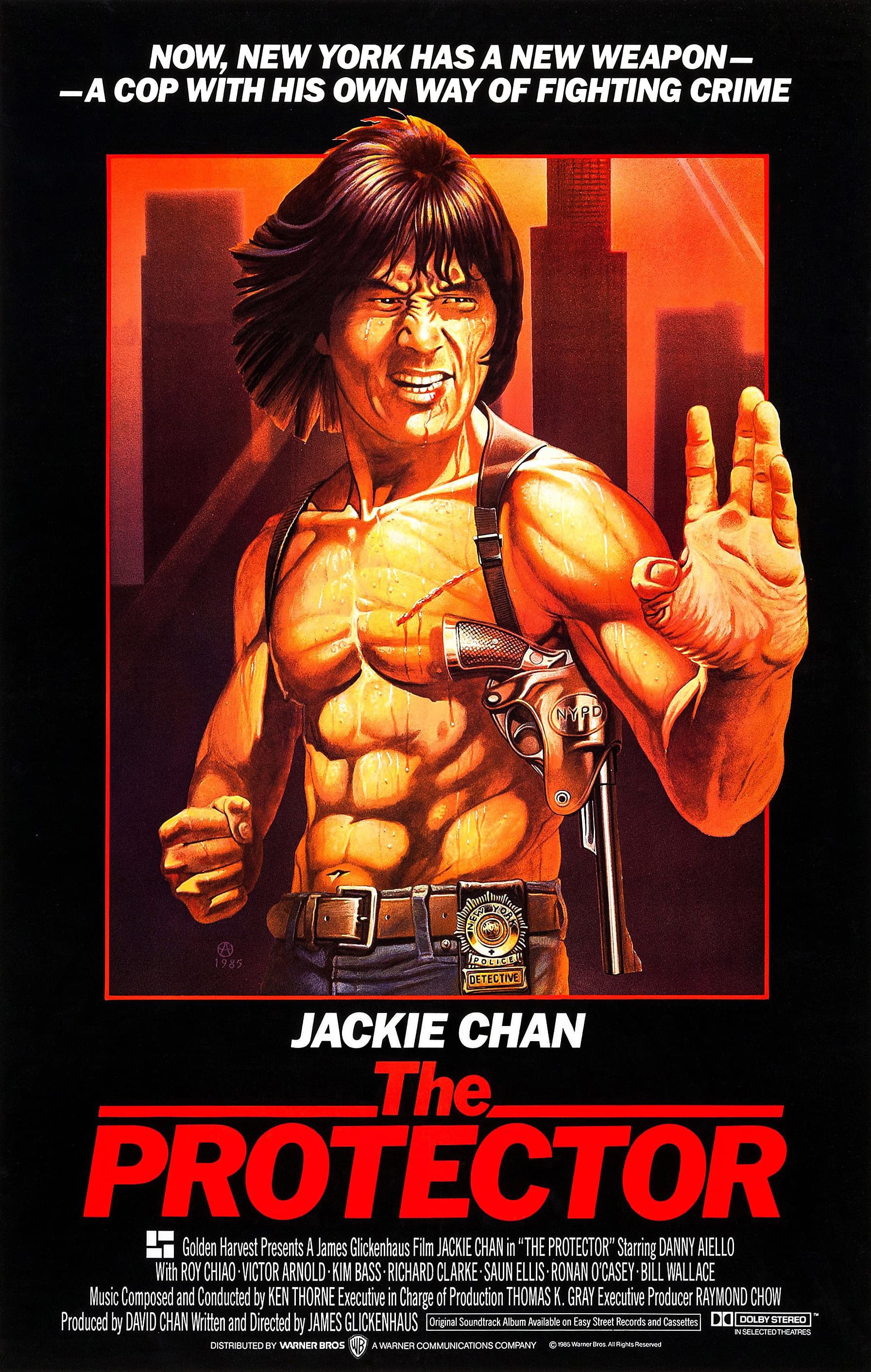
1985
The Protector
The Protector: family and parents protecting their children, and why this 1985 movie still matters.
Read our take →
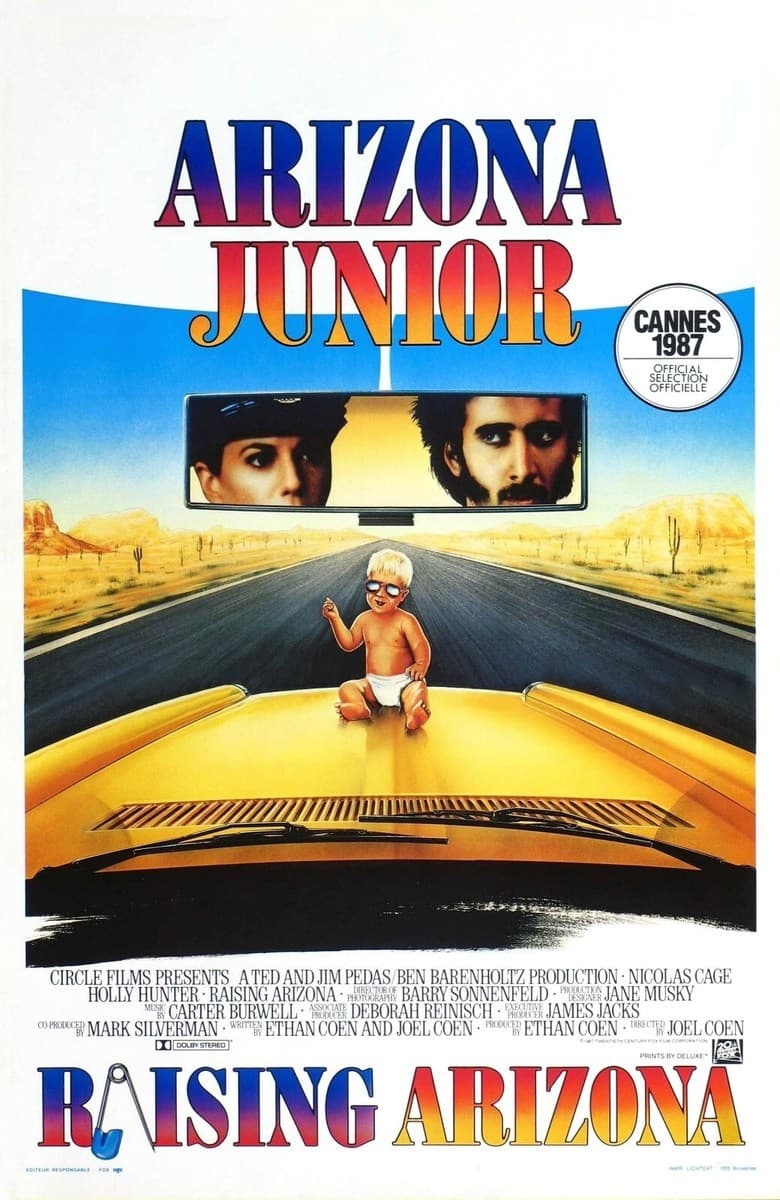
1987
Raising Arizona
A robber who wants a nursery more than a life of crime — and it’s the contradiction that keeps the laughs coming.
Read our take →
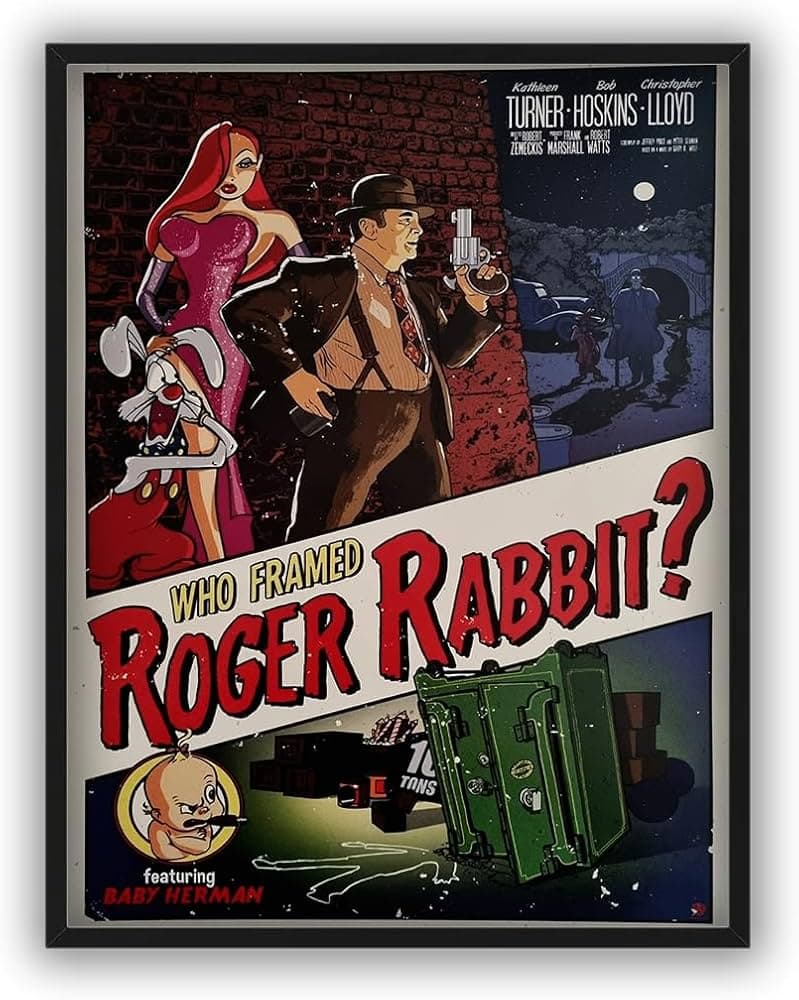
1988
Who Framed Roger Rabbit
A private eye, a jittery rabbit and a very British fondness for messing about with genre.
Read our take →