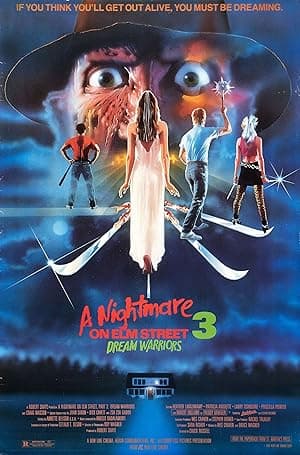
The setup
A Nightmare on Elm Street 3: Dream Warriors is the Elm Street film that decided therapy could be terrifying and teamwork could be terrifyingly effective. Nancy Thompson shows up as a psychiatrist, a group of teens discovers shared dream powers, and suddenly the franchise is less about solo survival and more about teaching kids to stand together in the dark.
THE MOVIE
Nancy Thompson is still the reason this movie works
If you remember one thing about A Nightmare on Elm Street 3: Dream Warriors it’s that Nancy Thompson doesn’t turn up to scream. She returns as a practising psychiatrist who walks into a ward full of teenagers haunted by the same dream stalker and, crucially, decides to teach them how to fight back.
That change in tone — from solitary survival to mentorship and shared resistance — is what gives this third film its personality. Instead of another loner picking through clues, Dream Warriors builds a classroom for nightmares: kids learning to use odd, individual dream abilities inside Kristen Parker’s shared dreaming.
Directed by Chuck Russell and released in 1987, it’s a tight 96 minutes that trades the lone-hero blueprint for something more collective. Nancy’s presence — Heather Langenkamp returning to the role she helped define — is the engine that turns a slasher sequel into a passing-of-the-torch story.
THE SETUP
The idea that sets Dream Warriors in motion
The film’s engine is simple and clever: Nancy arrives at a psychiatric ward where several teenagers are sharing recurring nightmares and being picked off in their sleep by Freddy Krueger.
Rather than treating each case as an isolated attack, the story pivots on a usable mechanic — Kristen Parker’s ability to pull other sleepers into her dreamscape — which turns the dream world into a place the group can enter together.
Inside those shared dreams each teen discovers a personal ability, what the film calls dream powers. The narrative then becomes an exercise in combining those odd strengths while Nancy and Dr Neil Gordon try to understand and contain what’s happening.
It’s an economy of premise that keeps things moving: a familiar monster, a new setup that allows ensemble confrontation, and the idea that teaching the kids how to fight is itself the plot.
THE CHARACTER
Why Nancy Thompson matters
Nancy Thompson isn’t a cameo; she’s the plot’s moral and tactical centre. Heather Langenkamp comes back to the role she originated and the film makes her a teacher of nightmares rather than an eternal victim.
Her motivation is clear and neat: atone for what she survived in the original and finish the job by showing a new generation how to fight. That shift — responsibility moving from one survivor to many — gives the movie its quieter backbone.
Because she’s not just solving puzzles, Nancy’s return reframes the franchise. The demon in the boiler room is still there, but the answer is less about outwitting a predator alone and more about passing on hard-earned knowledge.
UNDER THE SURFACE
Dream Warriors has more on its mind than the plot suggests
On the surface it’s a horror movie with inventive dream set pieces. Underneath it’s arguing that trauma shared is not trauma halved but trauma that can be confronted together.
The group mechanic — kids pooling their odd talents inside one dream — turns what might have been an isolation story into a tale about collective confrontation of trauma.
There’s also a clear through-line of mentorship and passing the torch: Nancy teaching, the adults scrambling to understand, and the teens being taught to own their power. It’s less melodrama, more workshop for survival.
Finally, the film toys with the line between dreams and waking life: the dreamscape isn’t simply an effects playground, it’s where adolescent identity and empowerment are tested and, sometimes, remade.
THE FILMMAKING
How Dream Warriors was put together
One reason the film sticks in the memory is a single recurring location: the junkyard finale. That production choice — building a physical, repeatable setpiece — gives the climax a theatrical, almost stage-like feel that the series returned to again and again.
Making the junkyard a centerpiece worked as a filmmaking shorthand: it’s a recognisable showdown space where the practical bits of the movie can be staged and amplified.
That decision ties into Chuck Russell’s debut as a feature director: he keeps the frame economical and lets the production design do heavy lifting, giving the strange dream imagery somewhere concrete to land.
PRACTICAL EFFECTS
The effects work that gives Dream Warriors its physical personality
The movie’s physical personality comes from a busy credit list of practical crafts — makeup specialists, mechanical teams, and a visual-effects house handling stop-motion and marionette work.
Names like Kevin Yagher and Greg Cannom appear on the special-makeup roster, and Dream Quest Images is credited with the visual and mechanical effects coordination that animated many of the film’s dream horrors.
The techniques are the old-school toolbox: mechanical effects, stop-motion skeletons, miniature construction, motion-control photography and optical compositing. It’s a craftsman’s approach — hands-on, deliberately physical — and the credits show that was an intentional part of the look.
PURE 80S
Dream Warriors could not belong to any other decade
Released in 1987 at a moment when New Line Cinema was moving from regional subdistribution to national ambition, Dream Warriors arrived as the company’s first planned wide release.
That timing matters: the film’s modest budget — reported in the low millions — paired with a strong domestic box office made it a rare mid-eighties success for an independent-studio horror sequel.
Another very 1980s move: the use of a hard-rock title song and cross-promotion with Dokken. Pairing genre pictures with contemporary music acts was exactly the sort of marketing you saw when studios wanted attention fast.
Put together, the business strategy, the budget and the pop-musical tie-ins mark the picture as a product of its decade — an efficient, commercially minded slice of 1987 horror.
THE LEGACY
Why Dream Warriors still matters
Dream Warriors opened at number one and went on to be a commercial success, grossing around $44.8 million domestically — the kind of return that helped keep Freddy Krueger very much in the public eye during the late eighties.
Beyond box office, the film shows up repeatedly in reference works and retrospectives as a third entry that sustained the series by changing its formula: it kept the monster but shifted the story toward collective action and mentorship.
The production also picked up industry recognition: nominations at the 1988 Saturn Awards, including make-up and a supporting-actor nod for Robert Englund, underline that the film’s craft aspects and Freddy’s continuing presence were being taken seriously at the time.
All of which explains why Dream Warriors gets mentioned whenever people talk about how the franchise expanded its palette — not because it rewrote horror, but because it found a way to keep the central character working and the series commercially alive.
THE VERDICT
Does Dream Warriors still hold up?
Yes — for what it sets out to be. If you want a straight slasher in the solitary-survivor mould, this isn’t the one. If you’re interested in a fast, 96-minute sequel that turns Freddy into a challenge for a group, teaches the kids to use strange dream powers, and keeps Nancy Thompson at the centre as the mentor who’ll finish what she started, Dream Warriors delivers.
The film’s hook — Kristen Parker’s ability to summon sleepers into a shared dream — is an economical device that lets the story stage collective confrontations rather than serial lone encounters. That choice gives the sequel energy and emotional logic: the teens are a team with a mission, which the movie plays as both rescue and training exercise.
Visually and technically it was noticed at the time; contemporary reviews singled out the effects-heavy dream sequences as a prominent part of the experience, and the credits list shows the practical and visual crafts were a deliberate focus.
So should you watch it now? If you enjoy the idea of a franchise that experiments with its rules, wants a brisk, idea-driven horror movie, and appreciates a returning Nancy who teaches rather than simply survives, then Dream Warriors is still worth your time. It’s the Elm Street entry that remembers nightmares are easier to face when you’re not alone.
Share this movie
Keep watching
More movies from the 80s
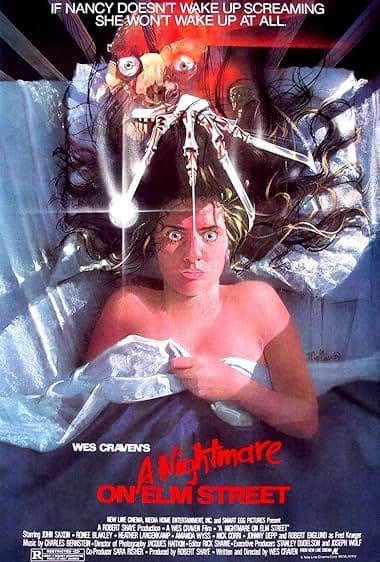
1984
A Nightmare on Elm Street
A Nightmare on Elm Street: family and the safety of home, and why this 1984 movie still matters.
Read our take →
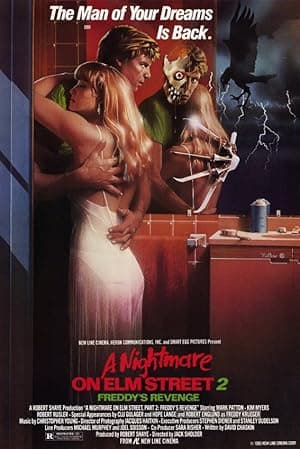
1985
A Nightmare on Elm Street 2: Freddy's Revenge
A Nightmare on Elm Street 2: Freddy's Revenge: the safety of home and family, and why this 1985 movie still matters.
Read our take →
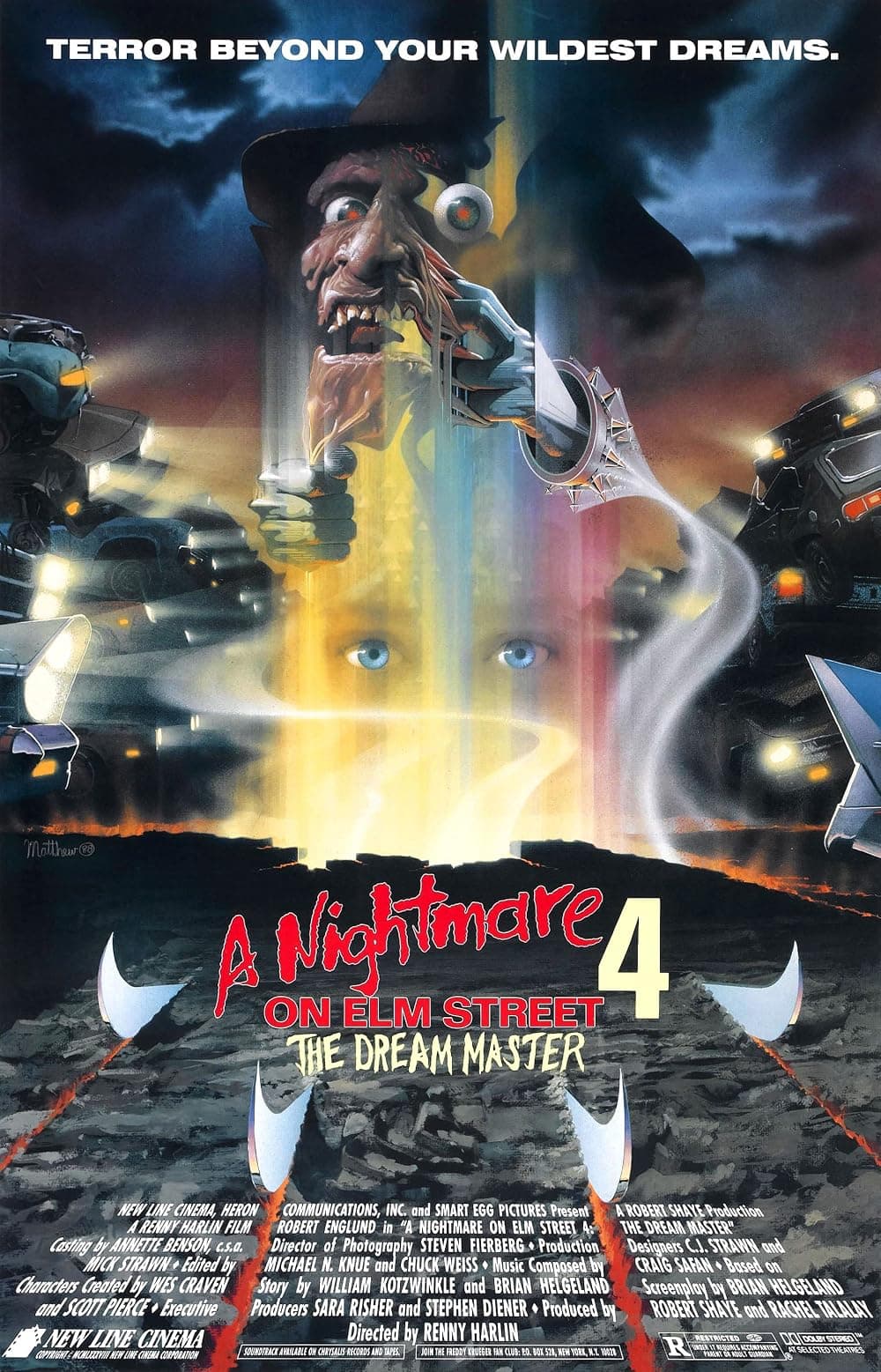
1988
A Nightmare on Elm Street 4: The Dream Master
A Nightmare on Elm Street 4: The Dream Master: parents protecting their children and friendship, and why this 1988 movie still matters.
Read our take →