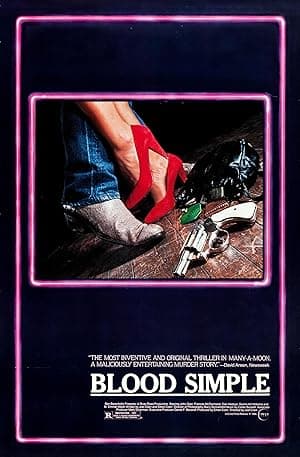
The setup
Blood Simple is the Coens’ little engine of misfortune: a lean, mean 96-minute noir where jealousy, voyeurism and terrible decisions tumble into one another. What keeps it fascinating today isn’t a single clever twist but a character — Ray — whose aimlessness makes every bad choice feel inevitable.
THE MOVIE
Ray is still the reason this movie works
Call it simple cruelty. Abby’s affair with a bartender named Ray starts the trouble — but it’s Julian Marty’s refusal to let go that turns a private grudge into something criminal. Marty hires a private detective, the detective produces motel photographs, and the whole thing unravels from there.
That chain — jealous husband, incriminating pictures, a hit arranged under the cover of a fishing trip — is the film’s pulley system. Every time someone misreads what they see, the plot tightens, and Ray, played by John Getz, is the figure most likely to trip the mechanism.
Joel Coen directed his debut feature in 1984 and packed it with economical storytelling: 96 minutes that leverage a small cast (Frances McDormand as Abby; Dan Hedaya as Marty; M. Emmet Walsh as the private detective) and striking visuals — Barry Sonnenfeld’s cinematography gives the ugly business a strangely magnetic look.
THE SETUP
The idea that sets Blood Simple in motion
The movie hinges on proof and misunderstanding. A private detective supplies photographic evidence of an affair; that photograph becomes a kind of currency, convincing one man of an obvious wrong and convincing others of all kinds of invisible things.
Marty’s response — arranging a contract killing and hiding it under the pretext of a fishing trip — is the sort of small, staged alibi that only looks clever until reality refuses to cooperate.
From there the film is patient and cruel: tiny mistakes — a misread face in a photograph, an awkward lie, an unlucky timing — trigger the next disaster. The title itself borrows from noir shorthand: a phrase for the confused, violent state that follows crime.
THE CHARACTER
Why Ray matters
Ray isn’t a mastermind. He’s an aimless, insecure bartender with limited resources, the sort of person who makes a bad situation worse because he doesn’t have the tools to do otherwise.
That weakness matters because the story needs someone whose poor decisions are believable. Abby is trying to escape a controlling domestic life; Ray is not the heroic rescue — he’s a partner in confusion, and his vulnerability makes him the film’s most human fault line.
When the detective levers his manipulations into the plot, Ray is the obvious victim: not because he’s the most moral, but because his circumstances and temperament make him easy to push around.
Put plainly: the movie’s pressure cooker works because Ray exists as the person most likely to bolt, freeze or blunder. Without him the chain of misunderstandings would feel engineered; with him it feels inevitable.
THE PERFORMANCE
Why Frances McDormand's performance matters
Frances McDormand appears here in her first motion-picture role. Contemporary reviewers flagged that debut as worth noticing, and it’s the starting point for a long collaboration between McDormand and the Coens.
That’s mostly what the evidence allows us to say: her screen introduction in Blood Simple is an early landmark that connects an actor and filmmakers who would keep working together for decades.
UNDER THE SURFACE
Blood Simple has more on its mind than the plot suggests
On the surface it’s a tight crime story. Under the surface it’s mostly about jealousy and possessiveness: Marty’s need to control Abby sets every calamity in motion.
There’s also a harsh dose of Murphy’s-law fatalism — small errors beget bigger ones until there’s no clean way back. The picture keeps piling consequences on the tiniest of missteps.
Photographs and spying turn belief into action; voyeurism isn’t just atmosphere here, it’s a mechanical force that propels characters into violent choices.
Finally, the film never sits in one mood. It borrows noir plotting, drops in black-comic moments and flirts with low-budget horror beats — a hybrid that keeps you off-balance in exactly the right way.
THE FILMMAKING
How Blood Simple was put together
Barry Sonnenfeld’s cinematography is one of the things reviewers singled out early on; the film uses bold camera choices (there are a few famously long moves through bar interiors) and a look that makes the ugly feel almost theatrical.
Joel and Ethan Coen share the screenplay; Joel received sole directing credit while Ethan took a producer credit — a division that reflects the guild practice of the time. The brothers were intimately involved in shaping the film’s rhythm.
The editing credits include the alias Roderick Jaynes alongside Don Wiegmann, and the Coens’ imprint on the film’s construction is obvious in the way scenes snap together with dry precision.
All of this gives the debut a confidence it doesn’t strictly earn by budget alone: clear choices about how to show things, when to withhold information, and how to let the camera watch people make terrible errors.
PRACTICAL EFFECTS
The effects work that gives Blood Simple its physical personality
The film’s violent beats rely on practical, on-set physical effects and makeup for their impact rather than any digital trickery.
That choice keeps the moments of injury and blood physically present in the frame, which suits a story that trades on small, tactile misunderstandings rather than spectacle.
Given the film’s low-budget roots, those practical techniques are part of how the movie feels immediate and hand-made.
PURE 80S
Blood Simple could not belong to any other decade
Released in 1984 and emerging from American independent cinema, Blood Simple helped signal a mid-80s appetite for fresh, low-budget takes on classic genres.
Its blend of noir plotting, black comedy and low-budget horror fits neatly with other independents of the era that reworked familiar genre ingredients for new audiences.
The film premiered at the New York Film Festival in October 1984 before opening more widely the following year, which is a reminder that it arrived via the festival circuit that sustained indie films at the time.
Decades later, restorations and curated reissues have kept the film visible, encouraging viewers to see it as part of a wider 80s indie moment rather than an outlier.
WATCHING IT NOW
What has aged — and what hasn't
Some artifacts of time have required work: period songs and licensed tracks have caused headaches for home-video editions, forcing substitutions or restorations in later releases.
Contemporary retrospectives note that these music-licensing issues and a few low-budget production marks have been the technical things curators needed to fix or accommodate.
Beyond that, the core mechanism of the film — a sequence of misunderstandings and escalating consequences — reads cleanly today. The plot’s economy isn’t a period trick, it’s deliberate craft.
THE LEGACY
Why Blood Simple still matters
Blood Simple launched Joel and Ethan Coen’s film careers and began creative partnerships that would last for decades: Carter Burwell provided his first feature score here, and Barry Sonnenfeld’s cinematography set a visual tone the Coens would revisit.
It also marks Frances McDormand’s screen debut and is regularly referenced as the beginning of her long association with the brothers.
Finally, preservation and curated editions — including a Criterion reissue among other restorations and festival screenings — have kept the film in circulation and encouraged reappraisal.
THE VERDICT
Does Blood Simple still hold up?
Yes. Blood Simple is compact — 96 minutes — and built like a tight machine: jealousy sparks a hired killing, a photograph turns opinion into action, and a dozen small misreadings escalate into ruin. It’s economical storytelling that still feels urgent.
Ray’s aimless insecurity and Abby’s attempt to escape a controlling situation make the human stakes simple and believable; once the detective’s photographs enter the scene, there’s no going back. Those ingredients still land.
The film also matters as a paper trail: Joel Coen’s directorial debut; Carter Burwell’s first feature score; Barry Sonnenfeld’s early cinematography; and Frances McDormand’s first screen appearance. All of that history is useful, but it’s the narrative’s relentless Murphy’s-law logic that does the real work.
If you’re after a late-night noir that prefers tight gears to grand ideas, Blood Simple still bites. It’s not sentimental: it’s a careful, cruel little clockwork of jealousy and bad decisions — and it still keeps its teeth.
Share this movie
Keep watching
More movies from the 80s
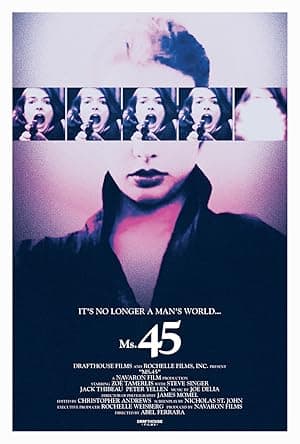
1981
Ms. 45
Ms. 45: family and the safety of home, and why this 1981 movie still matters.
Read our take →
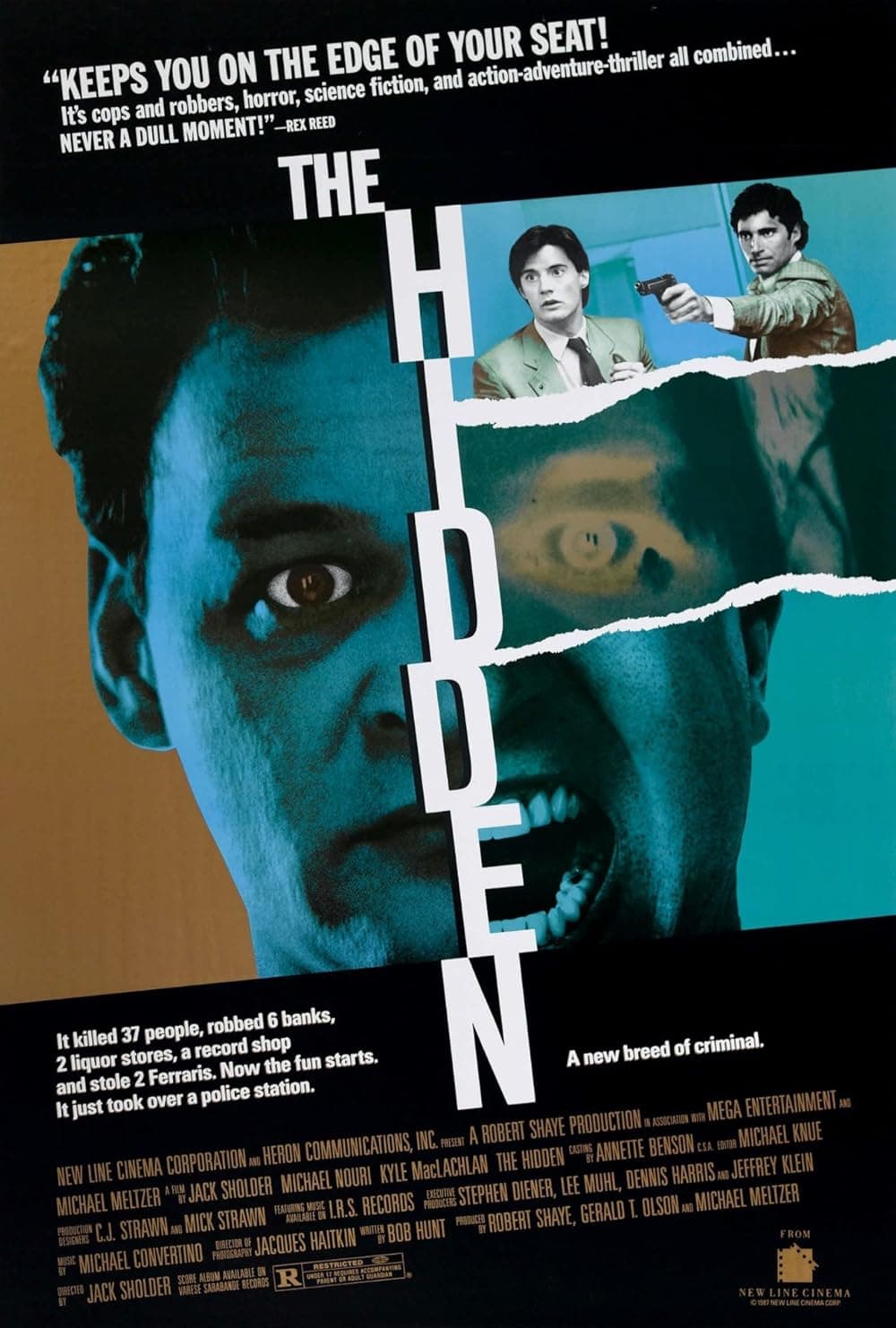
1987
The Hidden
The Hidden: mortality and lifespan and mortality, and why this 1987 movie still matters.
Read our take →
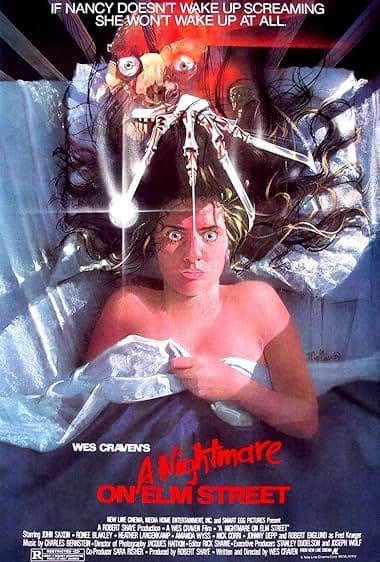
1984
A Nightmare on Elm Street
A Nightmare on Elm Street: family and the safety of home, and why this 1984 movie still matters.
Read our take →