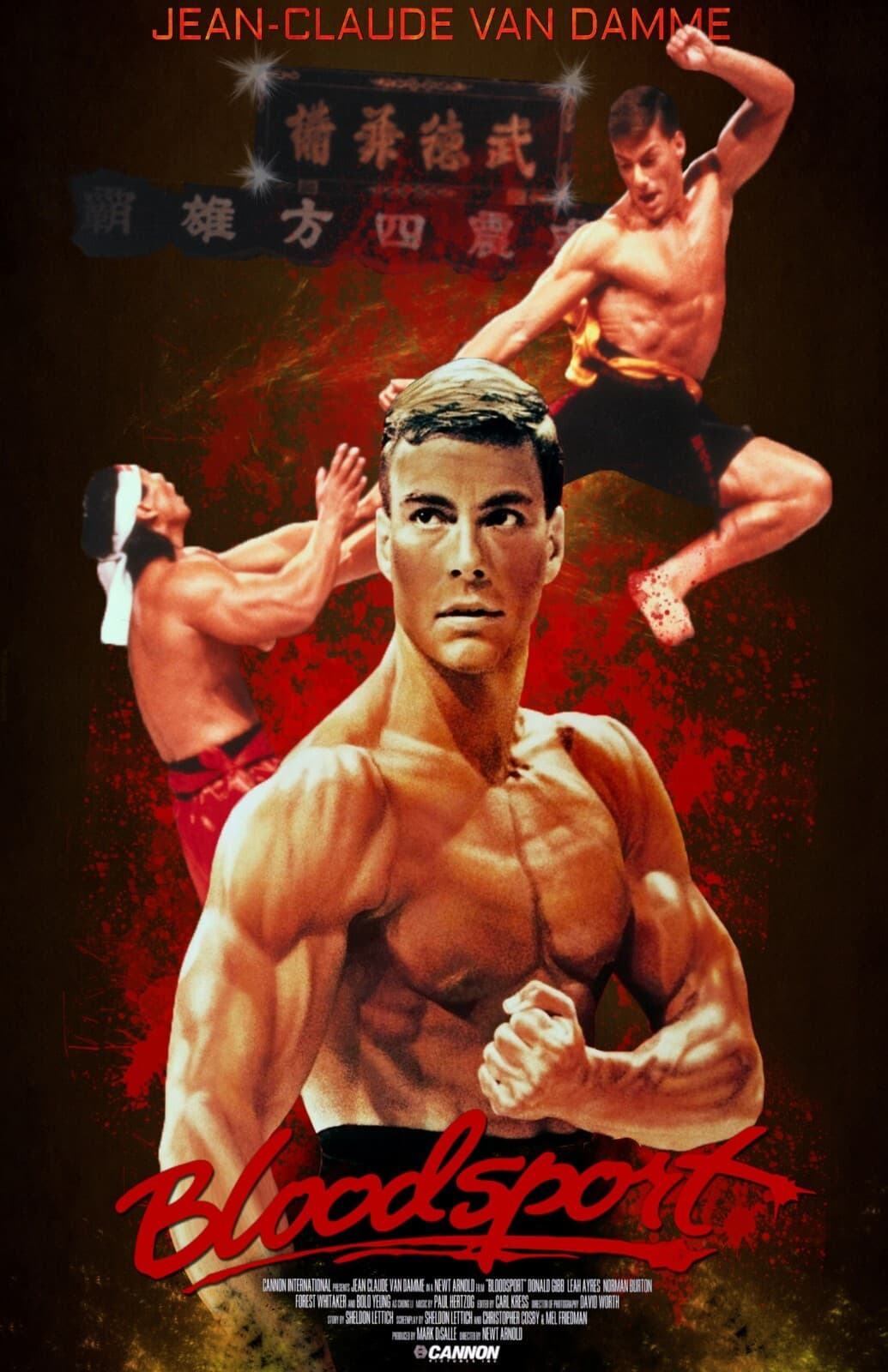
The setup
Bloodsport is the sort of film you remember as much for its single-minded hero as for its punchy premise: a U.S. Army captain who runs off to Hong Kong to fight in an illegal, full-contact tournament. It’s lean, uncomplicated and unashamed about what it wants to be — a gladiatorial exercise in honour, bruises and bravado. Revisit it and you quickly see why Frank Dux still holds the picture together.
THE MOVIE
Frank Dux is still the reason this movie works
Bloodsport is a compact, no-frills action picture built around one clear move: Jean-Claude Van Damme’s Frank Dux abandons his post as a U.S. Army captain and goes to Hong Kong to enter the Kumite, an illegal, full-contact martial-arts tournament held every five years.
What makes that set-up stick is motive. Frank isn’t out for fame or cash; he’s answering a dying teacher by taking his place in the tournament. Loyalty — the pupil honouring the teacher — is the engine that keeps the film’s forward motion feeling purposeful rather than arbitrary.
Directed by Newt Arnold and clocking in at a brisk 92 minutes, Bloodsport is an action–martial-arts drama that talks the language of ritual and macho mythmaking and does so without apologising for being precisely that.
THE SETUP
The idea that sets Bloodsport in motion
At its simplest: Frank Dux travels to Hong Kong to fight in the Kumite. That single destination clarifies every choice the film makes afterwards — fights, alliances, the stakes — because it’s a ritualised goal rather than a sprawling list of errands.
There’s a second strand to the picture: an American reporter who sneaks into the tournament intending to cover the story and who becomes Frank’s romantic interest. It adds another reason for Frank to be pulled between secrecy, duty and something more personal.
The marketing leaned on a splashy claim — the credits framed the tale as based on true events — but that origin story attracted scrutiny. A Los Angeles Times investigation published not long after the film’s opening reported an inability to verify many of the claims the publicity relied on.
THE CHARACTER
Why Frank Dux matters
Frank is the movie’s spine. He’s not an avenging loner or a loud-mouthed showman; he’s someone driven to honour a teacher’s request. That motive turns fighting into a rite rather than mere spectacle.
Jean-Claude Van Damme is the face attached to that role, and the film gives Frank a narrow, clean purpose: reach the Kumite and win it to keep a promise. When a film reduces its aims this way, everything else — the sidekicks, the villains, the reporter — orbits that single obligation.
Because the story is organised around loyalty, the emotional pay-offs that matter are straightforward. Frank’s choices are about keeping faith with the person who trained him, which makes the tournament about more than physical domination: it’s a test of fidelity.
UNDER THE SURFACE
Bloodsport has more on its mind than the plot suggests
On the face of it, Bloodsport is a tournament movie. Underneath, it’s preoccupied with mentor loyalty and honour — the sort of story where proving yourself means living up to someone else’s standards.
It’s also a manual of macho mythmaking. The Kumite is presented as the ultimate proving ground: anonymous, brutal and full of legends. The ritual amplifies the film’s appetite for myth rather than nuance.
There’s an outsider thread too. Frank is an American in an exoticised setting, and the film treats the Kumite as a realm apart — a closed circuit that tests outsiders and insiders by different rules.
Finally, the film comes wrapped in questions about truth and fabrication. The way the story was marketed — presented as based on a real man’s exploits — invites the viewer to decide how much the myth should matter once the end credits roll.
THE FILMMAKING
How Bloodsport was put together
If you’re tracing how the film builds its world, look at the credits: David Worth is listed as cinematographer, Carl Kress as editor and David Searl as production designer. Those are the people whose choices set the frame, pace and physical look of the action.
The film is economical in structure — a brisk 92 minutes — which keeps the narrative lean and the tournament sequences purposeful rather than indulgent. That economy feels like a practical choice as much as an aesthetic one.
Director Newt Arnold keeps the emphasis on the match-to-match momentum; the production credits remind you this was a relatively small, focused shoot that put fighting and ritual at the centre of its construction.
For what the movie wants to be — a tight, fight-driven story — the behind-the-scenes roster reads like a crew assembled to get the job done without unnecessary ornament.
PRACTICAL EFFECTS
The effects work that gives Bloodsport its physical personality
The fights feel grounded because the production relied on real fight and stunt coordination rather than digital trickery. Contemporary production records credit Frank W. Dux as the film’s fight coordinator.
The stunt department credits name Steve Lee Ka Ding as stunt coordinator with Tsui Siu Hung listed as assistant stunt coordinator, and the crew included practical stunt performers and stand-ins from Hong Kong.
That on-set coordination — real performers taking the falls and executing the choreography — is what gives the tournament its bruised, physical personality. The danger feels immediate because it was negotiated and executed in the moment, not painted on later.
When a film’s central spectacle is combat, having dedicated coordinators and practical crews is the difference between a closed exercise and something that reads like an actual contest.
PURE 80S
Bloodsport could not belong to any other decade
Bloodsport opened in February 1988 during a period when lower-budget martial-arts films could still find sizable international theatrical and home-video audiences. That commercial landscape helped the film find a market for its particular brand of action.
The production itself sits in a late-80s trend of Western martial-arts pictures leaning on Hong Kong crews and locations; principal photography began in Hong Kong in October 1986, and trades noted it as the first American feature shot there since 1969.
That U.S.–Hong Kong crossover gave the film a practical access to experienced fight crews and performers, which raised its ambitions beyond a purely domestic shoot.
In short, Bloodsport is very much a product of its moment: part globalised production, part economical genre picture and part a zeitgeist that still favoured straightforward, physically driven action.
THE LEGACY
Why Bloodsport still matters
Practically speaking, Bloodsport launched Jean-Claude Van Damme’s career in the American market. AFI and contemporary trade coverage point to the film as the picture that introduced him to a wider audience and helped revive mainstream interest in martial-arts movies in the late 1980s.
The film’s afterlife is modest but persistent: it spawned three direct-to-video sequels in the 1990s that carried the Kumite idea forward without Van Damme, and the property attracted periodic reboot interest from other producers in later years.
Part of why the movie keeps getting looked at is structural: it packaged a very digestible tournament myth — loyalty, a deadly champion and a foreign proving ground — into a tight, exportable format that studios could revisit or retool.
So even if the sequels never claimed the same profile, the original endures as the engine that created a recognizable franchise and a shorthand for a certain style of martial-arts storytelling.
THE VERDICT
Does Bloodsport still hold up?
If you want subtlety, look elsewhere. If you want a compact, punch-driven movie that centres on a simple, stubborn vow, Bloodsport still provides it. The story — an Army captain going AWOL to honour his mentor and enter an illegal, often-fatal tournament — never pretends to be anything other than a gladiatorial fable.
The Kumite is staged as a ruthless underground elimination tournament; the defending champion is presented as a violently ruthless fighter who recently killed an opponent, which keeps the stakes stark and immediate. The subplot with the American reporter adds a human tether and a reminder that the competition exists in a world with consequences.
Ray Jackson’s role as companion and foil matters because it turns what could be a lone-hero parade into a small circle of loyalty; when he is seriously injured by the champion, the danger feels personal and the tournament’s cruelty stops being an abstract spectacle.
So should you watch it? Yes, if you’re interested in a tight, 92-minute action picture that trades on loyalty, ritual and macho mythmaking — and if you want to see the film widely credited with launching Jean-Claude Van Damme’s American career. It remains an honest example of what a late-80s martial-arts movie set out to do: clear objectives, physical stakes and a single-minded promise at its heart.
Share this movie
Keep watching
More movies from the 80s
1988
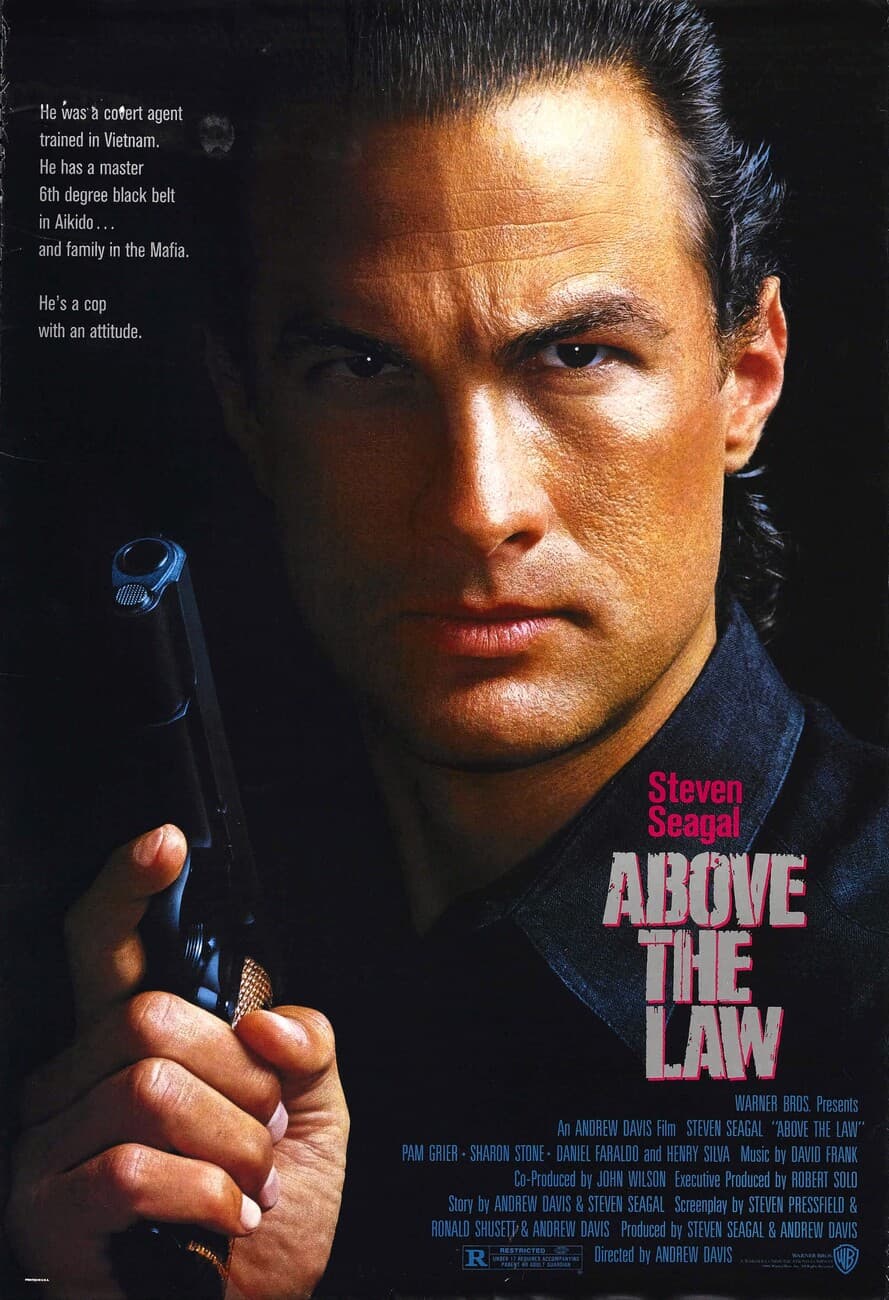
Above the Law
Above the Law: freedom, and why this 1988 movie still matters.
Read our take →
1988
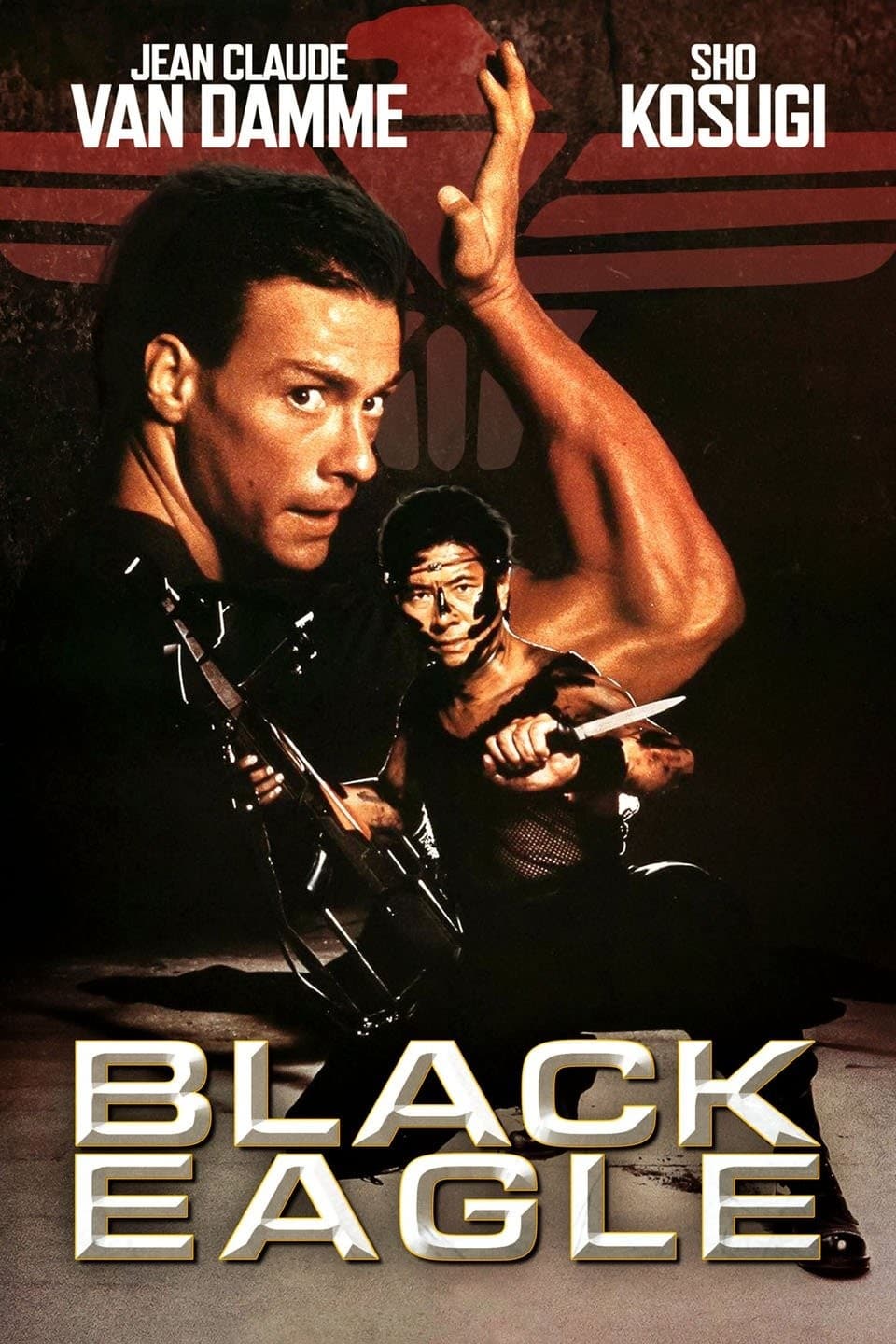
Black Eagle
Black Eagle: courage and parents protecting their children, and why this 1988 movie still matters.
Read our take →
1989
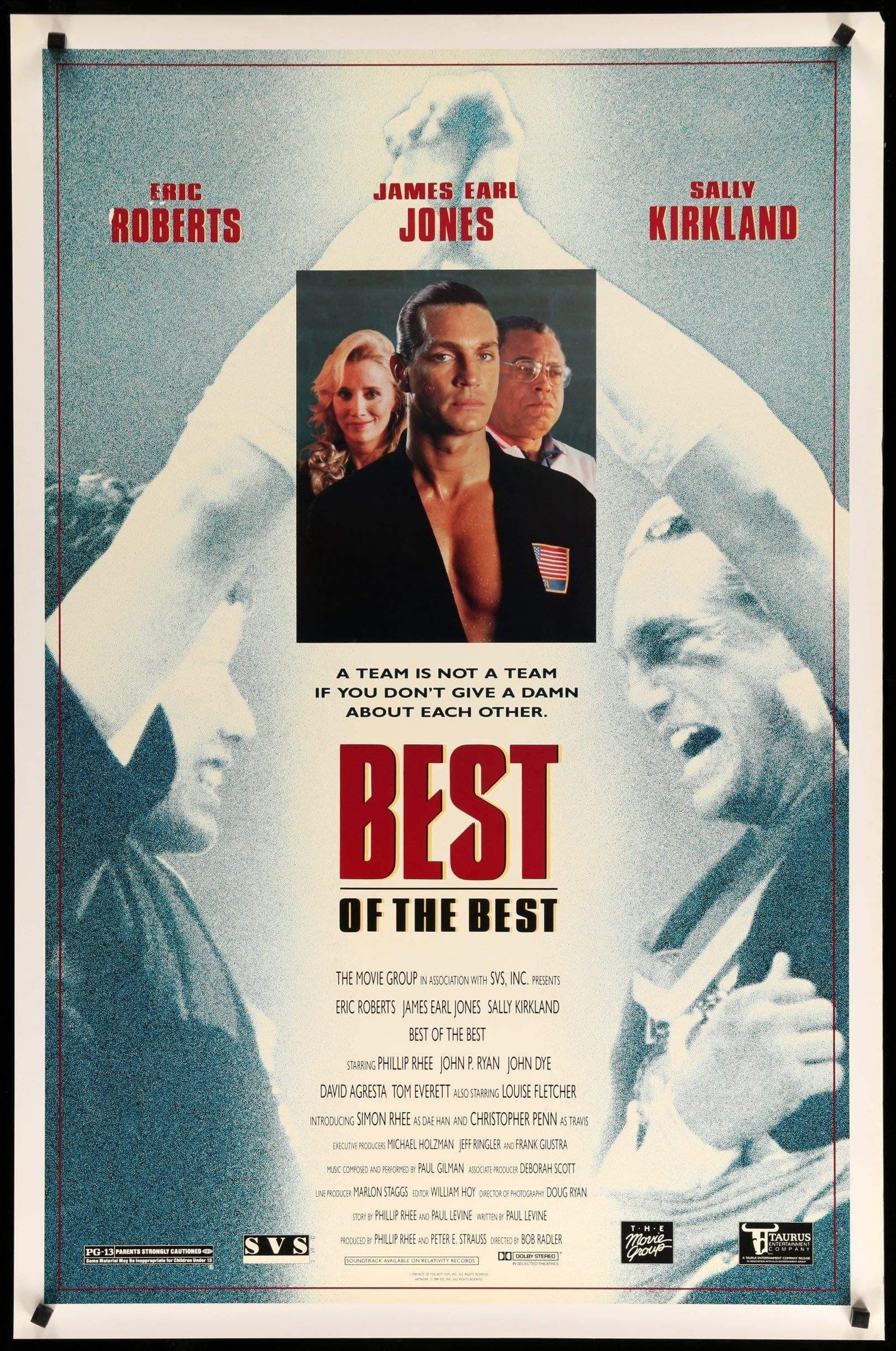
Best of the Best
Best of the Best: mortality and lifespan and family, and why this 1989 movie still matters.
Read our take →