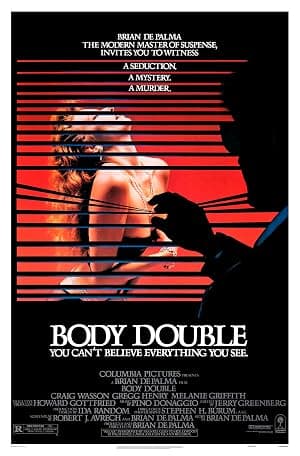
The setup
Body Double is the kind of movie that makes you aware of your eyeballs. Brian De Palma hands us a telescope and asks who we think we are when we peer. It’s rooted in a simple, uncomfortable premise: an out-of-work actor spies on the woman next door and, because of what he sees, his life gets pulled into a criminal and sexual underworld.
THE MOVIE
Jake Scully is still the reason this movie works
If someone asks why Body Double still turns heads, start with the watcher. Craig Wasson’s Jake Scully is a professional non-starter: an out-of-work actor who agrees to house-sit and takes up a telescope because it’s easier to look than to act. That set-up — a man made small by fear and curiosity — is the film’s engine.
The inciting image is uncomplicated and nasty: through his scope, Jake thinks he sees a violent attack on his neighbour Gloria during her late-night fan-dance. It’s the kind of thing that makes the viewer feel useful and guilty in the same breath, because the whole plot grows from watching and then trying to put those images together.
And yes, it’s Brian De Palma. This is not a cosy mystery. De Palma folds themes of voyeurism, spectatorship and doubled identities into a neo-noir that delights in making you complicit as the investigation unfolds.
THE SETUP
The idea that sets Body Double in motion
The film refuses the mechanical thriller trick of a detective knocking on doors. Instead we have an actor with a telescope — Jake Scully — who watches his neighbour and then tries to make sense of fragments. That telescopic watching isn’t decoration; it’s the plot machine. What Jake sees, how he reconstructs it and how he borrows pieces from the film world around him push the story forward.
De Palma doubles the real and the staged. There’s a conspicuous film-within-a-film moment — a staged adult shoot cut like a music video to Frankie Goes to Hollywood’s 'Relax' — that plays as both plot clue and commentary on what media does to desire and evidence.
So the puzzle in Body Double is partly forensic and partly performative. Jake’s sleuthing depends on combining the barely visible with what he already understands about the adult-film scene, and then staging encounters that blur private life and performance.
What keeps the set-up taut is that voyeurism is not just a gimmick; it’s the engine of motive and investigation. The film asks us to follow an amateur riddle-solver whose profession trains him to copy behaviour and whose fear makes him slow to act.
THE CHARACTER
Why Jake Scully matters
Jake is a deliberately odd lead. He’s not the swaggering hero of an action picture; he’s defined by fear, panic attacks and an inclination to look rather than move. Those traits make him a plausible witness — someone who would stay put with a scope rather than go knocking on a door.
That passivity matters because it colours every moral choice in the film. Jake is an observer whose job used to be pretending to be other people; now he has to turn that training into something useful. The story asks: can a man who makes a living copying behaviour make a life-or-death choice when the scene goes wrong?
Put simply: Jake is memorable because he’s the eye the film asks us to borrow. We watch what he watches, and his fear and curiosity give the plot its strain.
UNDER THE SURFACE
Body Double has more on its mind than the plot suggests
On the surface, Body Double is neo-noir plus sex and sleaze. Under the surface it’s obsessed with the act of watching: who watches, who is watched, and how images change the watcher. Voyeurism is the obvious theme, but it’s the moral weight of that watching — the erotic and ethical cost — that the film keeps returning to.
Closely linked is spectatorship and the male gaze. De Palma stages scenes that force you to reckon with how cinema trains desire. The music-video-style adult shoot, for instance, does double duty: it’s a clue in the story and a metacommentary about how the camera organises attention.
Obsession and identity are braided through the plot. Jake is a man who once pretended to be other people; the film toys with doubles and performance until the difference between a role and a life blurs. That doubling makes Hollywood itself feel like part of the crime scene — exploitation wrapped in showbiz gloss.
So beneath the murder mystery is a picture that’s quietly preoccupied with how media, performance and desire reshape who we are — and how they can make a witness into a participant.
THE FILMMAKING
How Body Double was put together
De Palma’s fingerprint is all over the staging. The director favours elaborate camera movements, tracking shots and montage to create a stylised suspense that keeps the viewer slightly off-balance — you’re always aware of the mechanics of the gaze as much as what’s being looked at.
That cinephile restlessness explains the film-within-a-film approach: scenes that are staged as entertainment inside the movie become operative evidence for the characters. It’s filmmaking folded back on itself — the medium becoming clue and cause.
Not everyone liked the approach. Contemporary reaction was mixed: critics who admired the visuals praised the style, while others found the explicit sex and violence excessive. Whether you read the film as a clever pastiche or a provocation depends on how comfortable you are being made to watch watching.
PRACTICAL EFFECTS
The effects work that gives Body Double its physical personality
The movie’s most notorious sequence is built as a fast montage rather than a single, lingering take. De Palma and his team assembled dozens of quick cuts to create a sense of chaos and measured horror; contemporary accounts described the sequence as made from around eighty shots.
One deliberately odd prop becomes its own visual argument: the killer’s electric drill is conspicuously long. That exaggerated length was a practical choice — the creative team wanted the witness below to be able to perceive the weapon — and the result is a weapon that reads as theatre as much as menace.
So the sequence’s punch comes from editing and careful coverage. It’s an argument for choreography over realism: the movie wants you to feel the construction as well as the shock.
PURE 80S
Body Double could not belong to any other decade
Released in October 1984, Body Double sits squarely in the decade’s wave of erotic thrillers and the heated arguments about on-screen sex and violence. The film trades on that moment — its provocations were part of a wider cultural conversation about media excess.
Its timing mattered. Body Double opened the same weekend as James Cameron’s The Terminator, which put it into a crowded autumn marketplace and a public eye that was rapidly fragmenting across very different types of genre cinema.
That 1984 moment helps explain why De Palma leaned into spectacle and controversy: the film isn’t coy about staking a place in those debates. It is, unmistakably, a product of its year.
THE LEGACY
Why Body Double still matters
Part of the film’s afterlife comes from the fuss it made on release. The sexual explicitness and violence sparked controversy — enough to cause censorship headaches for advertising and even to keep the Frankie Goes to Hollywood sequence off MTV at first.
That controversy hasn’t been the whole story. Melanie Griffith’s work in the film earned industry recognition — a Golden Globe nomination and the National Society of Film Critics’ Best Supporting Actress prize — which kept conversations about the movie anchored in its performances as well as its provocation.
Film writers and programmers have returned to Body Double for its visual style and De Palma’s auteurist mechanics. Retrospectives and anniversary pieces have reappraised the movie’s staging and how self-aware it is about the act of watching.
Home-video and later disc releases have fed that reappraisal with interviews and featurettes, letting De Palma and cast members reflect on the production and keeping the film in circulation for new viewers and revisitors alike.
THE VERDICT
Does Body Double still hold up?
Short answer: yes, but with a health warning. If you’re drawn to films that ask you to watch the watching, Body Double rewards that interest. The plot — an unemployed actor using a telescope who thinks he sees a violent act next door — gives De Palma a perfect vector to explore voyeurism and the ethics of spectatorship.
The film’s strengths are its appetite for games (the staged adult shoot that reads like a music video and then becomes evidence), its willing messiness around identity and doubles, and the way Jake’s fear and passivity make him a convincing point-of-view anchor. Contemporary observers identified Jake as the vulnerable viewpoint that holds the plot together, and that structural choice still matters.
But be honest about what you’re getting into: this is a neo-noir erotic thriller that uses explicit material as part of its commentary and its shocks. If that’s the point of interest, the film’s 114 minutes repay attention; if you want a tamer mystery, this is not the place to start.
So watch it for the theatre of the gaze — and for the way De Palma stages media itself as a suspect. Body Double still works when you accept that it prefers provocation to cosy closure.
Share this movie
Keep watching
More movies from the 80s
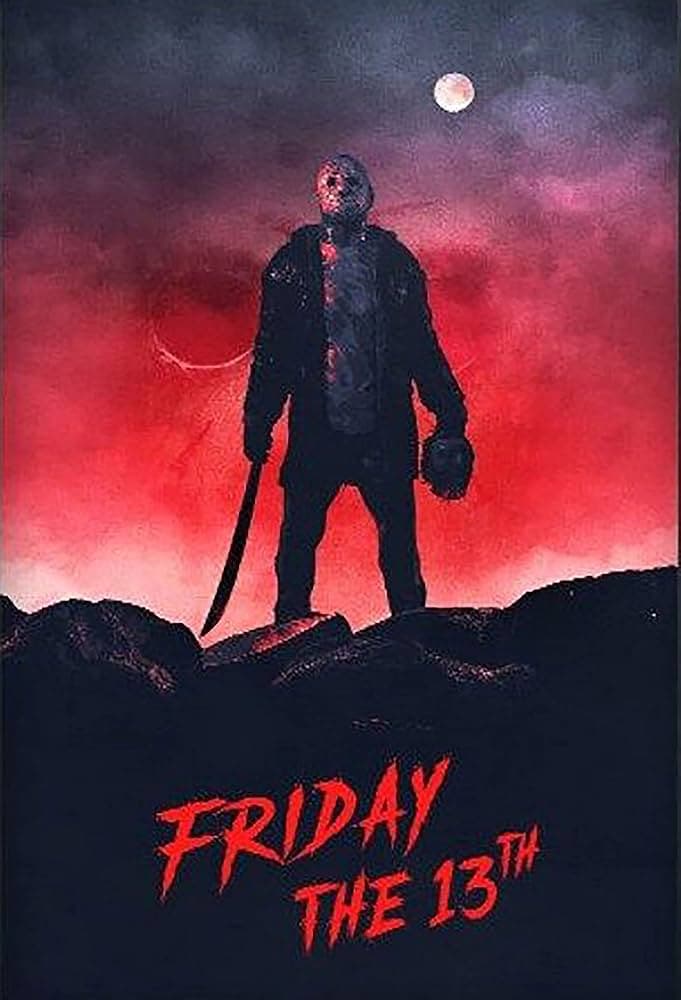
1980
Friday the 13th
Friday the 13th: mortality and friendship, and why this 1980 movie still matters.
Read our take →
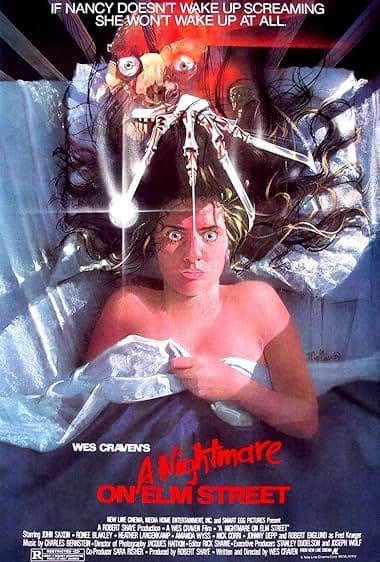
1984
A Nightmare on Elm Street
A Nightmare on Elm Street: family and the safety of home, and why this 1984 movie still matters.
Read our take →
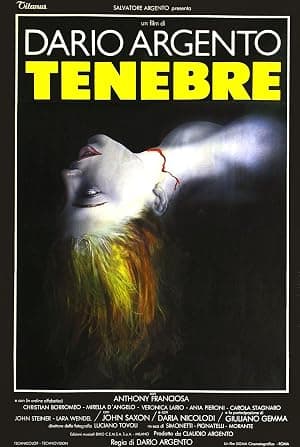
1982
Tenebrae
Tenebrae: the safety of home and mortality, and why this 1982 movie still matters.
Read our take →