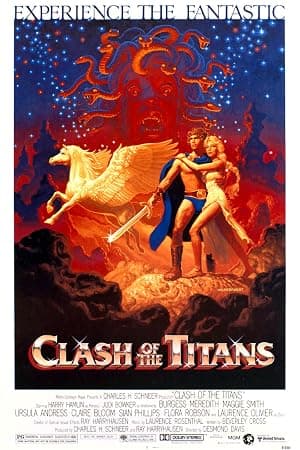
The setup
Clash of the Titans wears its mythology on its sleeve: it's Perseus’s quest dressed up as spectacle, and everything else—gods, monsters, curses—exists to make his choices matter. Desmond Davis stages that old story as a string of big, deliberate challenges, and the result still feels like a proper adventure rather than a concept piece.
THE MOVIE
Perseus is still the reason this movie works
Clash of the Titans is, at heart, Perseus’s story. The film borrows the essentials from the old myth—Perseus’s origins, his link to Zeus and the throne-minded drive that sends him out into the wide world—and then dresses those beats as a series of set-piece challenges.
What pushes the plot forward is not only monsters but a quarrelsome divine cast who steer human lives for their own ends: Zeus orders Poseidon to punish Argos with the Kraken, and gods large and petty keep rearranging fate until mortals either fight back or break. That tension—who decides a life—gives the action a sharper edge than it might otherwise have.
Directed by Desmond Davis and running at just under two hours, the film pairs its episodic hero’s quest with a very deliberate sense of genre: fantasy adventure that wants to feel like myth in motion.
THE SETUP
The idea that sets Clash of the Titans in motion
The movie gives us a clear engine: Argos is threatened by a huge sea monster and, because these are gods we’re dealing with, the threat is both punishment and bargaining chip. Zeus’s command to Poseidon to send the Kraken is the external hammer the rest of the story swings from.
Perseus’s quest is shaped around that threat but it’s not a single straight trip. The film strings together stops—taming Pegasus-related flight, the dangerous encounter with Medusa, a race to rescue Andromeda—that feel like trials rather than a single mystery to solve.
Crucially, monsters here are tools in a larger game. Medusa’s petrifying head is not just a scary finale: it becomes a deliberate plot device used to face the Kraken, which ties mythic invention to narrative necessity.
Because gods repeatedly step in—helping, punishing or manipulating—the characters’ decisions are often responses to divine moves. That keeps the story episodic but also keeps the stakes personal: this is about people trying to act when the rules keep changing above them.
THE CHARACTER
Why Perseus matters
Perseus is the connective tissue of the film. Harry Hamlin plays a man with a clear aim: to establish his place, correct slights done to his mother and claim what he sees as his rightful position.
That motive does useful work. It turns every monster and obstacle into something personal rather than merely dangerous: slaying Medusa isn’t just heroic showboating, it’s a step toward proving who he is and what he can claim.
Andromeda’s role as the sacrificial figure gives Perseus a concrete, immediate goal. Her fate is the hook that makes the kingdom’s politics matter to him, and the rescue task keeps the quest emotionally readable.
Personal antagonists sharpen that focus. Calibos’s transformation into a crippled, vengeful figure creates a private vendetta within the larger world of gods and monsters—a reminder that some conflicts come from human cruelty and revenge, not only divine meddling.
UNDER THE SURFACE
Clash of the Titans has more on its mind than the plot suggests
On the surface it’s monsters and rescue missions; underneath, the film keeps returning to a question of control. Divine intervention versus human agency is everywhere—gods move pieces on the board and mortals learn to push back or to make a life within those constraints.
Perseus’s journey reads like a string of tests. That episodic structure gives the film its hero’s-quest rhythm: tasks to be completed, identity to be forged, and a claim to a future to be won.
Revenge and transformation thread through the action. Thetis’s fury and Calibos’s curse make spite and mutation part of the movie’s logic, while Medusa’s petrifying power literalises the stakes of looking at what you should not.
All of this is wrapped in mythic spectacle—the sort of old-fashioned, often theatrical storytelling that relishes big moments and clear moral pulses rather than subtle ambiguity.
THE FILMMAKING
How Clash of the Titans was put together
The film’s production design leans into classical myth at every turn: sets and staging are built to feel like tableaux or storybook episodes, which helps the movie keep the sense that we’re moving through legendary moments rather than a single realist world.
That choice matters because the episodic hero’s quest needs readable spaces—temples, caves, courts—where a challenge can be introduced, staged and resolved without fuss.
Framing the film this way makes it feel deliberately theatrical; it’s a series of myths presented one after another, and the technical choices are there to support that idea rather than to disguise it.
In short: the movie looks and feels like something constructed to showcase large, mythic encounters, which suits its story-driven structure.
PRACTICAL EFFECTS
The effects work that gives Clash of the Titans its physical personality
A large part of the film’s character comes from its physical effects: stop-motion animation was used for the mythic creatures, giving them a tactile, puppet-like personality rather than smooth modern CGI movement.
That stop-motion sits alongside miniatures and model work, and the production credits list blue-screen and optical compositing to marry the animated models with live-action actors.
Masks and makeup specialists were also involved, which allowed live performers and animated elements to be combined in the same scenes without losing the sense that both occupy the same world.
Taken together, these techniques make the film feel built. The creatures and environments have a hands-on quality that marks the movie’s visual personality.
PURE 80S
Clash of the Titans could not belong to any other decade
Released in 1981, Clash of the Titans arrived at a moment when big, genre pictures were crossing borders—its production involved U.K. and U.S. financing and location work around Europe, a late‑1970s/early‑80s pattern for ambitious fantasy films.
It’s telling that the film opened the same weekend Raiders of the Lost Ark bowed in the U.S.; both belong to an era when audiences were eager for large-scale adventure, even if the two movies go about making spectacle very differently.
The early‑80s context helps explain the film’s appetite: it was aiming to be a mythic, theatrical experience in an industry ready for franchise-sized entertainments.
That decade placement also sets up why the story later attracted a remake—the original reads as a specific kind of 1981 fantasy-adventure, rooted in an older effects vocabulary and a straightforward heroic structure.
THE LEGACY
Why Clash of the Titans still matters
One clear reason the film remains in conversations is that it marks Ray Harryhausen’s final major feature work as a producer and special-effects creator—a last substantial showcase for classical stop-motion creature effects.
That technical endpoint gives the film a particular place in the history of movie-making: it’s often remembered as one of the last theatrical homes for a hands-on creature craft that would soon be eclipsed by new technologies.
The story itself—Perseus rescuing Andromeda, gods meddling and the personal stakes from Calibos’s curse—also keeps the film useful as a touchstone for myth-based fantasy storytelling.
Finally, the fact that the movie was remade and that the remake spawned its own sequel underlines the simple narrative durability of the material: these characters and scenes keep getting revisited.
THE VERDICT
Does Clash of the Titans still hold up?
If you’re after a tidy answer: yes, for certain kinds of viewers. The film delivers a clear quest—Perseus’s tasks, from taming winged flight to the Medusa episode and the attempt to save Andromeda—so the narrative never loses its bearings.
Part of its ongoing appeal is that the stakes feel both cosmic and personal. The gods are busy rearranging fate, but the story keeps personal vendettas—Calibos’s curse, the city’s need to placate a monster—front and centre, which gives Perseus real reasons to act.
The practical makeup of the picture also matters here: it’s a product of its time, directed by Desmond Davis and anchored in an effects workflow that leans on stop-motion, miniatures and optical compositing. Those choices make the movie feel like a crafted object with distinct textures.
So watch it if you enjoy mythic spectacle, a straightforward heroic arc and the tactile charm of pre-digital creature work. If you want psychological nuance or modern blockbuster gloss, this isn’t that film. But if you want Perseus’s story told like an old adventure yarn—and to see monsters made by hand—Clash of the Titans still does the job.
Share this movie
Keep watching
More movies from the 80s
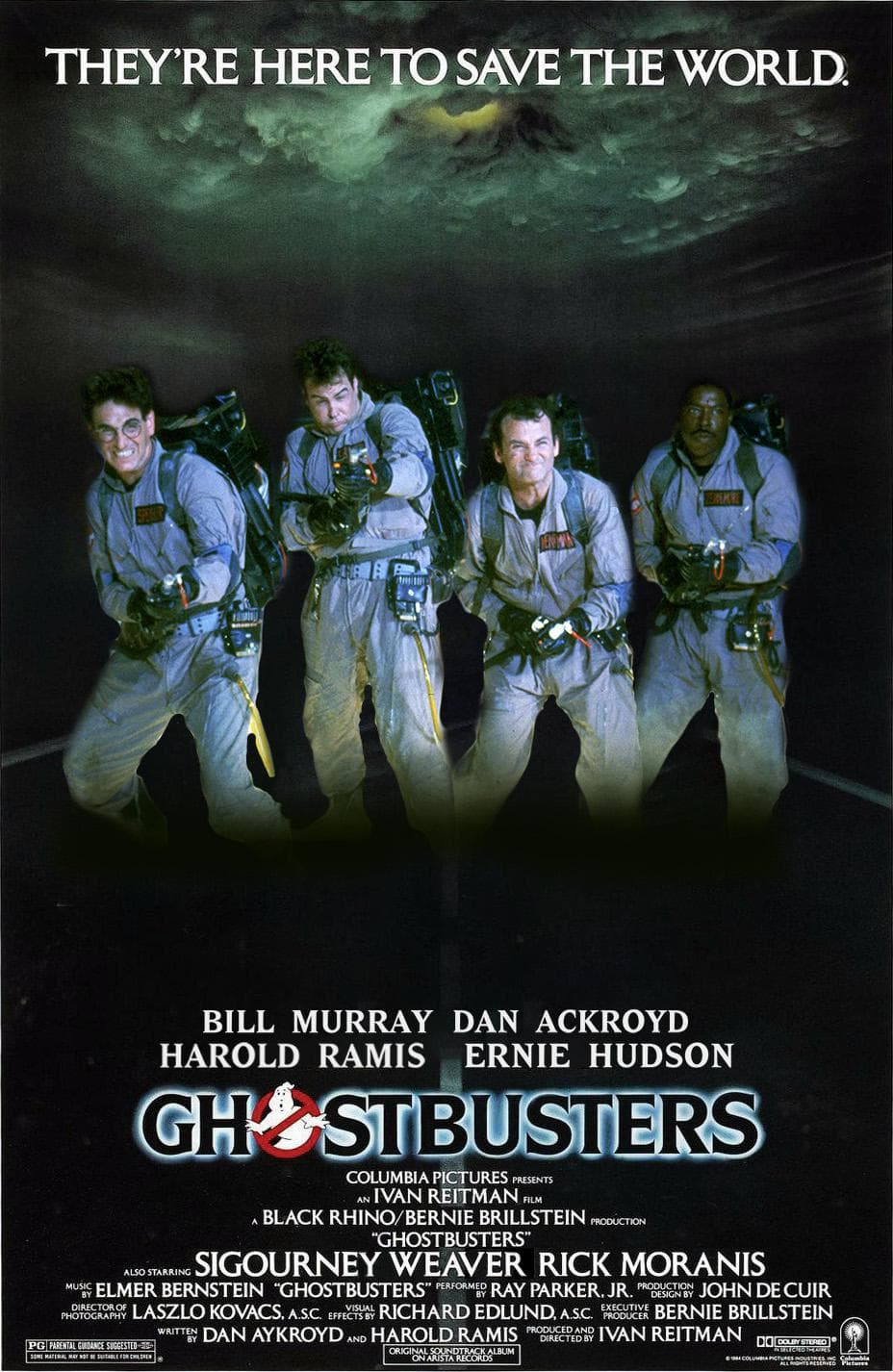
1984
Ghostbusters
A ragged band of scientists, a sardonic frontman and a city that refuses to behave — Ghostbusters still sells the joke.
Read our take →
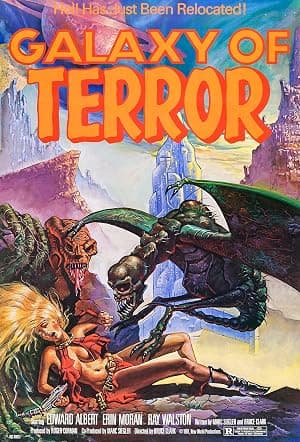
1981
Galaxy of Terror
Galaxy of Terror: fear and parents protecting their children, and why this 1981 movie still matters.
Read our take →
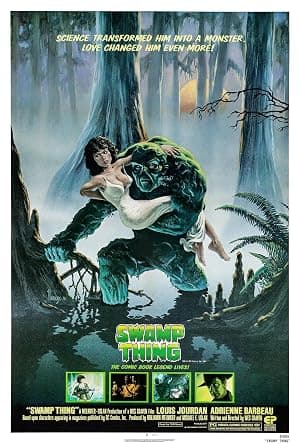
1982
Swamp Thing
Swamp Thing: freedom and fear, and why this 1982 movie still matters.
Read our take →