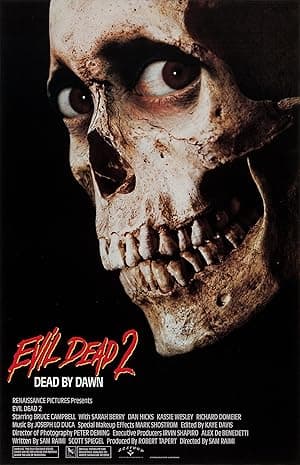
The setup
Evil Dead II is the film that turned gore into a running gag without losing its teeth. Sam Raimi tightened the screws on his own earlier picture and handed Bruce Campbell a role that’s equal parts survivor, pratfall expert and stubborn hero. If you remember the movie, you remember Ash — and if you don’t, you’ll soon see why he’s the reason to watch.
THE MOVIE
Ashley 'Ash' Williams is still the reason this movie works
Evil Dead II wastes no time: a prologue about the Book of the Dead and a set of recorded recitations set the whole trouble in motion. Play the tape, and ordinary things — and people — start behaving like lethal punchlines.
At the centre of that chaos is Ashley 'Ash' Williams. The story funnels through him: he’s the one fighting to keep breathing, to keep moving and, crucially, to keep making grimly comic choices while everything else falls apart.
Sam Raimi directs with the kind of gleeful impatience that matches the material. The movie is a tight eighty-four minutes of horror and slapstick stitched together into something that both shocks and makes you laugh.
THE SETUP
The idea that sets Evil Dead II in motion
The picture builds from a neat, dangerous premise: the Necronomicon’s words are recorded, those recordings are played back, and whatever reads along with them turns vicious. It’s tidy and nasty in one go.
From that single conceit the film keeps raising the stakes. Possession spreads, everyday objects turn hostile, and the cabin becomes a pressure-cooker of collapsing sanity and violent interruptions.
This is fundamentally a survival story. Ash’s job is simple and urgent: keep himself alive, resist being taken over, and find a way out of the house before the evil takes everything.
Raimi and Scott Spiegel also use the set-up to retell and revise parts of the original Evil Dead, so while the film nods to what came before it stands on its own as a compact, escalating nightmare.
THE CHARACTER
Why Ashley 'Ash' Williams matters
Ash isn’t a wisecracking superhero so much as a very practical man in a ridiculous situation. His immediate aim is to survive, and his instincts are all about getting out of the room rather than delivering speeches about fate.
That practical stubbornness gives the film its heart. The plot funnels into his decisions — duck, run, lash out — and the audience stays with him because he’s busy doing the one sensible thing: refusing to be a passive victim.
Bruce Campbell plays Ash, and the movie arranges itself around that central figure. Supporting players arrive and inflame the situation, but it’s Ash who carries the frantic momentum.
Put simply: without Ash, the film would be a sequence of stunts. With him, those stunts feel like a man improvising his way through calamity.
THE PERFORMANCE
Why Bruce Campbell's performance matters
Contemporary reviewers homed in on Campbell for a reason: his physical work and the comic beats he hits are central to the film’s uneasy double-act of laughs and squeamishness.
The role asks for broadness — pratfalls, timing, a kind of elastic reaction to the grotesque — and critics at the time specifically noted that Campbell’s approach anchored the movie’s blend of slapstick and horror.
So when the cabin turns into a carnival of menace, Campbell is the human fulcrum. Reviewers singled out that energy as the engine that keeps the film from slipping into either pure farce or pure gore.
UNDER THE SURFACE
Evil Dead II has more on its mind than the plot suggests
On the surface it’s a grisly haunted-house tale. Underneath, it’s playing a game with how far physical comedy can be stretched before it snaps into horror.
The film lives in a single, claustrophobic location and makes that isolation matter: survival becomes a mechanical problem as much as an emotional one, and the characters are forced into practical, often ridiculous responses.
There’s also the idea of contamination — forbidden knowledge that doesn’t merely frighten but infects, turning familiar bodies and tools into vectors for something obscene and contagious.
Finally, the picture stages bodily transformation as both threat and gag. The grotesque becomes a form of resistance, with physical comedy used as a way to push back against the invasion.
THE FILMMAKING
How Evil Dead II was put together
Raimi’s direction here is hyperactive in the best sense: rapid camera moves, kinetic framing and brisk cuts all push the film forward like a physical gag that keeps landing just when you think it won’t.
That manic visual energy isn’t decoration. It’s how the movie translates panic and escalation into something you feel in your bones — quick edits and camera choices that sell surprise and make the surreal readable.
The result is a film that looks like it’s constantly one step away from spinning out of control, which suits a story about small spaces, stubborn survivors and very bad books.
PRACTICAL EFFECTS
The effects work that gives Evil Dead II its physical personality
Evil Dead II leans on hands-on techniques. Stop-motion animation and miniatures are used in sequences such as the film’s odd little 'dance' moments, giving certain scenes a deliberately twitchy, uncanny quality.
The credits list specialist makeup design and a substantial practical-effects team — a crew that included people who went on to become well-known in effects work. That’s not name-dropping; it’s evidence of how seriously the film treated the grotesque as a crafted element.
There’s a lot of old-school fabrication in play: sculpting, molding, foam work and mechanical devices underpin the movie’s physical nastiness. It’s a film made by people who built the scares by hand.
PURE 80S
Evil Dead II could not belong to any other decade
Made in the mid-1980s and released in 1987, this version of the story benefited from more resources than the 1981 original — it was shot on 35mm and had a noticeably larger budget, which let Raimi expand the visual jokes and the practical work.
It also sits in the context of late-80s conversations about graphic material and ratings. The film’s U.S. release used a shell-company arrangement so it could open without submitting to the MPAA, a production decision that speaks to how contentious extreme content was at the time.
Evil Dead II is part of that era’s splatter conversation. The picture helped cement a splatstick current where gross-out horror and physical comedy could coexist, and it’s frequently named alongside other late-80s works that pushed gore into comic territory.
All of which makes it feel of a piece with its moment: a film that is unabashed about showing unpleasant things, while also having the cheek to make you laugh at them.
THE LEGACY
Why Evil Dead II still matters
Evil Dead II sits neatly in the franchise: it’s the second film and the one that visibly pushes the story toward Army of Darkness. That placement matters because it reshapes the series’ tone.
Crucially, the film helped consolidate reputations. It’s the picture that, in time, came to define how Sam Raimi and Bruce Campbell were talked about in cult-cinema circles, and it did so by leaning hard into a hybrid of slapstick and splatter.
It has also stayed in circulation — through home-video runs and periodic theatrical reissues — and that repeated presence has kept the film in critical discussions about comedy-horror sequels and notable genre work.
THE VERDICT
Does Evil Dead II still hold up?
Yes — if your idea of a good time involves laughing and flinching in equal measure. The film’s central engine is the simple, relentless problem of survival: words on a tape trigger possession, the cabin becomes hostile, and Ash has to keep improvising.
That survival impulse is amplified by the film’s tone. It’s short and intense — eighty-four minutes — and the mix of horror and comedy is never accidental: physical comedy is used as resistance against the corruption spreading through the house.
Part of why it endures is practical: Campbell’s presence, which contemporary reviewers singled out, keeps the audience tethered, while the stop-motion, makeup and mechanical effects give the weirdness a tactile personality you can’t quite get from purely digital tricks.
So if you want a taut, giddy ride where a single location turns into an arena of escalating nastiness and dark laughs, this still does the trick. Just don’t be the person who puts the tape on twice.
Share this movie
Keep watching
More movies from the 80s
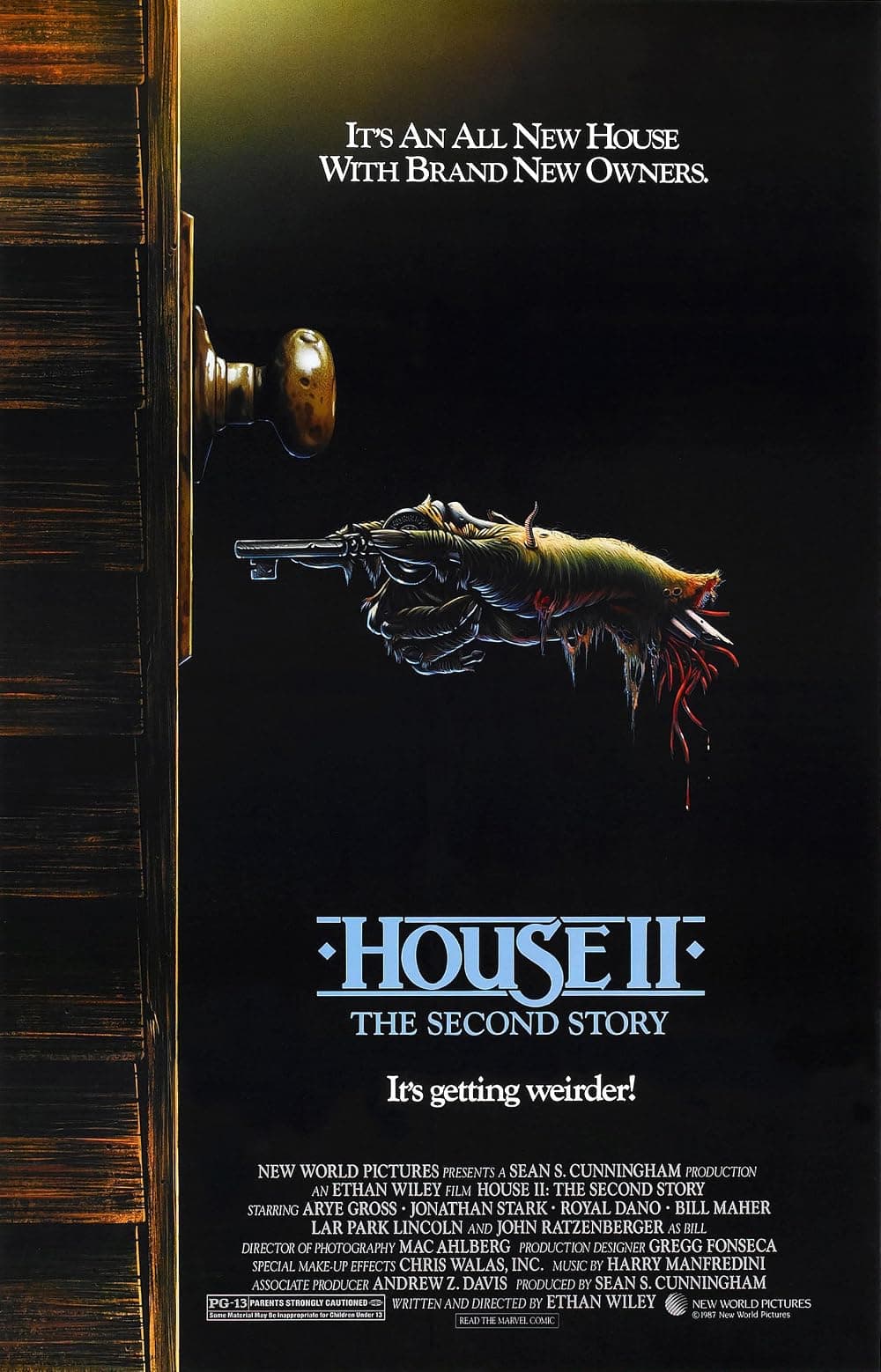
1987
House II: The Second Story
House II: The Second Story: family and the safety of home, and why this 1987 movie still matters.
Read our take →
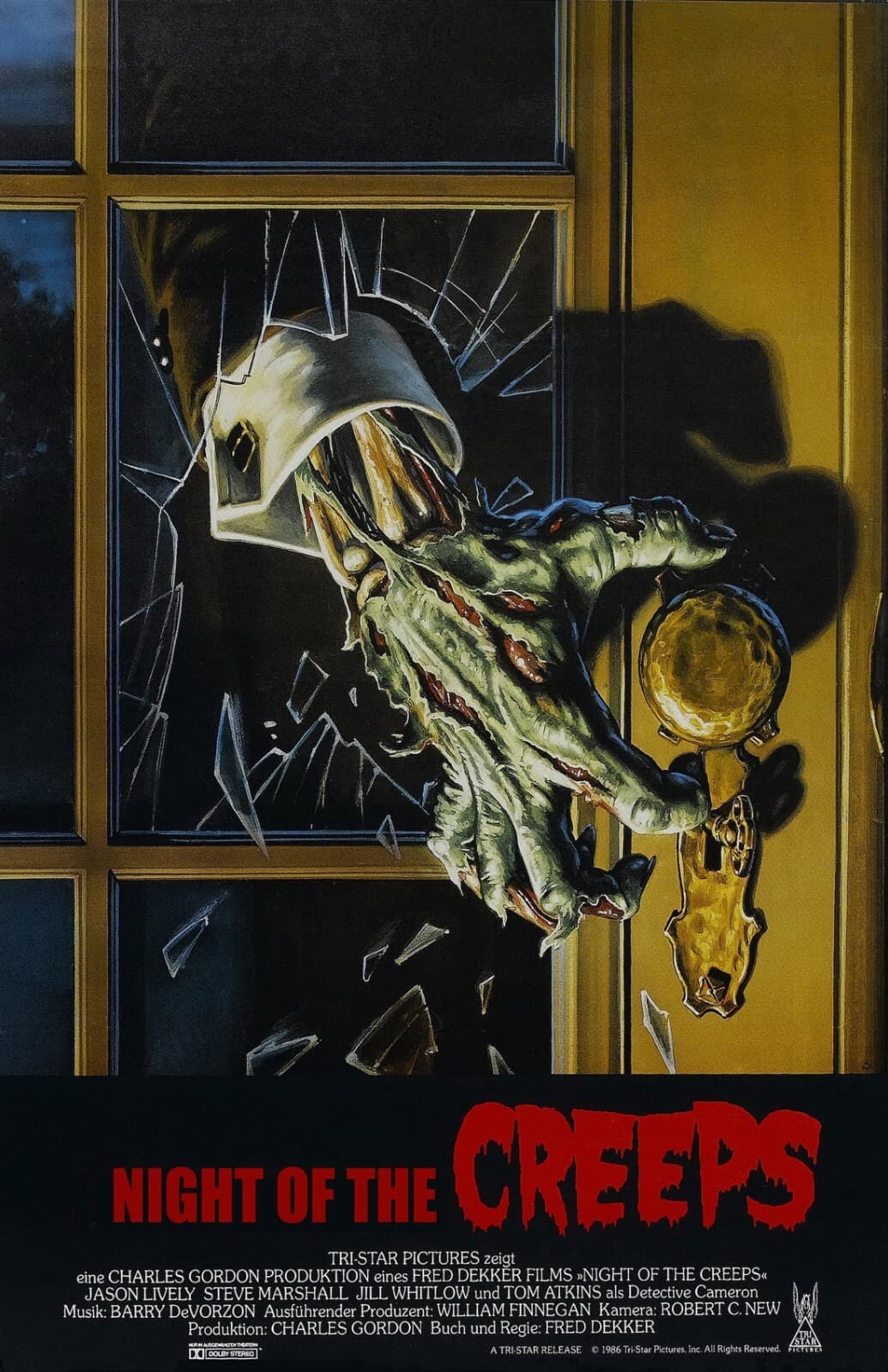
1986
Night of the Creeps
Night of the Creeps: the safety of home and mortality, and why this 1986 movie still matters.
Read our take →
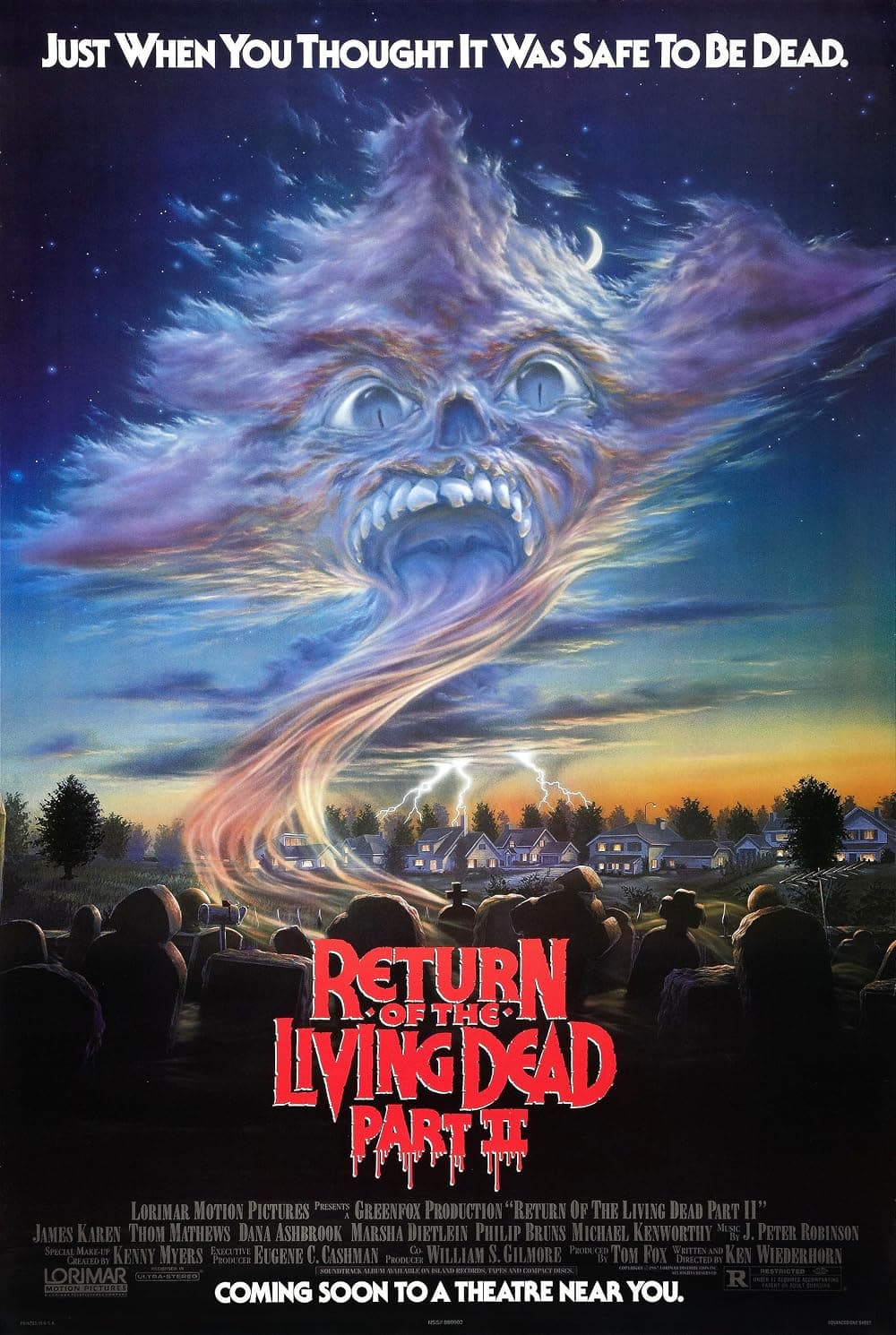
1988
Return of the Living Dead Part II
Return of the Living Dead Part II: freedom and family, and why this 1988 movie still matters.
Read our take →