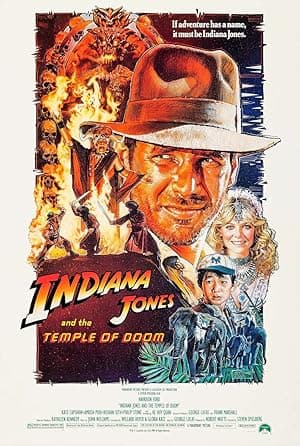
Indiana Jones and the Temple of Doom
A globetrotting pulp rush that’s equal parts kid-rescue thriller and teeth-grinding ritual horror.
The setup
You know the film before the details: it’s the Indiana Jones picture that goes darker, faster — a Spielberg-helmed adventure that turns the franchise’s cheeky treasure hunt into a fight to save children and prise loose a cursed stone. Set in 1935, it throws Indy into a world of cult control, set-piece mayhem and moral choices that keep the engine humming for its 118-minute run.
THE MOVIE
Indiana Jones is still the reason this movie works
There’s a simple way to explain why people still talk about Indiana Jones and the Temple of Doom: it asks its hero to do something that feels urgent and human. Indiana Jones lands in British India and, before you’ve caught your breath, villagers are begging him to recover a stolen sacred Sankara stone and bring back their missing children.
That setup yanks the film away from mere relic-chasing. The theft of a Sankara stone and the disappearance of children is the visible push that sends Indy into the Pankot Palace and down into an underground temple — and it gives the adventure a protective, almost parental rhythm: find, fight, save.
Under Steven Spielberg’s direction the picture keeps moving — action, rescue, ritual, repeat — and the cast around Harrison Ford (including Wilhelmina 'Willie' Scott, Short Round and the cult figure Mola Ram) populate a story that deliberately goes darker than the series usually does. That contrast is part of what keeps this one alive in conversation.
THE SETUP
The idea that sets Indiana Jones and the Temple of Doom in motion
At heart the film runs on a tidy, efficient idea: Indy arrives in 1935, a Sankara stone is stolen and the village children vanish. That single theft starts a chain of choices that turns a globe-trotting archaeologist into a rescue specialist.
The central conflict is straightforward and ruthless. Indiana, his new allies and the children are pitched against a Thuggee cult led by Mola Ram, a group that uses Sankara stones and ritual violence to control followers. The cult isn’t a background threat; it’s the machine the heroes must dismantle.
Structurally the film uses handfuls of big moments as its scaffolding. The Sankara stones do the MacGuffin work — they give everyone a reason to move — while a sequence of set pieces (Shanghai, a runaway mine-cart, the temple passages) keep the plot propelled from one crisis to the next.
There’s economy in that design: you don’t come for subtlety, you come for the momentum. And because the stakes are children-in-peril, the speed of the action reads as purpose rather than spectacle for its own sake.
THE CHARACTER
Why Indiana Jones matters
You can call him an adventurer, a professor or a thief with a heart; what matters here is function. Indiana Jones is the one who knows how to get things done — practical skills meet practical ethics. When children are taken, he becomes the obvious person to fix it.
That practicalism shapes the film. Indy is not an abstract hero; his decisions, tools and instincts drive the rescue plot forward. The story relies on him to choose, to plan and to intervene when others cannot.
There’s a simplicity to that role which the film uses to its advantage: the audience follows because they trust the hero will do the doing. The plot’s darker corners — ritual violence, coercion, the moral cost of confronting an organised cult — are made navigable by having a clear centre.
And because the movie is set before the events of Raiders of the Lost Ark, this entry can show a version of Indy that still feels recognisably the same man, one whose protective instincts are central rather than incidental.
UNDER THE SURFACE
Indiana Jones and the Temple of Doom has more on its mind than the plot suggests
On the surface it’s a treasure-hunt — stones, temples, chases. But the movie keeps pulling the viewer into harsher territory: children-in-peril and the responsibility to rescue them are not window dressing, they’re the spine of the dramatic stakes.
That spine allows the film to interrogate fanatic ritual and cult control in very direct terms. The Thuggee cult in the story uses ritualised violence and the promise of supernatural sanction to dominate, and the film treats that control as the real enemy the heroes must break.
There’s also a tonal choice at play: this instalment of Indiana Jones leans darker within the franchise’s pulp-adventure frame. It tolerates violence and dread more than the series usually does, which makes the adventure feel riskier and, for some viewers, more disturbing.
Finally, the story carries a constant outsider perspective. Indy arrives as a foreign presence in a local crisis; the movie repeatedly puts the outsider against organised local power. That relationship feeds both the rescue narrative and the questions the film raises about representation and intervention.
THE FILMMAKING
How Indiana Jones and the Temple of Doom was put together
There’s a practical assurance running through the movie’s technical choices. Douglas Slocombe was the director of photography and Michael Kahn handled the editing — names that signal experienced hands shaping pace and atmosphere.
One concrete production choice the film makes is how it treats dark interiors. The temple passages are handled with controlled low-light schemes and practical lighting rigs rather than broad daylight; that decision keeps the underground sequences claustrophobic and urgent.
Editing and photographic choices feed the film’s rhythm: cuts that push you from one peril to the next, and photographed spaces that compress danger into tight corridors. The result is a physical intensity that complements the story’s moral urgency.
Put simply, those filmmaking decisions aren’t decorative. They help turn ordinary action beats into genuinely tense sequences where the hero’s practical solutions feel earned.
PRACTICAL EFFECTS
The effects work that gives Indiana Jones and the Temple of Doom its physical personality
The movie’s kinetic action leans on Optical and visual techniques supplied by Industrial Light & Magic. ILM’s work helped sell sequences that need to feel fast and real — think of the film’s runaway-action beats where speed and spatial confusion are essential.
Those composite and optical methods are not just polish; they’re the mechanics that allow sequences such as the mine-cart run to read as a coherent, breathless chase. The effects team stitched together visual pieces to make the chaos legible.
The production recognised that this kind of craftsmanship mattered: the visual-effects team and mechanical effects supervision were awarded an Academy Award for their contribution. That’s a concrete recognition that the picture’s physical personality came from skilled technical work.
In short, once the story commits to big, dangerous set pieces, the effects work is the scaffolding that makes them convincing and, crucially, watchable.
PURE 80S
Indiana Jones and the Temple of Doom could not belong to any other decade
The film opened in May 1984 right in the heart of the summer blockbuster season, and it arrived with the kind of commercial profile that made big studio adventures the calendar’s centrepiece.
But it wasn’t just a popcorn machine. The movie’s more graphic sequences and the fact that it places children in peril sparked public debate about on-screen violence in 1984. That controversy helped push the industry towards a middle ground in ratings — the MPAA introduced the PG-13 rating later that year.
Production itself reflects the era’s scale: principal photography began in April 1983 with location shoots across Sri Lanka and Macau and additional work back at studios and California locations. It’s a production that mixes on-location ambition with studio control — very much an 80s way to make spectacle.
All of which makes it a film of its moment: commercially confident, willing to push boundaries for dramatic effect, and part of a wider conversation about what kind of content mainstream family audiences could be asked to watch.
THE LEGACY
Why Indiana Jones and the Temple of Doom still matters
Part of the film’s legacy is technical and institutional: its visual-effects crew received an Academy Award for their work, and John Williams’s score earned an Academy Award nomination. Those are tangible markers that the production was doing something notable on its own terms.
There’s also a less flattering piece of legacy — the film’s violent content and the scenes featuring children in danger contributed to the public pressure that led to the MPAA creating the PG-13 rating later in 1984. The conversation about what constitutes acceptable family entertainment is part of the film’s afterlife.
Finally, it remains part of the Indiana Jones franchise in a direct way: the picture was novelised, adapted into comics, and continues to appear in franchise compilations and streaming line-ups. That ongoing presence keeps it in circulation for new viewers and returning fans.
So the movie matters both for what it did on screen and for the industry conversations it helped catalyse off-screen.
THE VERDICT
Does Indiana Jones and the Temple of Doom still hold up?
Yes — but with a rider. If you want tightly-plotted action where the stakes are given a human face, Temple of Doom still delivers. Its engine is simple: a stolen stone, kidnapped children, a cult using ritual violence, and a central hero whose skills and moral choices push the rescue forward.
The film wears its pulp adventure roots on its sleeve while willingly turning the dial toward darker material. Those tonal choices make it thrilling for viewers who like danger with purpose; they also explain why the picture provoked discomfort and debate when it opened in 1984.
Contemporary coverage singled out Harrison Ford’s return as a steadying centre, and that steadiness matters here — having a recognisable, capable protagonist keeps the action intelligible when the story goes to its more disturbing places. The set pieces (the Shanghai escape, the mine-cart chase, the temple sequences) still function as structural highlights that keep the momentum moving.
If you’re watching today, go in expecting an early-80s blockbuster that deliberately takes its hero into unpleasant territory. It’s an audacious detour in the franchise: not everyone will like the darker corners, but the movie earns its push there by having a clear mission and a hero willing to see it through.
Share this movie
Keep watching
More movies from the 80s
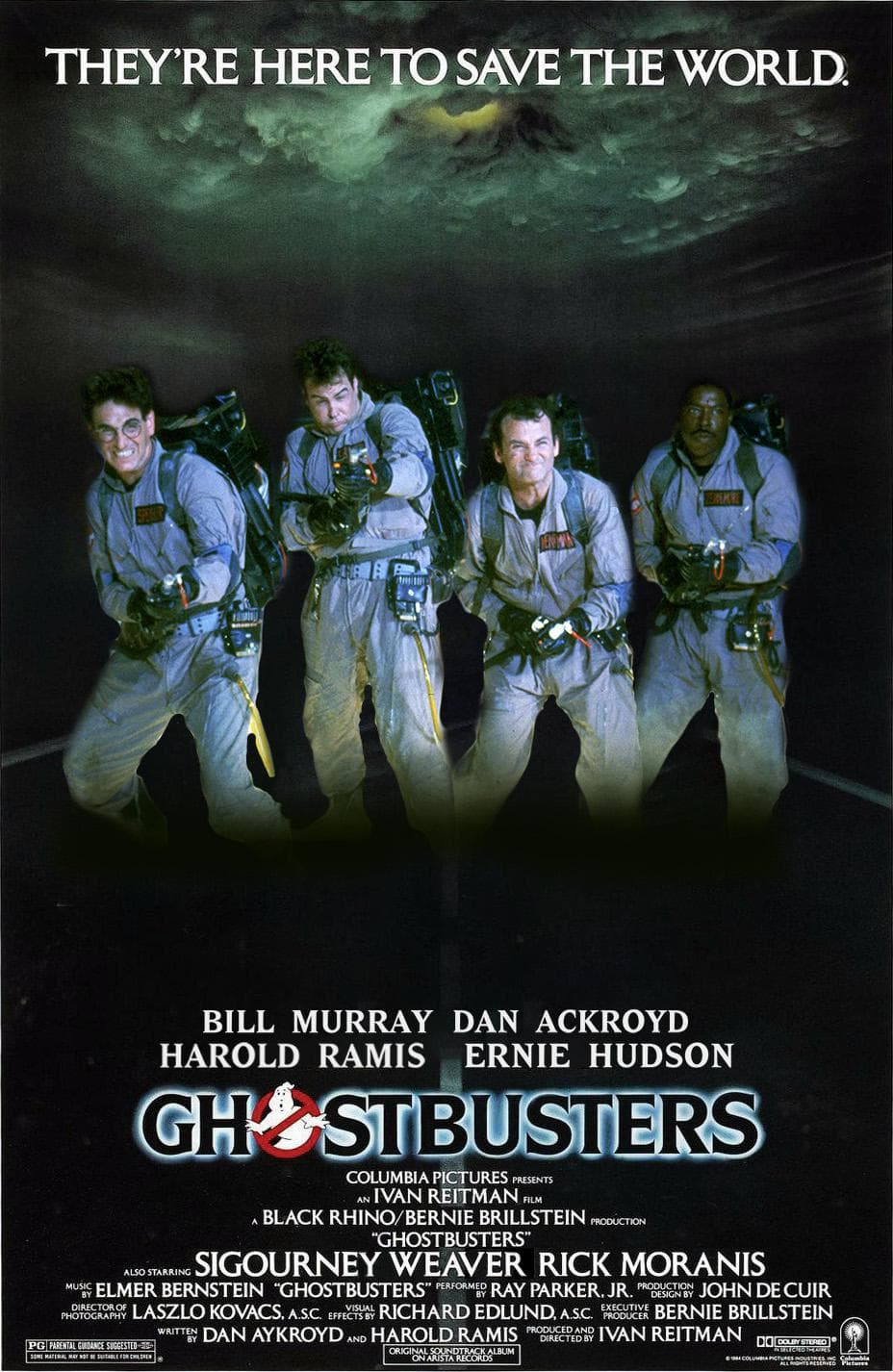
1984
Ghostbusters
A ragged band of scientists, a sardonic frontman and a city that refuses to behave — Ghostbusters still sells the joke.
Read our take →
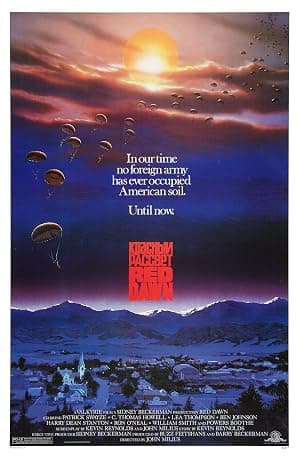
1984
Red Dawn
Red Dawn: family and freedom, and why this 1984 movie still matters.
Read our take →

1984
Star Trek III: The Search for Spock
Star Trek III: The Search for Spock: our relationship with technology and family, and why this 1984 movie still matters.
Read our take →