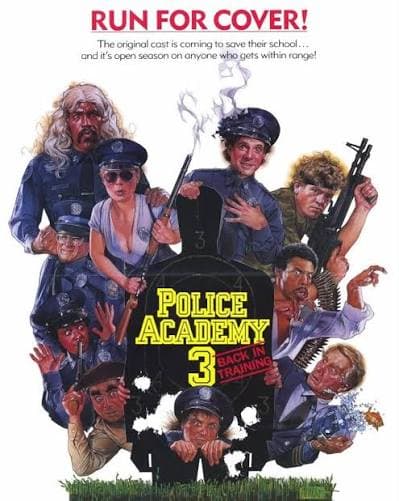
Police Academy 3: Back in Training
Police Academy 3: Back in Training: authority, and why this 1986 movie still matters.
The setup
Police Academy 3: Back in Training arrived in 1986, directed by Jerry Paris. In an unnamed city, the governor announces that, for budgetary reasons, one of the state's two police academies—run by Commandants Eric Lassard and Ernie Mauser, respectively—is to be closed. Decades later, it is worth looking at why the film still connects with audiences.
THE MOVIE
Carey Mahoney is still the reason this movie works
Police Academy 3: Back in Training was released in 1986 and directed by Jerry Paris. Rather than simply retelling the plot, the film is worth revisiting for the characters, conflicts and ideas that give its story its identity.
Authority emerge through what the characters face and the choices they make, giving the story more to explore beyond its immediate plot.
Carey Mahoney, Eugene Tackleberry and Mauser do not begin the film seeing one another clearly, and watching those first impressions break down is a big part of why Police Academy 3: Back in Training still works.
THE SETUP
The idea that sets Police Academy 3: Back in Training in motion
In an unnamed city, the governor announces that, for budgetary reasons, one of the state's two police academies—run by Commandants Eric Lassard and Ernie Mauser, respectively—is to be closed.
Mauser, along with his dim-witted captain, Carl Proctor, conspires with two unscrupulous officers from Lassard's academy, Chad Copeland and Kyle Blankes, to ensure Lassard's institution fails, in exchange for career promotions. That detail matters because it shapes the way the characters initially see one another.
From there, the film can concentrate less on explaining the setup and more on what happens between the people inside it.
New recruits arrive for training, including bumbling Sergeant Douglas Fackler's wife, Violet; the meek Carl Sweetchuck; erratic but reformed ex-gang leader Zed McGlunk, who used to harass Sweetchuck's store; Tackleberry's brother-in-law Bud Kirkland; and the beautiful Karen Adams, whom Mahoney quickly takes a liking to.
Mauser transfers Officer Tomoko Nogata, a Japanese exchange officer from Tachikawa, Tokyo, to Lassard's academy, hoping that his ethnicity and broken English will reflect poorly on the institution.
The cadets undergo several weeks of training.
Nogata becomes smitten with Callahan, who is impressed by his combat skills.
Meanwhile, Sweetchuck, overwhelmed by having to share a room with Zed, decides to quit, until Tackleberry convinces him to stay, promising protection and support.
During a training exercise, the recruits' clumsy performance fails to impress the oversight committee evaluating the academies.
However, Bud redeems their standing by winning the inter-academy boxing match.
THE CHARACTER
Why Carey Mahoney matters
Steve Guttenberg plays Carey Mahoney. Meanwhile, Lassard enlists his current instructors—the glamorous Lieutenant Debbie Callahan, soft-spoken Laverne Hooks, and prankster Larvell Jones—along with a trio of successful former cadets to serve as trainers: the laid-back Carey Mahoney, the towering and strong Moses Hightower, and gun enthusiast Eugene Tackleberry.
Later, when Mauser arrives at a bar to mock Mahoney and the others, they retaliate by applying strong tape over his eyes, which rips off his eyebrows when removed.
Lassard and Mahoney rally the cadets with an uplifting speech, restoring their morale, leading to Karen reciprocating Mahoney's attraction, while Tomoko—following Jones' advice—successfully seduces Callahan.
UNDER THE SURFACE
Police Academy 3: Back in Training has more on its mind than the plot suggests
The movie has more on its mind than the basic setup suggests. authority sits close to the centre of the film, but it is explored through the characters rather than treated like a lesson.
PURE 80S
Police Academy 3: Back in Training could not belong to any other decade
The film could hardly be separated from the decade that produced it. Released in 1986, it carries the attitudes, style and filmmaking rhythms of the 1980s without needing to announce them.
It also sits comfortably within the era's crime comedy, action and slapstick filmmaking, even if the movie itself is more interesting than any single genre label suggests.
That is part of why it still appears in conversations about 1980s movies and 1980s crime comedy movies. The film has become tied not only to its own story but to the wider memory of what 1980s movies felt like.
WATCHING IT NOW
What has aged — and what hasn't
Watching Police Academy 3: Back in Training now means seeing both what has lasted and what unmistakably belongs to 1986.
What still works best is the human material. Ideas around authority have not stopped being relevant simply because the clothes, language and cultural references belong to another era.
Some moments inevitably land differently for a modern audience. Revisiting an older film properly means enjoying what still works without pretending every choice has aged equally well.
THE LEGACY
Why Police Academy 3: Back in Training still matters
A large part of that staying power comes from the characters. Carey Mahoney, Eugene Tackleberry and Mauser are still useful shorthand for the personalities and pressures the film explores.
Carpenter's film has lasted because people continue to recognise something in it. Nostalgia helps, but nostalgia alone does not keep a movie in the conversation for decades.
THE VERDICT
Does Police Academy 3: Back in Training still hold up?
So, does Police Academy 3: Back in Training still hold up? Yes — although watching a film from 1986 honestly means accepting that not every moment will land exactly as it once did.
The film still has something recognisable to say about authority, and its characters stop those ideas from feeling abstract.
Police Academy 3: Back in Training remains worth revisiting because characters such as Carey Mahoney, Eugene Tackleberry, Mauser, Eric Lassard and Debbie Callahan still feel like people rather than labels once the film gets underneath the stereotypes.
Share this movie
Keep watching
More movies from the 80s
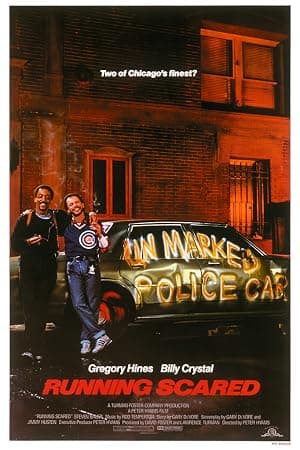
1986
Running Scared
Running Scared: heroism and freedom, and why this 1986 movie still matters.
Read our take →
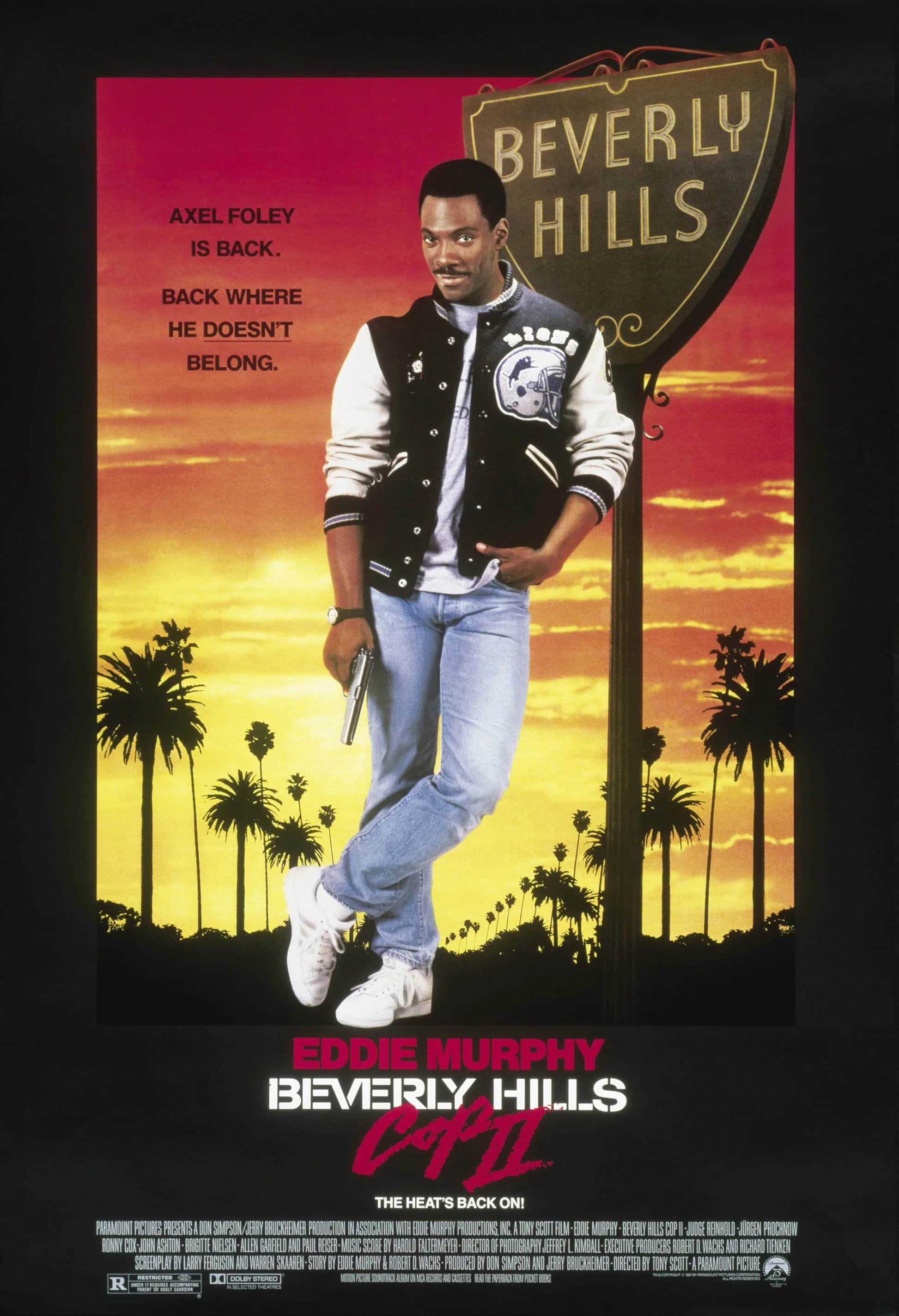
1987
Beverly Hills Cop II
Beverly Hills Cop II: authority and family, and why this 1987 movie still matters.
Read our take →
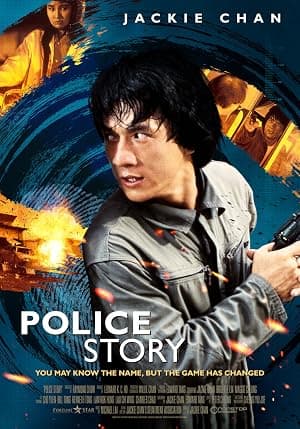
1985
Police Story
Police Story: freedom and authority, and why this 1985 movie still matters.
Read our take →