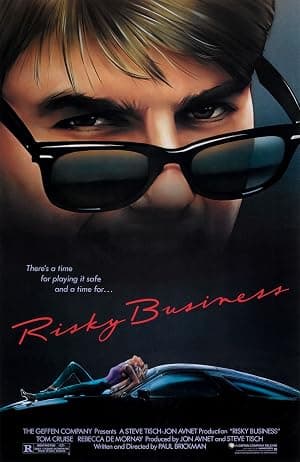
The setup
Risky Business is the movie people still bring up when they want to talk about Tom Cruise before he became a global movie star, and about how a very tidy suburban life can tip into chaos. Paul Brickman’s 1983 debut puts Joel Goodsen — a college‑obsessed teenager left home alone — at the centre of a story where sex, theft and a hastily improvised commercial scheme collide. There’s a famous underwear dance, yes, but there’s also a sharper idea underneath: what happens when entrepreneurial zeal meets moral fuzziness.
THE MOVIE
Joel Goodsen is still the reason this movie works
People still talk about Risky Business because it has a very clear eye for the exact teenager it wants to watch: Joel Goodsen, the obedient, achievement‑obsessed senior who’s meant to be thinking about college applications and nothing more risqué than grades.
Leave him alone in an affluent Chicago house and Brickman’s tidy little world snaps. Joel meets Lana, gets pulled into theft and blackmail, and suddenly his home is converted into a one‑night commercial operation to raise cash for a ruined sports car. It’s a neat, transactional premise that’s built to reveal how a kid negotiates adult compromises.
And yes — the underwear dance and Bob Seger’s rollicking score are part of the film’s DNA, but so is the sharper satire. Brickman directs a compact 96‑minute picture that can be enjoyed as a teen comedy and read as something a little darker; it also happens to be the film that announced Tom Cruise to a larger audience.
THE SETUP
The idea that sets Risky Business in motion
The engine of Risky Business is a simple, combustible idea: Joel Goodsen, a college‑bound senior, is left alone in his parents’ suburban house. That’s the piece the film pulls back the curtain on.
Once Joel meets Lana — introduced as a call girl who quickly becomes both a sexual and business partner — the story pushes him into theft, blackmail and a makeshift enterprise. The stakes are practical as much as moral: he needs to raise money to repair his father’s sports car, and the solutions get sloppy fast.
What keeps the set‑up lively is the film’s juggling of obligations. Joel is still meant to be attending school and preparing for a Princeton interview even as he scrambles to hide the house party/brothel operation. Those overlapping demands generate both the comedy and the pressure.
There’s also an external pressure Joel can’t control: Guido, Lana’s enforcer, who provides the concrete threat that forces Joel to act commercially rather than merely dream up ideas. The premise works because it makes negotiation — with adults, with danger, with himself — the only obvious path forward for a teenager with nowhere else to go.
THE CHARACTER
Why Joel Goodsen matters
Joel isn’t a rebel by instinct. He’s presented as obedient, achievement‑oriented — the kind of teenager whose interior life is mostly college brochures and polite performance. That’s why watching him negotiate messier adult compromises is interesting: he’s not rebelling so much as improvising.
That tension — between the carefully planned future and the sudden, unplanned present — gives the film its dramatic momentum. Joel’s decisions feel like small miscalculations that compound into something more serious, and because the film keeps returning to his perspective, those errors have weight.
Lana’s role matters to Joel’s arc. She’s introduced as a call girl but also framed as a pragmatic entrepreneur who opens the door to a different set of options. Her presence accelerates Joel’s passage from sheltered teenager to someone who does business and pays the consequences.
And while the movie only runs 96 minutes, it uses Joel as a neat vehicle for its themes: sex, class, the lure of quick cash and the moral ambiguity that arrives when success and survival look dangerously similar.
THE PERFORMANCE
Why Tom Cruise's performance matters
Evidence‑wise, Tom Cruise’s work in Risky Business is best described as the role that put him on the map. Contemporary and later sources identify it as his breakout; he also earned a Golden Globe nomination for Best Actor in the Musical/Comedy category.
That’s a useful, non‑fussy fact: the film introduced Cruise to a wider audience and Hollywood noticed. The nomination is a clear marker of industry recognition at the time.
Because the movie centres Joel’s earliest compromises, the casting mattered: the part needed someone who could plausibly be a neatly ambitious teenager pushed into improvisation. The film’s afterlife owes something to that alignment between character and performer.
So when people point to Risky Business as the start of Cruise’s trajectory, it’s less a piece of fan mythology and more an industry moment recorded in awards attention and contemporary coverage.
UNDER THE SURFACE
Risky Business has more on its mind than the plot suggests
On the surface Risky Business looks like a teen sex comedy with a high concept; underneath it’s a compact coming‑of‑age story about what happens when an eager, sheltered kid bumps into systems of adult commerce and compromise.
Class and privilege are threaded through the setup. Joel’s life is one of comfortable expectations — and that cushion is exactly what lets the film probe transactional decisions without collapsing into pure tragedy. The contrast between his school ambitions and the transactional sex economy he briefly runs sharpens the choices he makes.
Capitalism and entrepreneurship show up in odd places here. The improvised business operates like a small start‑up — a service, a market and a ledger — and Joel’s attempts to manage it read as a teenager learning the mechanics of profit and loss under pressure.
All of it drifts into moral ambiguity. The film doesn’t hand its characters simple absolution; instead it keeps nudging the viewer to decide whether Joel’s compromise is clever, cowardly, or both. Those tangled judgments are one reason critics compared the film to earlier movies about youthful sexual initiation and adult hypocrisy.
PRACTICAL EFFECTS
The effects work that gives Risky Business its physical personality
Risky Business uses real‑world stuntcraft where it counts. Production credits list a stunt team, named stunt drivers and a stunt double for Joel — details that matter when you watch sequences involving a car and actual danger.
The film stages a moment in which a sports car plunges from a pier into Lake Michigan. That sequence is grounded in physical stunt work rather than abstract montage, and the production credits reflect named personnel responsible for pulling it off.
Visual effects and title work were handled by a specialised company credited in the production. In short: the movie’s physical risks look the way they do because specialists were on hand to plan and execute them, not because of off‑screen handwaving.
Those practical decisions give the film a more tangible, tactile personality; when the narrative asks us to believe in a scrape or a threat, the production choices back it up.
PURE 80S
Risky Business could not belong to any other decade
Risky Business was written and directed in the early Reagan years, and from that vantage it reads as a sharp little satire of 1980s materialism and entrepreneurial aspiration. The film isn’t an accessory of the era — it actively comments on its priorities.
Its release in 1983 places it among a wave of early‑1980s films about suburban American youth. Modern curations often group it with other teen films from the period because all of them returned a camera to that particular social scene and its pressures.
That suburban setting is purposeful: the movie continually measures Joel’s ambitions against a background of privilege and expectation, which is a very 1980s concern in both politics and culture.
Practical details — the film’s 1983 release and its R rating at premiere — are reminders that this was aimed at adults as much as teenagers: a small but pointed film squarely of its moment.
WATCHING IT NOW
What has aged — and what hasn't
Contemporary reviewers picked up on stylistic flourishes and darker undercurrents, and that angle of reading is one reason curators and critics later argued the film was more than a standard teen sex comedy. That claim still gives modern viewers permission to look for nuance rather than just laughs.
Grouping Risky Business with other early‑80s teen films helps too: it belongs to a conversation about adolescence instead of existing as a single gag. In that company its sharper satirical notes stand out.
The soundtrack — a mixture of Tangerine Dream compositions and licensed tracks by well‑known artists — still marks the film as of a certain period, but it also helps set tonal contrasts between Joel’s private moments and the more commercial scenes he orchestrates.
Put simply: some of the period trimmings are obvious, but the film’s appetite for darker comedic edges and its interest in the mechanics of a small, improvised business still plays for viewers who want a teen movie with a moral sting.
THE LEGACY
Why Risky Business still matters
For many viewers the film’s immediate legacy is practical: it’s the movie that launched Tom Cruise into the sort of attention that changed the arc of his career. That breakout status is a tangible piece of film history.
There’s also an image that lodged in pop culture — the underwear dance to Bob Seger’s “Old Time Rock and Roll” — and the scene’s place in AFI’s 100 Years…100 Songs list underlines how that one beat outlived the rest of the marketing.
The Golden Globe nomination for Cruise is a second concrete trace of the movie’s early impact; it shows industry recognition beyond box‑office chatter.
And the fact that a director‑approved 4K restoration and Criterion release appeared in 2024 suggests the film keeps attracting a curatorial afterlife: people still want to preserve and present both the theatrical cut and the director’s cut cleanly for new viewers.
THE VERDICT
Does Risky Business still hold up?
Yes — but with a small, honest rider. Risky Business works because it keeps Joel Goodsen at the centre of a tightly written moral experiment: leave a college‑obsessed teenager alone and put business opportunities in front of him, and you’ll see how tidy ambition gets messy. That premise still lands.
The film’s central beats — Joel’s contact with Lana, the theft of a family heirloom and the ruined sports car that forces the improvised commercial scheme — remain a neat way to dramatise the transition from adolescent plans to adult compromises. Miles plays the instigator; Guido supplies the real danger; and those roles keep the stakes clear.
If you’re watching for pure nostalgia you’ll get the underwear dance and a period soundtrack. If you’re watching for a compact satire about privilege, entrepreneurship and moral ambiguity, the film still has bite — and the fact that it runs a spare 96 minutes helps it avoid flab.
So should you watch it? Absolutely — especially if you want a teen movie that knows how to be funny and a little uncomfortable at the same time. It’s not just a one‑note prank picture; it’s a small moral fable dressed up in a suburban suit.
Share this movie
Keep watching
More movies from the 80s
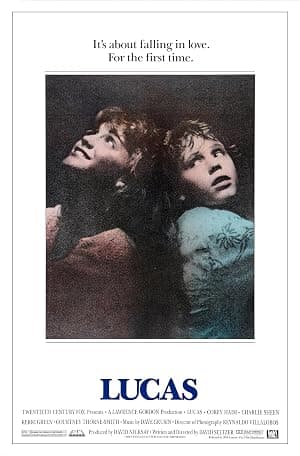
1986
Lucas
Lucas: friendship and family, and why this 1986 movie still matters.
Read our take →
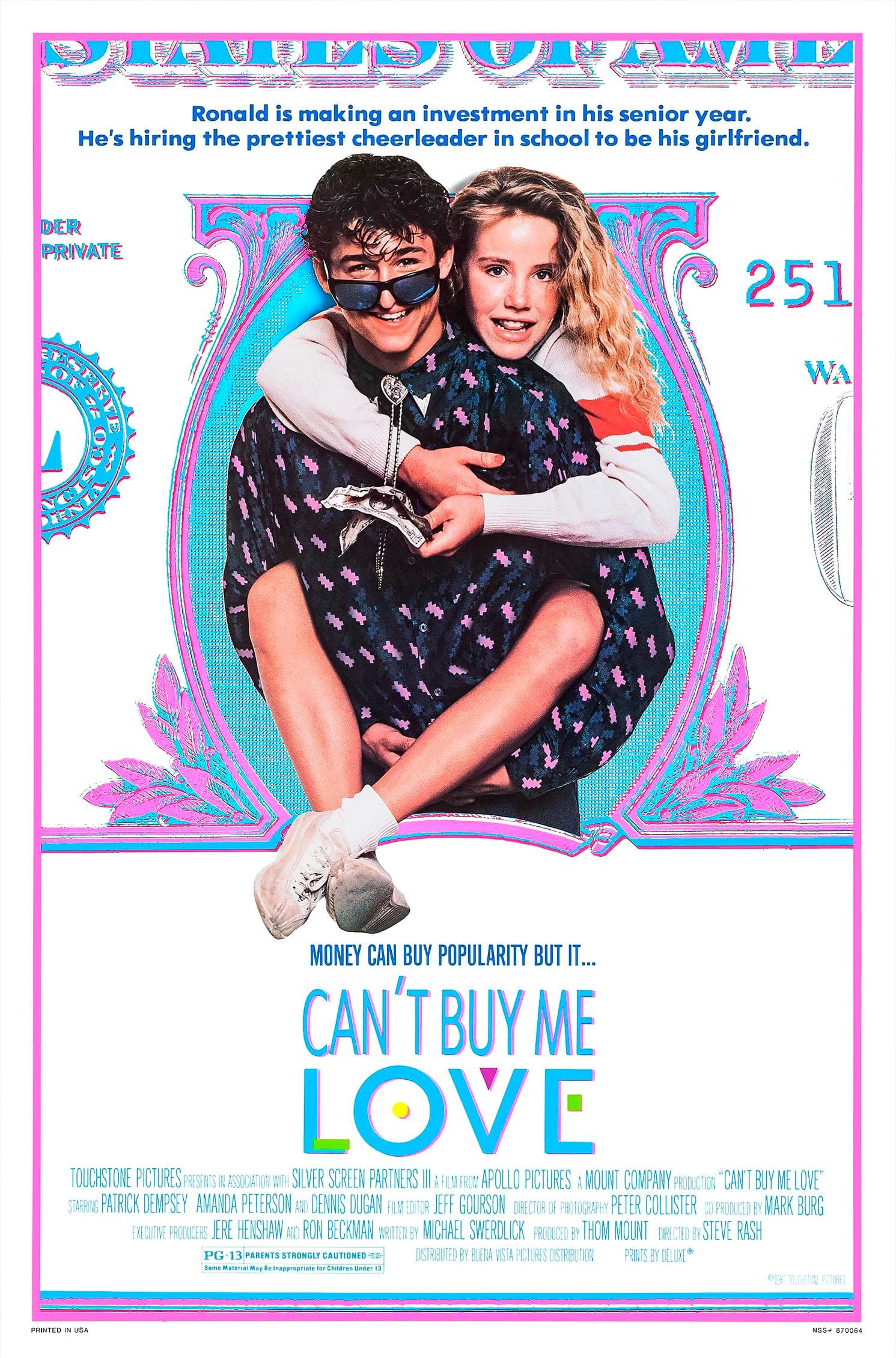
1987
Can't Buy Me Love
Can't Buy Me Love: friendship and peer pressure, and why this 1987 movie still matters.
Read our take →
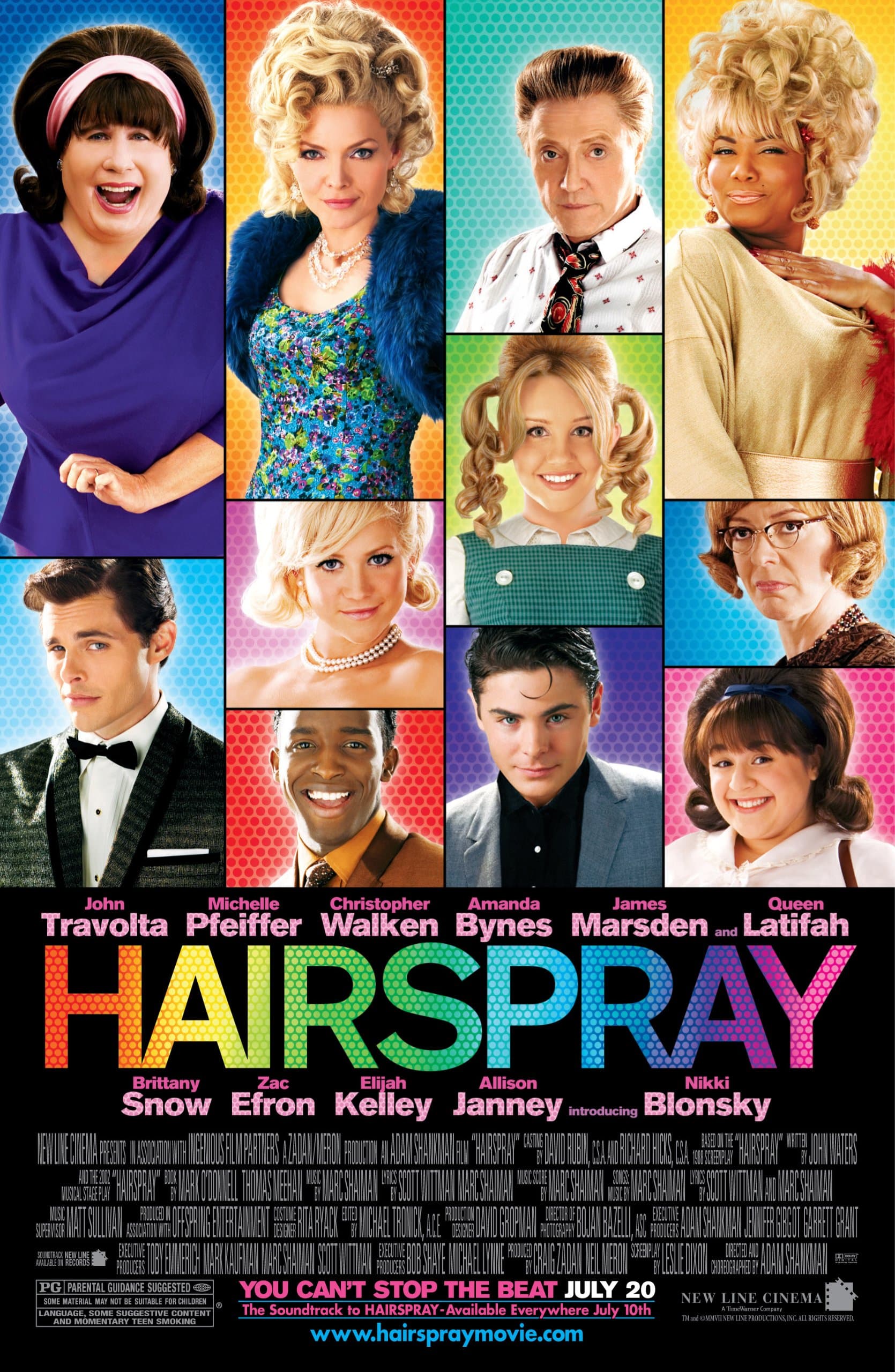
1988
Hairspray
Hairspray: family and parents protecting their children, and why this 1988 movie still matters.
Read our take →