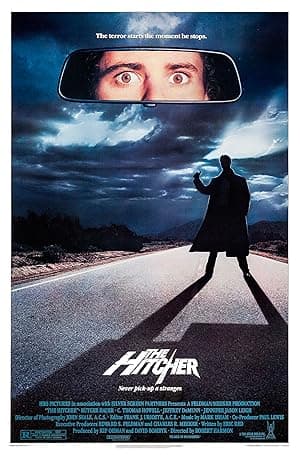
The setup
There are movies you think of as 'that one where someone picks up a hitchhiker' and then there’s The Hitcher — a lean, mean road thriller that turns a single bad choice into an escalating, paranoid nightmare. Robert Harmon and a compact 98-minute runtime refuse to let the story breathe; it keeps tightening the screw until you remember never to trust a stranger on the hard shoulder.
THE MOVIE
John Ryder is still the reason this movie works
You know the scene: a young driver gives a lift to a stranger, then ejects him after things go sideways. That small, awkward moral choice is the ignition switch for the whole film — and in The Hitcher it doesn’t just go wrong, it detonates a chain of escalating violence and framing that follows the driver across empty highways.
What keeps the film moving is less the geography of the chase and more the presence trailing behind it: John Ryder, an enigmatic figure whose violence comes without explanation. The screenplay deliberately refuses to hand you a motive, and that refusal turns Ryder from a villain you can understand into something more unsettling — a force that makes every act of roadside goodwill look like a gamble.
Directed by Robert Harmon and running under a compact runtime, The Hitcher condenses its action-horror-thriller hybrid into a tight experience that centres on that single terrifying proposition — give someone a lift, and your life might be ruined.
THE SETUP
The idea that sets The Hitcher in motion
At its heart the film is built on one compact premise: Jim gives a lift to a stranger, ejects him when the stranger turns threatening, and from that moment his life unravels. That single decision propels the rest of the picture.
What follows isn’t a cosy investigation or a conventional motive-driven hunt. The story arranges a series of violent set-pieces on lonely roads — staged crashes, planted evidence and chases that ratchet pressure on Jim while others begin to suspect him.
Those mechanics are economical and ruthless. Each incident both escalates the physical danger and tightens the narrative noose around the protagonist, so the film feels less like a sequence of isolated shocks and more like a relentless, narrowing pursuit.
That economy is why the setup works: the premise is simple enough to explain in a sentence, but the consequences are layered and cumulative, transforming one roadside decision into a full-scale emergency.
THE CHARACTER
Why John Ryder matters
John Ryder isn’t painted as a troubled man with a backstory you can sympathise with. He arrives as a presence and stays as a rule-breaker of expectations: remorseless, enigmatic and uninterested in explanation.
That lack of motive is crucial. If the film had explained Ryder, he would have been smaller. By refusing to do so, the screenplay makes him an idea as much as a person — the kind of danger that doesn’t need justification to be terrifying.
Rutger Hauer inhabits that role as the named figure behind the violence, but it’s Ryder’s inscrutability that sticks in the audience’s head. He’s the constant that the rest of the movie orbits around, the reason every highway looks suddenly suspect.
In short: the film’s fear is not just about what Ryder does, but about what he makes everyone else become — suspicious, defensive, and increasingly isolated on those long roads.
THE PERFORMANCE
Why Rutger Hauer's performance matters
Contemporary critics singled out Rutger Hauer’s contribution as a central element of what made the film hit harder than its set-up alone would suggest.
That attention matters because Ryder isn’t a plot device; he’s the emotional and psychological engine of the movie, and the way the role was realised shaped how threatening the character felt at every turn.
So even if you go into The Hitcher for the chases and the crashes, the performance is the spine that keeps those set-pieces coherent — it gives the film a figure around whom all the terror coheres.
UNDER THE SURFACE
The Hitcher has more on its mind than the plot suggests
On the surface it’s a road-thriller built from collisions and chases. Underneath there are a handful of stubborn ideas that refuse to let you relax: trust, chance, and how quickly ordinary kindness can be punished.
The film keeps returning to erosion of trust; what begins as a small, perhaps noble act — offering someone a lift — becomes an open question. Who is believable? Who can you rely on? Those questions drive every interaction thereafter.
There’s also the particular creepiness of random or motive-less violence. Because the screenplay withholds Ryder’s reasons, his actions read as arbitrary, which ratchets up the unease. Danger feels less like a puzzle to solve and more like an atmosphere to survive.
Put together with the cat-and-mouse structure and the roadside setting, these ideas make the movie less about catching a villain and more about coping with an absurd, escalating wrong — both practically and morally.
THE FILMMAKING
How The Hitcher was put together
If the film has a look and a rhythm, a lot of that comes from the crew names in the credits: John Seale shot the movie, Frank J. Urioste edited it, and Dennis Gassner handled production design.
Those are not throwaway listings. Each role is the sort that determines how a road thriller breathes — how sequences are paced, how sets and locations read as believable danger, and how the narrative keeps moving without stalling for explanation.
Robert Harmon, working with that team, keeps the movie lean. It’s assembled with a clarity of purpose: the technical players were in place to make the highway feel like a single, escalating corridor rather than a sequence of disconnected incidents.
So while we could debate individual camera angles or cuts, the reliable fact is the film’s identity was shaped by a compact, well-credited technical team whose job it was to make the chase feel relentless and coherent.
PRACTICAL EFFECTS
The effects work that gives The Hitcher its physical personality
Not every gory idea from the screenplay made it to screen. Several originally scripted graphic moments were toned down or staged to play offscreen — small choices that shape how violent the film feels without relying on explicit imagery.
At the same time, the picture uses physical stunt work and special-effects teams to sell the highway crashes and violent set-pieces. Those departments exist in the credits because the movie depends on believable, physical danger.
The result is a blend: some shocks are pared back so the film can keep its pulse without becoming a splatter piece, while other moments rely on stunts and practical setups to deliver genuine, on-the-road peril.
That combination keeps the violence tactile and immediate, even when some of the most graphic impulses from the script are deliberately muted.
PURE 80S
The Hitcher could not belong to any other decade
Released in 1986, the film sits squarely in a strand of American horror-thrillers from the decade that liked to mash together road-movie freedom with slasher and action energy.
That mixing of forms feels like an 80s move: you get the pacing and shocks of a slasher, the vehicular danger and momentum of a road movie, and the production backing that the era’s financing model could offer.
Production itself reflects mid-1980s industry realities: HBO Pictures and Silver Screen Partners were part of the kind of cable-studio and independent financing arrangements that helped riskier genre projects reach cinemas in that period.
Put another way, The Hitcher is of its time because it combines genre appetite with the practical financing and distribution routes of the mid‑80s, creating a film that could be ruthless and compact in ways the previous decade’s studio system might not have allowed.
THE LEGACY
Why The Hitcher still matters
The Hitcher didn’t vanish after its first run. It generated a direct-to-video sequel in 2003 and was remade for the big screen in 2007, which signals the story’s continuing appeal as a narrative proposition.
Beyond those follow-ups, the film’s reputation has grown in genre retrospectives and surveys where it’s often singled out as a noteworthy example of 80s road-horror and a compact thriller that keeps its threat economical and unnerving.
Part of its afterlife comes from how it made a simple moral gamble — giving a stranger a lift — feel like a setup for a slow, escalating catastrophe. That idea has kept people returning to the film as an example of how to make paranoia cinematic.
So its legacy isn’t only about repeats or remakes; it’s about the nerve of the premise and the way the original picture used that nerve to make audiences rethink something we usually treat as mundane.
THE VERDICT
Does The Hitcher still hold up?
Yes — if your tolerance runs to grim, lean thrillers that trade on escalating paranoia rather than neat explanations. The premise is simple: a young driver’s choice to give a lift becomes the catalyst for murder, framing and a road-long campaign of psychological terror.
The film’s economy is its strength. It strings together staged accidents, planted evidence and chase sequences in a cat-and-mouse structure where Jim is forced to prove his innocence while suspicion accumulates around him.
Crucially, the screenplay withholds Ryder’s motive, and that withholding is still effective. Making the antagonist’s violence seem arbitrary keeps the menace alive; it makes the danger feel unpredictable rather than solvable.
So if you want tidy answers, this isn’t the movie for you. If you want a compact, 98-minute road-horror that turns roadside altruism into a dangerous gamble — and that features the central presence of John Ryder as the engine of its dread — The Hitcher still delivers.
Share this movie
Keep watching
More movies from the 80s
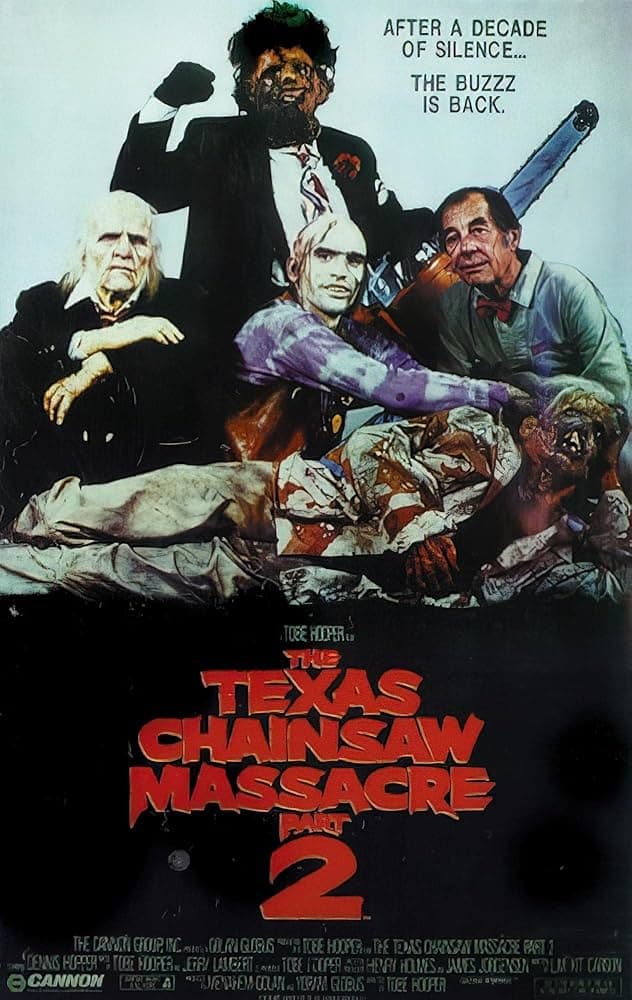
1986
The Texas Chainsaw Massacre 2
A chainsaw, a grieving ex‑ranger and a very loud 1986 satire — bloody ridiculous and oddly stubborn.
Read our take →
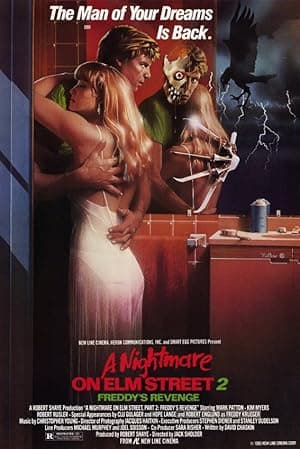
1985
A Nightmare on Elm Street 2: Freddy's Revenge
A Nightmare on Elm Street 2: Freddy's Revenge: the safety of home and family, and why this 1985 movie still matters.
Read our take →
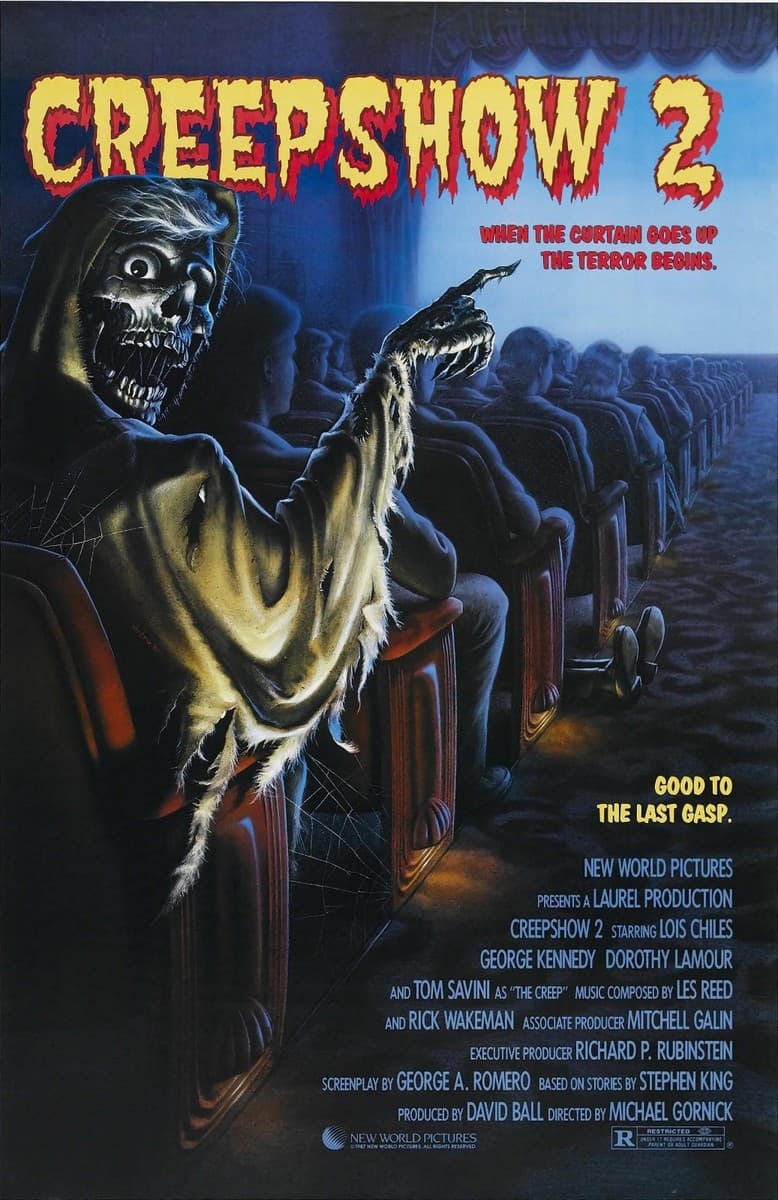
1987
Creepshow 2
Creepshow 2: freedom and family, and why this 1987 movie still matters.
Read our take →