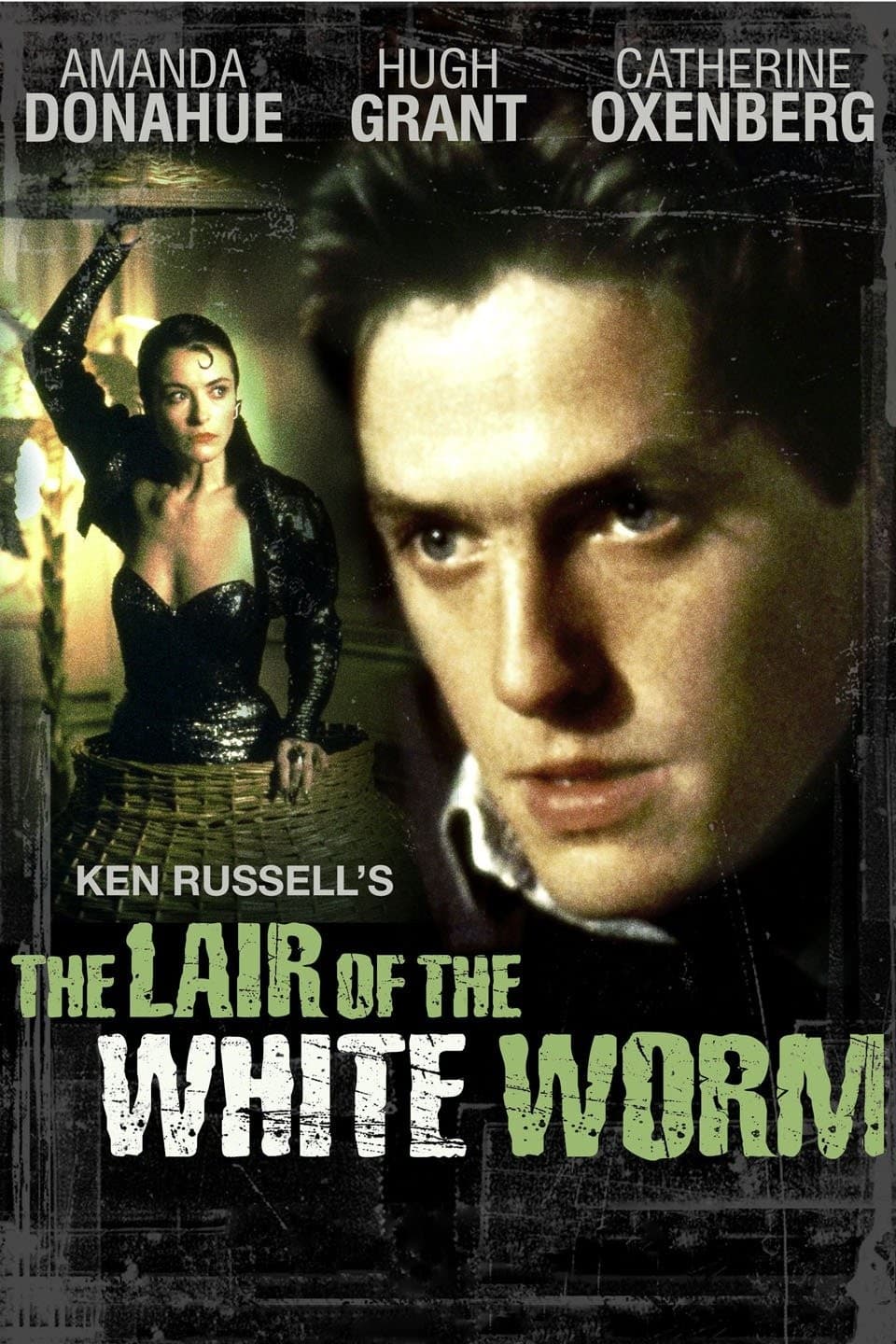
The Lair of the White Worm
Is it a vampire movie? Folk horror? Monster movie? Black comedy? A wildly sexual Gothic nightmare involving an ancient snake g
The setup
Directed by Ken Russell and released in 1988, The Lair of the White Worm takes inspiration from Bram Stoker's final novel and turns it into something that could only have emerged from the wonderfully strange imagination of the man behind The Devils and Tommy. It stars Amanda Donohoe as the unforgettable Lady Sylvia Marsh, alongside a young Hugh Grant and an equally young Peter Capaldi. There are ancient legends. Missing people. Roman archaeology. Snake worship. Hallucinations. Bagpipes. And one of the most gloriously unhinged villains in 1980s British horror. Welcome to Derbyshire. Things are about to get weird.
THE STORY
An Archaeological Discovery That Should Probably Have Stayed Underground
Peter Capaldi plays Angus Flint, a Scottish archaeology student carrying out an excavation at a Derbyshire farmhouse belonging to sisters Mary and Eve Trent.
And then he finds something.
A strange skull buried beneath the ground.
It's large.
It's reptilian.
And it definitely doesn't belong to anything Angus was expecting to dig up in rural England.
The discovery soon becomes connected to a local legend surrounding the D'Ampton Worm — an enormous serpent supposedly slain centuries earlier by the ancestor of local aristocrat Lord James D'Ampton.
James, played by Hugh Grant, understandably regards the whole thing as a bit of entertaining local folklore.
Unfortunately for everyone involved, the legend might be considerably more real than he thinks.
Especially when the mysterious Lady Sylvia Marsh returns to the nearby Temple House.
LADY SYLVIA
Amanda Donohoe Is Absolutely Magnificent
There is no sensible way to discuss The Lair of the White Worm without talking about Amanda Donohoe.
Her performance as Lady Sylvia Marsh is the movie.
Elegant, seductive, threatening and completely deranged, Sylvia is one of those villains who instantly takes control whenever she appears on screen.
It soon becomes clear that she's connected to an ancient serpent cult devoted to the pagan snake god Dionin.
And Lady Sylvia isn't exactly human herself.
Her methods of dealing with unwanted visitors include venomous bites, hypnotism and occasionally revealing a pair of enormous fangs.
Subtle she is not.
Donohoe seems to understand perfectly that she's appearing in a Ken Russell movie and responds by turning everything up several additional notches.
The result is unforgettable.
BEFORE FOUR WEDDINGS
Hugh Grant Before He Became Britain's Favourite Romantic Lead
Watching The Lair of the White Worm today comes with an additional pleasure.
That's Hugh Grant.
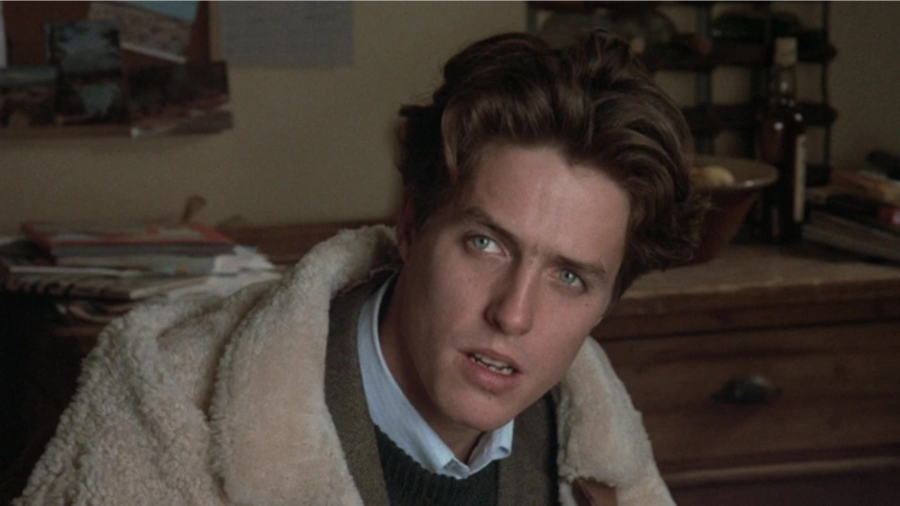
This is years before Four Weddings and a Funeral transformed him into one of the biggest romantic comedy stars in the world.
Here he's Lord James D'Ampton, the wealthy young descendant of the man supposedly responsible for killing the legendary D'Ampton Worm.
There are occasional glimpses of the Hugh Grant persona audiences would eventually come to know — the charm, the slightly awkward delivery and that unmistakable voice.
But watching him battle an ancient snake cult isn't exactly what later audiences would associate with him.
Anyone whose knowledge of Grant begins with Notting Hill is in for quite a surprise.
AND BEFORE DOCTOR WHO
Peter Capaldi Was Hunting Giant Worms Long Before the TARDIS
Then there's Peter Capaldi.
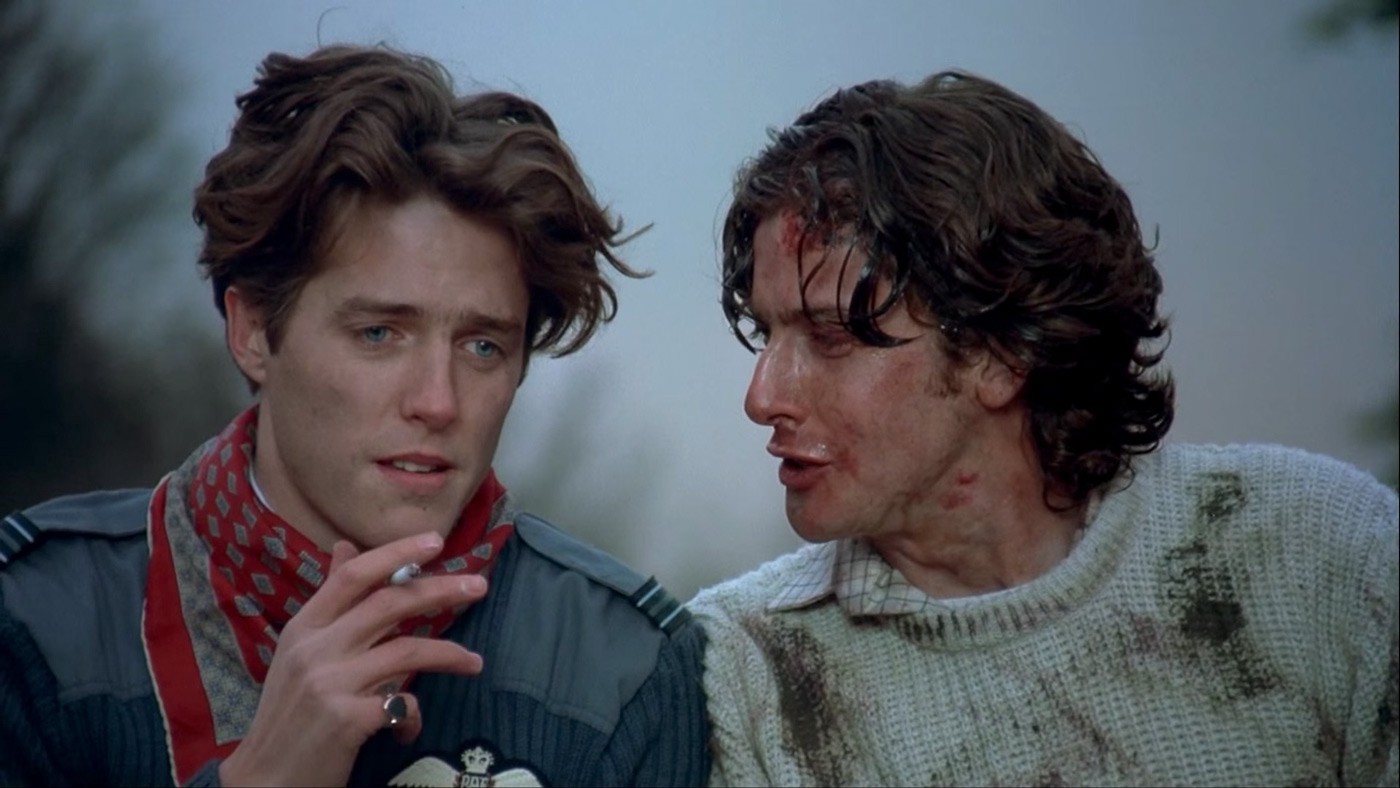
Decades before becoming the Twelfth Doctor in Doctor Who, Capaldi was digging around Derbyshire as Angus Flint.
He's arguably the closest thing the movie has to a conventional hero.
Angus is intelligent, curious and increasingly aware that the archaeological discovery beneath the Trent farmhouse may be connected to something considerably older and more dangerous.
Capaldi also gets involved in one of the film's most memorable confrontations.
It involves Lady Sylvia.
A mongoose.
And bagpipes.
If you've never seen the film, we're not going to explain that any further.
Some things deserve to be experienced.
BRAM STOKER
Yes, It's From the Author of Dracula
But Stoker continued writing supernatural fiction long after publishing his vampire masterpiece in 1897.
The Lair of the White Worm was his final novel, first published in 1911, shortly before his death the following year.
Ken Russell's movie is very loosely inspired by it.
And "loosely" is doing some serious work there.
Russell takes the basic ingredients — an ancient serpent, English aristocracy, mysterious disappearances and Gothic horror — and runs enthusiastically in his own direction.
Anyone expecting a faithful literary adaptation should probably abandon that idea immediately.
This is Bram Stoker filtered through Ken Russell.
That changes things.
Considerably.
KEN RUSSELL
Nobody Else Could Have Made This Movie
Ken Russell wasn't particularly interested in restraint.
His career had already produced films including Women in Love, The Devils, Tommy and Altered States.
By the time he made The Lair of the White Worm, audiences should probably have known what they were getting into.
Russell takes what could have been a fairly conventional Gothic monster story and fills it with surreal imagery, religious symbolism, sexual humour and increasingly bizarre fantasy sequences.
One hallucination involving a crucifix is particularly unlikely to leave your memory anytime soon.
Russell wasn't trying to create polite British horror.
He wanted something provocative.
Something funny.
Something outrageous.
Mission accomplished.
VAMPIRE... SORT OF
So Why Does It Get Included With Vampire Movies?
This is where things get interesting.
The Lair of the White Worm isn't technically a conventional vampire movie.
Lady Sylvia isn't Dracula.
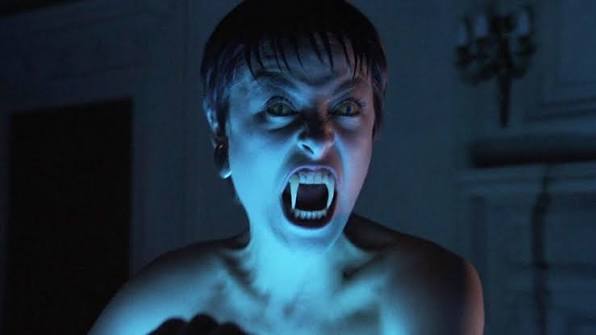
She's associated with snakes rather than bats, and the mythology revolves around an ancient serpent god rather than traditional vampirism.
But just look at her.
The fangs.
The bites.
The seduction of victims.
The supernatural immortality.
The predatory behaviour.
The film borrows heavily from vampire imagery while combining it with snake mythology and British folk horror.
Calling Lady Sylvia a vampire isn't entirely accurate.
Calling her completely unrelated to vampires would be equally misleading.
She's basically what might happen if a vampire and a cobra had a particularly dangerous night out.
THE D'AMPTON WORM
An Old English Legend Gets the Ken Russell Treatment
One of the cleverer aspects of the film is its use of British folklore.
The fictional D'Ampton Worm is clearly inspired by the legends of enormous worms and dragons found throughout England.
The word "worm" didn't always mean the harmless little thing you find in the garden.
In old British legends, a worm could be an enormous serpent or dragon-like creature.
Stories such as the Lambton Worm became part of local folklore, telling of huge creatures terrorising communities until eventually confronted by a hero.
Russell takes that tradition and asks a simple question:
What if the legend wasn't actually a legend?
And what if the thing everyone thought had been killed was still down there?
Waiting.
ONLY IN THE 80s
Somehow This Movie Makes Perfect Sense for 1988
There's something wonderfully 1980s about the fact that The Lair of the White Worm exists at all.
Imagine pitching it today.
"It's a comedy horror based loosely on Bram Stoker. Hugh Grant plays an aristocrat. Peter Capaldi is a Scottish archaeologist. Amanda Donohoe is an immortal snake priestess with enormous fangs, and there's an ancient giant worm living beneath Derbyshire."
Someone would immediately ask about franchise potential.
Ken Russell simply made the bloody thing.
And we're very glad he did.
The practical effects, surreal optical sequences and unapologetically strange tone give the film a personality that's impossible to manufacture.
It looks weird because it is weird.
Proudly so.
CULT CLASSIC
Why The Lair of the White Worm Refuses to Disappear
This wasn't a film destined to become a mainstream horror blockbuster.
It was far too strange for that.
But strange films have a habit of finding their people.
Over the decades, The Lair of the White Worm has developed exactly the kind of cult reputation you'd expect.
Some discover it because of Ken Russell.
Others arrive because they're exploring Bram Stoker adaptations.
Plenty probably find it because they hear there's an early movie starring both Hugh Grant and Peter Capaldi.
Whatever brings you here, it's Amanda Donohoe you're likely to remember afterwards.
Lady Sylvia Marsh belongs in the great collection of wonderfully excessive 1980s horror villains.
WHY WE STILL LOVE IT
They Really Don't Make Them Like This Anymore
We say that about plenty of old movies.
Here, it might actually be true.
The Lair of the White Worm feels like the product of a filmmaking era where directors could still make genuinely peculiar genre movies without sanding off all the rough edges.
It isn't perfectly paced.
Some of the effects have inevitably aged.
The tone jumps all over the place.
And there will almost certainly be moments where you wonder what on earth you're watching.
But that's the fun.
There's nothing anonymous about it.
Within five minutes of watching The Lair of the White Worm, you know you're watching The Lair of the White Worm.
You couldn't mistake it for anything else.
MOVIES IN THE 80s VERDICT
Is The Lair of the White Worm Still Worth Watching?
Absolutely.
But perhaps not with your grandmother.
Unless your grandmother happens to be a massive Ken Russell fan, in which case she's probably already seen it.
This is British 80s horror at its strangest: funny, provocative, Gothic, ridiculous and completely committed to its own insanity.
Hugh Grant and Peter Capaldi provide an additional reason to revisit it today, particularly because both were years away from the roles that would make them internationally recognisable.
But Amanda Donohoe walks away with the film.
Her Lady Sylvia is seductive, terrifying, hilarious and impossible to forget.
The Lair of the White Worm will never have the mainstream recognition of The Lost Boys or Fright Night.
It probably shouldn't.
Its weirdness is exactly what makes it special.
Because sometimes you don't want polished horror.
Sometimes you want Hugh Grant fighting an ancient snake cult while Peter Capaldi weaponises a set of bagpipes.
And thankfully, the 1980s gave us a movie for precisely that occasion.
Bonkers, British and gloriously bizarre — The Lair of the White Worm still has one hell of a bite.
Featured in
Explore more about The Lair of the White Worm
Share this movie
Keep watching
More movies from the 80s
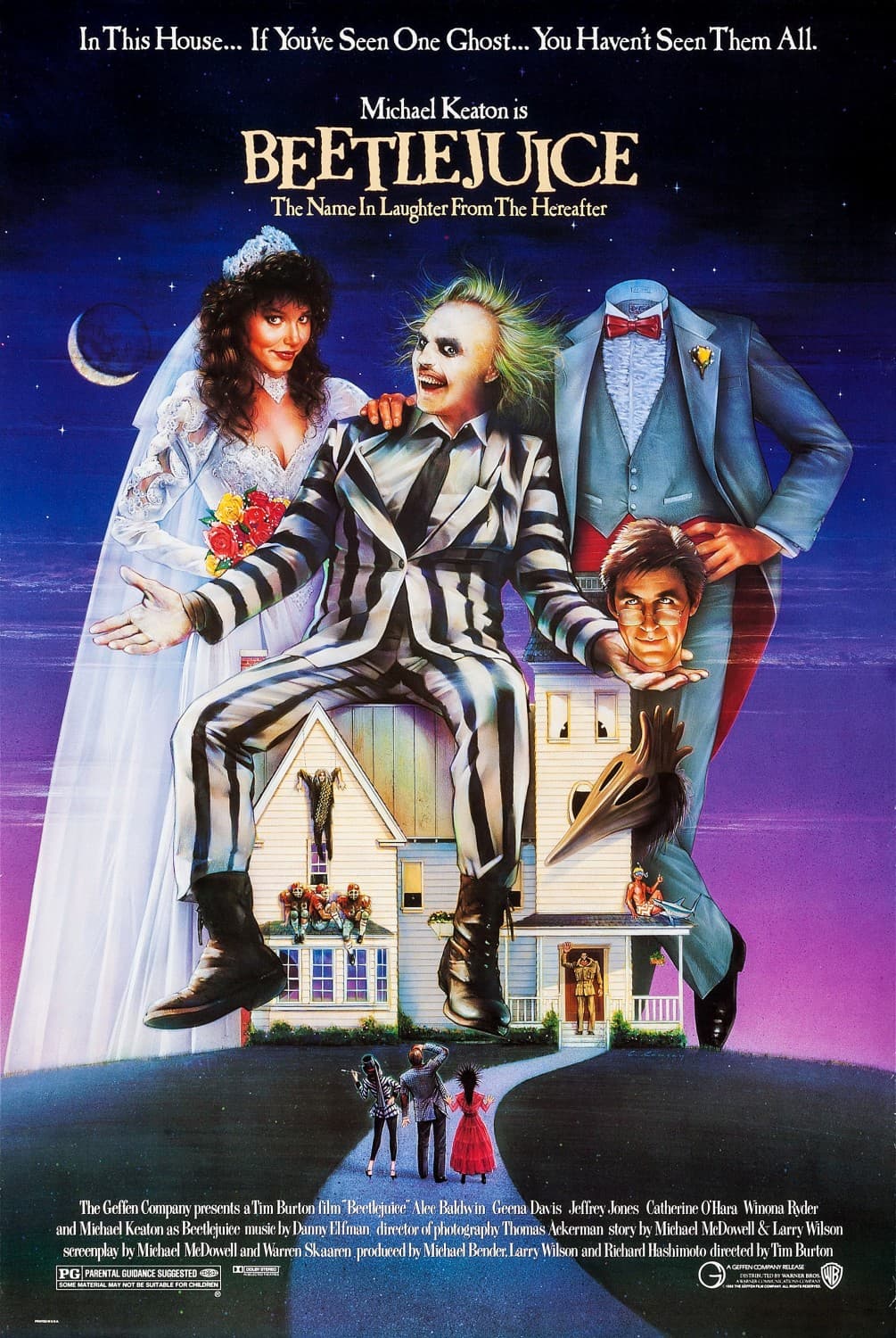
1988
Beetlejuice
A haunted house, a rules-bound afterlife and one gloriously unhelpful bio‑exorcist.
Read our take →
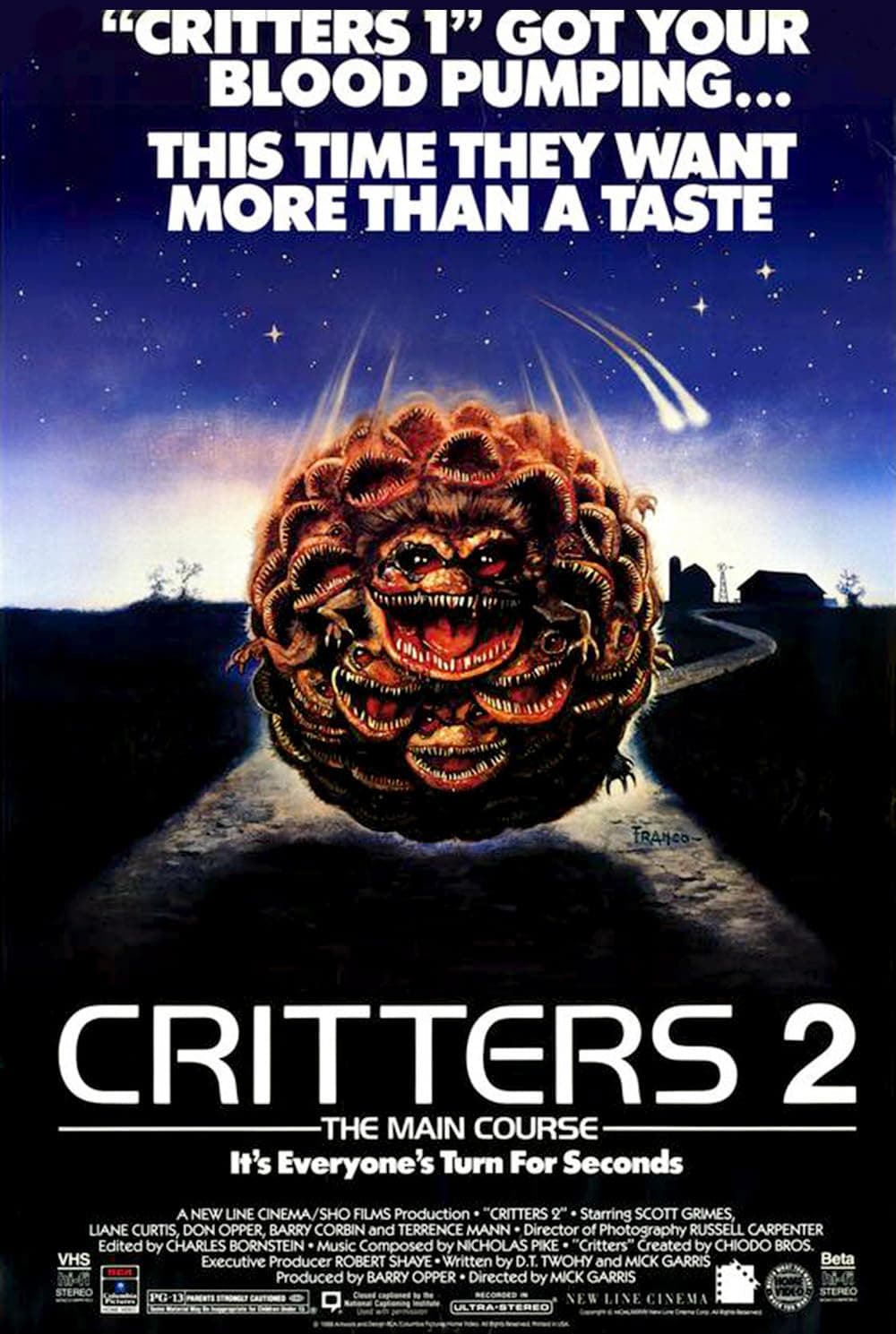
1988
Critters 2: The Main Course
Critters 2: The Main Course: fear and mortality, and why this 1988 movie still matters.
Read our take →
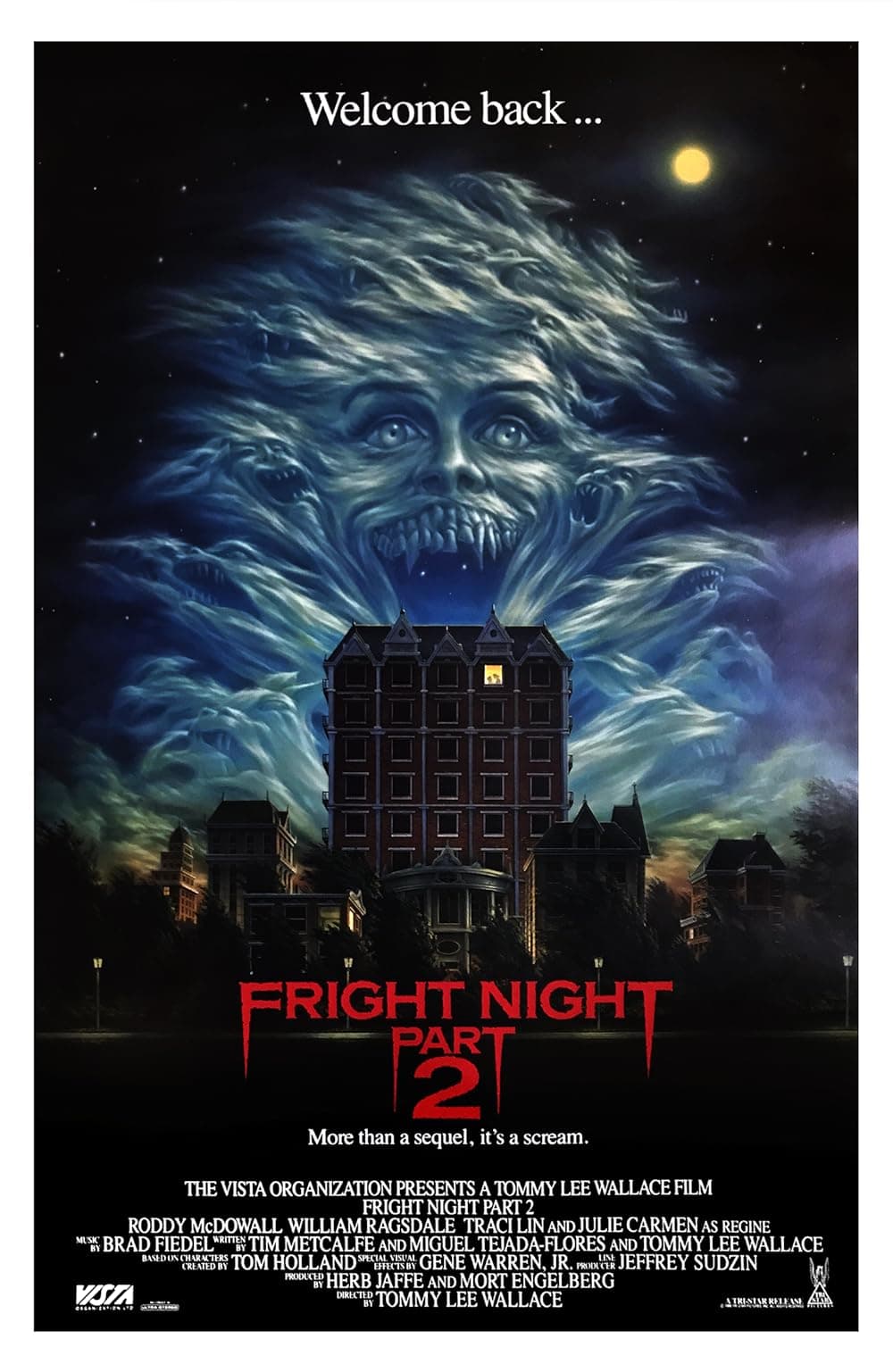
1988
Fright Night Part 2
Fright Night Part 2: friendship and fear, and why this 1988 movie still matters.
Read our take →