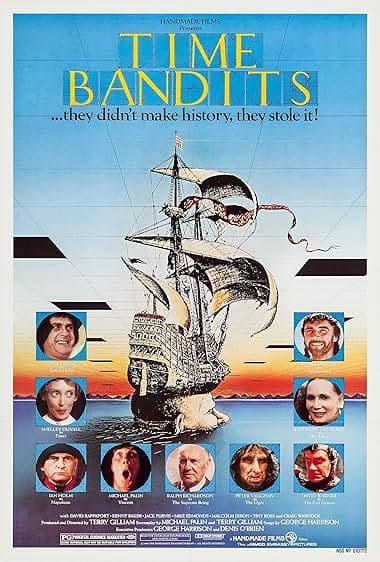
The setup
Terry Gilliam's Time Bandits still arrives like a half-remembered dream: chaotic, funny and slightly alarming. It's a family-sized adventure stitched together from historical scraps, a child's hunger for recognition, and Gilliam's delight in poking authority in the eye.
THE MOVIE
Kevin is still the reason this movie works
The moment Time Bandits begins, a small, history-obsessed boy named Kevin is yanked out of his bedroom life by six dwarfs who have nicked a map that pinpricks holes in the fabric of time. That simple, gleefully absurd inciting image — burglars in the night, a stolen map, a child who wants to be seen — does more heavy lifting than the plot often gets credit for.
This is Gilliam's kind of fairy tale: an adult auteur making a film that deliberately privileges a child's appetite for wonder. Kevin's wish for recognition and adventure is the motor that sends him off with the bandits into tableaux starring Robin Hood, Napoleon and King Agamemnon.
Gilliam underlines that point of view with the filmmaking itself. He shoots many scenes from low angles so the world is literally built around Kevin's height — a small visual trick that keeps the child's imagination central to the film's tone and keeps the audience travelling in his shoes.
THE SETUP
The idea that sets Time Bandits in motion
At its heart the film is obedient to one neat premise: a stolen map shows 'holes' in time and a gang of small-time thieves use it to hop into chosen historical and mythic moments. It’s a premise that allows the movie to be episodic by design — a string of tableaux linked together by travel and curiosity rather than a single linear quest.
Kevin joins the bandits because he isn't being noticed at home; his fascination with history gives him a reason to leap from his bedroom into the bigger, stranger vignettes the map offers. That compact emotional logic — want recognition, leave home, go on adventures — keeps the episodic leaps feeling purposeful rather than random.
The map is the film's physical prop and structural anchor: every time-jump is located by it, and every new set-piece reframes the little gang’s luck against bigger forces. Once the dwarfs and Kevin have the map, forward motion comes from their choices and from the antagonists who want the map back.
Gilliam’s setup lets him trade in short, punchy episodes: comedy, satire and a touch of menace in each stop. The framework works because it’s easy to understand and because Kevin’s perspective ties those episodes into one child's ongoing daydream.
THE CHARACTER
Why Kevin matters
Kevin is the emotional compass of Time Bandits, not because he’s heroic but because he wants something very ordinary: to be noticed. Craig Warnock plays that part — the small, history-obsessed child who treats old battles and myths as possible stages for himself.
That hunger for recognition is a smart screen-move. It gives Kevin agency without turning him into an adult-style protagonist: he follows the bandits because they offer escape and an audience, not because he's on a grand mission. That makes the movie feel like a child’s private entertainment, not a conventional family film.
Kevin's parents occupy the background of that want. Their preoccupations — the adult distractions that the film satirises — help explain why Kevin is so ready to bolt when the map and bandits arrive.
So the movie's stakes stay small and human: a child trying to be more than wallpaper in his own home. Follow that and the rest of Gilliam’s spectacle becomes easier to forgive and enjoy.
UNDER THE SURFACE
Time Bandits has more on its mind than the plot suggests
On the surface it’s an episodic fantasy-adventure. Underneath, Gilliam is playing with a handful of ideas that keep the film from being mere pastiche. The first is childhood imagination and escapism: the story is filtered through a child's point of view and many of the film's choices reinforce that framing.
Second, there's a sharp, often comic satire of authority and technology. The film sets a capricious, almost whimsical creator figure against a mechanistic 'Evil Genius' — Gilliam enjoys the clash between the mythic and the bureaucratic, the human and the technocratic.
Third, the movie revises historical and mythic figures so they feel less like untouchable legends and more like characters in a child's game. Robin Hood, Napoleon and Agamemnon are there to be mocked, admired and reinterpreted, which keeps the film playful rather than reverential.
Finally, there’s a recurring poke at adult consumer distraction: Kevin’s parents are shown as absorbed by household gadgets, which helps explain why the child's fantasies become the film’s most honest reality.
THE FILMMAKING
How Time Bandits was put together
Gilliam wore a lot of hats on Time Bandits: co-writer, producer and director. One of his clearest choices was practical and visual — he often shot from low angles to keep Kevin central in the frame and to stage the world around a child’s scale. It’s a small directing decision that has outsized effects on how you read the whole film.
The film's look is the product of a collaborative crew: Peter Biziou handled principal cinematography, Julian Doyle edited, and Milly Burns built the production world. The variety of historical set-pieces leans heavily on production design to make each stop in time feel distinct.
Costumes and design were essential to selling the film's jumps between eras and to keeping a consistent tone: not too literal, not overly scholarly, but vivid enough to sell the joke and the wonder in each tableau.
Put together, those choices make Time Bandits feel handmade: a patchwork of miniature worlds stitched around one child's experience, which is precisely the film's personality.
PRACTICAL EFFECTS
The effects work that gives Time Bandits its physical personality
Time Bandits is very much a hands-on picture. The film uses in-camera techniques and handcrafted production design to make its historical and mythical set-pieces feel tactile. That physicality gives the movie an immediate, unpolished charm.
Casting choices were part of that practical approach. A group of little people performers — David Rappaport, Kenny Baker, Jack Purvis, Mike Edmonds, Malcolm Dixon and Tiny Ross — were an explicit production decision that shaped how the film was staged and filmed.
Those choices matter because they force the camera and the production to accommodate real bodies and real spaces rather than rely on trickery. The result is a texture to the world that you can almost feel beneath the spectacle.
It’s an old-fashioned method, and in Time Bandits it helps the comedy and the fantasy sit side by side without either overwhelming the other.
PURE 80S
Time Bandits could not belong to any other decade
Time Bandits arrived in 1981 at a moment when British independent cinema could take wild swings, partly thanks to HandMade Films — the company George Harrison helped back to get Monty Python-related projects made. That production context allowed Gilliam the freedom to make something odd and personal.
Gilliam later described Time Bandits as the opening entry in his informal 'Trilogy of Imagination' — a 1980s creative arc that includes Brazil and The Adventures of Baron Munchausen — so the film sits squarely within that decade’s ambitions in his work.
The film’s mix of family-friendly adventure and sly adult references also felt of its moment: it was willing to serve two audiences at once, sliding from silly tableaux to sharper satirical notes without collapsing into either one.
All of which helps explain why Time Bandits reads like an 80s movie in the best sense: a project whose scale and tone were possible because of who financed it and where Gilliam was artistically at the time.
WATCHING IT NOW
What has aged — and what hasn't
If you watch Time Bandits today it’s clear curators and fans still find value in its physical design: director-supervised restorations (a Criterion 2K and a later 4K edition) show people care enough to preserve its handcrafted look. Those restorations keep the film available for new audiences to discover its textures.
The movie’s roughly two-hour running time still gives Gilliam space to breathe between set-pieces; what sometimes felt episodic in contemporary reviews is now part of the film's rhythm — a string of curiosities assembled around Kevin's viewpoint.
Some elements will surprise modern viewers: the mixture of satire and slapstick, sudden tonal shifts and the bluntness of certain jokes. But the film’s appetite — the willingness to risk odd juxtapositions in favour of invention — remains lively.
So Time Bandits ages like a well-thumbed storybook: its physical pages are worn but the tales inside still spark if you’re the sort of viewer who likes to be led by a child into strange rooms.
THE LEGACY
Why Time Bandits still matters
There are practical signs that Time Bandits keeps turning up on people’s radar: George Harrison’s HandMade Films financed the picture and his song 'Dream Away' closes the film, while significant home-video restorations (Criterion’s 2K and a later director-supervised 4K) have kept it in circulation.
The film is also regularly discussed as the opening entry in Gilliam's self-described 'Trilogy of Imagination', so it has a career-place in his filmography that invites reappraisal and comparison with his later work.
On a looser cultural note, the film’s map-of-time conceit has been pointed to by creators in other media as inspirational for their own mechanics, which suggests Time Bandits' ideas have migrated into other imaginative projects.
Even a television reimagining developed years later shows the story continues to resonate enough for new versions to be considered — another sign the film’s mix of childlike wonder and curiosity about history keeps attracting attention.
THE VERDICT
Does Time Bandits still hold up?
Yes—if you meet it on its own terms. Time Bandits is not slick modern blockbuster storytelling; it’s a stitched-together adventure that uses episodic set-pieces and a single child’s point of view to make sense of its eccentricities. That structure can feel uneven, but it’s also the source of the film’s charm.
Kevin is the reason to care: his simple, recognisable wish to be noticed gives the film an emotional thread through its travels and its jokes. The map and the bandits’ thefts supply the mechanics; the tension with the 'Evil Genius' and the Supreme Being gives those mechanics some stakes.
Contemporary critics singled out how certain guest parts were used, and that critique still holds — the film sometimes splashes big names into short beats — but the result is an ensemble collage rather than a star parade, and that collage is precisely the point.
So should you watch it now? If you enjoy movies that privilege imagination over tidy logic, and if you like being led by a child through weird rooms, Time Bandits is still worth your time. It’s a small, mischievous map to follow — and Kevin remains worth following.
Share this movie
Keep watching
More movies from the 80s
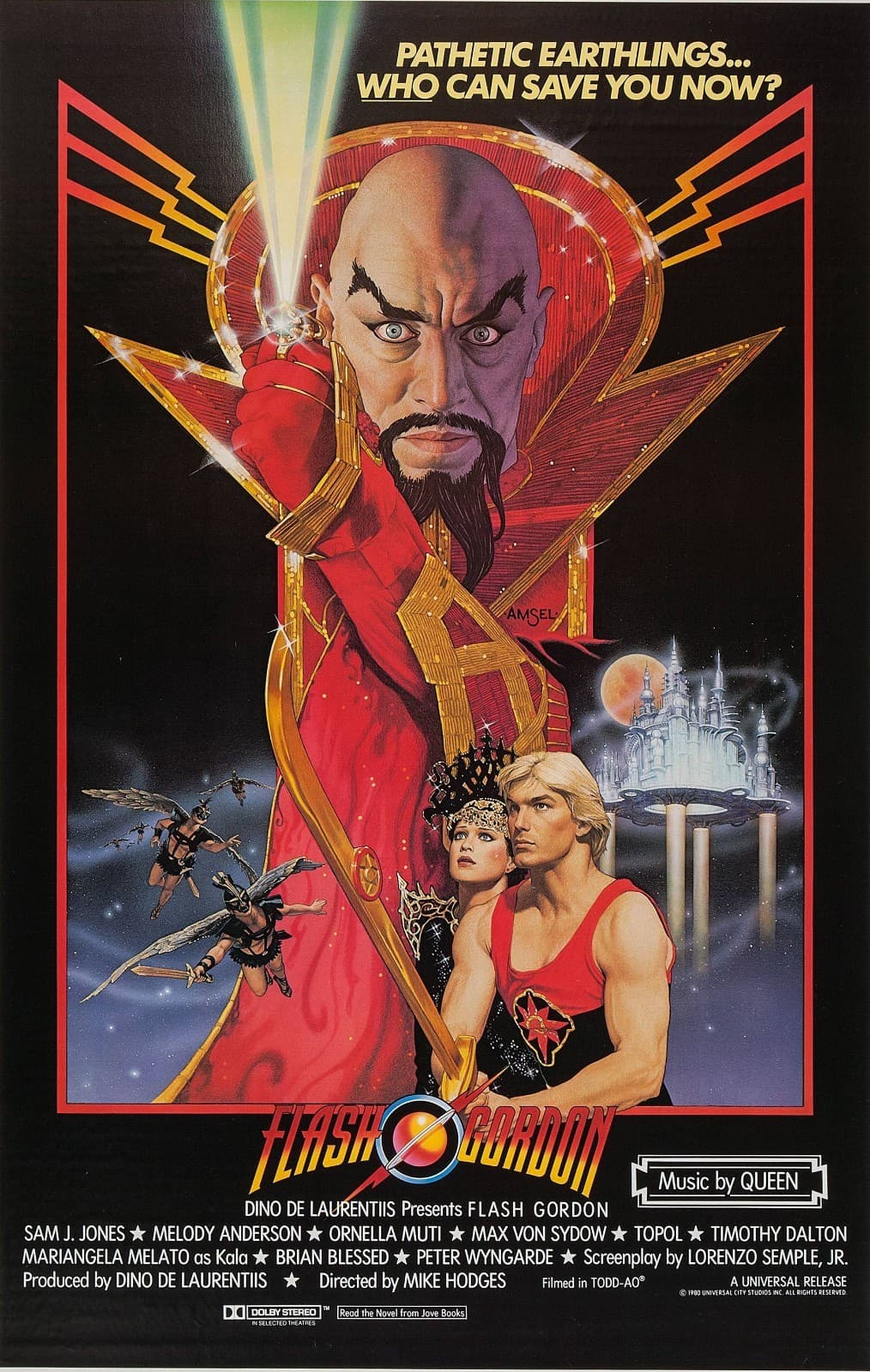
1980
Flash Gordon
Brash heroics, operatic spectacle and a Queen soundtrack — Flash Gordon wears its pulp heart on its sleeve.
Read our take →
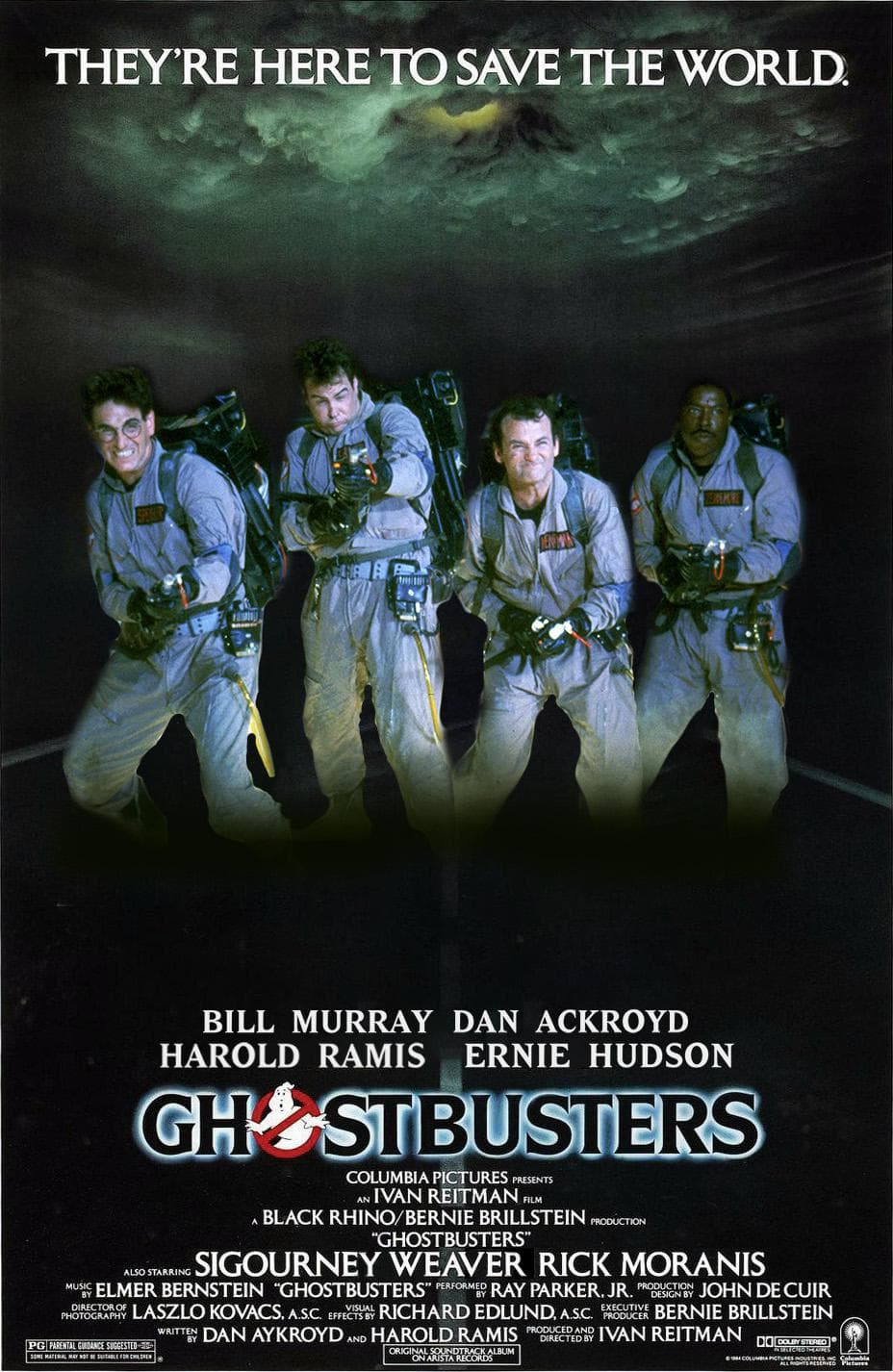
1984
Ghostbusters
A ragged band of scientists, a sardonic frontman and a city that refuses to behave — Ghostbusters still sells the joke.
Read our take →
1985
Explorers
Explorers: our relationship with technology and family, and why this 1985 movie still matters.
Read our take →