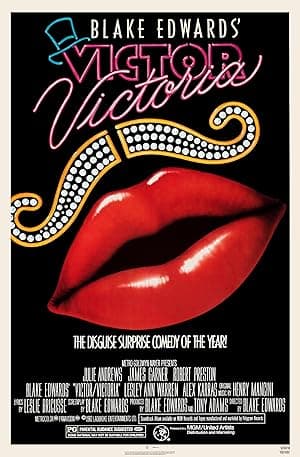
Victor/Victoria
A clever musical about disguise, showbiz and the friendships that make it bearable.
The setup
Victor/Victoria is the kind of film you remember by a single, slippery idea: a woman who becomes a man on stage, and then has to live with what that choice unleashes. Blake Edwards dresses that notion up as a glossy 1930s Paris musical, and the whole movie hangs on the fact that Victoria Grant can be both survival plan and spectacle.
THE MOVIE
Victoria Grant / Count Victor Grazinski is still the reason this movie works
Start with a simple truth: Victor/Victoria is a movie built around a single, deliciously complicated conceit. Set in Paris in the winter of 1934, it follows Victoria Grant, a singer who can’t find work as an opera soprano and needs a way to use her trained voice without starving.
Her lifeline comes in the form of Carroll 'Toddy' Todd, a down-at-heels cabaret performer who cuts her hair and invents a daring stage persona: Victoria will pretend to be a Polish man who performs as a female impersonator — Count Victor Grazinski. It’s an outrageous theatrical loop, and the film knows it; the farce is baked into the premise.
That setup matters because Victoria’s choice is practical as much as performative. She takes Toddy’s plan to survive and to sing. Blake Edwards dresses the idea in music, comic complications and shows that use costume and spectacle as plot devices — and Julie Andrews, playing Victoria, is the pivot around which it all turns.
THE SETUP
The idea that sets Victor/Victoria in motion
The engine of the film is practical and improbable in equal measure: a struggling singer, a scheming cabaret man and a stage trick that becomes a public sensation. Put plainly, Victoria’s inability to find work as an opera soprano pushes her into an elaborate performance that promises a paycheck.
Toddy’s intervention — cutting Victoria’s hair and pitching her as Count Victor Grazinski, a Polish male female-impersonator — gives the story its ridiculous, theatrical spine. From that moment, the plot delights in its own mechanics: costumes, nightclub numbers and staged reveals create both opportunity and peril.
Complications arrive predictably and entertainingly. When Chicago nightclub owner King Marchand takes an interest in 'Victoria', the deception ceases to be private and becomes a romantic problem as well as a professional one. The set-up works because the stakes are both intimate (food, shelter, a chance to sing) and public (fame, love, exposure).
THE CHARACTER
Why Victoria Grant / Count Victor Grazinski matters
Victoria is memorable because she is two things at once: a practical survivor and a carefully maintained illusion. Julie Andrews plays the role, but the character’s currency comes from the choices she makes — accepting a risky persona as a way to keep singing and to keep going.
Those choices ripple through the story. Norma Cassady, a rival performer and the girlfriend of King Marchand, heightens the danger with jealousy and scheming; Victoria isn’t merely hiding for art’s sake, she’s navigating real enemies in a competitive nightclub world.
And then there’s Toddy. His relationship with Victoria is part mentorship, part friendship; he’s the professional who opens a door and the friend who becomes chosen family. That mix — survival, performance and friendship — is what keeps the character interesting long after the initial joke of the disguise has landed.
THE PERFORMANCE
Why Julie Andrews's performance matters
There’s concrete evidence that the performances were notable in their day: the film earned Academy Award acting nominations for Julie Andrews (Best Actress), Robert Preston and Lesley Ann Warren in the supporting categories.
Contemporary reviewers singled out the principal performances. Critics such as Vincent Canby and Roger Ebert praised Andrews specifically and flagged the strong supporting work alongside her — a sign that the film’s central trick was carried not just by script and design but by its cast.
Put simply: the movie’s premise asks a lot from its leads, and the awards and the contemporary notices show those actors did enough to make the conceit believable and watchable for audiences at the time.
UNDER THE SURFACE
Victor/Victoria has more on its mind than the plot suggests
On the surface it’s a rom-com musical about a clever stage ruse. Underneath, it’s asking questions about gender performance and how sex roles are, to borrow the film’s language, put on for an audience.
Identity and deception aren’t treated as abstract puzzles but as lived problems: a public persona can be a lifeline and a trap at once. The film keeps returning to the moment when private truth and public act collide.
There’s also a strong thread about friendship and chosen family. Toddy isn’t merely an instigator; he’s the person who offers Victoria entry into a community. That bond matters as much as the romantic thread with King Marchand.
And finally, show business itself—costumes, numbers and spectacle—acts as both setting and theme. The nightclub is where identities are tested, sold and sometimes dismantled; spectacle drives the plot as much as desire does.
THE FILMMAKING
How Victor/Victoria was put together
If Victor/Victoria looks and feels like a constructed fantasy of 1930s Paris, that’s deliberate. Production design went big: the crew built a 110-foot-wide Paris street across multiple sound stages so the film could stage its exterior action and keep the world under the director’s control.
That controlled studio environment sits alongside more technical craft: the film was shot in Panavision with cinematography by Dick Bush and released in Metrocolor, with selected Dolby Stereo sound in theatres. Those are the technical choices that give the musical numbers their scale.
Costumes also play a structural role. Patricia Norris led costume design, and the clothes are not merely pretty; they’re the tools the story uses to change identity and to sell every nightclub transformation.
PRACTICAL EFFECTS
The effects work that gives Victor/Victoria its physical personality
This is a movie that relies on practical, tactile solutions. Production constructed extensive period sets on Pinewood sound stages, including a three-storey, 110-foot-wide Paris street built to accommodate vehicles and exterior action.
Closer to the actors, makeup, wigs and wardrobe are primary practical tools. Those elements do the heavy lifting when it comes to selling Victoria’s male-on-stage persona and the various nightclub transformations the plot depends on.
In short: much of the film’s amazement comes from things you can touch — fabric, hair, set — rather than illusions. That practical approach is what lets the story keep its theatrical logic intact.
PURE 80S
Victor/Victoria could not belong to any other decade
Released in March 1982, Victor/Victoria arrived at a moment when Hollywood was willing to put gender-disguise ideas in front of mainstream audiences. That timing meant the film entered early 1980s conversations about gender in popular cinema rather than staying hidden in arthouse corners.
It’s also a distinctly Blake Edwards picture of the period: a glossy studio musical packaged for Metro-Goldwyn-Mayer, fusing old-school showbiz mechanics with contemporary production values. The result is a film that looks backwards for its setting but forwards for the era that made it.
Finally, the film’s production timing — principal photography at Pinewood in 1981 and a March 1982 opening — places it squarely within the industry calendar of the early 80s, when studio musicals and star-driven comedies still had room to breathe between blockbusters.
THE LEGACY
Why Victor/Victoria still matters
On the awards front, the film left a mark: Henry Mancini and Leslie Bricusse won the 1983 Academy Award for Music (Original Song Score and Its Adaptation), and the picture garnered seven Academy Award nominations in total. That recognition confirms the production’s technical and musical ambitions.
Its afterlife extended beyond the screen: Blake Edwards’ screenplay and the film’s production led to a stage musical adaptation that premiered on Broadway in 1995, with Julie Andrews reprising the role of Victoria. That move from film to theatre underlines how fundamentally the story belongs to the stage-world it portrays.
Victor/Victoria has also kept a place in programming and retrospectives, and it appears on the American Film Institute’s list of 100 Funniest American Movies — a reminder that, for many viewers, its blend of comedy and music still registers.
THE VERDICT
Does Victor/Victoria still hold up?
Yes — with some sensible caveats. The film’s central contraption (a woman pretending to be a man who performs as a woman) remains a compelling machine for comedy and feeling because it ties a public spectacle to private stakes. When King Marchand becomes attracted to 'Victoria', the deception turns romantic rather than merely comic, and that friction keeps the film honest.
The movie is happiest when it leans into theatre: costumes, nightclub numbers and staged reveals are not ornamentation but the logic of the story. That theatrical DNA is consistent from the script to the production design and is one reason the film was recognised for its music and craft.
It also holds up because of the relationships around Victoria. Toddy’s role as mentor, manager and friend gives the story emotional ballast; Norma Cassady’s jealousy supplies the necessary external pressure. Those human elements stop the premise from turning into an endless one-joke parable.
So should you watch it? If you enjoy musicals that treat gender as a plot engine rather than a mere punchline, and if you like studio-scale theatricality, Victor/Victoria is worth revisiting. It’s a film that remembers it’s a show, and it asks, reasonably and sometimes cunningly, who gets to belong in the audience — and on the stage.
Share this movie
Keep watching
More movies from the 80s
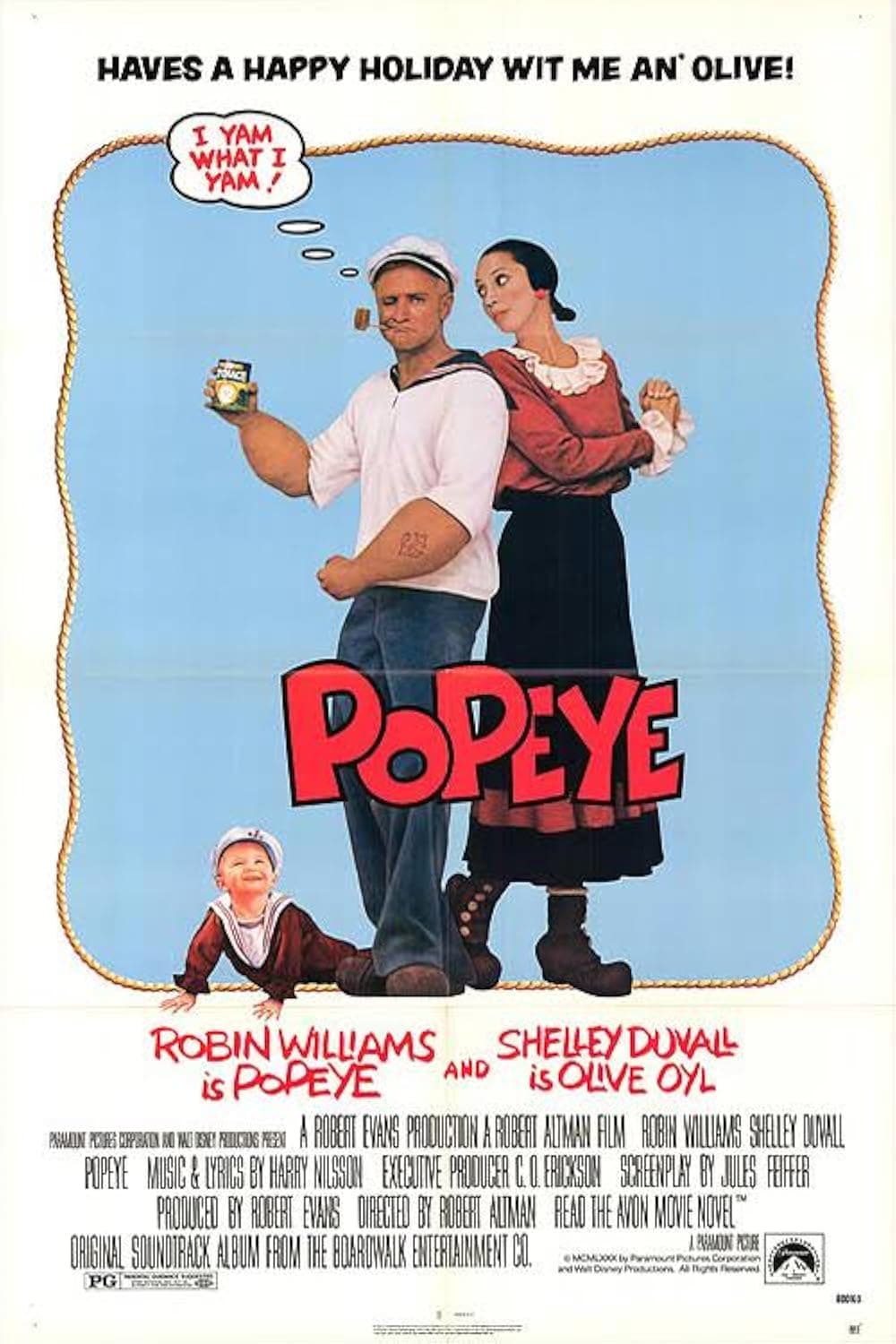
1980
Popeye
Popeye: family and parents protecting their children, and why this 1980 movie still matters.
Read our take →

1980
Xanadu
Xanadu: love and family, and why this 1980 movie still matters.
Read our take →
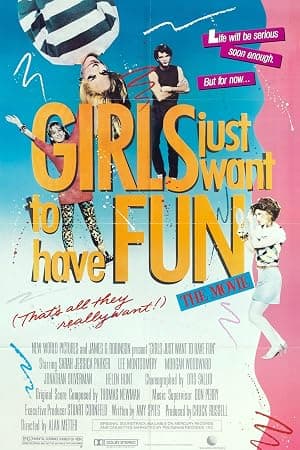
1985
Girls Just Want to Have Fun
Girls Just Want to Have Fun: family and friendship, and why this 1985 movie still matters.
Read our take →