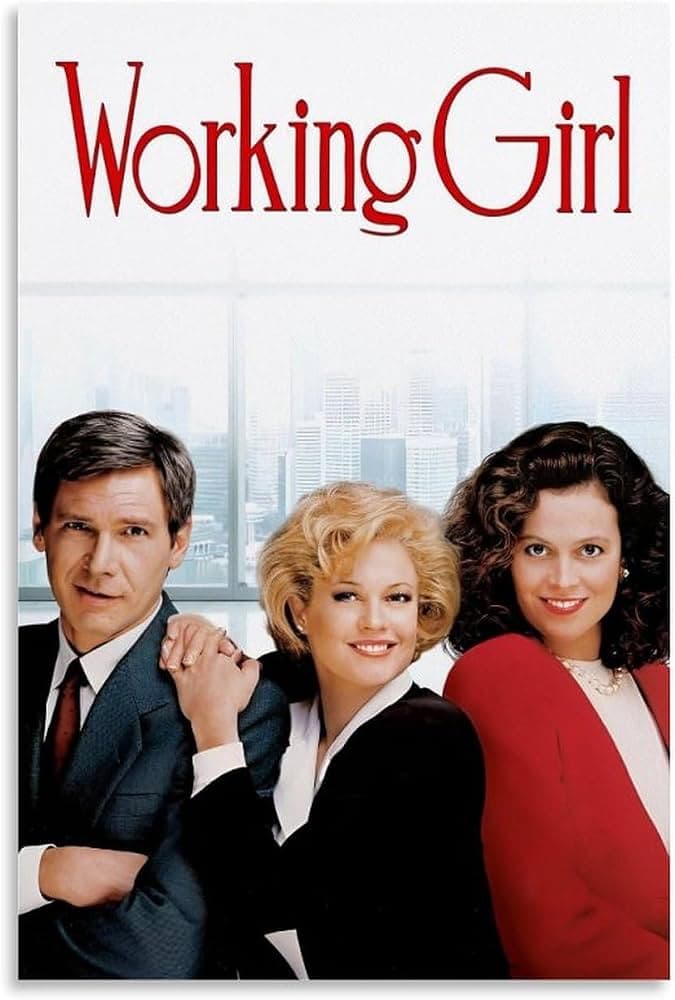
The setup
Working Girl is the sort of film that keeps turning up because it gives you a heroine who simply refuses to wait for permission. Mike Nichols directs a late-1980s workplace comedy-drama about Tess McGill — a Staten Island secretary and night-school student — who tries to turn street-smart know-how into a seat at the table. It’s a story about ambition, credit and class that still sparks a proper conversation about who gets to take credit for good ideas.
THE MOVIE
Tess McGill is still the reason this movie works
Working Girl hooks you by placing its energy in one person: Tess McGill, a Staten Island secretary who studies at night and wants more than the job she’s been given. That single, simple fact — a working-class woman trying to translate practical knowledge into professional advancement — is the engine of the film.
The plot’s opener is neat and blunt: when Tess’s immediate boss is suddenly out of the picture, she grabs the chance to present a mergers idea. That gamble sets up the messy, enjoyable argument the film keeps returning to: who owns an idea, who takes the credit, and what women have to do inside male-dominated offices to be noticed.
Mike Nichols steers the whole thing with the light, confident hand of a director comfortable mixing comedy and sympathy. Released in 1988 and running a little over 100 minutes, the film keeps returning — visually and narratively — to Tess’s commute and movement between Staten Island and Manhattan, which makes her ambition feel both practical and urgent.
THE SETUP
The idea that sets Working Girl in motion
You don’t need a blow-by-blow to get the premise: an opportunity opens when Tess’s immediate boss is incapacitated, and she uses it to push a mergers plan. That moment is the film’s pivot — it turns everyday office work into a high-stakes test of whose voice will be heard.
A clever story mechanism the film relies on is Tess presenting herself as an executive collaborator to prove the idea’s value. It’s a compact, risky manoeuvre that creates the plot’s central tension without turning into a long procedural; the question is less ‘what happens next’ and more ‘who gets the credit?’
Visually and narratively the movie brackets Tess’s transformation with a commute — the opening and final sequences both use the Staten Island ferry — which gives the set-up a tidy bookend. The premise works because the stakes are recognisable: ambition, authorship, and the rules that decide who counts as a professional.
THE CHARACTER
Why Tess McGill matters
Tess matters because she’s not a walking symbol — she’s a person who carries the film’s arguments in her decisions. We meet someone driven by night classes and practical smarts, determined to turn real know-how into a career. That makes her immediately sympathetic and, importantly, believable as an engine of change.
Her personal life is never background noise. Friends like Cyn and a boyfriend, Mick Dugan, are written as real counterpoints to the corporate world Tess is trying to enter; they remind the film she hasn’t been born into privilege and that social mobility involves trade-offs. Those relationships stop Tess becoming a caricature of upward mobility.
Casting aside any talk of trophy ambition, Tess’s determination reads as craft: she wants her work to count. That focus — wanting authorship, not charity — is what keeps the story honest about ambition rather than turning it into wishful thinking.
And it’s worth noting that the production treated the roles seriously: the leads prepared by researching brokerage firms, which helps the film land its everyday details and keep Tess’s struggle feeling rooted in a recognisable workplace.
THE PERFORMANCE
Why Melanie Griffith's performance matters
Contemporary reviewers and later retrospectives repeatedly point to Melanie Griffith as the emotional centre of the film — the thing that helps everything else feel connected. That recognition matters because the picture asks you to care about someone making compromises and bold moves in equal measure.
Putting the performance at the film’s heart gives the movie a human pulse: the plot’s clever contrivances work only if you can believe the person inside them. Griffith’s role is what the award conversation noticed most clearly at the time.
UNDER THE SURFACE
Working Girl has more on its mind than the plot suggests
Under the rom-com surface there’s a proper stack of workplace concerns. The film is about ambition — not as a slogan, but as the daily, nitty-gritty practice of persuading people that your idea matters. That’s where the ethical knot about authorship forms: who gets credit when an assistant’s work is folded into an executive’s résumé?
Gender runs through the film, not as headline rhetoric but as the practical way barriers appear: Tess must manoeuvre around assumptions about secretaries, expertise and who belongs in boardrooms. That’s linked to class mobility — Tess carries an identifiable background into spaces that reward polish and pedigree.
Finally, the movie is as much about reinvention as it is about promotion. Tess isn’t trying to erase where she comes from; she’s trying to translate it into professional value. That tension — identity versus adaptation — keeps the story from becoming a straightforward Cinderella tale.
THE FILMMAKING
How Working Girl was put together
Working Girl is the kind of commercial movie that benefits from a crew who know their trade. The film’s credits — including a high-profile cinematographer, editor, costume designer and production designer — are often mentioned when people praise its look and workplace detail.
That attention to craft matters because the film trades on believable environments: boardrooms that feel lived-in, costumes that help mark a character’s professional effort, and editing that keeps the tone brisk. Those choices let the performances and the plot breathe without over-clarifying every emotion.
Mike Nichols’s presence as director also helps the film balance comedy and seriousness: it never tips fully into satire or glossy fantasy. Instead it keeps a human scale, so the small ethical questions — who takes credit, who’s promoted — feel meaningful rather than schematic.
All those crew pieces add up to a picture that looks and moves like a studio movie with something to say about ordinary working life.
PURE 80S
Working Girl could not belong to any other decade
The film wears its 1988 moment where you can see it: it’s set in late-1980s corporate New York and engages directly with mergers-and-acquisitions culture and conspicuous workplace ambition. That era’s business obsessions give the story its stakes — the deals are big, the language is about leverage, and professional visibility matters.
Because the film fixes itself in that particular corporate moment, Tess’s attempts to be heard feel like a response to an environment that rewards swagger and connections as much as competence. The decade isn’t just decoration; it’s the condition that makes Tess’s gambit dramatic.
THE LEGACY
Why Working Girl still matters
The film left a clear musical footprint: Carly Simon’s 'Let the River Run', written for the picture, won the Academy Award for Best Original Song and also earned Golden Globe and Grammy recognition. That tune gave the film a high-profile cultural heartbeat beyond the story itself.
Working Girl was part of the late-1980s awards conversation more broadly — it picked up multiple Academy Award nominations across picture, directing, acting and music categories. That recognition helped the movie stay visible beyond its initial run.
The story also reached television: a short-lived NBC series arrived in 1990, showing the producers felt the film’s premise had life beyond the cinema. And institutions noticed too — AFI later put the film on a list of inspiring films, which speaks to how its themes continued to find an audience.
All of which is to say: between the song, the awards attention, a TV offshoot and later recognitions, Working Girl has maintained a presence in conversations about films that mix workplace comedy with serious questions about credit and ambition.
THE VERDICT
Does Working Girl still hold up?
Yes — on its own terms. If you want a film about a working person who uses practical smarts and sheer nerve to try and be heard, Working Girl still delivers. Tess’s position as a Staten Island secretary and night-school student who seizes an opportunity when her boss is out of the way gives the story a clear, sympathetic drive.
The film’s central puzzle — Tess presenting herself as an executive collaborator to prove an idea’s worth — still feels like a clever dramatic gamble. It keeps the focus on authorship and recognition rather than turning ambition into vague feel-good moralising.
The movie also makes good use of place: New York locations, from ferry commutes to financial buildings, stage Tess’s movement between worlds and make her climb feel geographically real. That rooting in the city matters because the path to professional visibility in the film is a literal journey as much as a personal one.
Finally, the awards attention and the way Melanie Griffith’s turn was singled out at the time underline that the film wasn’t just a crowd-pleaser — it had something people thought worth noticing. If you’re after a crisp, character-led workplace picture about credit, class and the cost of trying to be seen, Working Girl remains worth watching.
Share this movie
Keep watching
More movies from the 80s

1988
Big
Big: our relationship with technology and friendship, and why this 1988 movie still matters.
Read our take →

1988
Bull Durham
Mentorship, rites of passage and a catcher called Crash — Bull Durham still teaches a lesson.
Read our take →
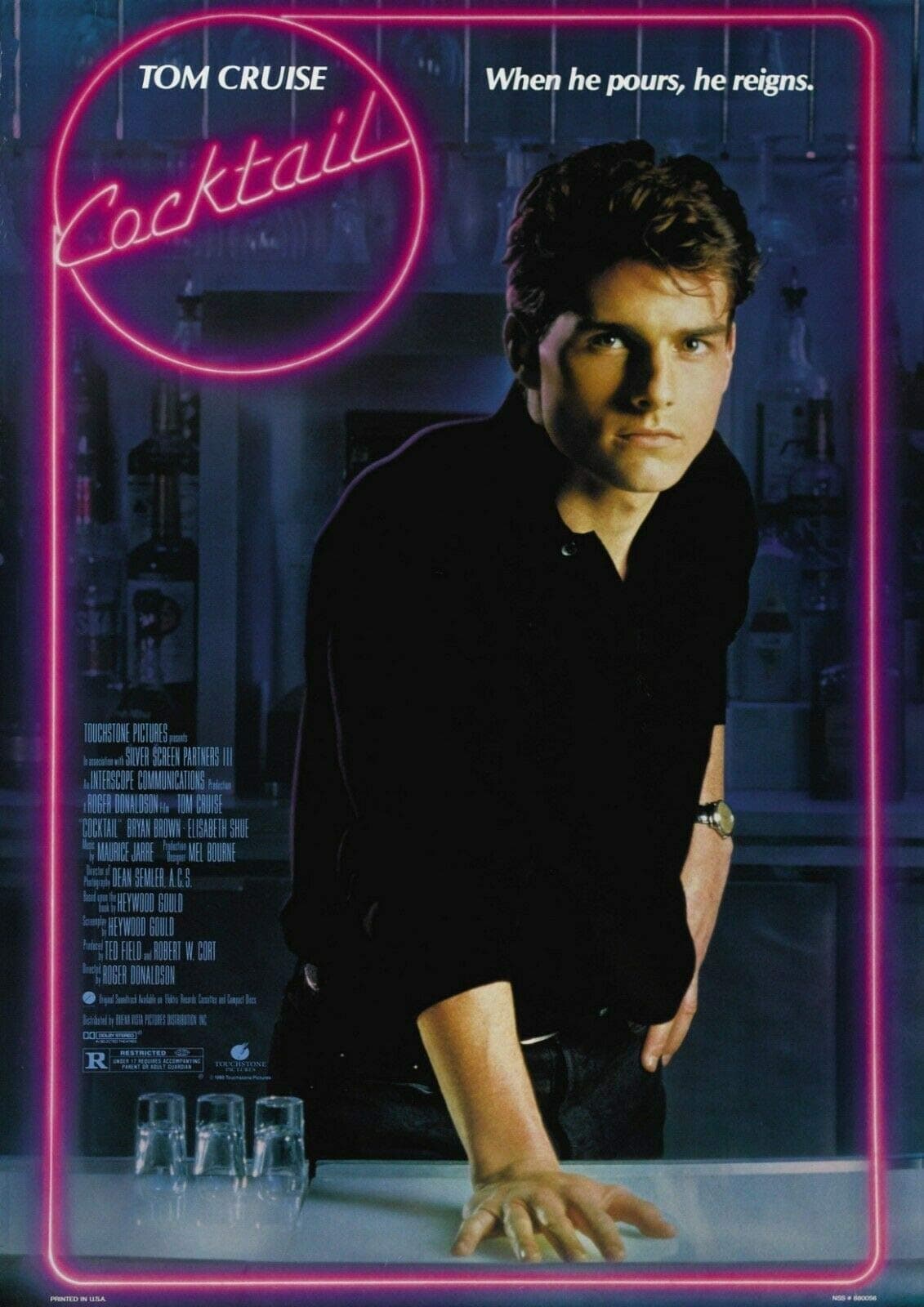
1988
Cocktail
Cocktail: family and greed, and why this 1988 movie still matters.
Read our take →