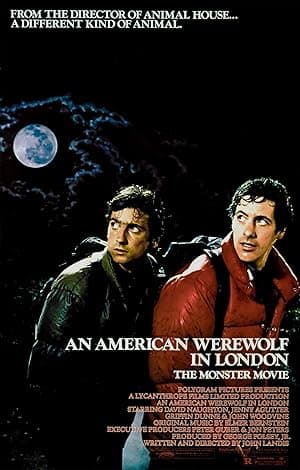
An American Werewolf in London
A ghost, a bite and a man trying not to become a monster — and somehow all three stay interesting.
The setup
An American Werewolf in London hooks by being oddly intimate for a movie about a man turning into a wolf. John Landis stages David Kessler’s slow collapse from tourist to something else so that the horror never feels abstract — it feels personal. That is why, even after a few decades, people keep coming back to it.
THE MOVIE
David Kessler is still the reason this movie works
An American Werewolf in London starts with two Americans on holiday and ends with one of them becoming the centre of a moral crisis. The attack on the moors leaves Jack dead and David infected, and that infection is the engine of everything that follows.
David wakes in a London hospital and the story immediately complicates itself: Jack returns as a supernatural visitation to tell David what he already suspects — a full moon is coming and he will change. Those visitations keep the plot honest; exposition arrives as eerie moral pressure rather than as a neat police report.
What keeps the film wired is David Kessler himself: presented as an outwardly ordinary American tourist, his injury and the way his body and mind begin to fracture make the film feel less like an effects showcase and more like a human story about loss of control and responsibility.
THE SETUP
The idea that sets An American Werewolf in London in motion
The film is built on a simple, elegant premise: two American backpackers are attacked on the Yorkshire moors, one dies, the other carries the bite. That straightforward turn — holidaying strangers thrown into a violent, unknowable event — sets a claustrophobic tone beneath the jokes.
Rather than unspooling through detective work, the story feeds us what we need via Jack’s ghostly returns. He supplies exposition, dark humour and a moral ultimatum: the threat is no longer hypothetical, and David is the living hinge between ordinary life and the terrible possibility of more victims.
That combination — an intimate victim-to-perpetrator trajectory plus a ghost who keeps nagging at conscience — lets the movie stay compact. It never becomes a sprawling mystery; it stays focused on one man’s collapse and the choices pressed upon him.
THE CHARACTER
Why David Kessler matters
David Kessler is not an archetypal horror hero. He’s an ordinary American tourist whose life is ripped open by one violent moment on the moors. That ordinariness matters: the story is about what happens when a normal person is forced into an uncanny state.
His vulnerability is what gives the film its weight. The plot is driven by David’s attempts to hold onto himself as his body and mind begin to change — his struggle is the movie’s forward motion, not a series of external set pieces.
And the human relationships around him sharpen that struggle. Alex Price, the nurse who cares for David after the attack, becomes his emotional anchor; she provides the film’s human answer to the nightmare, forcing questions of love, responsibility and whether someone slipping into monstrosity can or should be saved.
THE PERFORMANCE
Why David Naughton's performance matters
David Naughton plays David Kessler and his contribution to the film is preserved not just on-screen but in the conversations that followed. Cast audio-commentary and later interviews recorded for home-media releases include Naughton discussing the production and his role.
Those materials are telling because they let you hear the thinking behind choices: how the part was approached, how the transformation sequences were rehearsed and how the human beats were kept intact amid the effects. It’s useful context for anyone watching the film afresh.
UNDER THE SURFACE
An American Werewolf in London has more on its mind than the plot suggests
On the surface it’s a creature movie; underneath it’s obsessed with borders. The human/animal boundary — a body progressively seized by something not-quite-human — is the film’s core worry. Transformation is not merely spectacle here; it’s an invasion of identity.
Guilt and moral responsibility sit alongside that bodily horror. Jack’s ghost doesn’t only explain events; he presses David with an ethical demand: end the wolf’s bloodline. The film sets an agonising choice against the facts of what David has already become.
There’s also the outsider feeling running through it: Americans lost in Britain, culturally and geographically displaced. That foreignness amplifies the liminal tone — the movie’s characters live between places, between life and death, between day and the full-moon night.
Finally, liminality and haunting are everywhere: Jack’s returns, the blur between waking world and nightmare, and the constant sense that David occupies an in-between state that the film keeps interrogating rather than explaining away.
THE FILMMAKING
How An American Werewolf in London was put together
John Landis assembled a compact crew that kept the film focused. Cinematography credit goes to Robert Paynter and the film is edited by Malcolm Campbell — tidy, professional craftspeople who help the movie hold a brisk 97-minute shape.
That compact run-time and purposeful crew mean the film never lingers where it need not. Every sequence is economical: location work on the moors, compressed hospital scenes and night shoots in London are stitched together to keep the story moving toward its unavoidable moral and physical climax.
PRACTICAL EFFECTS
The effects work that gives An American Werewolf in London its physical personality
The transformation was achieved on-set with layered prosthetics rather than optical trickery. Rick Baker designed and executed the makeup and prosthetic effects, using life-casting, moulds, full-body appliances and staged, progressive pieces to chart the metamorphosis.
Crucially, the transformation is recorded as a sustained, single-character sequence on set rather than a series of quick cutaways. That decision makes the sequence feel like a continuous collapse — you watch one body change in front of you, step by step, which shapes how the scene reads emotionally.
Production records and later extras document the practical, hands-on process: life-casting the actor, fitting layered pieces and building the sequence in stages. Those practical methods are the engine behind the movie’s physical personality.
PURE 80S
An American Werewolf in London could not belong to any other decade
Released in 1981, the film arrived amid a short early-80s resurgence of interest in werewolves — it shared the year with other lycanthropy tales and helped bring the creature back into mainstream genre conversation.
Its arrival also coincided with an institutional shift: 1981 saw the Academy introduce a competitive Best Makeup category, and Rick Baker’s work on this film was central to that change. The movie’s practical craft thus mattered not only to fans but to the industry’s recognition of makeup effects.
In short, the film is a late-turn-of-the-decade creature piece: very much of its moment in how it brought elaborate prosthetic work and a lean, genre-savvy storytelling approach together in 1981.
THE LEGACY
Why An American Werewolf in London still matters
One concrete reason the movie endures is craft recognition: Rick Baker won the inaugural competitive Academy Award for Best Makeup for his work here, a milestone that anchored the film’s place in effects history.
The film’s afterlife is also documentary-heavy: restorations and high-definition reissues (including a 4K restoration and special editions) have kept the production story and the practical craft in circulation for new audiences and collectors.
Beyond awards and restorations, the film continues to appear in conversations about notable werewolf movies because of how it blends genre tones — the moral pressure of Jack’s return, David Kessler’s tragic arc and the theatrical transformation all make it a frequent reference point in discussions of makeup effects, genre mixing and John Landis’s career.
THE VERDICT
Does An American Werewolf in London still hold up?
Yes — for reasons that are clear from the film itself rather than from nostalgia. The story pins you to David Kessler’s experience: his gradual knowledge of what he has become, Jack’s persistent ghostly injunction and the moral impossibility that follows form a tight dramatic engine.
The movie balances location sequences and nightmarish interludes with a deliberately staged, prolonged transformation. That structural choice makes the central crisis feel inevitable and contained, rather than sprawling or unfocused.
And there is a practical, institutional reason to watch: the transformation sequence and the prosthetic craft were so important they helped prompt the Academy’s new makeup category and earned Rick Baker that first competitive Oscar. The film’s reputation for effects is not empty praise — it is anchored in what was actually achieved on set.
If you want a horror film that mixes black comedy with a serious ethical knot — a man who must reckon with what he might do and what others demand of him — this is still a sharp, carefully built example. It’s a movie you can enjoy as a genre piece and return to when you want to see how character and practical craft can push each other into something awkwardly brilliant.
Featured in
Explore more about An American Werewolf in London
Share this movie
Keep watching
More movies from the 80s
1981
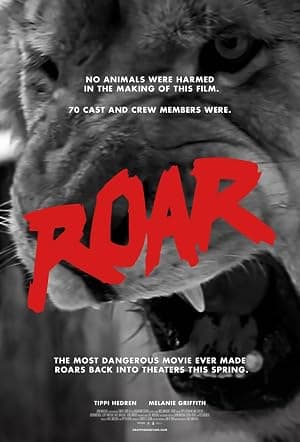
Roar
Roar: family and the safety of home, and why this 1981 movie still matters.
Read our take →
1982
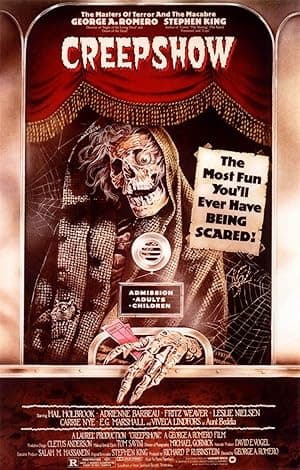
Creepshow
Five nasty little tales, a comic-book wrapper and one perfectly awkward professor.
Read our take →
1980
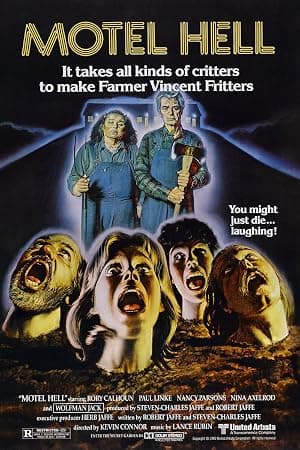
Motel Hell
Motel Hell: heroism and freedom, and why this 1980 movie still matters.
Read our take →