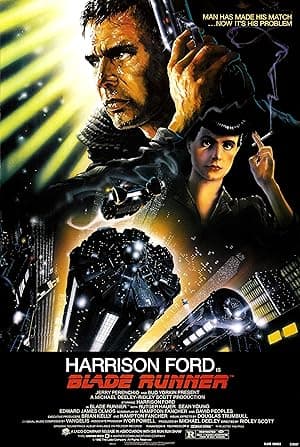
The setup
Blade Runner isn't just a future city with rain; it's a moral argument dressed as a thriller. Ridley Scott gave us Rick Deckard: a retired blade runner dragged back into work who finds the case mutating into something personal, and suddenly questions about life, memory and empathy feel urgent rather than abstract.
THE MOVIE
Rick Deckard is still the reason this movie works
Blade Runner begins as a classic assignment: Rick Deckard, a retired blade runner, is hauled back into a job that asks him to track down and 'retire' escaped Nexus‑6 replicants. Except the job doesn't stay mechanical for long.
Those replicants were engineered with a deliberately short lifespan, which gives their hunt for their maker a blunt, urgent motive — they are not scheming for power, they are asking for more time. That pressure reframes the film from a manhunt into a very human plea.
Deckard himself is not a hero who strides into purpose. He is weary and reluctant; his professional duty sits in tension with personal hesitation and, crucially, an emotional entanglement with Rachael, which complicates everything he thought his job meant. Ridley Scott directs this into a science‑fiction detective story that wants you thinking about empathy while you wait for the next twist.
THE SETUP
The idea that sets Blade Runner in motion
At heart, the film gives us a very tidy premise: a retired blade runner is called back to identify and 'retire' several Nexus‑6 replicants who have escaped to Earth. That simple instruction supplies the procedural engine — the interviews, the stakeouts, the tracking.
But the replicants aren't criminals motivated by greed; they are engineered beings with superior strength and intelligence who have been given an artificially limited span of life. Their journey is a pilgrimage to find the person who made them — not merely to kill or conquer, but to beg for longer.
Rachael complicates the setup. She is presented as an experimental replicant with implanted memories that make her believe she is human. Her uncertainty about who she is turns what could have been a clear‑cut assignment into a moral grey zone, because Deckard's targets now include someone capable of doubt and interior life.
So Blade Runner's opening bargain is clever: it borrows the scaffolding of a noir detective yarn and then quietly replaces the usual suspects with questions about identity, memory and whether manufactured life is worth the same considerations as organic life.
THE CHARACTER
Why Rick Deckard matters
Rick Deckard matters because he is the lens through which the film's questions become personal. He's not an abstract moral philosopher; he is a man whose job is to pull the trigger, and that tension — duty versus doubt — makes every choice feel freighted.
The set‑up places him in a particular bind. He's a former blade runner, reactivated by his superiors, and that enforced return to a job he left introduces a weary, reluctant note. You never quite watch someone eager to be the hero; you watch someone who would rather not be there, and that's grubby, interesting territory.
Deckard's relationship with Rachael tilts the story. She believes she's human because memories were implanted to make her think so, and that destabilisation of identity makes her more than a case file. Deckard's choices then touch not only law and order but the question of what humans owe to beings who feel.
Put bluntly: Deckard keeps the film honest. Without him the story might be a fable about artificial life. With him it's a messy, human conversation about responsibility, sorrow and whether empathy is something you can practice or simply discover at the last minute.
THE PERFORMANCE
Why Rutger Hauer's performance matters
Rutger Hauer's Roy Batty is frequently singled out in discussions of the film because the character's final scenes have a striking emotional weight. Contemporary and later coverage point to those moments as central to how Batty reads as more than a villain.
What often comes up in reliable accounts is that Hauer made changes to the character's closing monologue — improvisations that altered how we experience Batty's farewell. Those changes have circulated in coverage precisely because they shift the scene's tone toward vulnerability.
The attention paid to Batty's late scenes matters because it reminds us how performance choices can reshape a script's meaning. When commentary repeatedly points at Hauer's choices, it’s because they turned an act of violence into a pleading about mortality and memory.
So, even if you approach the film as a piece of plotting, the performance of Roy Batty is one of the reasons that the plot keeps flipping back into moral and emotional territory.
UNDER THE SURFACE
Blade Runner has more on its mind than the plot suggests
Beneath the detective beats and the rooftop chases, Blade Runner keeps returning to one stubborn question: what makes someone a person? The film pursues empathy, memory and emotional life as the rough measures we use to answer that question.
Memory becomes a key battleground. When characters' recollections can be manufactured, identity itself feels negotiable. If implanted memories can produce convincingly human interiority, then memory stops being evidence of a soul and becomes a design choice.
The Tyrell Corporation sits at the opposite end of that argument. As the creator of the Nexus‑6 models, Tyrell embodies the ethics of bioengineering and corporate power — the people with the blueprints and the control. That imbalance between creator and created amplifies the replicants' desperation.
Finally, mortality drives everything. The replicants' engineered short lives, their frantic search for more time, make the film less about domination and more about a very human fear: not to die before you've had the chance to be something like yourself.
THE FILMMAKING
How Blade Runner was put together
Ridley Scott staged Blade Runner as a detective story in the future, deliberately mixing film‑noir conventions with ambitious science‑fiction production design. That blend is the film’s organising impulse: a gumshoe mentality in a world that has forgotten any easy moral compass.
Production design played a large role. Lawrence G. Paull led the look, with Syd Mead contributing conceptual designs and vehicles; the film relied on big built sets and notable Los Angeles locations to sell its urban environment.
Jordan Cronenweth's cinematography is often singled out in discussions of the picture: the film favours low‑key, high‑contrast lighting and layered frames that feel noir rather than merely 'futuristic.' The photography keeps the mood anchored in shadow and reflection.
Beyond camera and set, the visual effects team used a range of photographic techniques to convince the eye the city was real. That combination of disciplined direction, design and photography is why Blade Runner reads as a carefully assembled vision rather than a scattershot special‑effects showcase.
PRACTICAL EFFECTS
The effects work that gives Blade Runner its physical personality
Much of Blade Runner's cityscape was built rather than conjured. The team created large‑scale miniatures and matte paintings and combined them with motion‑control photography and optical compositing to make the skyline feel massive and real.
Those miniatures weren't decorative props; elements like the flying vehicles and acid‑etched pyramids were photographed in smoke rooms with fiber‑optic lighting to give depth and atmosphere, then optically printed together to produce the film's layered city vistas.
Some of the techniques relied on clever practical photography: forced perspective, multiple camera passes and projecting 35mm imagery onto model surfaces to simulate the giant displays and billboards. It was engineering designed to trick an attentive eye.
All of this meant the world felt tactile. The effects were planned and photographed as physical things, which helped the film maintain a coherent sense of place even when the story moved quickly between action and quiet character moments.
PURE 80S
Blade Runner could not belong to any other decade
Released in 1982, Blade Runner arrived at a moment when Hollywood science fiction was pushing harder on production ambition. The film sits alongside other late‑70s and early‑80s movies that expanded what genre cinema could look like, and it fused noir sensibility with future design in a way that helped crystallise what later got called 'cyberpunk.'
Its initial reception was mixed, which is part of what makes the movie typical of the period: big, daring things were made and then reappraised as audiences and critics caught up. Over the late 1980s and into the 1990s, that reappraisal turned into a steady, serious conversation about the film's themes and visuals.
The film's afterlife is also very 1980s in another sense: multiple cuts have circulated — theatrical, international, a Director’s Cut and Ridley Scott’s Final Cut — and that patchwork of versions encouraged repeated viewings and renewed debate as home video and restorations became more common.
So while Blade Runner feels forward‑looking on screen, its trajectory — a bold release that needed time and repeated encounters to settle — is a story very much of its era.
THE LEGACY
Why Blade Runner still matters
Part of the film's legacy is plain in awards paperwork: it received Academy Award nominations for Best Art Direction and Best Visual Effects, and Vangelis's electronic score earned nominations from the Golden Globes and BAFTA. Those formal recognitions point at the film's craft as much as its ideas.
More broadly, Blade Runner became a foundational visual and thematic touchstone for what we now call cyberpunk and future‑noir. Its combination of corporate worldbuilding, ethical questions about engineered life and nocturnal cityscapes gave later creators a palette to work from.
The movie's afterlife has been shaped by the fact that multiple cuts circulate and that Ridley Scott supervised a restored Final Cut in 2007. The existence of those different editions kept discussion alive — viewers kept returning to decide which version felt closest to the film they wanted to argue about.
Finally, the film’s characters — Deckard, Roy Batty, Rachael and even quieter figures like Gaff — remain shorthand for particular ethical debates in science fiction: the hunter who hesitates, the created being who pleads for more time, and the manufactured memories that muddy identity.
THE VERDICT
Does Blade Runner still hold up?
Yes — but not because it’s merely a landmark. Blade Runner holds up because its central moves are still interesting: a retired blade runner forced back into service, replicants with deliberately short lives seeking their maker, and a personal relationship that turns a case into a moral problem.
The film's questions about whether memories — implanted or otherwise — can ground identity still feel sharp. That uncertainty around Rachael's humanity forces Deckard's choices to matter in a way that transcends era: this is a movie about recognising personhood, not ticking off plot points.
Rutger Hauer's Roy Batty remains one of the performances commentators often point to, precisely because the character's late scenes refract the film's mortality theme into something raw and memorable. The performance choices there help the story land emotionally.
If you haven't seen Blade Runner, or you're thinking whether to revisit it, go for the conversations it stages more than the spectacle. It's a film that keeps working because it keeps asking the same urgent question: who counts as alive — and what do we owe them while they are here?
Share this movie
Keep watching
More movies from the 80s
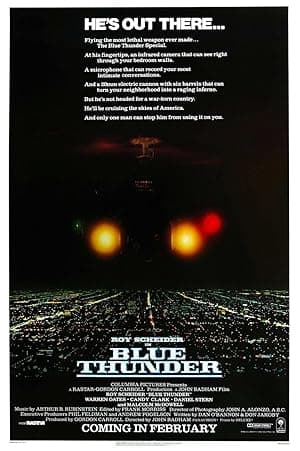
1983
Blue Thunder
A maverick pilot, a flying surveillance machine and a paranoid 1980s that still feels eerily familiar.
Read our take →
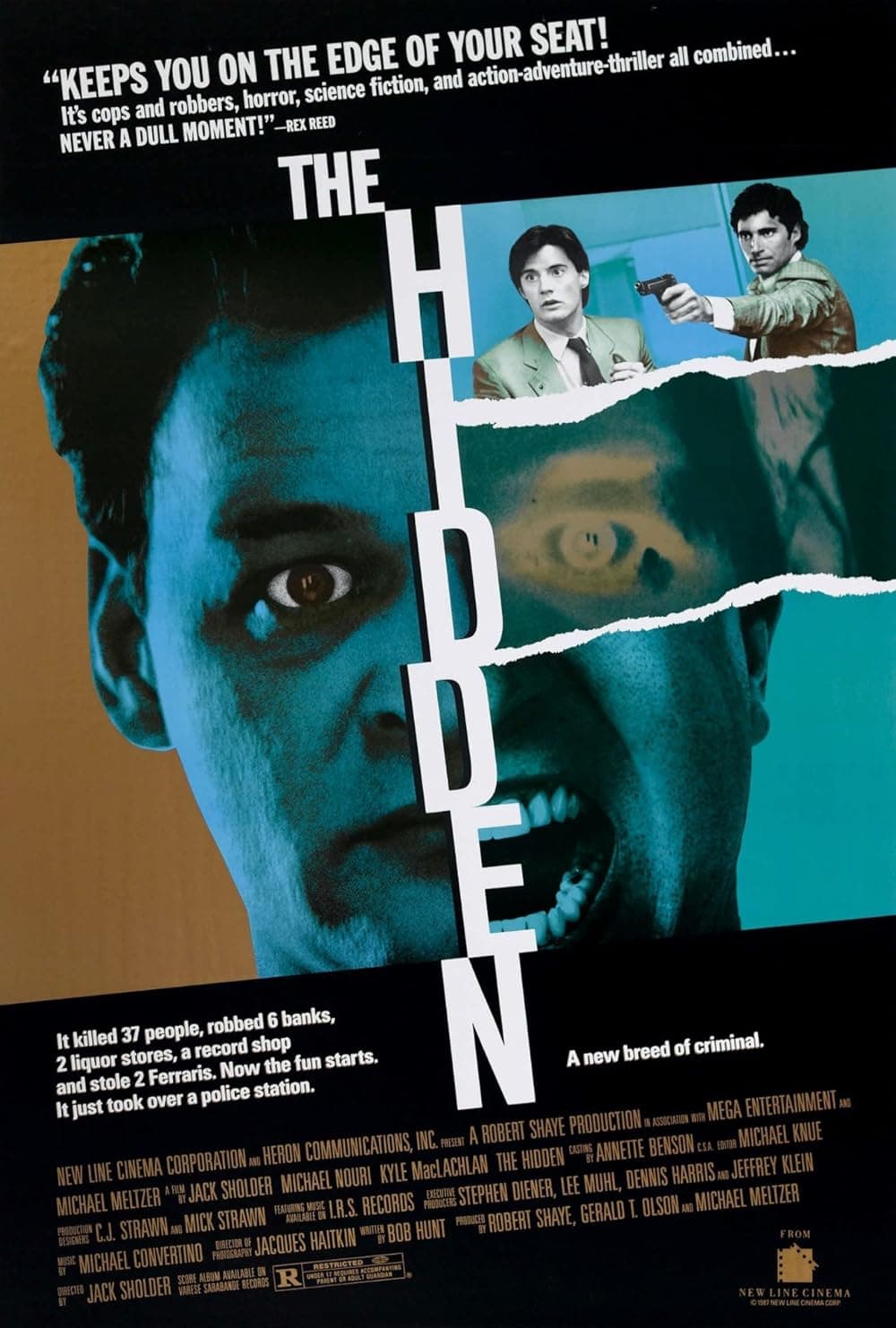
1987
The Hidden
The Hidden: mortality and lifespan and mortality, and why this 1987 movie still matters.
Read our take →
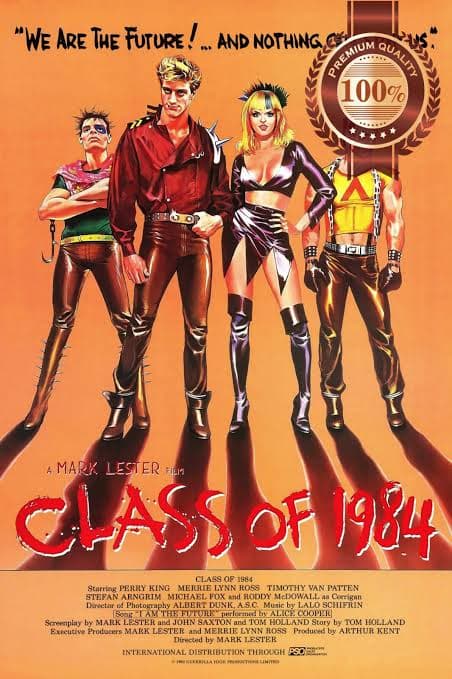
1982
Class of 1984
Class of 1984: family and the safety of home, and why this 1982 movie still matters.
Read our take →