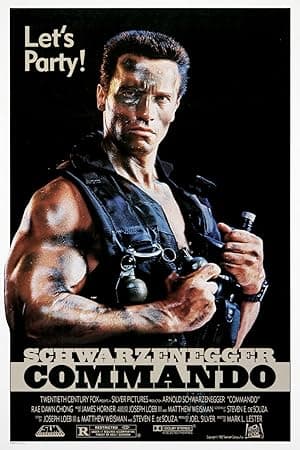
Commando
A retired commando, his kidnapped daughter and a short, very noisy principle: family first.
The setup
Commando cuts the chatter and gets to the point: John Matrix’s world is small, his goal simple, and the result is honest, physical action. Revisit Mark L. Lester’s 1985 thriller if you want a tightly paced, unmistakably 80s one-man rescue movie with a clear emotional motor.
THE MOVIE
John Matrix is still the reason this movie works
Commando is built around one very simple, very human idea: John Matrix’s daughter is taken, and everything he does from then on is to get her back. That straightforward engine — a retired Special Forces colonel dragged back into violence because his child’s life is on the line — gives the film a clarity a lot of noisier action pictures lack.
It helps the movie that the stakes never get abstract. Matrix isn’t fighting for ideology or a fat payday; he’s fighting to rescue Jenny. That parental rescue strand keeps the action punchy and immediate, and it’s what stops Commando from becoming pure spectacle.
Mark L. Lester directs a film that runs tight — ninety minutes of action, threat and grim purpose — and he’s backed by a cast whose names you’ll spot in the credits. Arnold Schwarzenegger plays John Matrix; Rae Dawn Chong is Cindy; Dan Hedaya is Arius; Vernon Wells is Bennett. The film makes its point and rarely wastes a beat.
THE SETUP
The idea that sets Commando in motion
The core premise is elegant in its brutality: Matrix lives quietly with his young daughter until she’s kidnapped to force him into carrying out an assassination. That coercion — a child used as leverage — is the motor of the whole film.
From there the plot is essentially a one-man campaign. Matrix is a retired elite soldier who must locate and rescue Jenny while facing hired mercenaries and, at times, former comrades turned adversaries. It’s a neat, simple conflict: one man against a professional force.
The film leans on a rescue/assassination-for-coercion mechanic. The villains need Matrix to do a job they can’t do themselves, so they seize what matters to him most. That keeps the story personal rather than geopolitical — even when the antagonists’ political aims are the stated reason for the kidnapping.
Key players are introduced with clarity: Arius appears as a deposed foreign leader seeking to regain power, and Bennett is set up as a treacherous former subordinate. Those relationships give the antagonists shape without derailing the movie’s main engine.
THE CHARACTER
Why John Matrix matters
John Matrix matters because he’s uncomplicated in the best possible way. The film gives him a single, urgent duty: protect his daughter. That makes his behaviour easy to follow — and for an action movie, clarity is a kind of virtue.
Matrix’s past as an elite soldier provides the how. His skills, training and history explain the means, while the parental bond explains the motive. When the plot asks him to do increasingly dangerous things, the audience’s investment is immediate because the goal is so plainly human.
There’s another, physical fact about the character that shapes how you watch him: production notes record that Schwarzenegger performed many of his own stunts and injured himself during filming. That physical commitment feeds the film’s sense of danger; Matrix feels like someone who actually does the hard work on screen.
Put simply: Matrix is memorable not because he’s mysterious, but because everything he does is intelligible and direct. A father. A set of skills. A deadline.
UNDER THE SURFACE
Commando has more on its mind than the plot suggests
At surface level, Commando is a lean rescue thriller. Scratch a little deeper and a few repeating ideas appear: the parental rescue beat, the lone ex-soldier returning to his old life, and the spectacle of one man pitched against a mercenary force.
The father-daughter bond is the emotional spine. Even when the movie dives into explosions and shootouts, that relationship keeps scenes tethered to something recognisable and urgent — it’s why the violence feels motivated rather than gratuitous.
The lone-soldier-as-hero theme is central to the film’s identity. Matrix exemplifies a particular 1980s hero type: an expert cut off from institutions, capable of unpicking professional threats alone. That solitary competence is both reassuring and a little mythic.
Finally, there’s the political backdrop: fictionalised coup politics and the sort of muscular action-militarism that defined many mid-80s thrillers. The film uses political aims mainly as plot fuel, but they colour the world and explain why hired guns and deposed leaders appear in the story.
THE FILMMAKING
How Commando was put together
One of the production’s bold choices was to actually build a fortress on location rather than fake it. At Hearst San Simeon the crew constructed a watchtower and five barracks specifically for the film’s climax.
Those structures were not merely set dressing. They were physically destroyed on camera during the finale, which gives the sequence a tactile finality: things were built, and then the production demolished them for dramatic payoff.
That approach says a lot about how Lester staged the film. When the climax is literally the destruction of a constructed place, the payoff feels earned in a material, rather than merely digital, way.
In short: Commando’s final beats rely on real-world construction and destruction to sell the scale of the threat and the resolution.
PRACTICAL EFFECTS
The effects work that gives Commando its physical personality
Commando’s personality is an oddly satisfying mix of stuntcraft and set demolition. The production built a purpose-built fortress complex at Hearst San Simeon — then blew it up during the climax — and that physicality gives the movie punch.
Elsewhere, the shoot relied on night work and large-scale set destruction for its action sequences. Those choices keep the movie feeling immediate: things happen in real space, on real sets, and you can see the consequence.
Another practical element was the lead actor’s involvement in the stunts. Production notes report Schwarzenegger performed many of his own on-camera stunts and suffered a dislocated shoulder and other injuries. That willingness to be in the thick of it feeds the film’s kinetic energy.
So when Commando looks and feels rough around the edges, that’s often deliberate: the crew went for real-world impact rather than the safety of always keeping everything off-camera.
PURE 80S
Commando could not belong to any other decade
Released in 1985, Commando sits squarely in the mid-80s surge of muscular, single-hero action films. It shares a production DNA with other Joel Silver–backed pictures of the era: fast, physical and unapologetically loud.
The film’s fictional country, Val Verde, places it inside a small web of action movies that used similar invented geographies. That invented geography is one of those era-specific shortcuts: it lets films be political without dealing in messy, real-world specifics.
The movie’s politics are mostly plot fuel — fictional coups and deposed leaders give the antagonists motive — but that flavour of action-militarism is very much of its time. Commando feels like a product of 1985 because both story and style answer the decade’s appetite for decisive, individual heroism.
Even the production footprint — shooting at places like Catalina Island and San Simeon, and staging large on-location set pieces — reeks pleasantly of 80s filmmaking choices, when crews still regularly built and blew things up for a camera.
WATCHING IT NOW
What has aged — and what hasn't
Modern viewers often respond to Commando on two levels. The practical stunt work and the action set pieces still land as physical thrills; there’s a visceral pleasure in seeing real structures go up and then come down, and in knowing the lead was in harm’s way for many of the sequences.
At the same time, the film’s tone and its fictional political backdrop mark it as very much a product of its era. The militaristic shorthand and uncomplicated villains can feel quaint, or at least plainly of the mid-80s moment.
The emotional core — a parent fighting to get their child back — remains clear and effective. That keeps the film watchable even when some contextual trappings feel dated.
Put another way: if you come for straightforward, physical action and a simple, human motive, Commando mostly still delivers. If you expect subtlety in politics or moral ambiguity, it’s less comfortable company.
THE LEGACY
Why Commando still matters
Commando mattered to audiences on release: it was commercially successful, and it remains closely associated with Arnold Schwarzenegger’s 1980s action-star persona. That connection helps explain why the film keeps being mentioned when people talk about the era’s shape of action cinema.
The movie’s afterlife has been shaped by home-video and collector editions. A director’s unrated cut arrived on DVD in 2007, and a director’s-cut Blu-ray metalpak followed as a Best Buy exclusive in 2015. Those releases keep the film in circulation for new viewers and completists.
There’s also a technical nod: the film received a Saturn Awards nomination for Best Special Effects, which reflects the period’s appreciation for practical, in-camera spectacle.
So Commando’s staying power is practical as much as reputational: it earned attention when it came out, has been kept in view by later releases, and lives on as a neat example of a certain action-movie formula.
THE VERDICT
Does Commando still hold up?
Yes — if you’re after a compact, no-nonsense action movie whose motive is plain and whose engine never stalls. The abduction of Jenny drags a retired John Matrix back into a violent routine, and that clarity makes the film brisk and consistently watchable.
The film’s ninety-minute runtime helps: there’s little fat. When it needs to set a scene it does; when it needs to throw Matrix into danger it does that too. Rae Dawn Chong’s Cindy functions as the local ally who keeps things moving, while the villains’ coercive scheme keeps the stakes sharp.
If your tolerance for 80s-style geopolitical shorthand is low, the fictional coup politics and muscular heroics may feel dated. But the movie’s practical stunts, physical set pieces and the simple parental-rescue heartbeat still land for many viewers.
So should you watch it? If you want an efficiently constructed, decidedly 80s one-man rescue film — and you don’t need modern moral complexity — Commando still delivers. It’s a tight, noisy promise kept: a father will go to extremes to get his child back, and the movie doesn’t let him off the hook.
Share this movie
Keep watching
More movies from the 80s
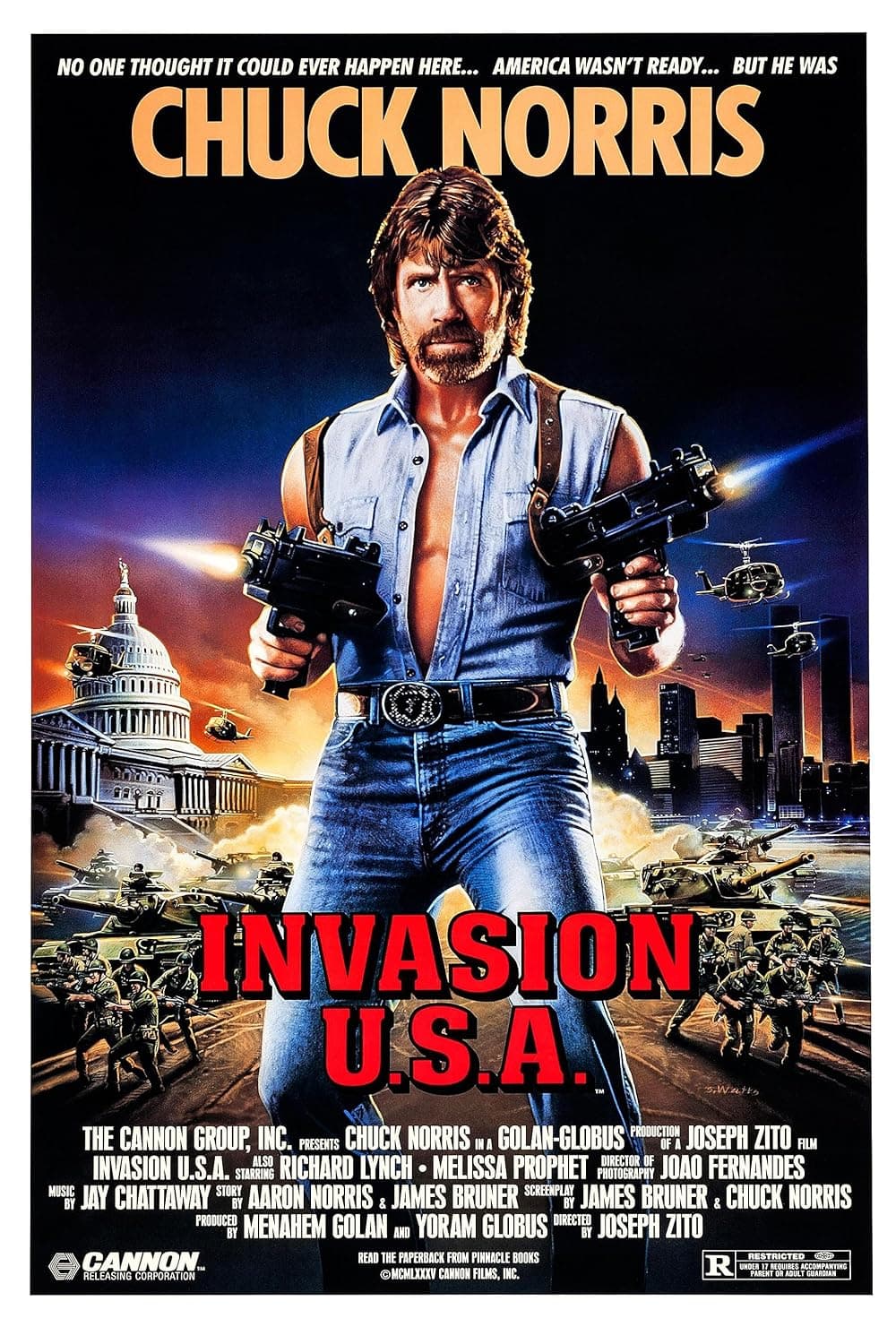
1985
Invasion U.S.A.
Invasion U.S.A.: fear and authority, and why this 1985 movie still matters.
Read our take →
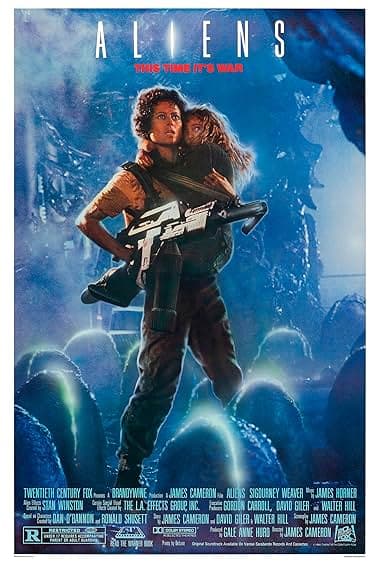
1986
Aliens
Motherhood, marines and monsters: why Ripley still makes Aliens sing.
Read our take →
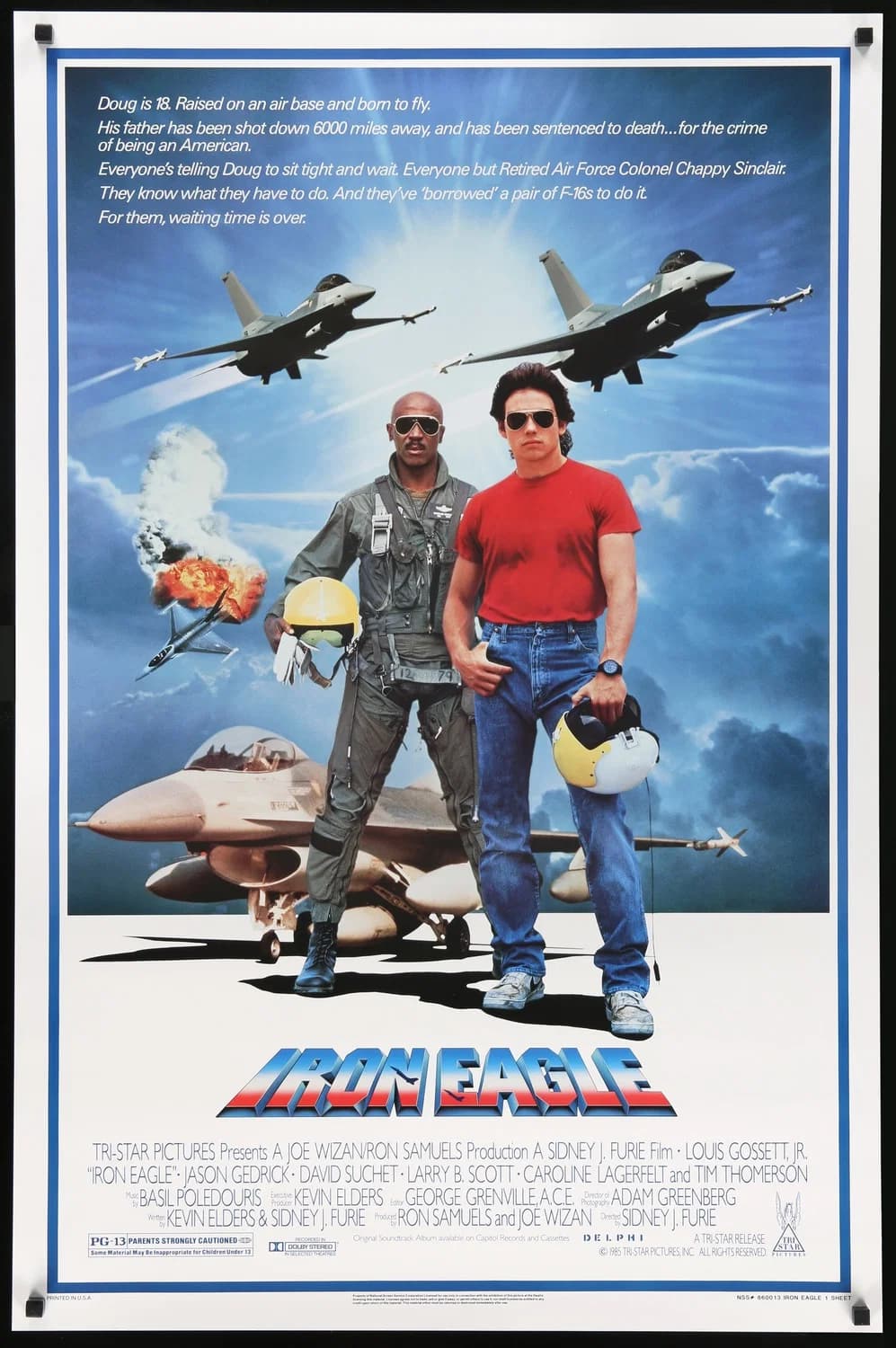
1986
Iron Eagle
Iron Eagle: parents protecting their children and heroism, and why this 1986 movie still matters.
Read our take →