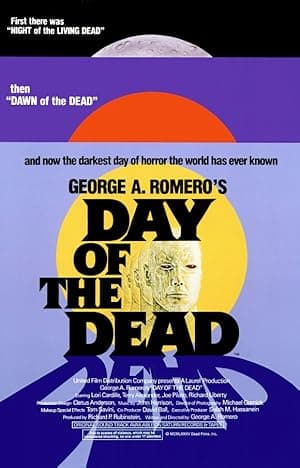
The setup
Day of the Dead isn't just gore and grudges — it's the one in Romero's trilogy where people argue more than they run. Rewatching it means sitting in on a miniature civil war: scientists trying to answer a question, soldiers trying to enforce an answer, and a doctor in the middle who keeps reminding everyone there might be a better way.
THE MOVIE
Dr. Sarah Bowman is still the reason this movie works
Day of the Dead straps you into an underground missile base and refuses to let you out until the arguments are finished. The set-up is compact: a handful of soldiers and scientists sheltering under Florida, trying to make sense of a world that’s already finished.
What keeps the engine running is Dr Sarah Bowman — a scientist whose aim is to find a cure, and whose refusal to shrug her shoulders turns her into the film’s moral touchstone. Against a backdrop where some figures treat the undead as problems to be smashed or tools to be trained, she insists on looking for answers.
That human friction — the bunker, the experiments, the soldier who tightens the screws — is what makes Romero’s 1985 film feel like more than horror on loop. And yes, the make-up work gives it teeth; the film’s physical nastiness was an obvious technical highlight at the time, which matters because Romero wanted the mess to feel real while the ideas do the heavy lifting.
THE SETUP
The idea that sets Day of the Dead in motion
The film takes place a few years after the outbreak, but it isn’t a globe-trotting rescue mission. Most of the action sits inside a single underground missile base in Florida, which turns the picture into a pressure-cooker of dwindling resources and mounting resentments.
On one side are scientists trying, in their way, to understand and respond to the plague. On the other side are soldiers whose job is to protect the compound — and whose methods grow steadily harsher as stress piles up.
Those two impulses — preservation versus experimentation, order versus inquiry — collide again and again. The loss of outside contact and the worry about supplies is the practical pressure; the ideological split is the emotional one.
So the movie works because Romero shrinks the world. With a limited stage, every disagreement matters, and small decisions have big consequences.
THE CHARACTER
Why Dr. Sarah Bowman matters
Sarah Bowman is the person who keeps insisting there’s a question worth answering even when everyone else is reduced to survival tactics. That insistence steadies the film; she reminds the audience there can be more to this nightmare than fighting and fleeing.
She stands in contrast to the rougher instincts in the bunker — not a sermoniser, but the figure who argues for method and restraint when the easy option is brutality.
That central stance is why her presence matters: she’s the one voice that keeps the film from becoming a simple exercise in shock.
And it wasn’t lost on contemporary viewers. The role earned Lori Cardille a Best Actress prize at Sitges, which is a tidy piece of evidence that the character landed with critics and festival audiences at the time.
THE PERFORMANCE
Why Lori Cardille's performance matters
We don’t need to invent accolades to say Cardille registered at the time: she won Best Actress at Sitges in 1985 for playing Sarah Bowman. That festival recognition tells you her work had visible impact on contemporary viewers.
Because the film leans on debate as much as gore, having a central actor who could carry those ethical scenes was important. The Sitges award is a reminder that the film’s quieter moments — the rows, the tough choices — were noticed alongside the obvious shock value.
In short: contemporary recognition shows Sarah Bowman was more than filling a role; she was one of the film’s main reasons people kept watching and talking.
UNDER THE SURFACE
Day of the Dead has more on its mind than the plot suggests
On one level, Romero is still making a zombie movie. On another, he’s interested in how human institutions behave once the usual rules collapse. Militarism and authoritarian leadership are under the microscope here — the bunker becomes a tiny state where power can rot quickly.
There’s also a clear argument about the ethical limits of science. Logan’s experiments with a captured zombie raise uncomfortable questions: when does curiosity become cruelty? When does research become ownership?
Survival and morality are set against each other repeatedly. The characters must decide whether keeping people alive is the same as living rightly, and those choices force the audience to pick sides.
Finally, the film is about communication breaking down. Romero himself framed the picture as a tragedy where failed communication leads to chaos; in the bunker, inability — or unwillingness — to listen becomes as lethal as any bite.
PRACTICAL EFFECTS
The effects work that gives Day of the Dead its physical personality
The movie’s unpleasantness is, in part, a hands-on achievement. Tom Savini ran the make-up effects department and brought together a sizeable crew to build the film’s prosthetics and gore.
Greg Nicotero also appears in the production as Savini’s assistant, a credit that matters because a number of people on that team later went on to form major effects houses.
Contemporary coverage singled out the makeup as a technical highlight — the physicality of the creatures and the prosthetics gave the film a tactile feel that supported Romero’s nastier ideas.
So while you’re watching difficult scenes, remember a lot of that rawness is literal: hundreds of hours of practical make-up work put the rot on-screen where Romero wanted it.
PURE 80S
Day of the Dead could not belong to any other decade
This is very much a mid-80s animal. Released in 1985, it sits at a moment when graphic special effects were becoming a selling point for horror — and when the technicians behind those effects were starting to gain industry clout.
Romero’s decision to make the third film in his Living Dead cycle so heavily physical in its approach aligns it with a period that celebrated practical prosthetics and practical nastiness on screen.
The film’s production history also shows that concreteness: it was shot in late 1984 with above-ground scenes in Florida and underground sequences in a Pennsylvania limestone mine, which helped give the bunker sequences their claustrophobic feel.
So while the ideas — power, science, human failure — are older than the decade, the film’s look and methods are very much of the 1980s moment when make-up artists were becoming recognised names in their own right.
THE LEGACY
Why Day of the Dead still matters
Romero himself picked this film out as his favourite of the original Dead trilogy, which helps explain why it has sustained a committed following. It isn’t the loudest in the series, but it’s the one where the arguments are sharpened.
The movie’s title has kept returning: remakes and even a Syfy television series have borrowed it, which shows there’s something in the concept that other creators keep wanting to rework.
Behind the scenes, Day of the Dead was a proving ground. Several crew members on the effects team went on to found well-known effects houses, and the film’s makeup work appears in genre histories and award lists.
Put simply: it matters for what it tries to do — a tight moral puzzle wrapped in a splatter film — and for the people it helped launch who kept working in horror for decades after.
THE VERDICT
Does Day of the Dead still hold up?
Short answer: yes, if you come for the thinking and the tension as much as the shocks. The film narrows its focus to a bunker where soldiers and scientists are forced into repeated ethical choices, and that small scale means the moral arguments hit harder than a wider, louder spectacle would.
If you want a character to root for, Dr Sarah Bowman is an excellent one — a scientist who keeps asking questions when easier hands would reach for force. Her centrality is backed by contemporary recognition: Lori Cardille won Best Actress at Sitges in 1985 for the role.
A lot of the film’s emotional pressure comes from Captain Rhodes’s increasing authoritarianism and from Logan’s troublesome experiments with the captured zombie Bub — those human-versus-human conflicts are what make the story feel urgent, not just the external threat.
So should you watch it now? If you’re interested in a zombie movie that treats its monsters as a backdrop for arguing about power, science and the cost of survival, this is the one to see. It’s not simply gore for gore’s sake; it’s a claustrophobic debate that happens to be very, very messy.
Featured in
Explore more about Day of the Dead
Share this movie
Keep watching
More movies from the 80s
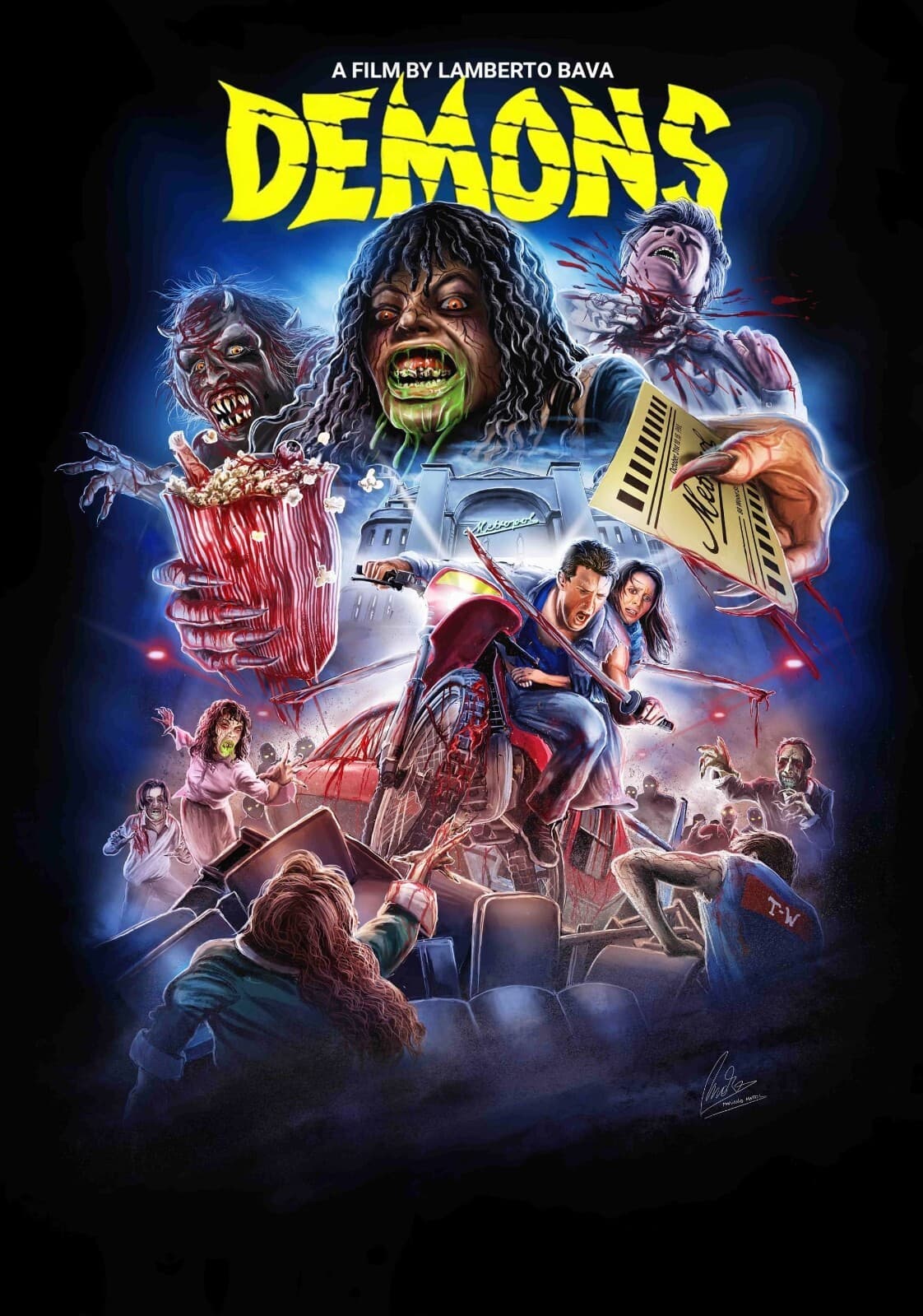
1985
Demons
Demons: freedom and friendship, and why this 1985 movie still matters.
Read our take →
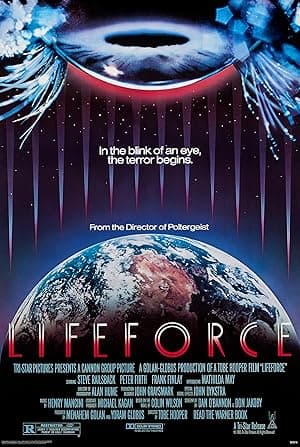
1985
Lifeforce
Lifeforce: mortality and freedom, and why this 1985 movie still matters.
Read our take →
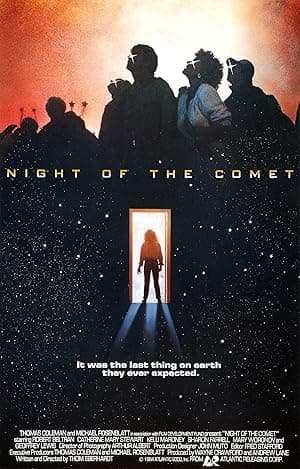
1984
Night of the Comet
Sisters, malls and a comet — Night of the Comet is a B-movie that learned how to be fun and oddly wise about survival.
Read our take →