The setup
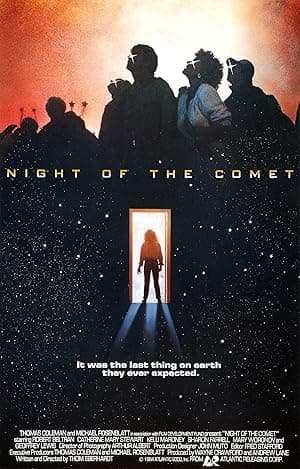
If you remember this movie at all, you probably remember the image of a single teenager walking through an abandoned shopping mall like she’s late for a shift and everyone else has simply gone missing. Night of the Comet pairs that jaunty, pop-teen energy with a genuinely doomsday premise, and the result is a small, sharp post-apocalyptic picture that keeps surprising you with how much personality it has. Directed and written by Thom Eberhardt, it’s 95 minutes of juvenile chaos and oddly sensible grit.
THE MOVIE
Regina 'Reggie' Belmont is still the reason this movie works
Night of the Comet opens with one of those neat, almost disrespectful ideas: the tail of a comet comes through and most of humanity either turns to red dust or becomes short-lived, aggressive survivors. It’s the kind of premise that could have been grim and fatalistic, but the film treats catastrophe like a pop-culture event — messy, noisy and a little deliciously absurd.
The morning after, two sisters wake up to Los Angeles emptied out: friends gone, neighbours gone, the city turned into a stage set. That sharp contrast — teenagers trapped between ordinary life and an utterly altered world — gives the whole picture its kick. It’s an apocalypse you could walk into wearing your regular clothes and still make a sarcastic remark.
At the centre of it is Regina 'Reggie' Belmont, an 18-year-old who works in a movie theatre and becomes the default protector for her younger sister. Reggie is practical where much of the genre would choose melodrama, and that steady, unfussy competence is what keeps Night of the Comet from being merely a clever idea and instead makes it a proper, enjoyable little movie.
THE SETUP
The idea that sets Night of the Comet in motion
The film’s engine is dead simple: Earth passes through a comet’s tail and most people either become red dust or turn into short-lived, violent survivors. Simple, nasty and ideal for an 80s genre mash-up.
Two sisters — Reggie and her younger sibling — survive because they happened to be inside steel-lined enclosures during the comet’s passage. It’s a tidy, almost old-school sci-fi explanation that the movie commits to and then exploits for the rest of its running time.
From there, the sisters have to navigate an emptied Los Angeles. The threats come in two flavours: predatory, zombie-like people roaming the streets, and a desert research facility whose staff have complicated, sometimes ethically dubious plans for what to do with survivors.
You get classic post-apocalyptic beats — radio contact, cramped alliances, scientists with different agendas — but the film keeps the emphasis on the sisters’ resourcefulness rather than long philosophical debate. It’s a setup that allows brisk action, a few scares and a surprising amount of comic texture.
THE CHARACTER
Why Regina 'Reggie' Belmont matters
Reggie matters because she behaves like the practical centre of a good household rather than a melodramatic lead. She’s 18, works in a cinema and becomes the person who organises, protects and plans so that her sister can still be a teenager even if the world has collapsed.
That practical streak gives the movie its tone. Reggie’s not a reluctant hero framed by destiny — she’s someone who fixes problems, scavenges what’s needed and makes decisions quickly. The film trusts a sensible, competent character to carry scenes that could easily have been played for shock or spectacle alone.
Importantly, her relationship with Sam is believable in simple, human terms: older sister/guardian, younger sister/impulsive kid. That contrast keeps emotional stakes grounded without having to slow the film down for heavy sentiment.
Because Reggie’s approach to survival is ordinary and direct, she turns what could be a pulpy concept into something immediately sympathetic. You don’t have to be a soldier or a scientist to see how she makes sense of the apocalypse — she just gets on with it.
UNDER THE SURFACE
Night of the Comet has more on its mind than the plot suggests
On the surface it’s a post-apocalypse romp — comet, dust, wandering survivors. But the film layers that with teenage attitudes and a wink to older B-movie forms, so it reads like a pastiche that’s also genuinely feeling its way through catastrophe.
Female empowerment is baked into the premise: two sisters are the protagonists, and the story keeps returning the focus to their choices rather than sidelining them. The movie doesn’t dress empowerment up as a grand thesis; it simply places competent young women at the centre and follows what happens.
There’s a clear B-movie affection running through the film. It borrows the economy and punchiness of mid-century genre pictures — quick ideas, bold premises, and a willingness to embrace the outrageous — while still being conscious of pop culture and teen sensibilities.
Finally, the empty-city and mall sequences turn consumer culture into a touchstone. Abandoned commercial spaces become playgrounds and battlegrounds, which is a neat way of saying the world that once felt important now looks eerily trivial.
THE FILMMAKING
How Night of the Comet was put together
Night of the Comet wears a deliberate visual attitude. Production design leans into a comic-book sensibility: characters and moments are visually flagged so you understand quickly who to side with and who to dislike. It’s an economical stylistic choice that suits a tight runtime.
Those design decisions were a practical way to get storytelling mileage out of modest resources. With a small budget, clear visual shorthand helps scenes land without the film needing long expository set-pieces or elaborate spectacle.
The crew credits read like a compact, efficient team: cinematography, editing and production design are all listed in the main production credits, which speaks to a focused production where roles were kept lean and purposeful.
And there’s the music credit too — original music supports the film’s switch between humour and menace, nudging scenes when the movie wants to feel light and stepping back when it allows the emptiness to speak.
PURE 80S
Night of the Comet could not belong to any other decade
This is very much an early-80s independent picture: it was produced and marketed by Atlantic Releasing at a time when small distributors were willing to push microbudget genre films into mainstream awareness. That commercial appetite is part of why the film found a wide audience on release.
It arrived in November 1984, the kind of year when the PG-13 rating was still new and distributors were experimenting with how to sell edgier material to teenagers and grown-ups alike. Night of the Comet fitted neatly into that moment — a genre title with enough bite to feel grown-up but enough cheek for younger viewers.
The film’s wide opening and distributor marketing are reminders that this wasn’t a tiny festival curiosity — it was positioned as a mainstream genre outing. That energy is part of its feel: confident, fast and unafraid to trade on youth culture.
And like many films of the era, it found a second life on home video. A strong rental market in 1985 and later collector releases helped it stay in circulation long after its theatrical run.
WATCHING IT NOW
What has aged — and what hasn't
The central premise — two sisters surviving a comet event because they sheltered in steel-lined spaces — still reads as a clever, economical hook. It gets you into the story fast and keeps the stakes immediate without dragging in too much mythology.
The film’s focus on the sisters’ practical responses rather than long philosophical detours helps it remain watchable: the story moves at pace and the emotional beats are clear, which modern viewers often appreciate.
Some elements play as period pieces — the tone and teen attitudes are of their time — but that doesn’t make them inert. The mix of pop sensibility and apocalypse still gives the movie a particular personality that contemporary audiences can enjoy as a distinct flavour.
Finally, the fact that Night of the Comet has been reissued on home formats over the years means it’s been easy for curious viewers to find the film and judge it for themselves, rather than having it be a forgotten curio.
THE LEGACY
Why Night of the Comet still matters
Night of the Comet developed a cult following after its initial theatrical run, the kind of steady afterlife that keeps a film in conversation long enough for new generations to discover it. Collector Blu-ray releases and essays over the years have helped cement that status.
Commentators and creators have pointed to the movie’s blend of teen sensibility with supernatural and horror elements when discussing later projects. It’s often mentioned among the sorts of pictures that helped imaginations coalesce around the idea of young people being the centre of genre stories.
The property has also attracted remake interest in the 2010s, with industry reports in 2018 and after detailing development activity. That kind of attention — active attempts to retell or update the material — suggests the core idea still feels fertile to some storytellers.
Taken together, the film’s continued availability, its cult fans and the occasional remake conversation mean Night of the Comet keeps resurfacing in genre discussions, not as a major studio cornerstone but as a nimble, memorable entry that people like to revisit.
THE VERDICT
Does Night of the Comet still hold up?
Yes — if you approach it on its own terms. Night of the Comet is a tight, 95-minute mix of science fiction, comedy and horror that knows which beats to hit and which to skip. The comet premise sends the world sideways quickly and the film keeps the focus on what matters to its characters rather than sprawling into unfriendly complexity.
At the heart of that focus are the sisters: Reggie, the practical 18-year-old who organises survival, and Sam, the younger, more impulsive foil. That relationship is the film’s steady centre; it gives stakes to scenes that, in other hands, could have become mere genre set-pieces.
The supporting pieces — a truck-driver ally who survived in steel shielding, conflicting figures at an underground research facility — supply the film with familiar but serviceable genre pressure. They keep the plot moving and sharpen the choices the protagonists must make.
If you’re after perfect filmmaking or a sober take on apocalypse, this isn’t it. But if you want a nimble, character-driven B-movie that marries teen energy to doomsday absurdity, Night of the Comet still delivers. It’s a small film that remembers to be entertaining first, and surprisingly thoughtful second.
Share this movie
Keep watching
More movies from the 80s
1985
Day of the Dead
A bunker drama with zombies, a scientist who won a festival, and a soldier who won't listen.
Read our take →
1985
Re-Animator
A medical-school madman, a glowing green reagent and enough stage blood to cause moral indigestion.
Read our take →
1985
The Return of the Living Dead
Brains, bad decisions and Burt — a punky, gory little time-bomb.
Read our take →