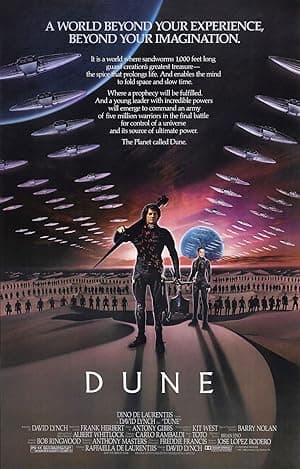
Dune
A sandstorm of prophecy, politics and prodigy — and Paul Atreides stands square in the middle of it.
The setup
David Lynch’s 1984 Dune is the kind of ambitious thing that either sweeps you away or leaves you squinting at the horizon. Revisit it for the central figure who pulls the story together: Paul Atreides, a young noble pushed into a collision with empire, prophecy and the planet that everyone wants.
THE MOVIE
Paul Atreides (Muad'Dib) is still the reason this movie works
Talk about Dune and sooner or later the conversation comes back to Paul. He’s the thread you can follow through deserts, court treachery and strange visions — the young noble at the eye of an enormous political and spiritual storm.
The film sets him on Arrakis, the one planet that produces the universe’s spice, and that assignment is not a neutral posting: it’s the prelude to a violent conspiracy involving a rival house and the Emperor himself. That transfer — and the trap it conceals — is what sets everything moving.
David Lynch directed this particular take in 1984, and Kyle MacLachlan plays Paul. What keeps the film worth revisiting is how it places a single developing messianic destiny at the centre of big, blunt questions about power, belief and survival.
THE SETUP
The idea that sets Dune in motion
At its simplest, the picture moves because one family is given the stewardship of the desert planet Arrakis — and Arrakis is where the spice is found. Control the spice and you control commerce, travel and political muscle across the universe.
That transfer of power is not a friendly handover. Behind the scenes there’s a plot hatched by House Harkonnen and the Emperor to destroy House Atreides. The threat feels structural and personal at once: a political ambush with human consequences.
The film keeps three clear poles of conflict in view — the fight for the spice, the bitter rivalry of two great houses (with the Emperor pulling strings), and the special position Paul finds himself growing into as local belief and his own training collide.
If nothing else, the setup works because it makes the stakes easy to understand: Arrakis matters, the Atreides matter, and the rest of the galaxy will rearrange itself depending on which way control goes.
THE CHARACTER
Why Paul Atreides (Muad'Dib) matters
Kyle MacLachlan is cast as Paul, and that fact alone is useful: the film funnels the audience into his experience. You see the larger political game through his choices and the pressure he’s under.
Paul isn’t just a noble with good training. He’s also the product of deeper schemes. His mother, Lady Jessica, belongs to the Bene Gesserit and is split between being a parent and serving a much longer-term programme of breeding and influence.
That family tension — a mother torn between maternal loyalty and a sisterhood’s patient genetic plan — gives Paul a complicated inheritance. His life is political in a private way and personal in a political way.
The presence of figures like the Reverend Mother Gaius Helen Mohiam adds a second set of eyes on Paul: he’s observed, tested and quietly manipulated by institutions that think in generations rather than moments. That is part of what makes him memorable.
UNDER THE SURFACE
Dune has more on its mind than the plot suggests
Beneath the sand-and-royal-drama surface, the film keeps returning to a few weighty ideas. One obvious thread is colonialism: Arrakis isn’t simply a backdrop, it’s an exploited resource whose control drives politics and violence.
Closely linked to that is the idea of resource extraction. The spice is a commodity everyone needs, and that economic hunger shapes loyalties and betrayals in ways that feel very familiar when you look at the modern world.
Messianic destiny and religious myth-making are another layer. Paul’s visions and the way local belief systems gather around him show how political movements can be given a sacred frame — and how a single figure can be turned into a symbol with its own momentum.
Finally, there’s a quieter ecological question: the tension between stewardship and exploitation. The planet and its people aren’t merely scenery; their treatment and the competing agendas around them are central to the story’s moral texture.
THE FILMMAKING
How Dune was put together
Dune’s physical identity is the product of big, practical commitments. Freddie Francis led the cinematography and Anthony Masters carried the production-design responsibility — and both had to place actors inside multiple, very different planetary environments.
The production didn’t skimp on sets: reports indicate roughly seventy large constructions were assembled to represent the film’s various worlds. That’s the sort of build that gives a film a tactile presence rather than a purely studio-bound look.
When a production builds at that scale, choices about framing, performance and blocking change. Actors and directors are working inside concrete spaces that demand specific choreography and attention.
All of which matters because this is a story that trades on scale: the politics and prophecy feel more convincing when they’re happening in recognisably lived-in, physical places rather than abstract matte paintings alone.
PRACTICAL EFFECTS
The effects work that gives Dune its physical personality
A memorable part of Dune’s production story is the attention given to the sandworm work. Producer documents show a significant chunk of the budget — roughly $2 million — was set aside for the sandworm effects, designed by Carlo Rambaldi.
The production also assembled decidedly practical infrastructure for compositing and photography: a very large blue screen — reported to be around 35 feet high by 108 feet wide — and a 100 by 300-foot reservoir used during effect photography.
Those are not small, throwaway pieces of kit. They’re the sort of on-set apparatus that shapes how sequences are shot and how effects are integrated with actors and sets.
For a film that asks you to believe in huge, unusual creatures and planetary vistas, committing money and space to physical effect methods is a clear creative decision.
PURE 80S
Dune could not belong to any other decade
This was a major, studio-financed science-fiction gamble of the early 1980s. Produced by Dino De Laurentiis’s outfit with a reported budget near $40 million, it’s the kind of big-money literary adaptation studios only sometimes attempt even then.
The production’s multinational shape also feels of the period: principal photography in Mexico City and on Mexican dunes, plus additional work stretching into the next year, reflect the era’s tendency to combine location shooting with international cost-saving arrangements.
The release was supported by an unusually broad merchandising and promotional plan for the mid-1980s, and there were concrete hopes for sequels that ultimately didn’t happen. That industrial ambition — big budgets, wide promotion, sequel plans — is very much of its decade.
Put simply: Dune wears the ambitions of 1984 on its sleeve. It’s a large-scale experiment in how to turn a dense novel into a summer-size cinematic proposition.
THE LEGACY
Why Dune still matters
There are concrete reasons the film remains part of the conversation. It received an Academy Award nomination in a sound-related category, which is one way the industry recognised certain technical achievements.
The movie also has a complicated afterlife: a longer television re-edit was broadcast with the director’s credit replaced by Alan Smithee after Lynch distanced himself from that altered cut, which is part of the film’s story now.
Beyond awards and production drama, Dune (1984) has kept a persistent cult following and has been repeatedly reissued and restored on home video, including boutique 4K releases — people keep coming back to it.
And because other adaptations and a later big-screen version renewed mainstream attention to the property, Lynch’s film lives in a field of comparison: fans return to see an idiosyncratic, large-scale attempt to tackle Frank Herbert’s novel.
THE VERDICT
Does Dune still hold up?
Short answer: yes — but with a big caveat. Lynch’s Dune is worth watching if you’re drawn to stories where a single, complicated character anchors huge political and spiritual questions. The film follows Paul as his family takes stewardship of Arrakis, a move that triggers a broader conspiracy and forces him into a role that looks messianic.
The ambition is part of the appeal. This version compresses large swathes of Frank Herbert’s book and leans on onscreen prologues and voice-over to supply the necessary exposition. If you can accept that this is a dense, edited retelling rather than a page-for-page translation, the film’s scale and ideas remain engaging.
There are practical reasons to watch too: Kyle MacLachlan’s Paul anchors the picture, Lady Jessica’s Bene Gesserit loyalties complicate the family story, and the production’s many large sets and significant special-effects investment make the world feel elaborately built.
If you want a tidy, faithful adaptation, you may find it frustrating. If you’re prepared for a highly stylised, sometimes opaque but often thrillingly strange take on political betrayal, ecology and prophetic power, then Dune still pays off. It’s a densely packed, sometimes blinding sandstorm of ideas — and worth walking into if you like the taste of salt.
Share this movie
Keep watching
More movies from the 80s
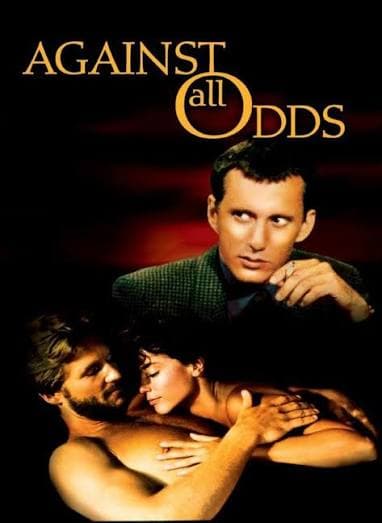
1984
Against All Odds
Against All Odds: family and greed, and why this 1984 movie still matters.
Read our take →
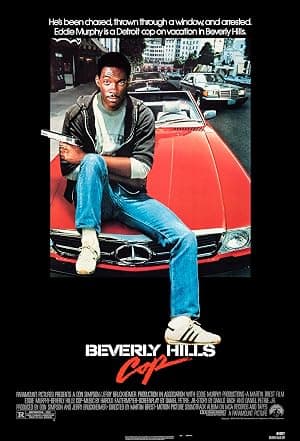
1984
Beverly Hills Cop
A fast-talking cop, a culture clash and a synth hook.
Read our take →
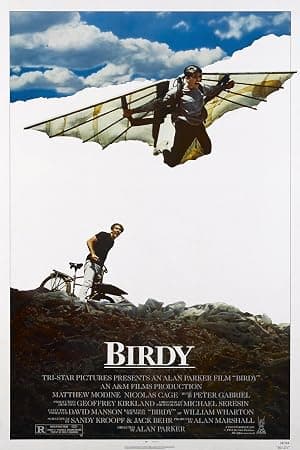
1984
Birdy
Birdy: family and the safety of home, and why this 1984 movie still matters.
Read our take →