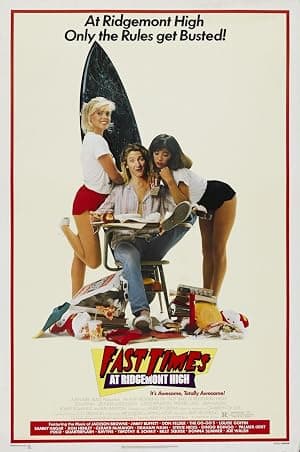
Fast Times at Ridgemont High
Teenage hormones, mall jobs and one surfer who won't be quiet about it.
The setup
Fast Times at Ridgemont High still turns up in conversations because it knows which parts of being a teenager to linger on: the awkward, the hungry and the hilariously unbearable. Amy Heckerling’s debut stitches together several high-school lives — from frantic first-time romance to part-time-shift panic — into a breezy, sharp 92 minutes that still smells faintly of 1982.
THE MOVIE
Jeff Spicoli is still the reason this movie works
Fast Times at Ridgemont High doesn't hang on one hero. It skips between a handful of teenagers trying to figure sex, jobs and friendships, and in that scattershot way it feels truthful — adolescence rarely hands you a single plotline, after all.
But if you had to pick one reason the film keeps getting talked about, you'd point at Jeff Spicoli. Sean Penn's stoner-surfer is the recurring burst of comic energy that keeps the film from flattening into pure social observation; his clashes with authority give the movie a regular shot of anarchic fun.
Amy Heckerling directed the whole thing as her first feature, and she keeps it light and economical — 92 minutes, a pop-rock soundtrack that sticks in your head, and a mall-world backdrop that makes the film feel like a social map of youth in 1982.
THE SETUP
The idea that sets Fast Times at Ridgemont High in motion
The film works like a stitched-together weekend at Ridgemont: several high-school lives interlock around classes, shifts at the mall and the small dramas that feel enormous when you're sixteen.
At the centre of that mess is Stacy Hamilton, a freshman whose attempt to gain sexual experience turns into genuine emotional fallout — the kind of consequence the film treats as part of growing up rather than as a neat moral lesson.
Running through these stories is Spicoli, a perpetually stoned surfer whose repeated run-ins with his history teacher punctuate the movie with comic set pieces and highlight the film's broader generational friction.
Rather than tying every thread into a tidy knot, the film finishes with a short epilogue that tells you where the principal characters end up — more summary than closure, and somehow appropriate for this episodic, lived-in world.
THE CHARACTER
Why Jeff Spicoli matters
Jeff Spicoli is presented simply: a kid obsessed with surfing and freedom. That simplicity is the point. In a movie full of complication, he is untroubled by nuance and refreshingly uninterested in growing up on anyone else’s timetable.
His scenes are structural — recurring interruptions, a foil for authority, a comic pressure valve that releases tension at regular intervals. The classroom showdowns with Mr. Hand perform two jobs at once: they’re funny, and they remind you the film is interested in generational disagreement.
Because Spicoli refuses to be anything other than a force of laid-back chaos, he becomes an organising element. The other storylines orbit him; when he appears, the film breathes out and we get to watch that very particular teenage refusal to be serious.
And he matters to the film’s shape as much as to its jokes: the narrative lets the quieter characters develop, but Spicoli is the recurring musical riff that keeps the whole sequence recognisable.
THE PERFORMANCE
Why Sean Penn's performance matters
Contemporary and later commentary consistently singled out Sean Penn's turn as Jeff Spicoli as the film's most memorable comic presence.
That attention matters because it shows how a single, lively character can lift a film made of smaller, quieter stories — Spicoli supplies the comic punctuation and keeps the film from settling into a single emotional register.
The film routes a lot of its energy through that figure, so how audiences remember Fast Times is, to a surprising extent, how they remember Spicoli.
In short: the performance provided the movie with a recurring jolt it otherwise might not have had.
UNDER THE SURFACE
Fast Times at Ridgemont High has more on its mind than the plot suggests
Beneath the jokes and the mall strolls, the film is about adolescent sexuality and the awkward work of becoming sexually experienced — and the consequences that arrive when those experiments collide with real feelings.
It’s also a coming-of-age film in the plainest sense: characters try, fail, learn and get messy along the way. That honesty about mistakes keeps the movie from feeling sentimental despite its bright surface.
Mall culture and consumerism are not just background décor; they’re where teenagers meet, mess up and earn money. The shopping mall is the social engine of the film — a place of employment and identity, not merely a set.
Finally, the movie stages authority versus youth repeatedly. Teachers, parents and employers rub up against the characters’ appetite for pleasure and freedom, and those clashes keep the stakes recognisable and surprisingly universal.
THE FILMMAKING
How Fast Times at Ridgemont High was put together
Heckerling’s direction keeps the movie moving briskly, and the production choices support that ease. The mall scenes were lit to feel like ordinary mall lighting but also to give everything the clarity a camera needs — practical, unobtrusive choices that keep the focus on the characters.
Matthew F. Leonetti handled cinematography while Eric Jenkins was in charge of editing; Dan Lomino led production design and Marilyn Vance researched costumes. Those credits matter because they explain why the film looks and flows like a slice of contemporary life rather than an artfully staged period piece.
The technical approach is modest and functional: the goal is to make the mall and school feel like workplaces for teenagers, with enough visual openness for the ensemble to move around and keep the pace lively.
Taken together, these choices underline the film’s interest in ordinary spaces and how young people inhabit them — it’s filmmaking that serves character first, style second.
PURE 80S
Fast Times at Ridgemont High could not belong to any other decade
Released in the summer of 1982, the film arrived in a wave of early-1980s teen sex and coming-of-age pictures that were willing to treat adolescent sexuality and its consequences without too much hand-wringing.
The movie foregrounded the mall as a social setting and used a pop-rock compilation soundtrack — choices that place it squarely in the era’s youth-culture conversation rather than in any abstract, timeless high school.
Amy Heckerling made her feature debut directing a Cameron Crowe screenplay adapted from his book; that combination helped the film feel both observational and sharply written, a neat fit for early-'80s tone.
Shot around Los Angeles and the San Fernando Valley, the film’s locations and its soundtrack made it feel immediate to its first audiences — very much a film of its moment.
WATCHING IT NOW
What has aged — and what hasn't
One of the things that still stands up is the film’s unusually frank treatment of teenage female sexuality; the inclusion of an abortion subplot is notable for a mainstream Hollywood picture of the time and still prompts discussion today.
Certain elements have become time-capsule markers: contemporary commentators often point to Sean Penn’s Spicoli and the soundtrack as vivid reminders of early-1980s youth culture. They anchor the film in a specific era, for better or worse.
The film’s focus on the friction between adolescent freedom and institutional authority also reads clearly now — those clashes are straightforward enough that modern viewers still recognise the stakes.
Finally, the epilogue cards that report the characters’ later whereabouts give the movie a slightly old-fashioned wrap-up, but they suit a story that prefers to suggest outcomes rather than polish every subplot into resolution.
THE LEGACY
Why Fast Times at Ridgemont High still matters
The film helped launch or significantly advance several careers — it gave prominent early exposure to actors such as Sean Penn, Jennifer Jason Leigh and the then-credited Nicolas Coppola.
It also reached beyond cinemas: there was a short-lived television adaptation in 1986, and the movie has been revisited through anniversary re-releases and retrospective coverage over the years.
Its soundtrack and the memorable characters kept the picture in conversations about 1980s teen cinema; those elements helped it find a place on lists and anthologies that look back at the decade’s comedies.
Put simply, Fast Times maintained a foothold because it combined clear-eyed teenage stories with characters and music that stuck in people’s heads after the credits rolled.
THE VERDICT
Does Fast Times at Ridgemont High still hold up?
Yes — but with a small, candid asterisk. Fast Times at Ridgemont High remains a lively, economical portrait of teenage life: multiple interwoven storylines, a clear focus on coming-of-age and adolescent sexual awakening, and recurring set pieces led by Jeff Spicoli that keep the film springy.
The Sherman Oaks Galleria and other mall-and-workplace settings tie the characters together in believable ways, and the soundtrack still colours the film in a way that feels period-specific rather than merely dated.
It doesn't smooth every corner. The movie prefers suggestion over tidy resolution — which is why it ends with a short epilogue summarising where characters wind up instead of tying every subplot neatly.
If you watch it now, expect to be amused, occasionally uncomfortable and often impressed by how many of its small observations about youthful life still land. Fast Times plays like a day among teenagers that knows how to be both kind and blunt — and that combination is why it still matters.
Share this movie
Keep watching
More movies from the 80s
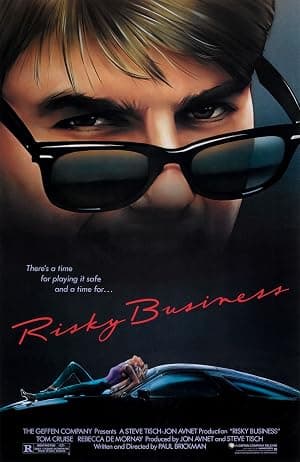
1983
Risky Business
A suburban teenager, a one‑night business and the day ambition learned to look dangerous.
Read our take →
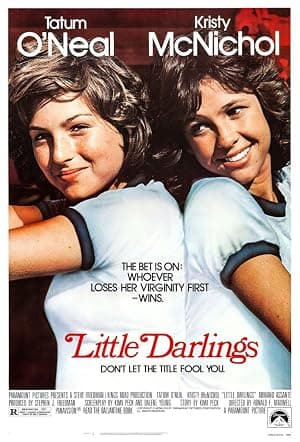
1980
Little Darlings
Little Darlings: family and love, and why this 1980 movie still matters.
Read our take →
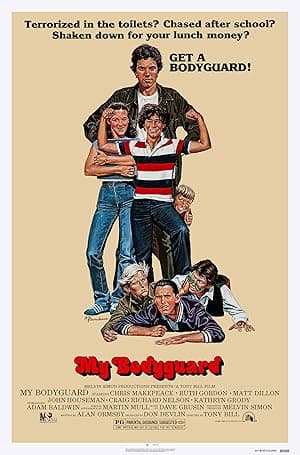
1980
My Bodyguard
My Bodyguard: courage and friendship, and why this 1980 movie still matters.
Read our take →