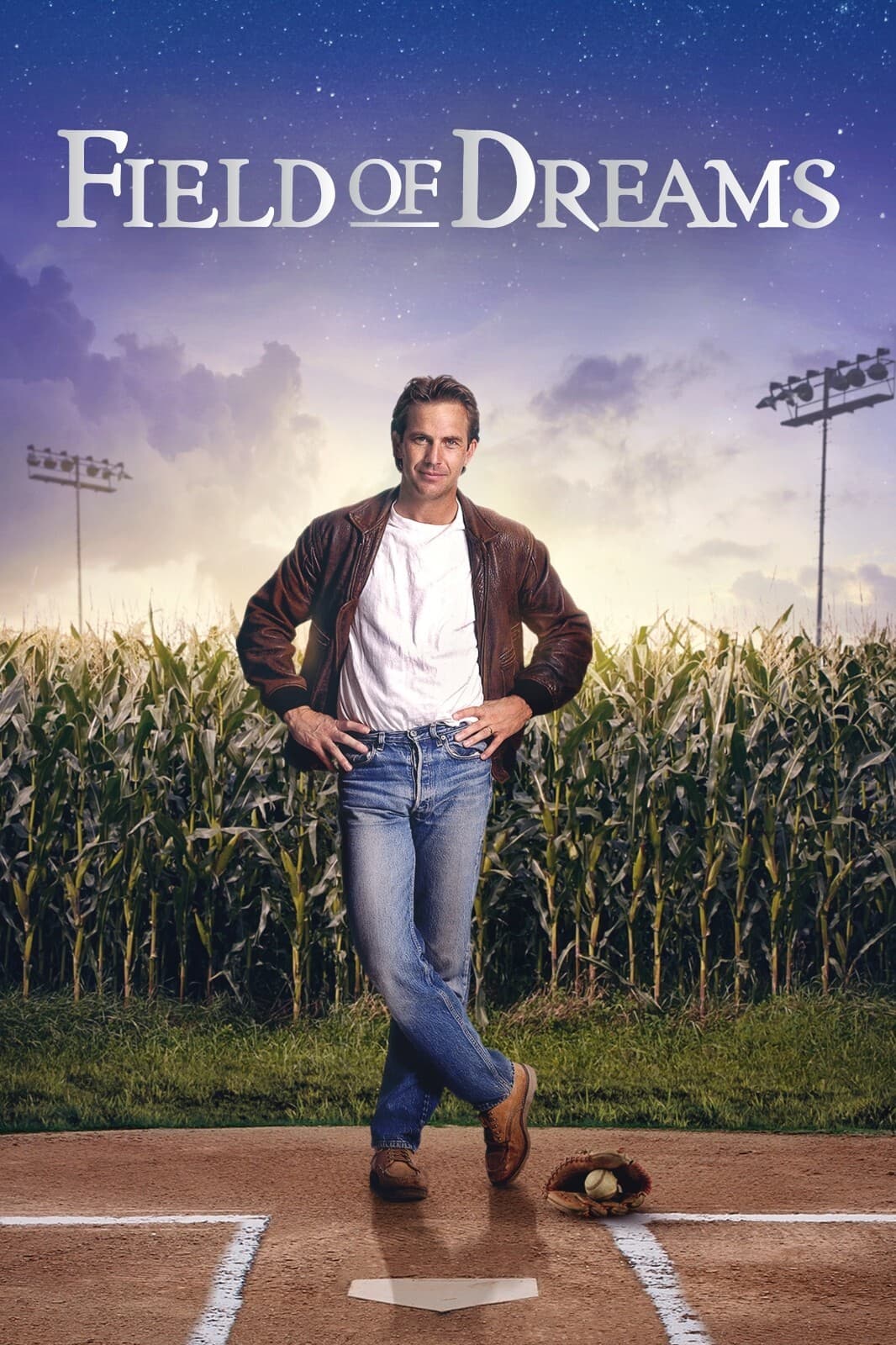
The setup
Field of Dreams still feels like the sort of film that sneaks up on you: it begins with a whisper and ends up asking the sort of grown-up questions Hollywood usually skips. Phil Alden Robinson’s 1989 fable lets a stubborn Iowa farmer chase a voice, and through that chase untangles memory, regret and the stubborn work of making peace.
THE MOVIE
Ray Kinsella is still the reason this movie works
You know the set-up: a voice tells a farmer to build a baseball diamond in his cornfield, and he does. That startlingly small instruction is the film’s engine — simple, absurd and irresistible enough to carry the rest of it.
What keeps the film grounded is Ray Kinsella himself. His decision to answer that whisper isn’t a plot convenience; it’s an attempt to fix something bigger — a strained relationship with his late father — and his choices move every scene that follows.
Phil Alden Robinson directs a movie that looks like a fable and moves like a quiet quest. It’s fantasy, drama, sport and ghost story rolled into one 106-minute package, with a supporting cast assembled to help Ray’s strange adventure feel lived-in rather than theatrical.
THE SETUP
The idea that sets Field of Dreams in motion
At face value the film begins with a fantasy: build a diamond and the game — and its players — will return. That literal premise is neat because it lets the story do two things at once: stage a bit of supernatural wonder and give Ray a reason to go looking for answers.
The plot mixes that fantasy with a quest: Ray’s search for meaning pushes him away from the farm to cities and to the doorstep of an unlikely companion, a reclusive writer whose presence reframes what Ray is really chasing.
There’s also a practical pressure under all the magic. Ray’s decision to carve a field out of his crops arrives against a background of financial strain — banks and loans breathing down the family’s neck — which keeps the story from floating away into whimsy.
Finally, the film connects Ray’s present choices to unfinished business from his past. Ghostly ballplayers turn up not simply to play baseball but to make space for the reconciliation Ray needs, which is why the fantasy element never feels gratuitous.
THE CHARACTER
Why Ray Kinsella matters
Ray isn’t a tragic hero or a grand visionary. He’s an ordinary farmer who makes an extraordinary choice. That ordinariness is precisely why the movie trusts him: his yearning for something like reconciliation feels recognisable, not staged.
His private motivation — to answer a voice and, by doing so, to make peace with his late father — pulls the story forward. Everything Ray does, from ploughing a diamond to knocking on strangers’ doors, reads as attempts to repair that one relationship.
Annie Kinsella is there as the pragmatic counterweight: she keeps the family afloat financially and emotionally at key moments. The film uses her steadiness to give Ray’s flights of belief a grounded home.
And because the movie was made where it needed to be — on a real farm in Iowa with Fenway Park shot in Boston — Ray’s choices feel like they exist in a world you could visit, not just imagine.
UNDER THE SURFACE
Field of Dreams has more on its mind than the plot suggests
On paper it looks like a ghost story about baseball. Under the surface it’s quieter: it’s about fathers and sons, the work of remembering, and the stubborn hope that second chances exist.
Nostalgia is present but complicated. The film doesn’t simply long for a golden past; it tests memory against reality and asks whether longing can be a decent foundation for forgiveness.
Redemption turns up in different guises — not only for players whose reputations were damaged but for people who need permission to move on. The baseball element becomes a ritual that allows private grievances to be aired and, sometimes, settled.
And finally the movie pitches belief against scepticism. Characters are asked to choose whether to trust something improbable. That choice drives the emotional stakes, because belief here is less about magic and more about doing the brave, foolish thing your heart tells you to do.
THE FILMMAKING
How Field of Dreams was put together
The movie’s look helps sell the fable. John Lindley’s cinematography places Ray’s landscape centre stage: endless corn, late light and the sense that the world could tilt into something quieter and mythic.
Production design had a practical job to do. The team built a full baseball diamond and dressed the players in period costume so that 1919’s shadow could sit believably inside a present-day Iowa field.
Credit rolls list Ian Crafford on editing and Dennis Gassner on production design — names that point to careful construction rather than flash. The film’s craft is about making the unreal feel ordinary.
Those choices keep the film anchored: the pastoral setting and the physical diamond make Ray’s fantasy feel like a place you could walk into, which helps the emotional beats land without melodrama.
PRACTICAL EFFECTS
The effects work that gives Field of Dreams its physical personality
Most of the film’s magic is practical. The baseball diamond was built on-site in rural Iowa by professional crews, and it wasn’t a temporary prop — it became a lasting fixture visitors still seek out.
The production even had to manage crops to keep that look. Because drought threatened the corn needed for shooting, crews irrigated and tended the fields to preserve the rural tableau the director wanted.
And for the baseball scenes the production relied on real coaching and choreography. Baseball advisors were used to stage believable play and to train actors so the on-field action reads as lived-in rather than posed.
Those practical touches matter because they make the movie’s small miracles feel tactile. When players run the bases here you believe they’re in a real place that has weathered real care.
PURE 80S
Field of Dreams could not belong to any other decade
Released in 1989, Field of Dreams arrived at the end of a decade that had developed a taste for adult-oriented sports stories. It followed Kevin Costner’s turn in Bull Durham and fit into a brief run of films that treated sport as myth rather than mere entertainment.
That late-80s moment mattered because audiences were ready for stories that blended nostalgia with a grown-up emotional core. Field of Dreams offered both: a pastoral fable and a human story about reconciliation.
Phil Alden Robinson adapted W. P. Kinsella’s novel into a screenplay that leaned into those late-decade sensibilities. The film feels like a product of 1989’s appetite for emotionally serious mainstream fare.
Put simply, the movie sits comfortably in the era’s appetite for films that used sport to ask emotional questions — not as wallpaper, but as the language for national myth and private regret.
WATCHING IT NOW
What has aged — and what hasn't
The film’s sense of place has held up well. The on-location shooting in Dubuque County and the real farm setting give the movie a texture that still reads as lived-in rather than staged.
Small trivia that delights modern viewers: then-teenagers Ben Affleck and Matt Damon appear as uncredited extras in the Fenway Park crowd. It’s the sort of blink-and-you’ll-miss-it detail that cinema obsessives love to point out.
Beyond those touches, the film’s emotional machinery — the whisper, Ray’s stubborn listening, and the idea that a single act can open a door to repair — still plays. The themes aren’t trendy; they’re basic human work.
If anything dates the film it’s less about visuals and more about a kind of late-80s earnestness. But for viewers willing to lean into that tone, the movie’s rewards remain intact.
THE LEGACY
Why Field of Dreams still matters
Field of Dreams earned attention on its release: it picked up three Academy Award nominations, including Best Picture and Best Adapted Screenplay, which signalled industry recognition beyond its sentimental surface.
The Library of Congress added the film to the National Film Registry in 2017, a formal stamp that the movie is worth preserving for its cultural and aesthetic footprint.
The physical set lives on too. The diamond constructed for the production became a maintained tourist site in Dyersville, Iowa, and later provided the context for Major League Baseball events, showing that the film’s geography entered real-world life.
And there is a short, memorable injunction at the heart of the film — a neat phrase that people still quote — which, alongside the film’s framing, helps explain why it appears on lists of inspirational movie moments.
THE VERDICT
Does Field of Dreams still hold up?
Yes — if you go for the film on its own terms. At its core it’s straightforward: a farmer hears a voice, builds a field, and the resulting journey forces reckonings with money, memory and a father he never quite put to rest.
Its mechanics — the whisper that starts everything, a bank pressure that raises real stakes, and a quest that sends Ray to reluctant allies like a reclusive writer — are tidy but effective. The fantasy elements exist to make private repair visible.
Annie’s role as the family’s pragmatic anchor keeps the emotional balance from tipping into pure mawkishness, and figures such as Terence Mann and the ghostly players turn private pain into public ritual.
So watch it. The film still works because it asks a simple question and lets its answer be awkward, strange and tender. It’s a movie about listening — and sometimes that’s all you need.
Share this movie
Keep watching
More movies from the 80s
1987
A Nightmare on Elm Street 3: Dream Warriors
Nancy comes back to teach a new generation to fight Freddy — and she brings a team.
Read our take →
1984
A Nightmare on Elm Street
A Nightmare on Elm Street: family and the safety of home, and why this 1984 movie still matters.
Read our take →

1983
Christine
Obsession, adolescence and a car that won't let go.
Read our take →