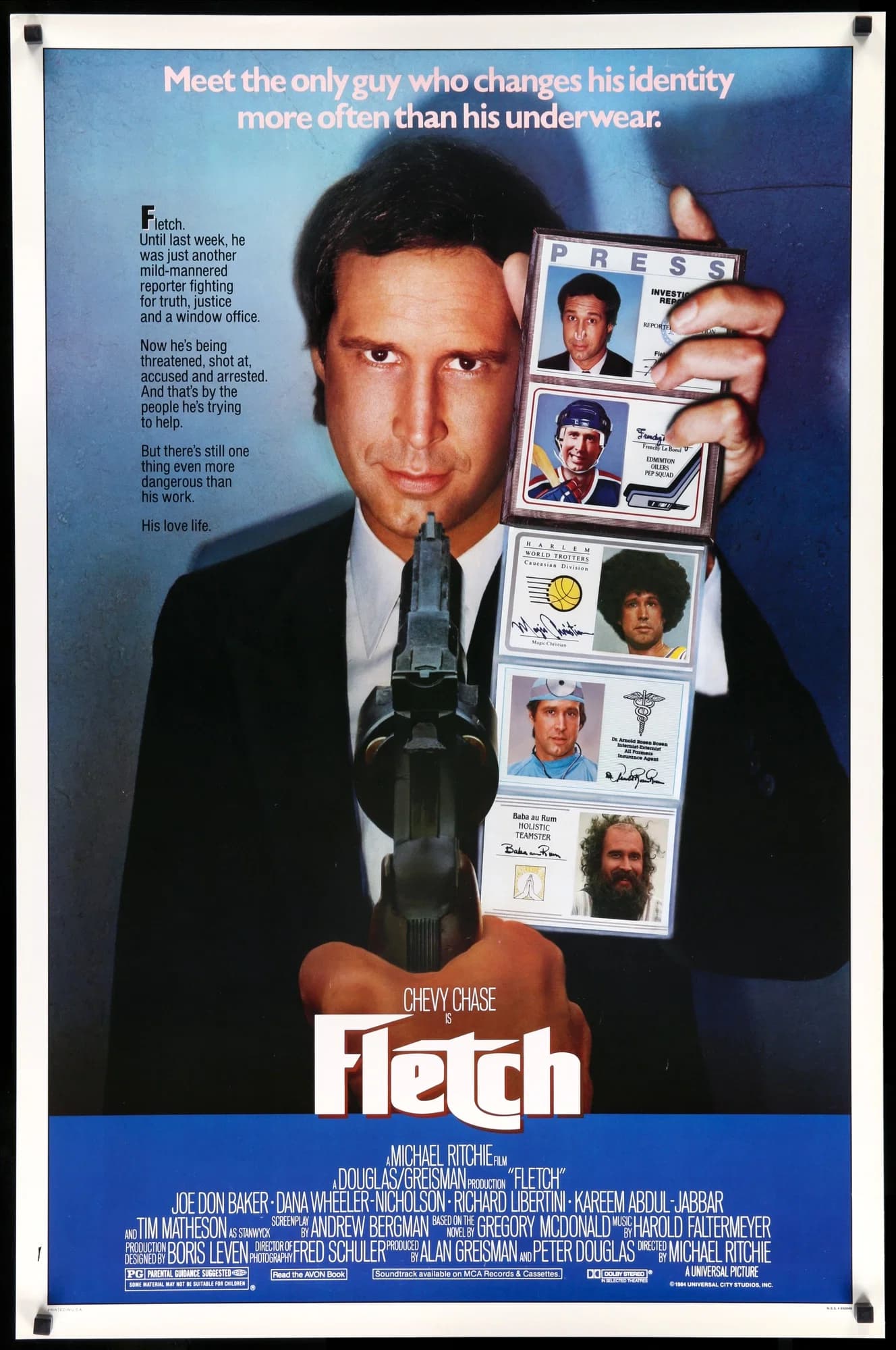
The setup
Fletch arrived in 1985, directed by Michael Ritchie. Los Angeles Times undercover reporter Irwin M. Decades later, it is worth looking at why the film still connects with audiences.
THE MOVIE
Marvin Gillet is still the reason this movie works
Fletch was released in 1985 and directed by Michael Ritchie. Rather than simply retelling the plot, the film is worth revisiting for the characters, conflicts and ideas that give its story its identity.
Greed, Authority and Freedom emerge through what the characters face and the choices they make, giving the story more to explore beyond its immediate plot. Marvin Gillet, Irwin "Fletch" Fletcher and Chief Jerry Karlin do not begin the film seeing one another clearly, and watching those first impressions break down is a big part of why Fletch still works.
THE SETUP
The idea that sets Fletch in motion
Los Angeles Times undercover reporter Irwin M.
"Fletch" Fletcher (who writes as "Jane Doe") is writing an article exposing drug trafficking on the beaches of Los Angeles. That detail matters because it shapes the way the characters initially see one another.
While posing as an addict, he is approached by Boyd Aviation executive vice president Alan Stanwyk, who assumes Fletch is a real junkie. From there, the film can concentrate less on explaining the setup and more on what happens between the people inside it.
Stanwyk claims to have bone cancer with only months left to live, and wishes to avoid the suffering.
Claiming suicide would nullify his expensive life insurance policy but murder wouldn't, Stanwyk offers $50,000 for Fletch to kill him at his mansion in a few days' time, stage the scene as a burglary, then flee to Rio de Janeiro.
Along with his colleague Larry, he begins investigating Stanwyk instead of completing his drug exposé, much to the chagrin of his editor Frank Walker.
Disguised as a doctor, Fletch goes to the hospital where he accesses Stanwyk's medical records and learns he does not have cancer.
Fletch visits Stanwyk's wife Gail at her tennis club.
Pretending to be Stanwyk's friend, he flirts with her.
Looking into Stanwyk's finances, Fletch finds that Gail recently converted $3 million of her personal stock in Boyd Aviation into cash for her husband, to buy a ranch in Provo, Utah.
UNDER THE SURFACE
Fletch has more on its mind than the plot suggests
Fletch has more on its mind than the basic setup suggests. greed sits close to the centre of the film, but it is explored through the characters rather than treated like a lesson.
authority matters just as much. The film keeps challenging the assumptions its characters make about one another, which is where much of its emotional weight comes from.
There is also plenty here about freedom. Those ideas overlap rather than sitting in separate boxes, which helps the movie feel like a story about people rather than a checklist of themes.
PURE 80S
Fletch could not belong to any other decade
Fletch could hardly be separated from the decade that produced it. Released in 1985, it carries the attitudes, style and filmmaking rhythms of the 1980s without needing to announce them.
It also sits comfortably within the era's comedy, crime and mystery filmmaking, even if the movie itself is more interesting than any single genre label suggests. That is part of why it still appears in conversations about 1980s movies and 1980s comedy movies. The film has become tied not only to its own story but to the wider memory of what 1980s movies felt like.
WATCHING IT NOW
What has aged — and what hasn't
Watching Fletch now means seeing both what has lasted and what unmistakably belongs to 1985.
What still works best is the human material. Ideas around greed, authority and freedom have not stopped being relevant simply because the clothes, language and cultural references belong to another era.
Some moments inevitably land differently for a modern audience. Revisiting an older film properly means enjoying what still works without pretending every choice has aged equally well.
THE LEGACY
Why Fletch still matters
A large part of that staying power comes from the characters. Marvin Gillet, Irwin "Fletch" Fletcher and Chief Jerry Karlin are still useful shorthand for the personalities and pressures the film explores.
Fletch has lasted because people continue to recognise something in it. Nostalgia helps, but nostalgia alone does not keep a movie in the conversation for decades.
THE VERDICT
Does Fletch still hold up?
So, does Fletch still hold up? Yes — although watching a film from 1985 honestly means accepting that not every moment will land exactly as it once did.
The film still has something recognisable to say about greed, authority and freedom, and its characters stop those ideas from feeling abstract. Fletch remains worth revisiting because characters such as Marvin Gillet, Irwin "Fletch" Fletcher, Chief Jerry Karlin, Gail Stanwyk and Frank Walker still feel like people rather than labels once the film gets underneath the stereotypes.
Share this movie
Keep watching
More movies from the 80s
1982
Deathtrap
Deathtrap: the safety of home and fear, and why this 1982 movie still matters.
Read our take →
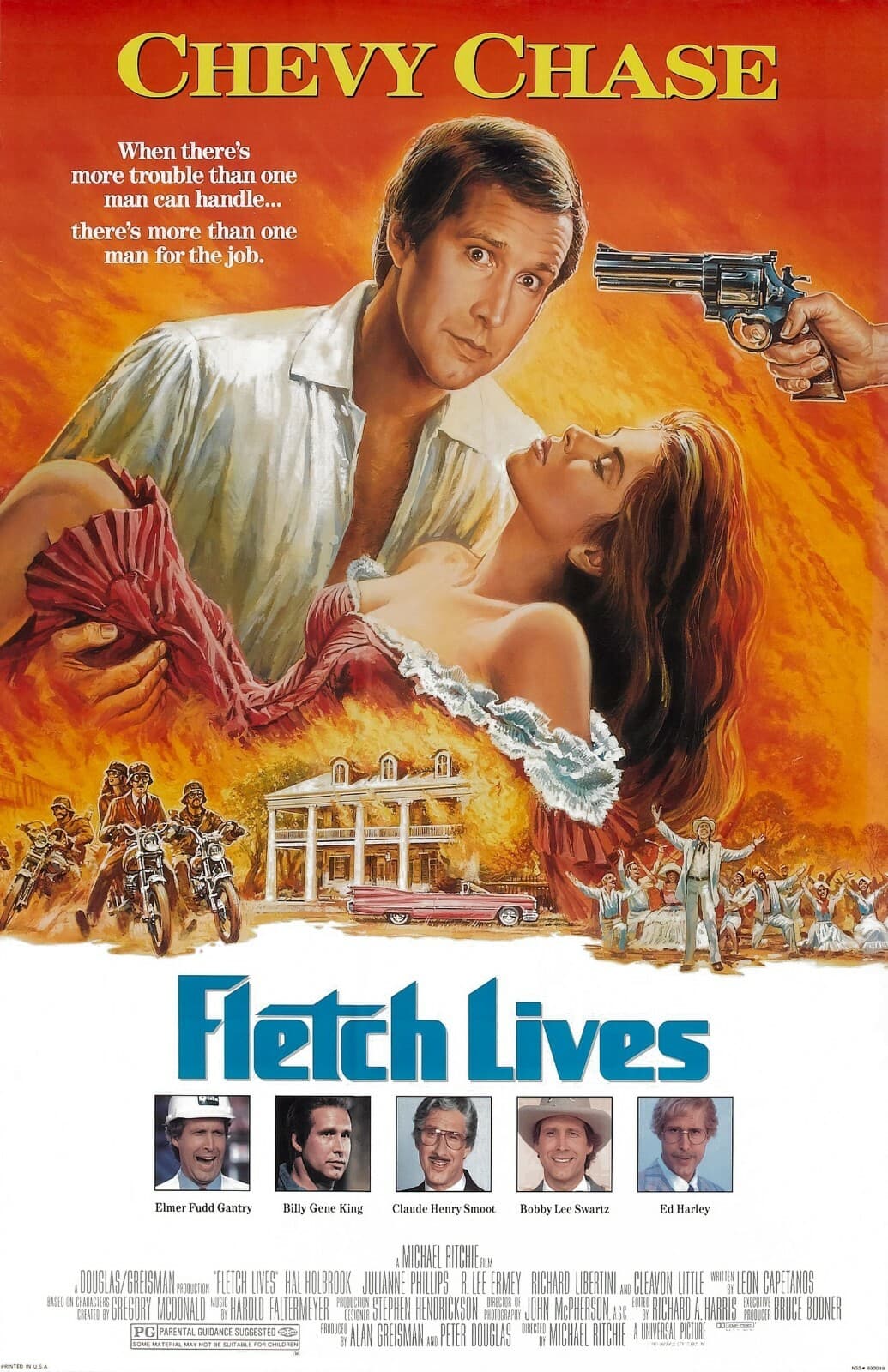
1989
Fletch Lives
Fletch Lives: family and the safety of home, and why this 1989 movie still matters.
Read our take →
1984
Body Double
A film about watching — and about what watching does to the watcher.
Read our take →