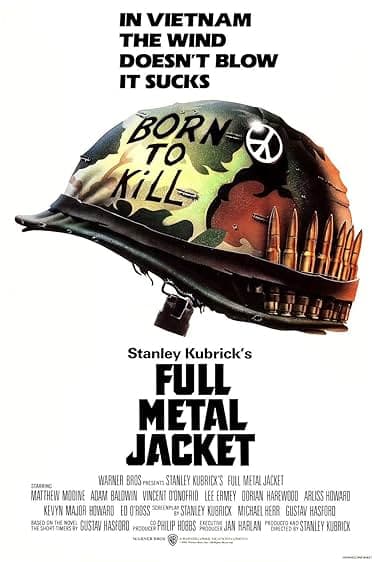
Full Metal Jacket
Two halves, one soldier: Joker carries Kubrick’s Vietnam from drill yard to Huế.
The setup
Full Metal Jacket follows Private James 'Joker' Davis from Marine boot camp to the streets of Huế, and it keeps returning to the one idea that makes the whole film click: what the uniform does to a man. Directed by Stanley Kubrick and released in 1987, it’s a tight, unsettling two-part picture that still rewards attention.
THE MOVIE
Private James 'Joker' Davis is still the reason this movie works
There are plenty of memorable set pieces in Full Metal Jacket — the drill-sergeant onslaught, the cramped, dangerous streets of Huế — but what holds them together is a single through-line: the movie follows Private James 'Joker' Davis from Parris Island basic training to his work as a combat correspondent in Vietnam.
Kubrick slices the film into two very different halves — an extended boot-camp sequence and a separate in-country section — and it’s Joker’s journey between them that makes the structure feel purposeful rather than merely episodic. The shifts let the film show how a single system can remould a young man, and they give the story a kind of uneasy balance.
Directed by Stanley Kubrick and released in 1987, the picture is economical — 116 minutes that keep returning to questions of brutality, identity and what happens when military training turns people into mechanisms. Matthew Modine plays Joker, and the cast around him charts the different shapes that a recruit’s life can take.
THE SETUP
The idea that sets Full Metal Jacket in motion
At its simplest the movie follows a recruit through the processes that make him a Marine and then follows him again when the theatre shifts to Vietnam. That journey — from Parris Island boot camp to the chaos of the Tet Offensive — is the engine.
It’s not a traditional linear war epic. Instead the film frames events through Joker’s commentary, using his voice to distance and, at times, to undercut what we see on screen.
The film doesn’t pretend to be an exhaustive history; it chooses a handful of moments and lets them do most of the talking. Rafterman appears as the combat photographer in the later section, reminding us that part of this story is about how war is seen and recorded.
Because the same central figure moves between the two halves, the story gets to compare training-room lessons with street-level consequences without spelling out a lecture — the setup trusts the contrast to speak for itself.
THE CHARACTER
Why Private James 'Joker' Davis matters
Joker matters because the whole film literally follows him. His passage from recruit to combat correspondent lets the story show two ways of being in the same war: trained soldier and assigned observer.
That arc gives the movie room to set up contrasts — different roles young men are pushed into, the choices available to them once the institution has done its work. It’s a useful organising device: we watch a single figure move through two systems.
Matthew Modine plays Joker, and his presence is the film’s connective tissue. The casting choices around him sketch a roster of soldier-types that the movie needs, from the obsessed combatant to the photographer whose job is to look.
Put simply: Joker is the thread. Follow him and you get both halves of the film, and with them the picture’s small study of how men respond to being made into Marines.
UNDER THE SURFACE
Full Metal Jacket has more on its mind than the plot suggests
You can watch Full Metal Jacket as a set of scenes, but it’s quieter ambitions are about how institutions shape people. Dehumanization and a kind of systematic brainwashing are threaded through both halves: the drill yard purposefully strips recruits down and tries to rebuild them.
Closely linked to that is the film’s interest in masculinity and military identity. The movie is full of demonstrations: how toughness is taught, how aggression is packaged, how men are given roles to inhabit and then judged by the ones they perform.
There’s also a tug-of-war built into the film — a motif of duality. The contrast between slogans and symbols hints at the split inside the men themselves, a private contradiction that the uniform only amplifies.
Finally, the film doesn’t ignore the fact that war is seen through media. The presence of a combat photographer and Joker’s later duties point to how representation changes the story being lived, and to how young men are both players and images in that process.
THE FILMMAKING
How Full Metal Jacket was put together
Kubrick assembled a conventional-sounding crew on paper — a credited director of photography, production designer and editor — but the practical choices they made are what give the film its physical sense of place.
Anton Furst is listed as production designer and Douglas Milsome as director of photography; Martin Hunter is the editor. Those credits matter because the film’s look and its construction were deliberate collaborative decisions.
Part of that meant building an environment: substantial set construction and even selective demolition were used to create the urban Vietnamese locations the story requires.
Those decisions — to build rather than merely suggest — are the kind of production moves that let the film shift credibly from the claustrophobic drill yard to the ruined streets of Huế.
PRACTICAL EFFECTS
The effects work that gives Full Metal Jacket its physical personality
Kubrick’s production went to notable lengths to make the battlefield feel tangible. For the Hue sequences the production rented six M-47 tanks from the Belgian Army and shipped them across the Channel.
The art department didn’t just paint facades — buildings were selectively destroyed and dressed to stand in for a bombed-out Vietnamese city, and significant tropical foliage was imported to make the sets read as southern terrain.
Those choices were backed up by people on the ground: thousands of background performers of Vietnamese origin were employed to populate the Da Nang and street sequences, giving scale and human texture to the crowd scenes.
The result is a physical world that reads as lived-in and dangerous because the production treated it as something to be built and occupied, not merely suggested.
PURE 80S
Full Metal Jacket could not belong to any other decade
Full Metal Jacket arrived in 1987, during a mid-1980s wave of Vietnam pictures that were trying to reckon with soldier experience in different, often personal ways.
Contemporary coverage frequently grouped it with other recent films examining the soldier’s point of view — a cluster that pushed Hollywood and studios to take prestige war pictures more seriously for a moment.
For Kubrick it was also a return to features after The Shining; the production sat within a Warner Bros. deal at a time when studios were more open to ambitious, adult dramas about war.
The film’s production schedule and its decision to build large Huế sets in England make it feel like a period piece of the 1980s in the sense that this was a moment when scale and craft were being marshalled around serious subject matter.
THE LEGACY
Why Full Metal Jacket still matters
Part of the film’s afterlife is simply documentary: the screenplay by Kubrick, Michael Herr and Gustav Hasford received an Academy Award nomination for Best Adapted Screenplay, and the picture earned BAFTA recognition in technical categories.
Industry attention singled out certain elements on release: R. Lee Ermey received a Golden Globe nomination for his role as Gunnery Sergeant Hartman, and that casting backstory — where Kubrick incorporated material from Ermey’s sessions as a technical adviser — became part of how people talked about the film.
The film’s original electronic score, credited to Vivian Kubrick under the pseudonym Abigail Mead, produced trade coverage at the time and remains a notable production detail in the movie’s dossier.
Taken together, those facts explain why Full Metal Jacket remains a film people return to: it’s a carefully assembled piece of work that attracted awards attention and conversation about the choices behind the camera as well as on it.
THE VERDICT
Does Full Metal Jacket still hold up?
Yes — on its own terms. The film’s decision to keep the story focused on Private James 'Joker' Davis and to split the narrative into two contrasting halves is still a smart dramatic choice: it lets Kubrick show both the manufacture of a soldier and the messy reality that the training is meant to prepare him for.
The boot-camp section, with its pressure cooker of authority and the figure of the struggling recruit Leonard 'Gomer Pyle', gives the film a compact, brutal centre; the Vietnam section turns to squad mechanics and the problems of reportage and survival, with Joker now in the role of observer as much as participant.
A lot of the movie’s continued power comes from those structural moves and from the production commitment — the way the film was put together, the construction of Huế sets and the logistical choices behind the battle scenes — all of which were deliberately handled to make the world feel immediate.
If you’re prepared for a film that is lean rather than sprawling and that prefers to pose questions by contrast, Full Metal Jacket remains worth watching. It’s a movie that examines what happens when an institution strips a man down and issues him back to the world — and it does so in two short, sharp acts.
Share this movie
Keep watching
More movies from the 80s
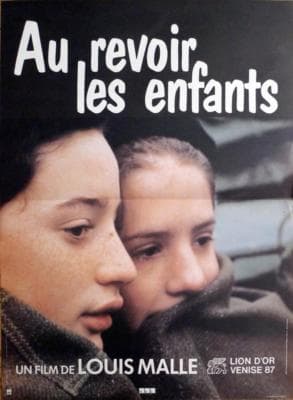
1987
Au revoir les enfants
Au revoir les enfants: family and friendship, and why this 1987 movie still matters.
Read our take →
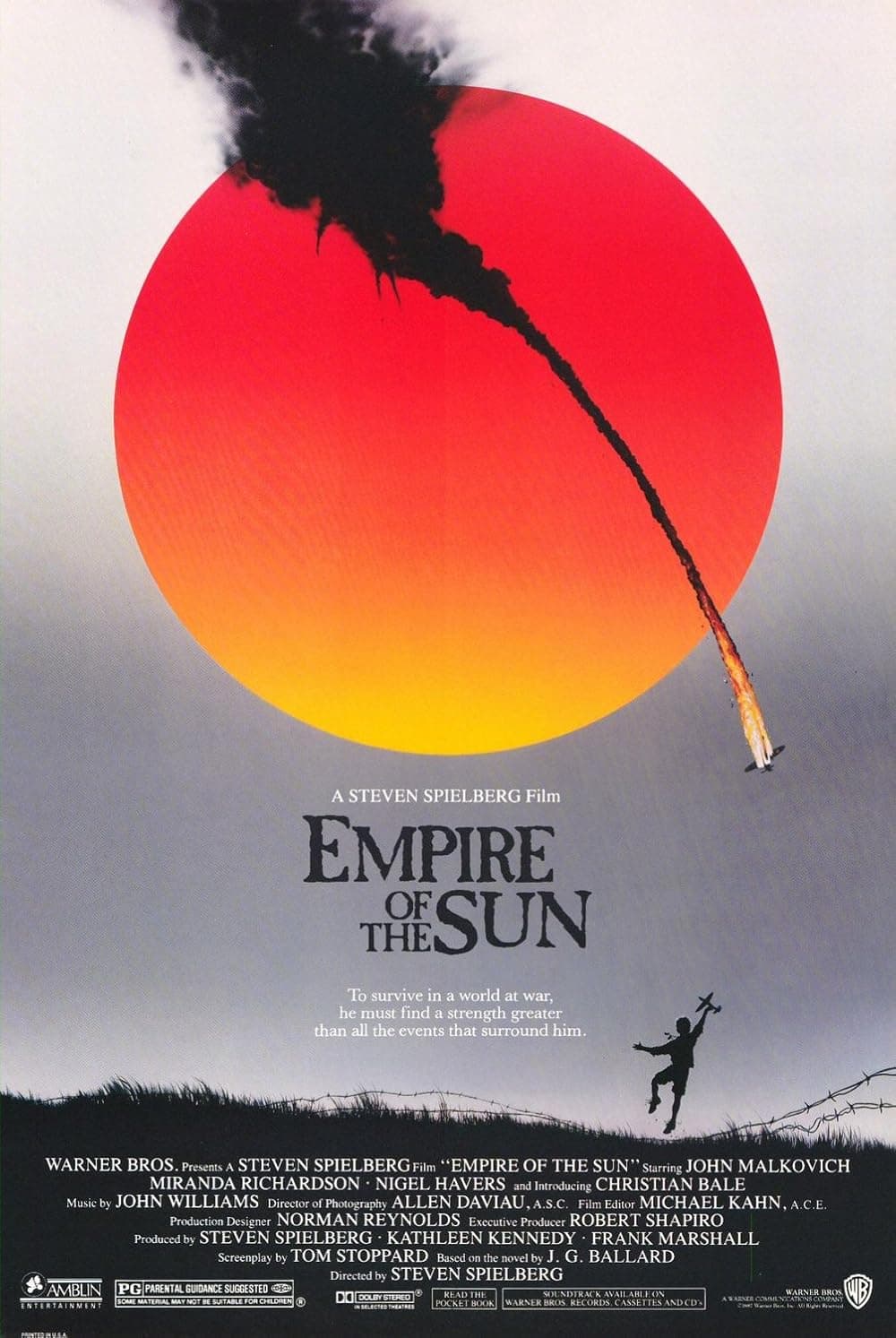
1987
Empire of the Sun
A child's obsession with flight becomes the lens for war, survival and a very awkward apprenticeship in adulthood.
Read our take →
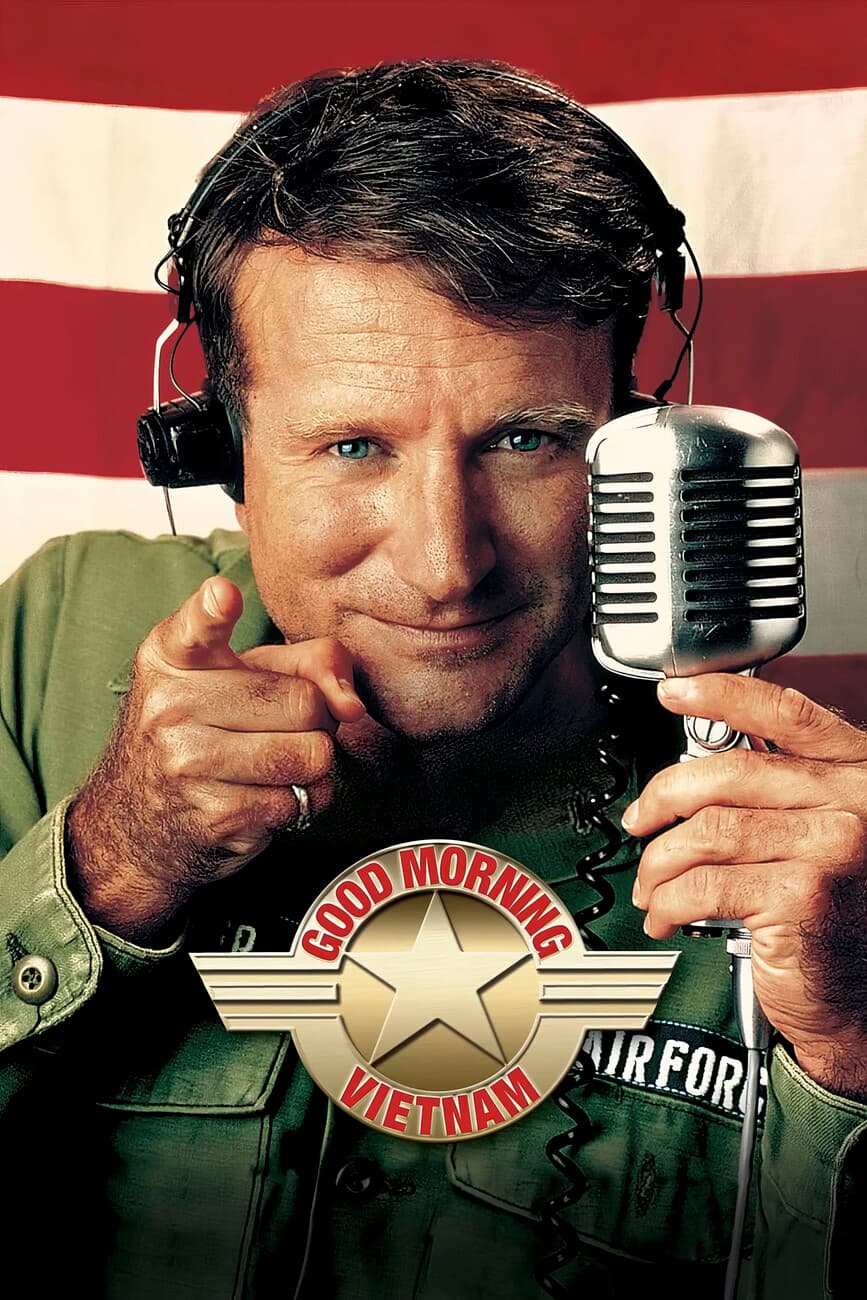
1987
Good Morning, Vietnam
A loud, furious hello from a man who thinks radio can fight censorship and loneliness at once.
Read our take →