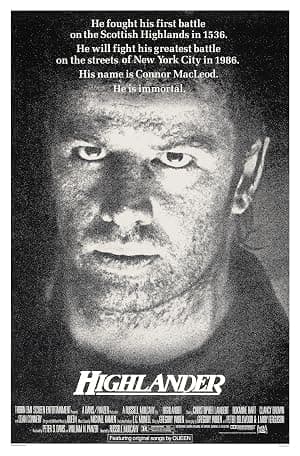
The setup
Highlander isn't just a fantasy about head-chopping immortals; it sticks because of Connor MacLeod — a man who has to learn how to survive for centuries and pay for it in solitude. Russell Mulcahy brought a music-video energy to the whole thing, and that odd blend of myth and modern city noir still gives the film a personality worth revisiting.
THE MOVIE
Connor MacLeod / Russell Edwin Nash is still the reason this movie works
Highlander sets up a simple but strangely compelling bargain: a 16th-century Scot discovers he cannot die and must live with that fact for centuries. The plot moves between his Highland origin and a very different 1980s New York where he hides under the name Russell Nash and keeps one eye open for other immortals.
What keeps the story from turning into mere fantasy set-dressing is the cost of that longevity. Connor is driven by the need to survive, yes, but also by exile and the grief of watching people he loves age and die while he carries on.
You can also see why people talk about it: Russell Mulcahy directs with a distinct flair, and the film pairs that modern style with a story about isolation, sword fights and the strange dignity of someone who has been around far too long.
THE SETUP
The idea that sets Highlander in motion
At its centre Highlander has a tidy premise: certain people are immortal, they don't age, and the only way one can die is by being decapitated. That rule turns the film into a centuries-spanning contest rather than a conventional revenge drama.
The wider conceit — that immortals hunt each other until only one remains to claim 'The Prize' at the Gathering — gives every duel a larger meaning. It’s not just about the next fight; it’s about surviving a very long game.
Structurally, the film stitches that long history to the present with flashbacks, so the Highland origin scenes sit next to 1980s New York in a way that keeps the stakes feeling both mythic and immediate.
A small practical note: the U.S. theatrical version lost a few minutes compared with European cuts, which trimmed some local humour and character beats. That tightening changes the film's rhythm for different audiences.
THE CHARACTER
Why Connor MacLeod / Russell Edwin Nash matters
Connor MacLeod is the film’s emotional anchor because he’s not just a sword-wielding immortal — he’s someone who has to make hard practical choices about identity and solitude. Living through centuries isn’t glamorous here; it’s a burden that shapes every decision he makes.
He carries the weight of exile and loss. The movie keeps returning to how surviving those losses changes him, forcing a continuity between the Highland boy who learned to fight and the man who now hides in New York.
Because the story follows him across eras, we get a sense of consequence. His survival isn’t abstract; it has personal cost — friends and kin left behind, a life lived half in memory and half in caution.
That is what makes Connor memorable: he isn't merely defined by the swordplay or the rules of immortality, but by the long, difficult arithmetic of staying alive when everything and everyone around you changes.
THE PERFORMANCE
Why Christopher Lambert's performance matters
Contemporary critics singled out Christopher Lambert's take on Connor as distinctive, and that observation points to the film’s odd tonal mix. His version of the character is less polished leading-man and more weathered survivor.
Reviews of the time specifically noted his accent work and the physicality he brings to the film's sword sequences. That matters because Highlander asks its lead to sell both centuries of memory and the very immediate business of fighting with a blade.
The physical side of the role — moving convincingly in duels, inhabiting an ancient warrior in modern surroundings — is central to Connor feeling believable across eras.
So even if you arrive at Highlander for the premise, much of the film's emotional plausibility rides on how Lambert occupies the part: a man who looks like he could have been born in the 1500s and yet can still stand in an uptown parking garage and be dangerous.
UNDER THE SURFACE
Highlander has more on its mind than the plot suggests
On the surface it’s a fantasy about swordfights and decapitation. Underneath, the movie keeps returning to what it actually costs to be immortal: isolation, the repetitive grief of losing people and the strange etiquette of secrecy.
There's also a passing of knowledge at work. The mentor relationship — most clearly embodied by Ramírez — is about how traditions and survival techniques get handed down. That transmitted knowledge becomes a form of human connection in a world where time refuses to behave.
Power is never presented as free. The Prize is desired, yes, but the story also shows how appetite for power can brutalise. The Kurgan exists as the opposite of restrained immortality: appetite without conscience.
Finally, Highlander stages a small culture clash: myth rubbed up against the modern city. Ancient rules and rituals meet 1980s practicalities, and that friction is where the film finds much of its moral interest.
THE FILMMAKING
How Highlander was put together
Russell Mulcahy brought a music-video sensibility to the feature, and it shows. The film uses quick cuts and stylised imagery in ways that feel borrowed from the short, punchy grammar of 1980s videos.
That approach helps Highlander leap between centuries: the same editorial shorthand that works in a pop promo here stitches flashbacks to present-day scenes with a rhythmic momentum.
Production travelled. The movie was shot in the Scottish Highlands, London, Wales and New York City, and that location work gives it a tangible sense of place when it needs one — from clan battles to Manhattan streets.
On the credits side, Gerry Fisher handled the cinematography and Peter Honess edited the picture, while Allan Cameron led production design; those named crafts combine to hold together a story that hops time and tone.
PRACTICAL EFFECTS
The effects work that gives Highlander its physical personality
When Highlander needs to feel big it often does so without CGI: the Battle of Glencoe sequence, for example, relied on a very large number of extras — contemporary records note a 400-person reenactment for those crowd scenes.
Swordplay was treated as a practical business on set. Lead actors underwent extended sword training so the duels read as physical encounters rather than filmed choreography alone.
Stunt and safety work were an on-set priority, and contemporary production notes indicate some stunts were performed by principal actors. Reports specifically mention Sean Connery performing many of his own stunts.
Those decisions make the fights feel tactile. You may notice it as small, practical touches: the way a blade is held, the rhythm of a parry — details that come from rehearsal and muscle memory rather than trickery.
PURE 80S
Highlander could not belong to any other decade
Highlander wears its mid-80s birthmark plainly: Mulcahy came from music videos, and the film borrows that MTV-era pulse in its pacing and cut. The result is a fantasy that often feels edited like a pop promo.
That cross-pollination extends to the soundtrack. The film combines Michael Kamen’s orchestral score with songs written and recorded by Queen — most notably 'Princes of the Universe' — a pairing that was very much of its time.
The way the film was financed and distributed also marks it as an era product: it was produced in the mid-1980s within UK/US co-production networks and released through those channels.
All of which places Highlander neatly in 1986 — a moment when genre pictures were happy to mix high and low registers, pop music and traditional scoring, and a director could move from videos to features without losing his voice.
WATCHING IT NOW
What has aged — and what hasn't
Highlander didn't open as a runaway hit in the U.S.; it struggled at the box office before finding a long life on home video and through European releases. That afterlife is why so many people remember it now.
The fact that it has been restored and reissued — including anniversary Blu-ray and a 4K restoration for a 30th edition — shows there is ongoing market and archival interest in the film’s production choices and soundtrack pairing.
Because it developed into a cult property, audiences today often approach it as a curio: a hybrid of earnest medieval melodrama and 80s stylistic bravado. That makes it uneven in places, but also oddly watchable.
Its franchise growth — television, sequels, books and merchandise — has kept the world alive, which means the film is rarely seen in isolation. Viewers coming to the movie now are often aware they’re entering a bigger storytelling playground.
THE LEGACY
Why Highlander still matters
Part of Highlander’s afterlife is sheer persistence: it grew from a struggling theatrical release into a multimedia franchise with sequels, a long-running TV series, novels and comics.
Russell Mulcahy helmed the immediate theatrical sequel, which helped cement Highlander as the start of a continuing story rather than a one-off fantasy.
The Queen songs written for the film — most famously 'Princes of the Universe' — were reused across franchise media, so the soundtrack became a recurring thread in Highlander’s cultural memory.
Regular restorations and anniversary releases also show the film commands enough continued interest to justify archival work and reissues, which in turn keeps conversation—and reappraisal—alive.
THE VERDICT
Does Highlander still hold up?
Yes — but with a rider. Highlander remains watchable because its central story and characters still land: an immortal warrior whose life is measured in loss, a mentor who teaches him the old rules, and a savage rival whose appetite makes victory feel costly.
The film’s structure — flashbacks to the Highlands coupled with a contemporary thread (an inciting modern incident in a Madison Square Garden car park that drags in the police) — keeps the stakes personal and immediate rather than purely mythic.
Expect rough edges. The original U.S. theatrical cut trimmed about eight minutes that affected character detail and humour, and contemporary reviews were mixed. Yet Christopher Lambert’s portrayal was frequently noted for being distinctive, and that helps glue the picture together.
So should you watch it now? If you’re curious about a movie where the drama of immortality is also, quietly, a story about exile, transmitted knowledge and the cost of wanting power, Highlander still does the job. It isn’t flawless, but it’s a singular piece of 1986 cinema that keeps its strange, rather melancholy pulse.
Share this movie
Keep watching
More movies from the 80s
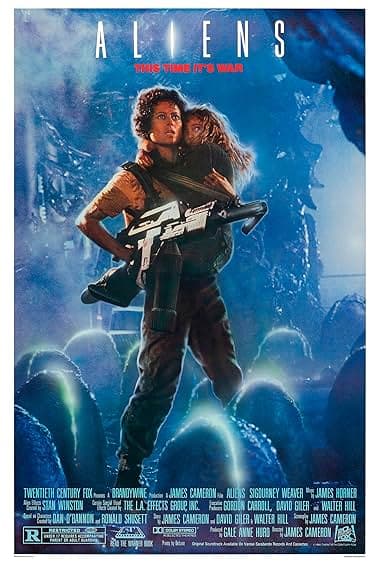
1986
Aliens
Motherhood, marines and monsters: why Ripley still makes Aliens sing.
Read our take →
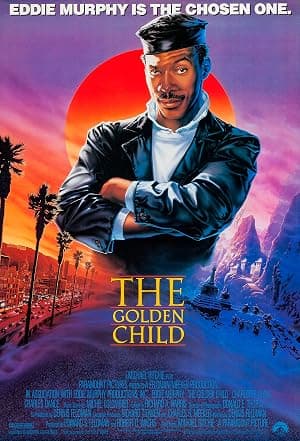
1986
The Golden Child
The Golden Child: parents protecting their children and mortality, and why this 1986 movie still matters.
Read our take →
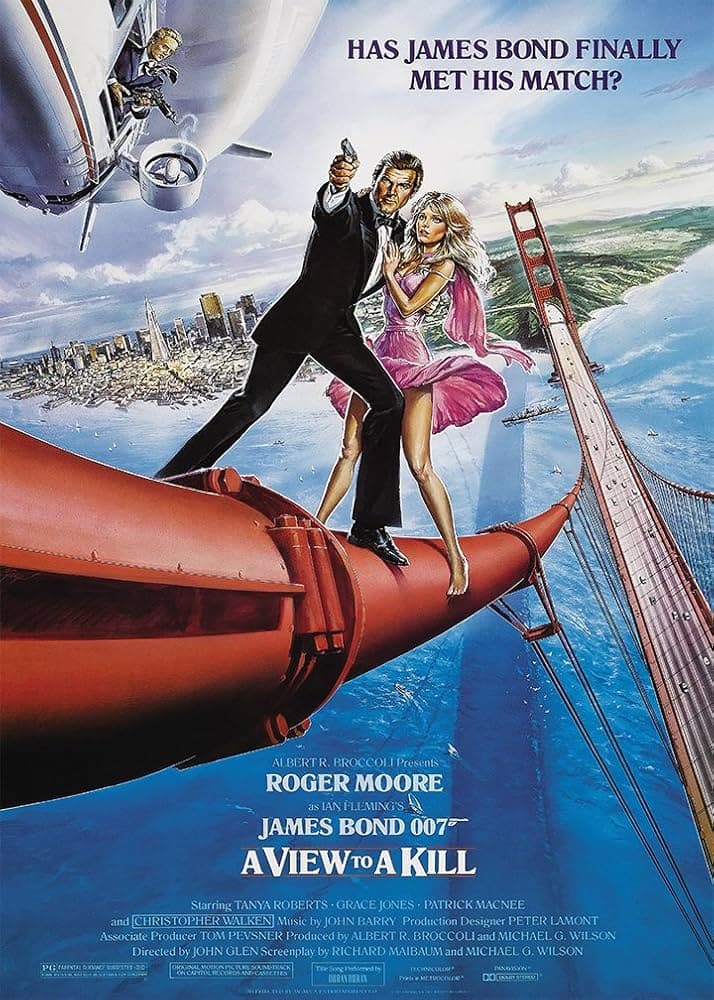
1985
A View to a Kill
A View to a Kill: freedom and courage, and why this 1985 movie still matters.
Read our take →