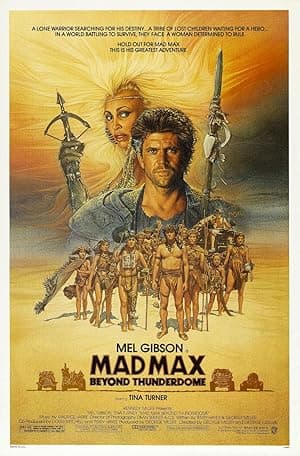
Mad Max Beyond Thunderdome
A gladiator ring, a methane economy and one reluctant road warrior — Mad Max still knows how to make survival feel personal.
The setup
Mad Max Beyond Thunderdome is the Mad Max film that decided to think bigger — not just more cars and bigger stunts, but a whole dusty society to kick around. George Miller (co-directed with George Ogilvie) piles on spectacle, politics and a pop single, yet at the movie’s heart it’s the familiar, stubborn figure of Max Rockatansky who keeps everything honest.
THE MOVIE
Max Rockatansky is still the reason this movie works
There’s a lot going on in Beyond Thunderdome — Bartertown’s plumbing, methane politics, a metal-cage arena and a band of children who think storytelling is how you survive. It’s a louder, more expansive Mad Max than anyone had seen up to 1985, and that expansion is deliberate: the film builds a small economy so it can tear the rules of survival down and put them back together again.
But none of that spectacle would land without a solid centre. Mel Gibson’s Max Rockatansky returns as the lone survivor we already know: someone for whom the day-to-day question is still how to stay alive. In this film his solitude gets complicated — he’s shoved into the Thunderdome, exiled into the wastes and then dragged into the messy business of protecting other people.
Directed by George Miller (co-directed with George Ogilvie) and running to 107 minutes, the film mixes action and adventure with explicit themes of power, resource control and redemption. It’s noisy on purpose, but it’s anchored by a simple idea: what happens when a survivor is asked to stop surviving alone?
THE SETUP
The idea that sets Mad Max Beyond Thunderdome in motion
At its most economical, the film gives us a handful of clear moves: Bartertown exists because someone found a way to turn methane into leverage, and those who control the pipes control the town. That political set-up makes everything that follows feel inevitable — gladiatorial justice, trade-offs and the occasional bargain you regret.
The Thunderdome itself is both a show and a game-changer. It’s presented as public theatre — a way to settle scores in spectacle — and as a narrative machine: Max’s fate in the arena determines his exile, which in turn pushes him into contact with people he would otherwise avoid.
From exile to rescue, the other hinge is the tribe of children led by Savannah Nix. They’re not background decoration; their existence and storytelling practice refract the movie’s questions about how communities remember and teach survival.
There’s a production-side footnote that sits under the whole film: this was the first Mad Max completed after Byron Kennedy’s death in 1983, a change in the series’ production history that quietly marks this entry as a different, more outward-facing chapter.
THE CHARACTER
Why Max Rockatansky matters
Max matters because he’s a useful contradiction: practised at solitude, suddenly made useful to others. That tension — survival instinct meeting reluctant responsibility — gives the film its emotional tug without turning the story into a morality play.
We meet him again as a wanderer, driven by the basic question of staying alive. This film nudges that single-mindedness into a new shape: forced into Bartertown, thrown into the Thunderdome, then exiled and obliged, against his nature, to become a protector.
The arc is partial, not heroic in the classical sense. Max doesn’t transform into a saint; he compromises, chooses to help, and in doing so proves that the world’s rules can be bent. It’s a small but vital evolution for a character who began as a man on a mission and remains, at heart, a survivor.
All of which is to say: when the movie widens its ambitions — politics, myth, spectacle — Max is the tidy knot that keeps those pieces from scattering. He still asks the simplest question: how do I get through this day? The answers the film offers are messier, and that’s what makes them interesting.
THE PERFORMANCE
Why Tina Turner's performance matters
Casting Tina Turner as Aunty Entity was a clear signal that this Mad Max wanted both grit and stage presence. Contemporary coverage picked up on that immediately: reviewers drew attention to her presence and the way the Thunderdome sequence heightened that energy.
Turner’s Aunty controls Bartertown through force and showmanship, and that balance is part of why the character reads as more than a standard villain. Critics singled out the Thunderdome fight as a particularly original staging of cinematic combat — a sequence that frames Aunty’s rule as public theatre as much as governance.
Small production details underline the commitment: archive material notes Turner shaved part of her hair for the role and wore substantial chain-mail costume pieces. Those choices help the character occupy both the stage and the throne she’s created.
Put simply: Aunty Entity isn’t just another boss to be toppled. The contemporary reaction made it clear the casting and presentation mattered — Turner brought an unmistakable authority to a part that needed to be both charismatic and ruthless.
UNDER THE SURFACE
Mad Max Beyond Thunderdome has more on its mind than the plot suggests
On the surface it’s action and stunts. Underneath it’s about who controls the basics of life. Bartertown’s methane system isn’t just a clever set piece — it’s the engine of power: whoever runs the pipes runs the town. That concentration of resource control turns everyday survival into political theatre.
Max’s reluctant movement from loner to protector reads as a story of partial redemption. He doesn’t seek to be a saviour, but the plot forces him into decisions that look like atonement — choices made for others rather than for himself.
Then there’s the tribe led by Savannah Nix and their oral traditions — their 'Tells' — which the film treats as more than quaint background. Those stories are survival manuals; they keep community memory alive and, in the film’s logic, turn myth into practical technique.
Finally, the Thunderdome itself stands where spectacle and governance meet. It’s a rule by ritual: public combat as law. That marriage makes the movie less about action for its own sake and more about how societies organise conflict when civilisation has been stripped down to essentials.
THE FILMMAKING
How Mad Max Beyond Thunderdome was put together
Beyond Thunderdome feels built to be seen: production design throws up big, showy spaces — Bartertown’s public arenas and the costumes that fill them — and the movie mixes location work with constructed sets to keep the scale believable.
That scale is not accidental. This is the Mad Max film that most consciously reached for an international audience: bigger budget, bigger star names and a more pronounced sense of spectacle than the earlier entries. The production reflects that shift by making its world feel designed for both cinema and commerce.
George Miller retained creative direction across the series, and here he shares co-directing credit with George Ogilvie. The result is a film that tries to balance Miller’s appetite for kinetic invention with broader storytelling beats — the set pieces arrive with intent rather than accident.
So while the movie still operates as a vehicle picture in the most literal sense, the filmmaking here also invests in civic detail — marketplaces, systems and rituals — which gives the action a context beyond car chases.
PRACTICAL EFFECTS
The effects work that gives Mad Max Beyond Thunderdome its physical personality
The film uses real-world tricks to sell a ruined world. Production employed physical models and miniatures to suggest a damaged Sydney skyline — including scaled representations of the Harbour Bridge and the Opera House — in the film’s world-building moments.
Those miniatures sit alongside much more obvious on-set bravado: live vehicular stunts, carefully staged fight choreography and enormous set pieces for both the Thunderdome and the film’s chases. It’s film craft aimed at giving the audience something tangible to believe in.
Contemporary reviewers noticed the physicality: the way stunts land and the clarity of choreographed action are part of what critics singled out when discussing the film’s highlights.
Put another way, the movie doesn’t do its world-building with offscreen whispers; it builds things you can touch on camera, then smashes them convincingly.
PURE 80S
Mad Max Beyond Thunderdome could not belong to any other decade
This is the Mad Max that leaned into mid-80s blockbuster logic: bigger budgets, international casting and studio distribution. The production choices move the franchise toward a more Hollywood-facing model — a conscious widening of scope.
Tina Turner’s involvement and the decision to release a pop single from the soundtrack — 'We Don't Need Another Hero (Thunderdome)' — fit neatly into a mid-80s pattern of films using chart-ready songs to reach a wider audience. It’s marketing and mood in one move.
The film’s 1985 release places it at a moment when action cinema was stretching its wings internationally; this entry shows a franchise learning to speak that larger language without completely abandoning its rugged origins.
There’s also a production milestone tucked into the film’s history: it’s the first Mad Max completed after Byron Kennedy’s death in 1983, which subtly marks this chapter as a turning point for the series’ production story.
THE LEGACY
Why Mad Max Beyond Thunderdome still matters
For a long time this was the Mad Max most people outside Australia knew: it was the franchise’s most high-profile mainstream entry until later revivals, and it keeps turning up in franchise DVD and anthology packages. That continued visibility is part of why people still talk about the film.
The title single — 'We Don't Need Another Hero (Thunderdome)' — gave the movie a reach beyond curse-word-laden chases and armour-plated brawls. A pop hit with major-award nominations, the song helped the film slide into popular consciousness in a way earlier entries didn’t attempt.
Production-wise, the film also marks a transition: it was the first Mad Max completed after Byron Kennedy’s death in 1983, a fact that later histories of the series note as a turning point for how the films were produced and positioned.
So its legacy is messy and specific: remembered in franchise round-ups, boosted by a hit single, and marked as a production milestone — not an abstract cultural monolith, but a film that opened the series up to a larger, more mainstream conversation.
THE VERDICT
Does Mad Max Beyond Thunderdome still hold up?
Yes — if what you’re looking for is a big, brash entry in the series that balances spectacle with surprisingly specific ideas about power, resource control and how societies survive. The film’s politics are literal: Bartertown runs on methane, and the people who control the methane control everything. That gives its action stakes beyond mere excitement.
The Thunderdome set-piece does the heavy lifting. It’s both spectacle and plot device: the arena shapes Max’s exile and his return, and contemporary critics singled that sequence out as a particularly original piece of combat staging. If you remember only one image from the movie, the Thunderdome is a good place to start.
Character-wise, the film still works because it keeps Max’s basic question — survival — in view even as it asks him to do something he’s avoided: be useful to others. The children led by Savannah Nix provide a moral counterpoint to Bartertown without dissolving into passive victimhood, which is an underrated strength.
If you want to watch a mid-80s franchise movie that aimed for broader visibility — with a major pop single, star casting and a push toward Hollywood scale under George Miller’s direction — this is exactly that. It’s not pure Road Warrior grit, and it isn’t apologising for that. It’s a different kind of Mad Max, and for many viewers, that difference is precisely the point.
Share this movie
Keep watching
More movies from the 80s
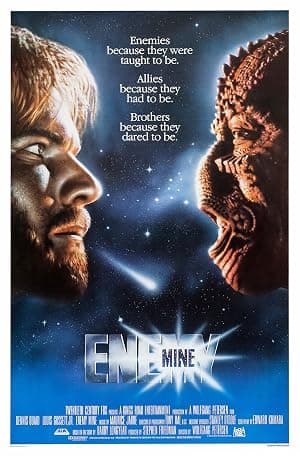
1985
Enemy Mine
Enemy Mine: humanity and mortality and lifespan, and why this 1985 movie still matters.
Read our take →
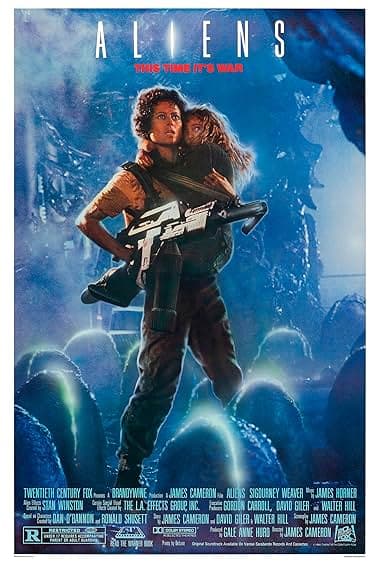
1986
Aliens
Motherhood, marines and monsters: why Ripley still makes Aliens sing.
Read our take →
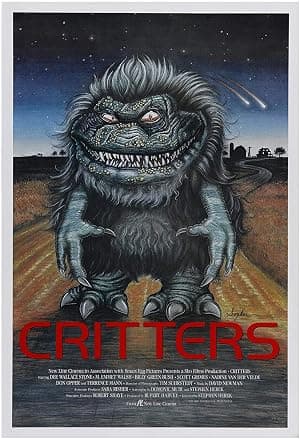
1986
Critters
Critters: freedom and family, and why this 1986 movie still matters.
Read our take →