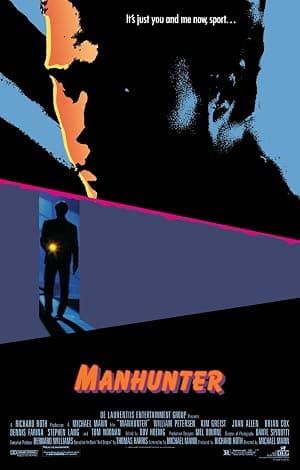
The setup
Manhunter feels like a private investigation in the dark — not just of a killer, but of the man who tracks him. Michael Mann's take on Thomas Harris's Red Dragon centres on Will Graham being pulled out of retirement to piece together a murderer by imagining the murderer’s mind. It's a procedural with nerves: a film less interested in jump scares than in how empathy can wear you down.
THE MOVIE
Will Graham is still the reason this movie works
Manhunter isn't a flashy studio shocker — it's a slow, intimate headlock. At its core is an arresting idea: retired FBI profiler Will Graham is pulled back into service after a new string of murders, the kind that leave a distinctive bite mark and a trail of dread.
That recruitment is the film's hinge. William Petersen plays the man who has to put himself inside another person's head to find them, and the movie makes that risky method an ethical problem as much as a detective tool: empathy starts to look a lot like becoming the thing you hunt.
Michael Mann directs with a clear eye for mood — he adapted the screenplay himself — and he sets a neo-noir crime-thriller against themes of isolation, media interference and the strange doubling of hunter and hunted. That combination is why Manhunter still draws conversation today.
THE SETUP
The idea that sets Manhunter in motion
The film kicks off when Graham is summoned to consult on a series of murders distinguished by bite marks — the straightforward procedural hook that lets the rest of the movie unfold. It's a tidy premise, but what follows is less about clues and more about method.
That method is empathetic profiling: Graham doesn't just gather evidence, he tries to re-create the killer's inner landscape by imagining himself in that person’s place. It's a blunt, psychologically expensive technique, and the movie treats it as such.
Complicating the investigation are routine but telling pressures: the intrusive reporter Freddy Lounds and Graham's own attempts to shield his family. Those elements keep the case from existing in a neat laboratory; the personal and the public collide, and the stakes feel plausibly human.
So the setup works because the plot and the procedure are braided — you get a police story that insists you watch what empathy does to the watcher.
THE CHARACTER
Why Will Graham matters
Will Graham is the movie's moral and psychological fulcrum. He's not an invulnerable action lead; he's a retired profiler haunted by a near-fatal encounter with Hannibal Lecktor, and that history shapes every choice he makes while hunting the new killer.
That history isn't window dressing. Graham returns to the field because he's driven to stop another murder spree, yes — but also to protect his family from the cost of his work. That tension keeps him human: his investigative gifts come with consequences for the people closest to him.
In short, Manhunter asks us to follow a protagonist who pays for his empathy. Watching Graham is watching someone balance duty, memory and domestic life, and that balancing act gives the film its emotional pull.
THE PERFORMANCE
Why William Petersen's performance matters
Contemporary reaction to William Petersen's turn as Will Graham was mixed — some critics at the time questioned his charisma in the role. That doesn't mean the choice lacks purpose: casting a quieter, less conventionally theatrical lead keeps the film from tumbling into action-movie heroics.
Seen through what the movie asks of Graham — a man who must internalise darkness to map it — Petersen's presence reads as a deliberate fit for a restrained psychological thriller rather than an obvious star vehicle.
If your appetite is for flashy lead turns, Manhunter won't deliver. But if you want the film's focus to remain on the strain of empathising with evil, the casting choice supports that aim.
UNDER THE SURFACE
Manhunter has more on its mind than the plot suggests
On the surface it's a serial-killer movie. Underneath it becomes an examination of what happens when the person who hunts monsters lets them in. The film repeatedly returns to empathy and profiling as moral trade-offs: to catch a killer Graham must think like one, and that bleeds into his life.
There's also a neat doubling running through the story — hunter and hunted mirror each other. That duality isn't decorative; it's the engine that makes the film feel tense even when nothing explosive is happening.
Isolation is another motor of the narrative. Several characters are lonely in ways that matter to their actions; the movie treats emotional disconnection as something that can drive violence or lead people into dangerous decisions.
Finally, Manhunter keeps one eye on the world outside police procedure: the press and sensationalism complicate the investigation, reminding us that policing is never conducted in a vacuum.
THE FILMMAKING
How Manhunter was put together
Michael Mann assembled a tight crew. Dante Spinotti is credited as director of photography, and the film leans on a controlled, stylised palette and production choices that feel of a piece with Mann's 1980s work. Those choices shape the film's identity rather than merely dressing it up.
Editor Dov Hoenig is also credited, and contemporaneous criticism singled out the film's deliberate pacing and rhythmic editing. The result is a movie that prefers tension and mood over breathless plot churn — which suits the procedural and psychological material it handles.
Put simply: Mann's construction keeps the pressure steady. The filmmaking choices aren't flashy for their own sake; they keep you inside the case and inside Graham's uneasy headspace.
PRACTICAL EFFECTS
The effects work that gives Manhunter its physical personality
One notable production decision affected how Francis Dollarhyde appears on screen: Dollarhyde was originally photographed with an elaborate chest tattoo, but the production later reshot or removed some of that footage, changing how the character's physical presence reads in the finished film.
That choice matters because it alters how the audience encounters Dollarhyde's ritualistic persona. Small practical adjustments like this can shift a performance's impact without touching the screenplay.
PURE 80S
Manhunter could not belong to any other decade
Manhunter landed in August 1986, at a moment when Michael Mann was moving between his feature work and television projects. The film sits squarely in the 1980s neo-noir conversation precisely because of that career-phase and the aesthetic choices that accompany it.
Part of what dated — and once divided critics — was its music and stylised visuals: the soundtrack leans on synthesised and alternative contemporary songs, and the production design signals an 80s production sensibility. Those elements made the film feel modern at the time and remain part of its personality.
Because of that combination — the era's sounds and Mann's mood-driven approach — Manhunter reads as a product of its decade in a way that is intrinsic rather than nostalgic.
THE LEGACY
Why Manhunter still matters
Manhunter introduced Hannibal Lecktor to cinema — Brian Cox's portrayal is the character's first screen appearance — and it was the inaugural film version of Harris's Lecter novels. That provenance gives it a particular place in the Lecter story on screen.
The film's reputation didn't remain fixed; through the 1990s and 2000s it developed a cult following and underwent critical re-evaluation, with later viewers and commentators praising aspects like its procedural focus and stylistic decisions.
Practically speaking, the movie has been kept in circulation through multiple alternate cuts and restorations, including a director-approved 'Final Cut' that has been used for anniversary theatrical showings. Those restorations have helped maintain interest and let new audiences reassess the film.
THE VERDICT
Does Manhunter still hold up?
Yes — but with a caveat. If you come for a conventional serial-killer thriller you might be impatient: Manhunter is a neo-noir procedural that takes its time and asks you to sit in the friction of empathy and investigation. The premise is simple — a retired FBI profiler is pulled back to track a killer known as the 'Tooth Fairy' — but the film earns its length by making that method the story's moral problem.
The movie depends on the pressure between hunter and hunted. Graham repeatedly consults the incarcerated Hannibal Lecktor, and his near-fatal encounter with Lecktor hangs over the investigation. That history makes Graham's return personal; his attempt to protect his family adds stakes that are not merely plot mechanics.
Francis Dollarhyde is written as a solitary, ritualistic figure, fixated on William Blake's Great Red Dragon imagery; his emotional isolation matters to the crime and to the film's themes. Mann's direction and the film's patient construction let those threads breathe instead of resolving them through spectacle.
So should you watch it? If you appreciate a crime movie that prefers psychological tension to popcorn thrills — and enjoy seeing how an 80s neo-noir handles empathy, media complications and the hunter/hunted mirror — Manhunter is worth your time. It won't be everyone's cup of tea, but it rewards a quiet, attentive watch.
Share this movie
Keep watching
More movies from the 80s
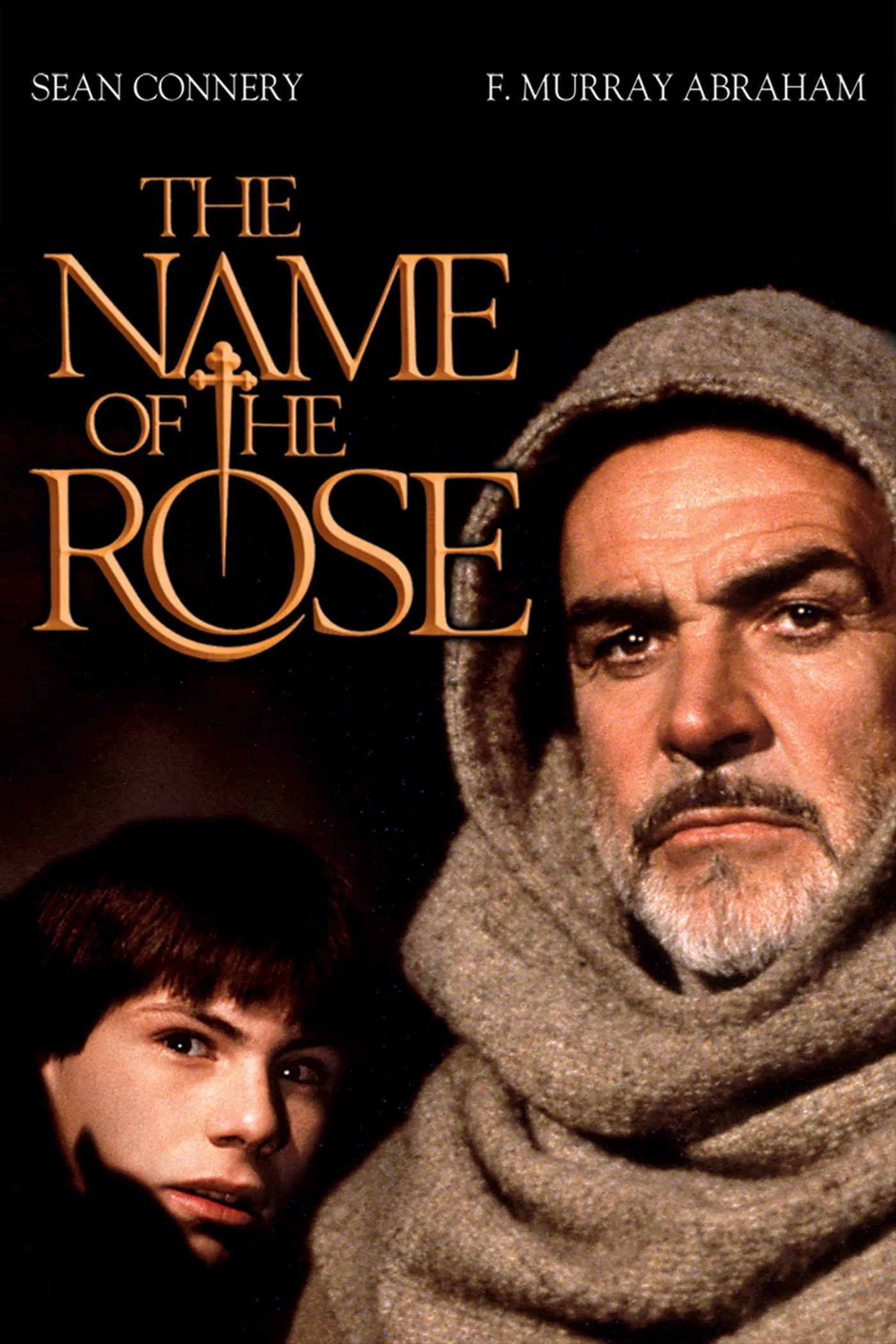
1986
The Name of the Rose
A murder mystery where books are as fragile — and dangerous — as secrets.
Read our take →
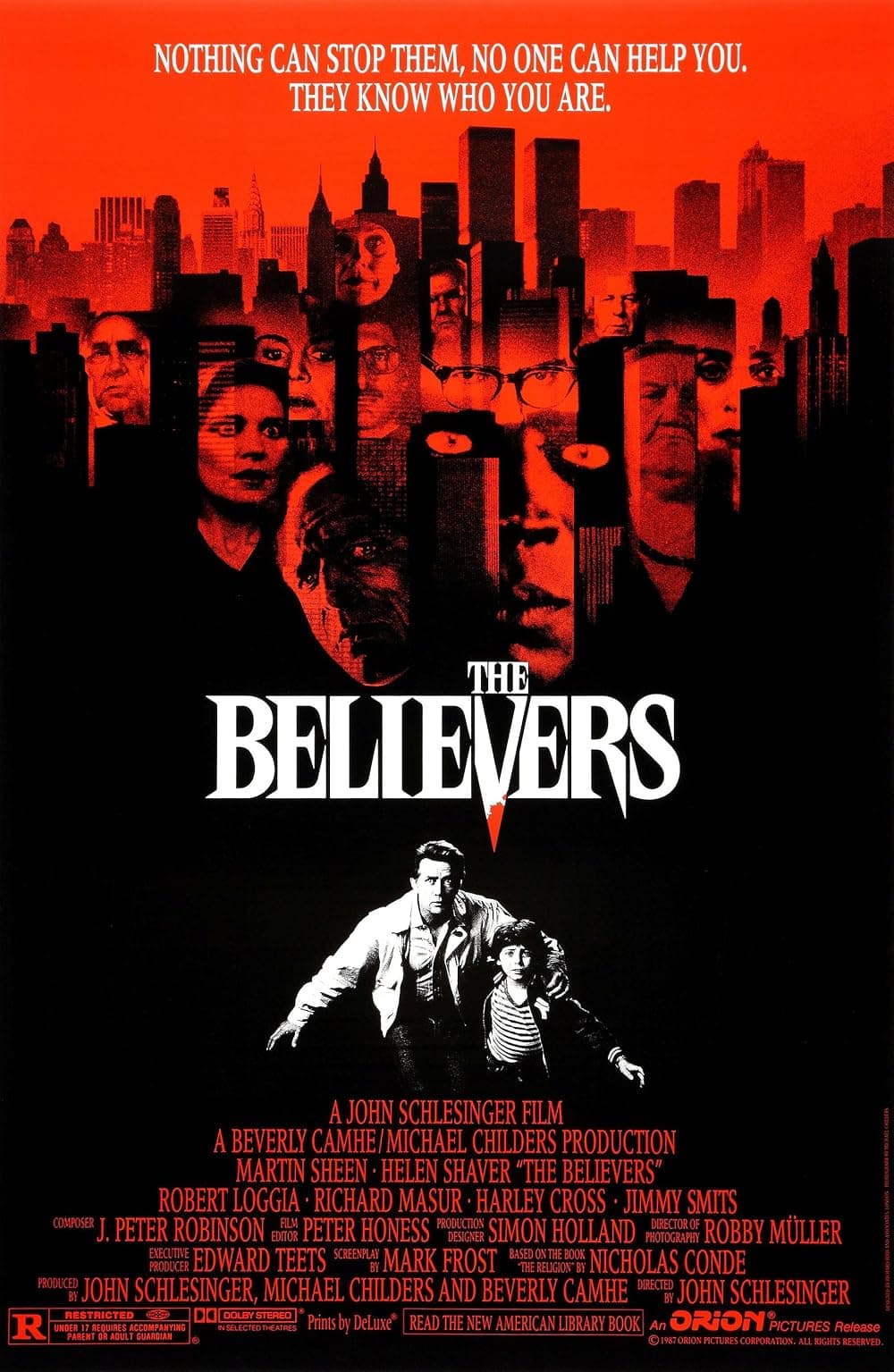
1987
The Believers
The Believers: the safety of home and family, and why this 1987 movie still matters.
Read our take →
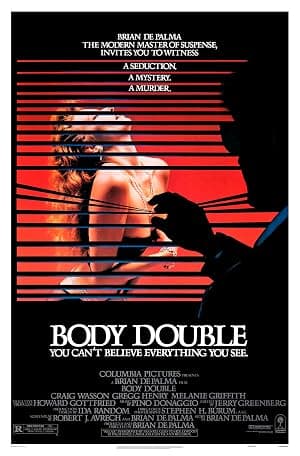
1984
Body Double
A film about watching — and about what watching does to the watcher.
Read our take →