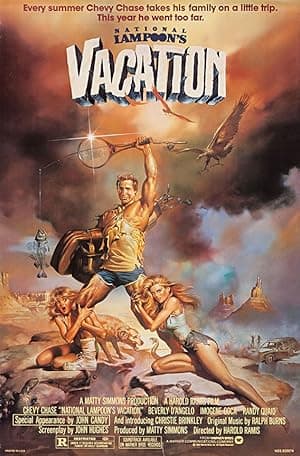
National Lampoon's Vacation
A disastrously planned holiday that somehow still makes you laugh — and wince.
The setup
National Lampoon's Vacation is easier to describe by quoting its ambitions than its plot: a father who insists on crafting a flawless, consumer-grade family day out. Directed by Harold Ramis and built around Clark Griswold’s single-minded drive to get his family to Walley World, it’s a road movie that doubles as a satire of suburban aspiration.
THE MOVIE
Clark Griswold is still the reason this movie works
Think of National Lampoon's Vacation and one image comes front and centre: a man convinced that the right plan, the right car and the right attitude will produce family bliss. That’s Clark Griswold’s programme — he’s determined to drive his wife and two children from the Chicago suburbs all the way to Walley World in search of the ultimate family day out.
The joke — and the engine of the movie — is that Clark’s idea of perfection is almost always a little bit monstrous. He insists on driving the garish Family Truckster and never stops treating the holiday like a project to be executed rather than an experience to be shared, which is where the comedy lives.
Harold Ramis directs with that steady comic touch that lets chaos breathe long enough to land the next gag, and the film trims itself to a neat 98 minutes. It’s a short, sharp trip: ambitious, messy and, crucially, built around a single character’s overconfidence and earnestness.
THE SETUP
The idea that sets National Lampoon's Vacation in motion
At its simplest, the film is a road trip: Clark takes Ellen, Rusty and Audrey out of suburban Chicago and points the Family Truckster toward Walley World in southern California. That premise gives the story a clear destination and a permissive structure for mishap.
Instead of one long ordeal, the movie arranges itself as a string of episodic vignettes. Each stop produces a new misunderstanding, accident or setback that chips away at Clark’s plans and raises the stakes for the next scene.
John Hughes supplied the original short story, and his suburban sensibility provides the bones. Those bones were then refashioned — Ramis and Chevy Chase shifted the focus toward the father’s point of view so the narrative becomes as much about Clark’s need to control the outing as it is about the trip itself.
Because the plot is essentially a succession of comic catastrophes aimed at one goal, the film never has to feint at complexity; it can keep turning the screw on a single, recognisable idea and let the humour come from escalation.
THE CHARACTER
Why Clark Griswold matters
Chevy Chase plays Clark Griswold, but what’s important is the shape of the character: an overconfident, well-meaning paterfamilias who treats the family holiday as a mission. The film is written to show how that insistence on control consistently backfires.
Clark isn’t dark or vicious; he’s earnest. That earnestness is exactly what makes him memorable — he believes in suburban aspiration so fully that the holiday becomes a performance of success rather than a chance to relax.
Because the family’s problems keep arriving like interruptions to Clark’s programme, he functions as the engine of the story. The comedy grows from his escalating attempts to impose a perfect, consumer-styled experience on people who didn’t sign up for theatre rehearsal.
He matters because he embodies several of the film’s themes: fatherhood as a performance, domestic aspiration and the way consumer culture promises happiness if you can only assemble the right checklist.
UNDER THE SURFACE
National Lampoon's Vacation has more on its mind than the plot suggests
On the surface it’s a string of pratfalls. Underneath, the film is quietly occupied with family dysfunction — not the melodramatic kind, but the ordinary friction that turns a shared plan into a battlefield.
It’s also about suburban aspiration and consumerism. The trip is less a search for fun than a checklist: the correct car, the correct park, the correct photos. The humour comes when that consumer dream refuses to cooperate.
Fatherhood and masculine performance are central. Clark keeps measuring himself against an ideal of the successful provider and activities director; the holiday becomes a stage on which his masculinity is repeatedly tested.
Finally, in the tradition of American road films, the road is a kind of quest — except the prize is commercial leisure rather than spiritual revelation. The contrast between pursuit and payoff is where the film finds a lot of its satire.
THE FILMMAKING
How National Lampoon's Vacation was put together
The movie’s comic tone is steady rather than showy, and the crew credits give a clue as to why. Victor J. Kemper served as director of photography, Pembroke J. 'Pem' Herring handled the editing and Jack T. Collis was the production designer — a team that kept the chaos legible.
That legibility matters: a road movie built from episodic set pieces needs clarity so each misadventure can land without losing the throughline toward Walley World. The credited editor and cinematographer provided that narrative spine.
Harold Ramis’s direction favours an ensemble approach; the film stitches together lots of small comic beats from supporting players, but the technical team keeps those moments readable and rhythmically tight.
The result is a film that looks and moves like a comedy built for the studio system — designed to let jokes breathe while keeping the action clear and the family’s progress understandable.
PRACTICAL EFFECTS
The effects work that gives National Lampoon's Vacation its physical personality
The film’s physical comedy relies on tangible props and stunts rather than tricks. Production notes record that five distinct 'Family Truckster' picture cars were created for the movie’s centerpiece visual gag, which lets the car itself become part of the joke.
That kind of practical commitment — multiple bespoke vehicles — helps the movie sell its conceit: the car is both a character and a comic device.
Driving and physical-comedy sequences were handled with professional care. The production used a credited stunt coordinator and a roster of stunt performers for the film’s more hazardous driving and pratfall moments.
Those choices keep the humour grounded. When a pratfall or a driving mishap occurs, it feels like something staged and executed for laughs rather than a digital afterthought.
PURE 80S
National Lampoon's Vacation could not belong to any other decade
The film sits in a particular early-1980s moment when material from National Lampoon and its alumni was being adapted into mainstream studio comedy. That cultural pipeline gave the movie a comic voice that felt contemporary and a little bit mischievous.
John Hughes was the writer, giving the script a suburban-family register that prefigured his later work as a director. Here, in 1983, Hughes writes the suburban vernacular and the movie channels that perspective through Clark’s ambitions.
Its summer release in 1983 placed it in a studio landscape eager for broadly accessible comedies; the film’s nationwide opening the same summer helped it find an audience quickly.
The production’s scale — shooting across five states and more than ninety locations — also ties it to the decade’s appetite for movies that could feel big and mobile without being epic in subject.
WATCHING IT NOW
What has aged — and what hasn't
One thing that still registers is Clark himself. Retrospectives and popular discussion regularly point to him as a recognisable comic archetype: the well-meaning but ineffectual family patriarch. That character shape keeps the film readable to modern viewers.
The family dysfunction at the centre of the movie also remains relatable. The film’s conflicts are ordinary and recognisable rather than tied to fleeting trends, which helps many of the jokes still land.
The Family Truckster gag survives because it’s a physical, repeatable joke — production records note five cars were made — and physical gags that are integral to the story tend to keep their bite even decades later.
Put together, these elements mean the movie still has a spine: a single, readable character pushing a clear agenda through a chain of mishaps, and those basics age better than disposable one-liners.
THE LEGACY
Why National Lampoon's Vacation still matters
The clearest piece of evidence for the film’s afterlife is its own offspring: a long-running Vacation franchise that returned to the Griswolds multiple times in theatrical sequels and later iterations. That continuation speaks to the durability of the family template the film sets up.
It also mattered to the studio at the time: opening wide in July 1983, it became a sizeable commercial success for Warner Bros., a performance that turned the Griswold characters into recurring studio property.
Beyond commerce, the movie established a formula — a driven father, an increasingly exasperated family and episodic misadventures aimed at a consumer destination — that proved easy to revisit and adapt for different seasonal or geographic variations.
So its legacy is less about one transcendent joke and more about building a dependable comic world that other films could return to, remix and exploit.
THE VERDICT
Does National Lampoon's Vacation still hold up?
Yes — but with a rider. The film’s central conceit is simple and clear: Clark’s mission to manufacture a perfect family vacation, executed from behind the wheel of the Family Truckster and punctured by an endless series of setbacks. That structure still produces laughs because the stakes are plain and the payoffs are visual and immediate.
The episodic road-trip format helps. Each vignette is economy of comedy: an idea, a complication, a payoff. When it works, it works fast, and the film rarely overstays its welcome in any given scene.
The movie also survives because of the marital dynamic at its heart. Ellen’s long-suffering presence keeps Clark’s schemes anchored in a recognisable family relationship rather than an abstract string of set pieces, and the children provide the generational reactions that make Clark’s performance feel grounded.
So if you’re watching for sharp satire of suburban aspiration and a compact, efficient comedy about a man trying — and failing — to stage-manage happiness, it’s still worth your time. It’s not flawless, but it’s honest about the particular thing it’s trying to do.
Share this movie
Keep watching
More movies from the 80s
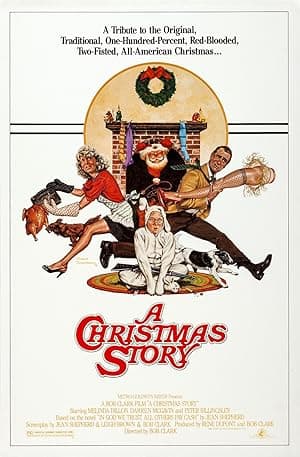
1983
A Christmas Story
Nine years old, a single-minded wish, and a narrator who never lets you forget it.
Read our take →
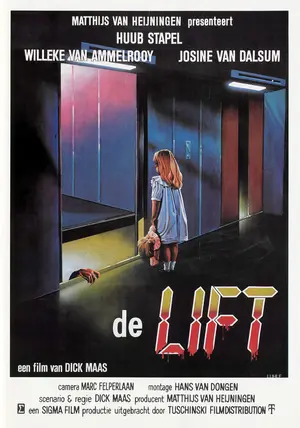
1983
De Lift
De Lift: corporate power and our relationship with technology, and why this 1983 movie still matters.
Read our take →
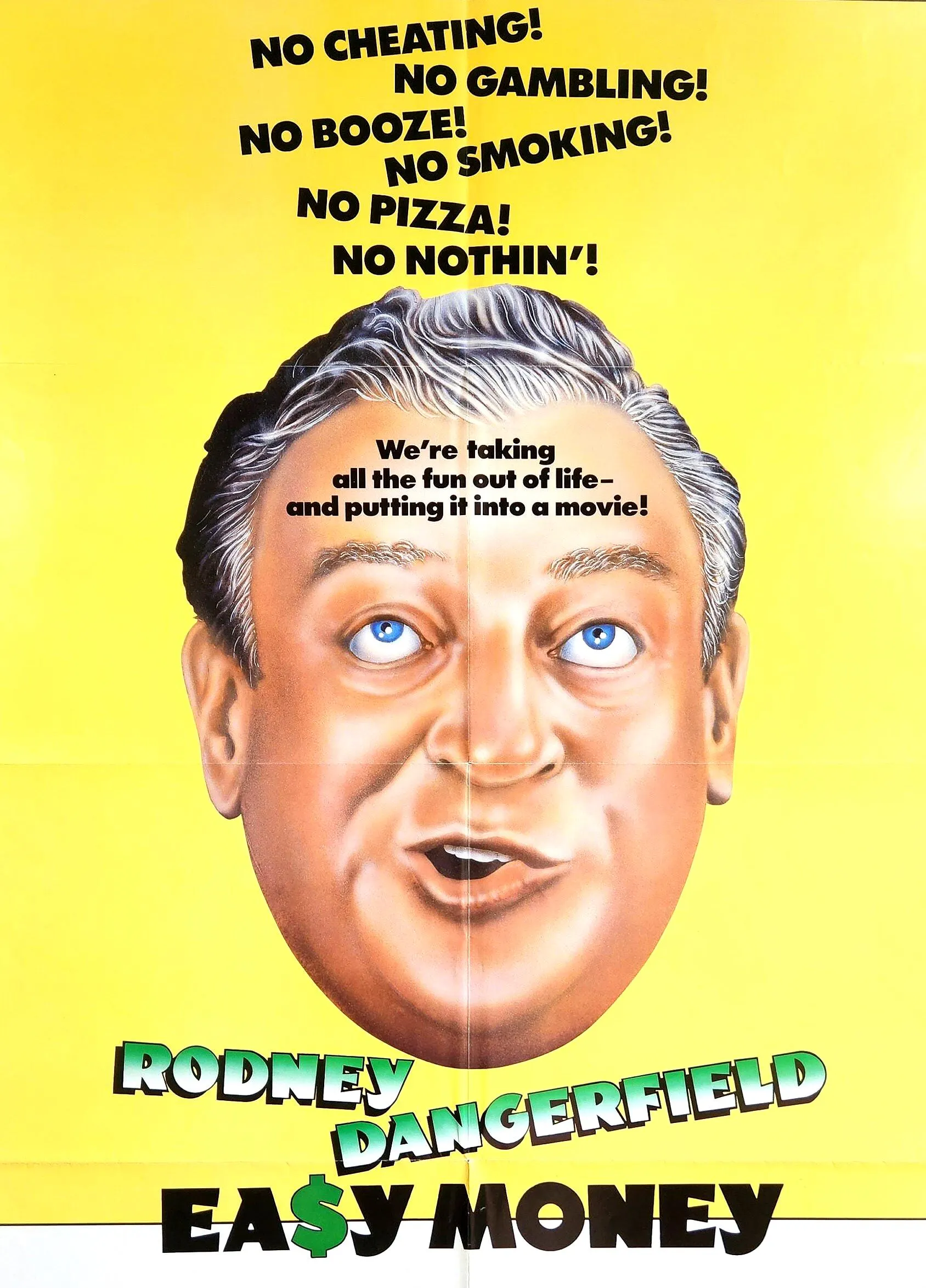
1983
Easy Money
Easy Money: family and parents protecting their children, and why this 1983 movie still matters.
Read our take →