The setup
Pink Floyd – The Wall is less a conventional film than a relentless mood-piece built around a single figure: Pink, the rock star whose life becomes a literal barrier. Alan Parker and Roger Waters turned an album into something that feels like a fever dream — musical set-pieces stitched together with Gerald Scarfe’s animation to say, bluntly, what happens when grief and fame meet.
THE MOVIE
Pink (adult) is still the reason this movie works
What keeps people coming back to Pink Floyd – The Wall isn’t a catchy scene or a clever visual gag; it’s the steady, narrow gravity of Pink himself — a successful rock star whose collapse is shown as a wall built out of the wreckage of his life. The wall is literal and symbolic, a tidy device that lets the film stack grief, shame and alienation like bricks.
This isn’t a chatterbox drama. The story is carried by songs and by animation as much as by faces and words; musical sequences and Scarfe’s illustrations do the heavy lifting, folding hallucination into memory so the film rarely feels obliged to explain itself in plain speech.
Alan Parker directed this thing into being in 1982, casting Bob Geldof in his first feature turn as Pink and leaning hard on a live-action/animated mix that refuses to be decorative: it’s the method for showing a mind shutting down. If you’re going back to it, that formal gamble — album, animation and star all prised together — is what still makes the film worth arguing about.
THE CHARACTER
Why Pink (adult) matters
Pink is the film’s fixed point: not just a performer on stage but a man whose private losses and protective upbringing calcify into something he uses to hide from the world. That inward turn — the withdrawal, the armour — is what the movie watches and interrogates.
The mother is not a subplot; she’s a formative force. Her overprotectiveness is presented as the early mortar for Pink’s emotional isolation, the sort of care that curdles into dependence and then, later, into withdrawal.
Around Pink the people aren’t crafted as warm companions. Managers, roadies and groupies are staged in ways that underline the machinery of stardom; they’re part of the landscape that pushes him further behind his wall rather than pulling him out of it.
When the film starts to feel surreal, it’s usually trying to show what Pink can’t say: teachers and objects warp, march and collapse to mirror his inner state. Those visual tricks keep the story anchored to Pink’s psychology rather than to a tidy series of plot beats.
THE PERFORMANCE
Why Bob Geldof's performance matters
Bob Geldof arrived in the role as a fresh face in feature film, stepping into Pink’s collapse after the part had even been considered for Roger Waters earlier on. That casting choice folds into how viewers read the film — a non‑actor playing a fractured performer.
Over the years critics have been split. Plenty of commentary singled out Geldof’s central screen performance as noteworthy precisely because it divides opinion; some commentators found the choices convincing, others less so. It’s one of those performances that colours how you experience the whole piece.
Because this is a music-driven, image-heavy movie, Geldof’s work doesn’t sit under ordinary dramatic rules. He’s often there to be observed inside sequences rather than to explain motives in dialogue, which makes the role feel less like acting and more like becoming a vessel for the film’s themes.
So whether the performance lands for you will affect whether the film feels like a raw portrait of collapse or a stylised exercise. That argument — rather than a single, unanimous verdict — is part of the movie’s ongoing life.
UNDER THE SURFACE
Pink Floyd – The Wall has more on its mind than the plot suggests
At its most basic the film is about being cut off. Isolation and alienation are the scaffolding: Pink’s life is shown as a retreat rather than a climb, and the wall is an architecture of avoidance.
Memory and trauma are what the bricks are made from. The movie continually folds back on itself, presenting episodes that feel like residues rather than linear events, which keeps the emphasis on interior damage over external consequence.
Fame is treated unsentimentally. The trappings of success are often emptier than the spaces Pink occupied before, and the film makes a point of showing celebrity as an engine that can grind a person down rather than lift them up.
And the film doesn’t shy from showing institutions as corrosive: school discipline and authoritarian aesthetics are staged to look punitive, suggesting that oppression can be both personal and structural.
PRACTICAL EFFECTS
The effects work that gives Pink Floyd – The Wall its physical personality
Gerald Scarfe’s animation is not a gratuitous flourish. The film uses those animated sequences — the marching hammers and the melting figures — to translate psychological states into a visual shorthand that the live-action scenes can’t quite manage on their own.
For the large pageantry moments the production didn’t cheat with a handful of faces: hundreds of extras were used to create crowd and rally sequences, giving those authoritarian tableaux a scale and a thunder that feels deliberately overwhelming.
Some of the film’s more intimate but unnatural moments were achieved with practical rigs. Shots requiring weight-support or suspended positions used custom solutions and body casts to get the physical business right, literally holding performers in ways that sell the illusion.
Put together, the film mixes physical staging and drawn metamorphosis so that the unreal and the real sit in the same frame — which is exactly what a movie about hallucination and memory should do.
PURE 80S
Pink Floyd – The Wall could not belong to any other decade
The film sits squarely in a moment when rock albums wanted to be more than records: the late 1970s and early 1980s saw big concept albums and stage spectacles trying their luck on film, and The Wall is one of the bolder examples of that crossover.
It also preserves something of arena-scale performance aesthetics. The movie flirts with the language of big shows — pageantry, spectacle, theatrical set-pieces — because that’s where the original material came from and what the film leans on to make emotion feel operatic.
The imagery of authoritarian pageantry — the marching hammers and staged rallies — resonated with early-80s political anxieties in Britain, which is why those sequences have a particular bite when you watch the film now.
Released in 1982, it’s a live-action/animated musical surrealist drama that feels like a product of its era not because of fashions or décor but because of its willingness to treat rock theatre as cinema material.
WATCHING IT NOW
What has aged — and what hasn't
Two things keep the film alive. First, it still works as a curious specimen of rock-to-film crossover; it belongs with other late‑70s/early‑80s attempts to turn concept albums into cinema, and that context helps explain both its ambitions and its oddities.
Second, the visual language — turning teachers into machines, objects into marching symbols — remains a strong way of externalising a damaged interior. Those metamorphoses still hit, because they make a private collapse legible at a glance.
What hasn’t aged in the same way is purely a matter of taste: the film is resolutely stylised and unsparing, so if you’re impatient with operatic cinema or with a story told through images and songs rather than scenes of talk and explanation, it can feel distant.
For viewers willing to accept noisy allegory, though, the core approach — image and music taking priority over tidy storytelling — is exactly why the film can still feel potent.
THE LEGACY
Why Pink Floyd – The Wall still matters
The film’s practical recognition is concrete: it won BAFTAs for Best Original Song ('Another Brick in the Wall') and for Best Sound, which marks a certain institutional acknowledgement of what the project achieved.
For fans and students of the movie there’s also a trove of making-of material. Documentaries and retrospective extras — the kinds of 'Behind the Wall' features included on home releases — have kept its production stories and debates available for curious viewers.
A couple of the songs associated with the film have their own afterlife: 'When the Tigers Broke Free', which was first used in the movie, later found its way out into compilation releases, giving one sequence a life beyond the film itself.
Taken together, those threads — awards, archival extras, and the soundtrack’s extended circulation — explain why the film keeps turning up in conversations without having to claim cultural ubiquity.
THE VERDICT
Does Pink Floyd – The Wall still hold up?
Short answer: yes — but with a caveat. If you come for conventional storytelling you will leave frustrated. The film follows Pink’s psychological collapse and uses music and animated interludes rather than ordinary dialogue scenes to build that collapse, so it rewards patience and tolerance for operatic, image-led cinema.
What still makes it worth watching is how clearly the film maps emotional damage into spectacle: early-life trauma (the wartime death of Pink’s father and the overbearing protection of his mother) is shown as bricks in a wall, and the movie traces school humiliation, a failing marriage and touring life as further layers. That concrete bildungs-of-a-wall keeps the film focused.
It helps that supporting figures are staged to underline the dehumanising machinery around him — teachers become ideological antagonists, managers and groupies function as part of the logistics of fame — so the film never loses sight of what’s pressing on Pink from the outside as well as the inside.
If you want an easy, comforting watch, this isn’t it. But if you’re intrigued by a film that treats trauma, fame and isolation as things that can be sung, painted and marched into being — and if you can sit with Bob Geldof’s debut as the conduit for that experiment — then The Wall still delivers something distinctive and often unnerving. It’s loud, strange and, crucially, honest about how spectacle can be the language of collapse.
Share this movie
Keep watching
More movies from the 80s
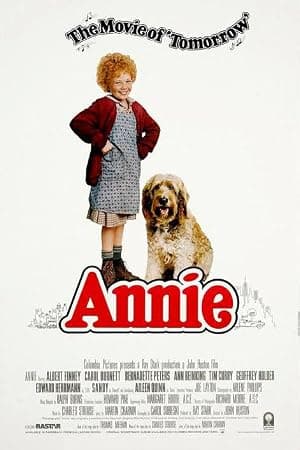
1982
Annie
Annie: family and freedom, and why this 1982 movie still matters.
Read our take →
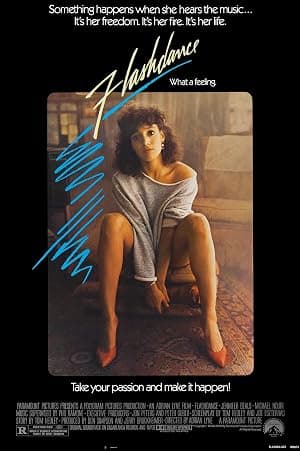
1983
Flashdance
Flashdance: family and mortality and lifespan, and why this 1983 movie still matters.
Read our take →
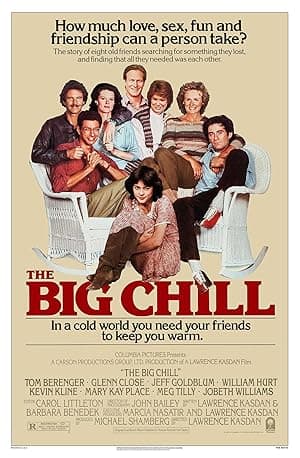
1983
The Big Chill
A funeral, a stack of records and a weekender where old promises get examined.
Read our take →