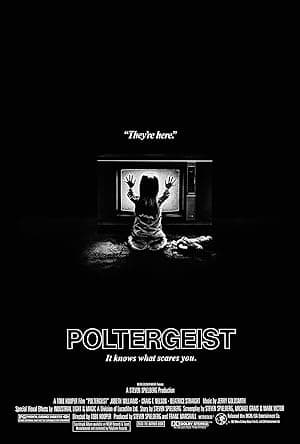
Poltergeist
A suburban home, a frightened child and a television that isn't just background noise — Poltergeist still makes the domestic uncanny feel dangerously familiar.
The setup
Poltergeist asks a simple, terrifying question: what happens when the thing meant to keep you entertained becomes the doorway to danger? It centres on a family whose tidy suburban life is ruptured by forces that treat the house as a battleground. Revisit it for the way the family holds the film together and for how the movie turns ordinary domestic details into genuine dread.
THE MOVIE
Diane Freeling is still the reason this movie works
The spine of the picture is blunt and brilliant: a middle-class family’s home, sold on the idea of suburban safety, becomes the site of an uninvited invasion. The Freelings live in the planned Cuesta Verde development and the film treats that domestic normality as the ground that gets shaken when something unnatural moves in.
The spark that lights the whole thing is oddly modern-seeming — the youngest daughter starts to talk to the television while it shows post-broadcast static, and that static becomes a literal conduit between the family and whatever is on the other side. That domestic object, banal and familiar, is repurposed into the film’s primary source of dread.
It helps that the story is kept anchored to people who feel recognisably fixed in their roles: Craig T. Nelson’s real-estate-agent father and JoBeth Williams’s caregiver mother give the threat domestic stakes you can understand. With Tobe Hooper listed as director and a 114-minute running time, the film takes time to let those stakes breathe before it starts to unsettle them.
THE SETUP
The idea that sets Poltergeist in motion
At its simplest the plot is built around an urgent, recognisable problem: the Freeling family must recover their youngest child after supernatural forces treat the house — and crucially the family television — as a gateway. That central premise keeps the drama tight; the danger is both intimate and domestic.
The television/static sequence functions as more than a spooky image. It’s a recurring story mechanic: a clear through-line that the screenplay uses again and again to make the supernatural feel like a breach of everyday technology rather than a distant, gothic curse.
Although the screenplay credits list a story by Steven Spielberg with a screenplay by Spielberg, Michael Grais and Mark Victor, the film remains focused on the Freelings’ struggle and how ordinary parental roles are tested when strangers from another realm disrupt family life.
Contemporary coverage and later production histories also note that Spielberg contributed substantial creative input during production; accounts differ about the precise director-level contributions between Spielberg and Tobe Hooper, but the screenplay and story credits reflect Spielberg’s creative presence.
THE CHARACTER
Why Diane Freeling matters
Diane Freeling is the emotional fulcrum around which the movie turns. JoBeth Williams is listed in the cast as Diane, and the story consistently treats her domestic responsibilities — as the family’s caregiver — as the axis of decision-making when the unthinkable happens.
Her role is not decorative. Diane’s status as mother and caretaker gives the threats a human face and a set of believable priorities: this is about saving a child, not settling a score. That grounding keeps the film from slipping into abstract horror and makes the danger immediate and personal.
Diane’s relationship to Steve — he’s a real-estate agent, she’s the family’s caregiver — helps define the film’s emotional stakes. Their roles as middle-class parents make clear what’s at risk: the safety of a home and the cohesion of a household under strain.
Set in the planned Cuesta Verde community, Diane’s character also stands for a wider theme of family unity. The way the plot asks the Freelings to act together when the house is invaded gives Diane a central dramatic function beyond single scenes of fright: she is the family’s moral and emotional centre.
UNDER THE SURFACE
Poltergeist has more on its mind than the plot suggests
On the surface it’s a haunted-house movie, but the film’s emotional centre toys with themes beyond jump scares. At its heart is family unity — the Freelings are repeatedly shown as a unit that must respond collectively to an external, inexplicable threat.
There’s also a clear focus on suburban invasion: the movie stages terror inside the conventions of middle-class domestic life. That breach — the uncanny entering the home — is the engine of the film’s dread, because it turns familiar safety into vulnerability.
Children in peril is another organising idea. The youngest child’s contact with the television raises parental responsibility into narrative fuel; the fear the movie trades on is not just of ghosts, but of parents’ powerlessness and obligation.
Finally, technology as gateway is central to the film’s imagination. The television and its static are not mere props but the literal mechanism through which the otherworldly intrudes, making everyday technology feel like a potential threshold.
THE FILMMAKING
How Poltergeist was put together
Official credits list Tobe Hooper as director, but production records and contemporary coverage underline that Steven Spielberg had a heavy creative hand: storyboarding, supervising effects photography and editing supervision are among the contributions noted in the historical record.
The technical credits are a roll call of experienced professionals: cinematography is by Matthew F. Leonetti and the editor credited is Michael Kahn. Those names in the crew list help explain the film’s measured construction and the way it balances family scenes with escalating supernatural incidents.
Production design is credited to James H. Spencer, and the film combined soundstage work with Southern California locations, including Culver City and Simi Valley, for principal photography and sets. Those production choices gave the movie a specific, lived-in suburban backdrop.
The filmmaking team’s work was recognised at the time: the film earned three Academy Award nominations, for Original Score, Sound Effects Editing and Visual Effects, which speaks to the craft investments behind both the emotional and technical components.
PRACTICAL EFFECTS
The effects work that gives Poltergeist its physical personality
The film’s special visual effects are credited to Industrial Light & Magic with Richard Edlund listed as visual-effects supervisor. That pairing is plainly central to how the film stages the supernatural in tangible, screen-facing ways.
Industrial Light & Magic’s name on the credits signals that the production treated its visual phenomena seriously and invested in creating believable moments of the uncanny rather than relying solely on suggestion.
Those technical efforts were part of a production that the Academy recognised: among the three nominations Poltergeist received was a nod for Best Visual Effects, underlining the importance of the effects work to the film’s overall impact.
Taken together, the visual-effects credit and the awards recognition explain why the movie’s physical and optical moments carry weight within the story: they were planned and executed as essential storytelling tools.
PURE 80S
Poltergeist could not belong to any other decade
Its timing matters. Released in the summer of 1982 — part of what contemporary coverage called a Spielberg-heavy release period — the film arrived a week after E.T., which makes that summer feel unusually centred on childhood and strange encounters.
The movie’s preoccupation with suburban settings and middle-class anxieties slots it into a strand of early-1980s Hollywood horror that nudged the uncanny out of gothic ruins and squarely into American homes. That displacement is part of what gives the film its era-specific edge.
Both Poltergeist and its contemporaneous Spielberg-produced releases foreground a child’s perspective, which was a narrative move studios were clearly invested in that year. The pairing of child-focused storytelling and big-studio production helped shape how audiences experienced the material.
Opening on 4 June 1982, the film is very much a product of its moment: a studio horror that treats parental fear, domestic order and technological unease as subjects worth making scary on a mainstream scale.
WATCHING IT NOW
What has aged — and what hasn't
A key reason the film still resonates is its emotional centre: the plot’s investment in parental fear and the child’s point of view give the story a human urgency that modern viewers continue to respond to. That remains the movie’s chief currency.
At the same time, some elements of tone and certain visual choices feel tied to the period’s filmmaking habits. Modern audiences often notice those period cues, and they affect how the film reads beside newer horror that uses different rhythms and effects.
The Freeling household — the planned Cuesta Verde community — keeps the stakes rooted in family and place. That domestic solidity helps the film survive changing tastes because the central moral problem is timeless: protecting the vulnerable when you’re suddenly out of your depth.
So the parts that age best are the human ones: the family unity and the parental drive at the plot’s centre. The parts that read as period are largely matters of tone and some stylistic choices, not the emotional architecture that holds the picture together.
THE VERDICT
Does Poltergeist still hold up?
Yes — but with a small rider. The film’s central engine is simple and effective: the Freelings’ suburban home is invaded and the family must retrieve their youngest child after supernatural forces use the house and the television as a conduit. That premise still delivers genuine unease because it converts the familiar into the threatening.
What helps the film remain watchable is that it keeps its emotional goals front and centre. JoBeth Williams’s Diane anchors those stakes, and the narrative continually returns to parental responsibility and family unity rather than letting spectacle completely take over. Contemporary reviews singled out Heather O'Rourke and JoBeth Williams for the emotional centre they provide, which explains why the human element still reads across decades.
Technically, the film is a product of its moment: Tobe Hooper is credited as director while the screenplay credits list Steven Spielberg alongside Michael Grais and Mark Victor, and production records highlight Spielberg’s creative involvement. The result is a mainstream horror picture that blends studio craft with a family-focused script — and that combination is part of its enduring appeal.
So should you watch it now? If you care about a horror film that treats family fear and the vulnerability of childhood seriously — and if the idea of everyday technology becoming a gateway still unnerves you — then yes. Poltergeist still works when you let its domestic drama do the heavy lifting; the scares feel sharper when you care about who’s at risk.
Featured in
Explore more about Poltergeist
Share this movie
Keep watching
More movies from the 80s
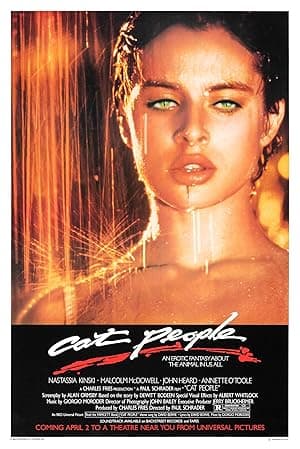
1982
Cat People
Cat People: love and loss, and why this 1982 movie still matters.
Read our take →
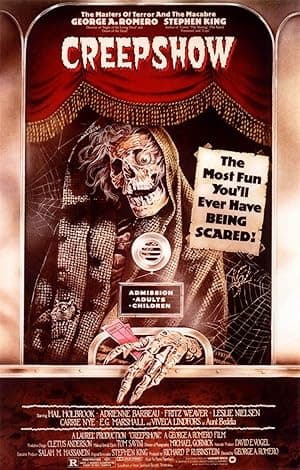
1982
Creepshow
Five nasty little tales, a comic-book wrapper and one perfectly awkward professor.
Read our take →
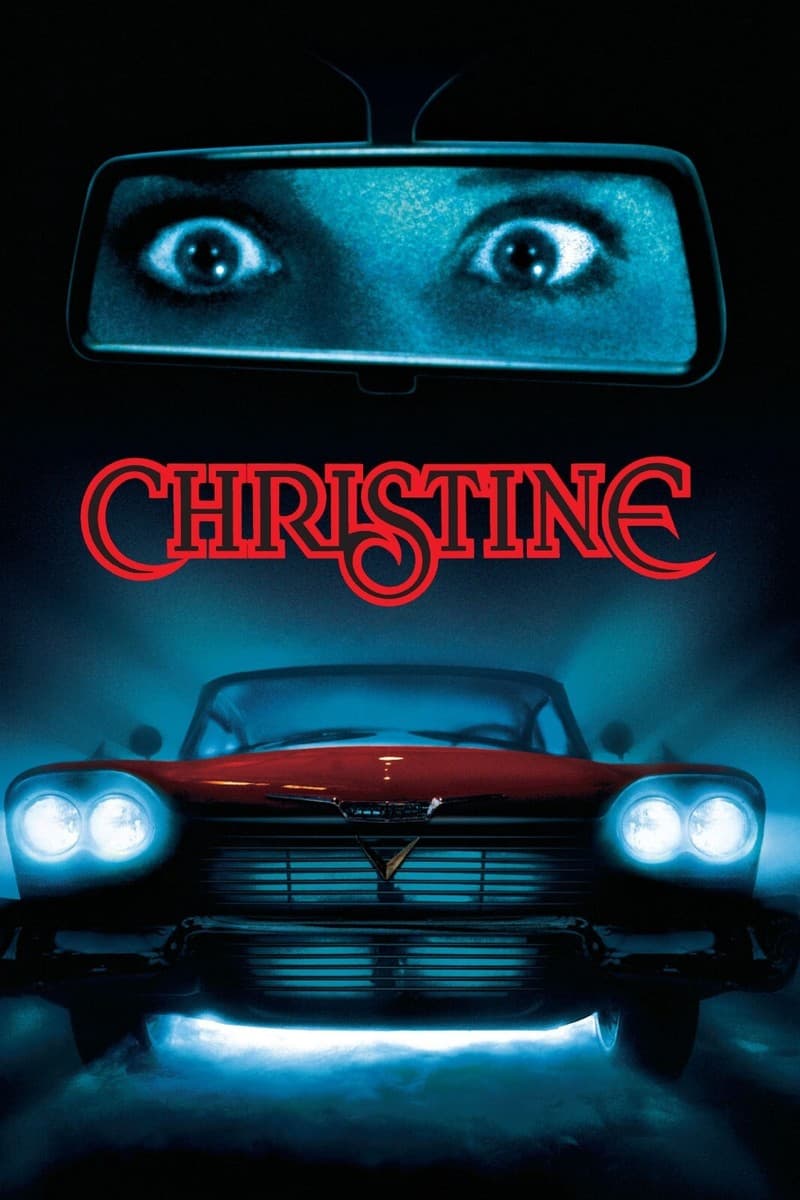
1983
Christine
Obsession, adolescence and a car that won't let go.
Read our take →