The setup
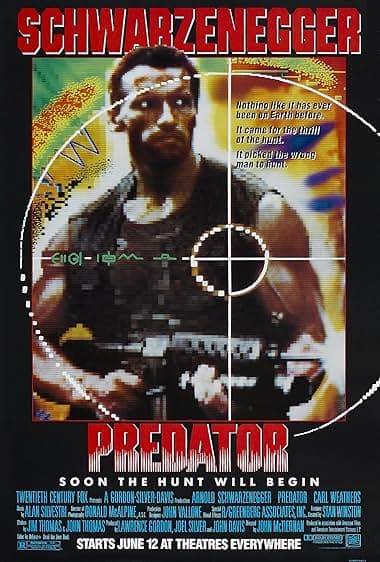
Predator sticks in the head because it pairs a simple, terrifying idea with a clear centre: Major Alan "Dutch" Schaefer and his team on what should be a routine extraction in a Central American jungle. They find wreckage, skinned corpses and tracks that turn a rescue into a fight for survival. John McTiernan directs the whole thing with a lean, hungry clarity — and it still makes you hold your breath.
THE MOVIE
Major Alan "Dutch" Schaefer is still the reason this movie works
There’s a neat, brute-force logic to Predator: a paramilitary team goes into the jungle to extract a politician and his aide, and the job turns into the opposite of what they expect. The discovery of a downed helicopter, skinned corpses and odd tracks is the film's rude awakening — the mission has become a hunt.
At the centre of that reversal is Major Alan "Dutch" Schaefer. He’s the mission leader whose professionalism and survival instincts set the tone for how the group reacts when the rules vanish and something else is running the game.
That setup — men with military tradecraft pushed into playing prey — is what lets John McTiernan keep the picture small, tense and immediate across its roughly 107 minutes.
THE SETUP
The idea that sets Predator in motion
Predator's premise is disarmingly straightforward: Dutch and his elite rescue team are flown into the jungle to pull out a politician and his aide. What feels like a textbook extraction goes sideways when they stumble on wreckage and bodies that say something else is in the trees.
From there the film crystallises into a cat-and-mouse: a lethal, unseen hunter picks them off one by one, and the team's role flips from rescuers to survivors.
The movie leans on clear, mechanical tools to make that work — the Predator's camouflage/cloaking, its thermal point-of-view, and the very human reply of traps and guerrilla improvisation.
That low-tech-versus-high-tech exchange finds its decisive image in Dutch smearing himself with mud to beat the Predator's heat-based sensing — a small, grubby trick that becomes crucial in the final one-on-one.
THE CHARACTER
Why Major Alan "Dutch" Schaefer matters
Dutch matters because he’s the practical centre of the film. The plot hands him a job — lead a team, get people out — and then strips the usual rules away, leaving his training and instincts as the only leverage the men have.
He doesn’t exist as an abstract heroic idea so much as a set of decisions: organise the team, react to new threats, adapt tactics when the mission becomes survival. That clarity keeps the film from drifting into melodrama and makes the stakes feel immediate.
Crucially, Dutch anchors the squad. When the hunt begins, his choices — tactical and practical — are the things the others can rally around or resent. That friction is where the film’s interpersonal tension lives.
THE PERFORMANCE
Why Arnold Schwarzenegger's performance matters
Contemporary reviews observed that Schwarzenegger’s contribution sits comfortably within his established action-star persona: his physical presence is a clear part of the film’s machinery.
Predator doesn’t ask for long, interior scenes of character study. It asks for a leader who reads situations and makes hard calls, and reviews noted the picture depends more on that physical authority than on extended psychological unpacking.
Put another way: the film is built around a particular kind of screen figure — someone you trust to keep the group moving — and Schwarzenegger supplies that reliably.
UNDER THE SURFACE
Predator has more on its mind than the plot suggests
On the surface Predator is an action-monster movie. Underneath, it’s interested in what happens to masculine identity and camaraderie when the comfortable hierarchies of war vanish.
There’s a steady contrast between advanced hunting technology and bare-bones survival improvisation. The Predator arrives with tricks the men can't match at first — cloaking and thermal vision — and the human response is cunning, low-tech traps and sheer stubbornness.
Because the team are soldiers, the film also becomes about loyalty and the brittle bonds that hold a unit together under pressure. When the mission is revealed to be different from what they were told, deception by authority adds a hard edge to the conflict.
All of which turns a straightforward monster picture into a study of how trained professional men behave when the rules change and survival is the only scoreboard.
THE FILMMAKING
How Predator was put together
Predator’s production is notable for how the physical creature work shaped the shooting itself. The film’s production designer (John Vallone) worked on a shoot that required an extended pause while the creature effects were reworked — a reminder that some stories demand time to get their monsters right.
That stop-and-start meant the film had to be assembled around what the creature could believably do on camera, which in turn kept the filmmakers focused on manageable, high-tension scenes rather than sprawling spectacle.
The end result is a movie that feels tightly constructed: once the hunt begins, the staging and pacing keep the action intimate and surgical, not sprawling.
PRACTICAL EFFECTS
The effects work that gives Predator its physical personality
Predator’s physical presence owes a lot to Stan Winston Studio, which constructed the creature suit and the practical make-up and creature work that make the hunter feel tactile on screen.
That physical creature was paired with optical compositing by R/Greenberg Associates to sell the Predator’s cloaking — a camouflage effect created by combining multiple film elements rather than by a single easy trick.
Meanwhile the Predator’s thermal or heat-vision viewpoint was produced through a mix of in-camera technique and post-production work supplied by the film’s VFX vendors, giving the hunter a distinct visual language when it was observing its prey.
PURE 80S
Predator could not belong to any other decade
Predator bundles together several recognisably late-1980s production elements: an ensemble of action personalities and body-built performers, producers experienced in commercial action cinema and a willingness to blend genres for mass audiences.
Producers like Joel Silver and Lawrence Gordon had a hand in positioning the film within the era’s action slate, which explains the movie’s straight-to-the-point attitude and muscular commercial instincts.
The film also exemplifies a late-80s trend: mix action, science fiction and horror and let the audience ride the tonal shifts. Predator is comfortably placed in that cross-genre space.
Even the shoot’s schedule — principal photography beginning in April 1986 around Puerto Vallarta and pausing to address effect problems — reads like an 80s production that balanced on-location grit with big practical ambitions. It was released in 1987.
WATCHING IT NOW
What has aged — and what hasn't
Predator’s most obvious afterlife is concrete: it launched a franchise and ongoing media around the Predator concept, so the film has stayed in circulation beyond single-view nostalgia.
The production’s clear, commercial bones — a screenplay by Jim and John Thomas and a producer line-up that was built for mainstream action — mean the movie was designed to be immediately watchable. That structural simplicity helps it survive repeat viewings: the premise is easy to re-enter.
On the other hand, it’s not a film that hides behind mystery; its pleasures are the mechanics of the hunt and the way the team responds. If you come for those elements, it still provides them.
THE LEGACY
Why Predator still matters
Part of Predator’s ongoing presence comes from craft-level achievements. The film received an Academy Award nomination for Best Visual Effects — a nod to the work that made the hunter feel like a plausible threat.
The movie also established a recognisable kit: the creature design, the thermal-vision point-of-view and the hunter-as-sport concept. Those elements have been repeatedly referenced in genre conversations and in later visual-effects work.
Because it built a compact, adaptable idea — an alien hunter with a code who stalks humans with advanced tech — the film became fertile ground for sequels and crossovers, which is why the Predator is a recurring property in science-fiction media.
THE VERDICT
Does Predator still hold up?
Yes — if what you want is a lean, effective hunt movie that keeps its focus on survival and the tactical puzzle of being stalked. The film’s core is straightforward: Dutch and his elite rescue team are sent into the jungle, they discover wreckage and skinned corpses, and a lethal alien hunter forces the men from rescuers into hunted.
Predator still works because its central mechanics are clean and visible: cloaking and thermal vision give the hunter a distinctive method, and the humans reply with traps, guerrilla tactics and — famously — smearing mud to defeat the heat-sensing. That one grubby improvisation becomes the key to the final confrontation.
The picture is also honest about its priorities. It relies on Arnold Schwarzenegger’s physical authority as Dutch and on the cast of hard-bitten personalities around him, and contemporary reviews noted the film depends more on that presence than on long character arcs. If you watch expecting a tightly plotted survival thriller rather than a deep character study, it delivers.
So should you watch it today? If you’re curious about a compact, well-constructed genre film about men in a jungle learning they can be out-hunted, yes. Predator holds up as a demonstration of how to build tension from a single simple premise — and how, sometimes, a mud bath is the smartest weapon in the room.
Share this movie
Keep watching
More movies from the 80s
1986
Aliens
Motherhood, marines and monsters: why Ripley still makes Aliens sing.
Read our take →
1988
They Live
Sunglasses, slogans and a man who will not let you look away.
Read our take →
1989
DeepStar Six
DeepStar Six: fear and parents protecting their children, and why this 1989 movie still matters.
Read our take →