The setup
Bernardo Bertolucci’s The Last Emperor is the sort of film that dresses history in huge canvases and then asks you to look very closely at a single face. It follows Puyi from a bewildered child on a throne to a man remade by forces much larger than himself, and it does so by letting history happen to him rather than through him. If you’re deciding whether it’s worth another viewing, start with the person at its centre — that’s where the movie still talks to us.
THE MOVIE
Puyi (adult) is still the reason this movie works
The Last Emperor covers an enormous life: Puyi’s coronation as a child, exile, his years as a puppet in Manchukuo, capture after the war and eventual imprisonment and political re-education. The film moves through these stages not as a rapid biographical checklist but as a series of moments that keep returning to the man at the centre.
That return is deliberate. The story is framed by Puyi’s detention in a Fushun prison camp, and the long flashbacks give the film its episodic sweep. It’s a biography shaped around memory and containment rather than a linear rise-and-fall melodrama.
What makes the movie sing is how it treats Puyi as more acted-upon than acting. Bertolucci is less interested in triumphant agency and more curious about how identity can be carved by institutions, tutors, invaders and prison governors — and how a person made of ceremony copes when ceremony stops meaning anything.
THE SETUP
The idea that sets The Last Emperor in motion
At a glance the film looks like a conventional epic biography: big historic moments, length, and the sweep of a life lived across turbulent decades. But the device that gives the picture its shape is simple and effective — multiple actors play Puyi at different ages, so the movie reads as an extended life study rather than a single continuous drama.
That approach lets Bertolucci stage childhood and consequence side by side: you get the coronation and the adult consequences of being coronated, often in the same viewing breath. The film keeps returning to key formative scenes and then lets the later Puyi exist as someone whose interior has been largely formed for him.
Because the film charts so many phases — from the inner world of the Forbidden City to the political theatre of Manchukuo and finally to the slow work of re-education — it feels less like a plot-driven thriller and more like a long close-up on how a person becomes what the world insists they should be.
And that structure turns the casting choices — tiny boys, an awkward adolescent, and John Lone as the adult — into more than a practical necessity. They become the film’s way of showing a life assembled in parts, each piece carrying the weight of an earlier decision or accident.
THE PERFORMANCE
Why John Lone's performance matters
Contemporary critics repeatedly picked out John Lone’s central casting. That’s telling because the whole film depends on the audience accepting Puyi as someone who is shaped by events rather than shaping them.
Reviews of the time described Lone’s work as quietly compelling and suited to a protagonist whose defining trait is passivity. In other words, what mattered was not bombast but a particular stillness and interiority that the film could read as history doing the acting.
That suitability isn’t a trivial detail. If the lead had read as aggressive or theatrically self-directed, the film’s point about agency being taken away would have been undermined. Lone’s casting keeps the portrait believable — a man who has been apprenticed to power rather than trained to wield it.
So when you watch the movie again, notice how the choice to favour restraint at the centre lets the surrounding spectacle mean something rather than just look impressive.
UNDER THE SURFACE
The Last Emperor has more on its mind than the plot suggests
Beneath the historical incidents sits a steady concern with identity — who Puyi is when stripped of imperial ritual, and whether a name or title can survive when the institutions that gave it content vanish. The film keeps nudging you to ask whether identity here is a private thing or a public costume.
Power and passivity is the movie’s persistent engine. Puyi is less a political actor than an object around which other people and systems move. That passive centrality lets Bertolucci show power as something enacted on a person, not necessarily through them.
The clash between tradition and modernity runs through the scenes: tutors and foreign influences nudge Puyi into anglophile habits, while political change drags him into new roles he never chose. The tension isn’t melodramatic; it’s practical — the old forms no longer hold, and the new ones ask him to change the shape of his life.
Finally, the film is unafraid of the thorny questions about collaboration and culpability. Puyi’s years as a puppet, and the later processes of memory and re-education, force the film to sit with uncomfortable grey areas rather than offer tidy moral absolutes.
THE FILMMAKING
How The Last Emperor was put together
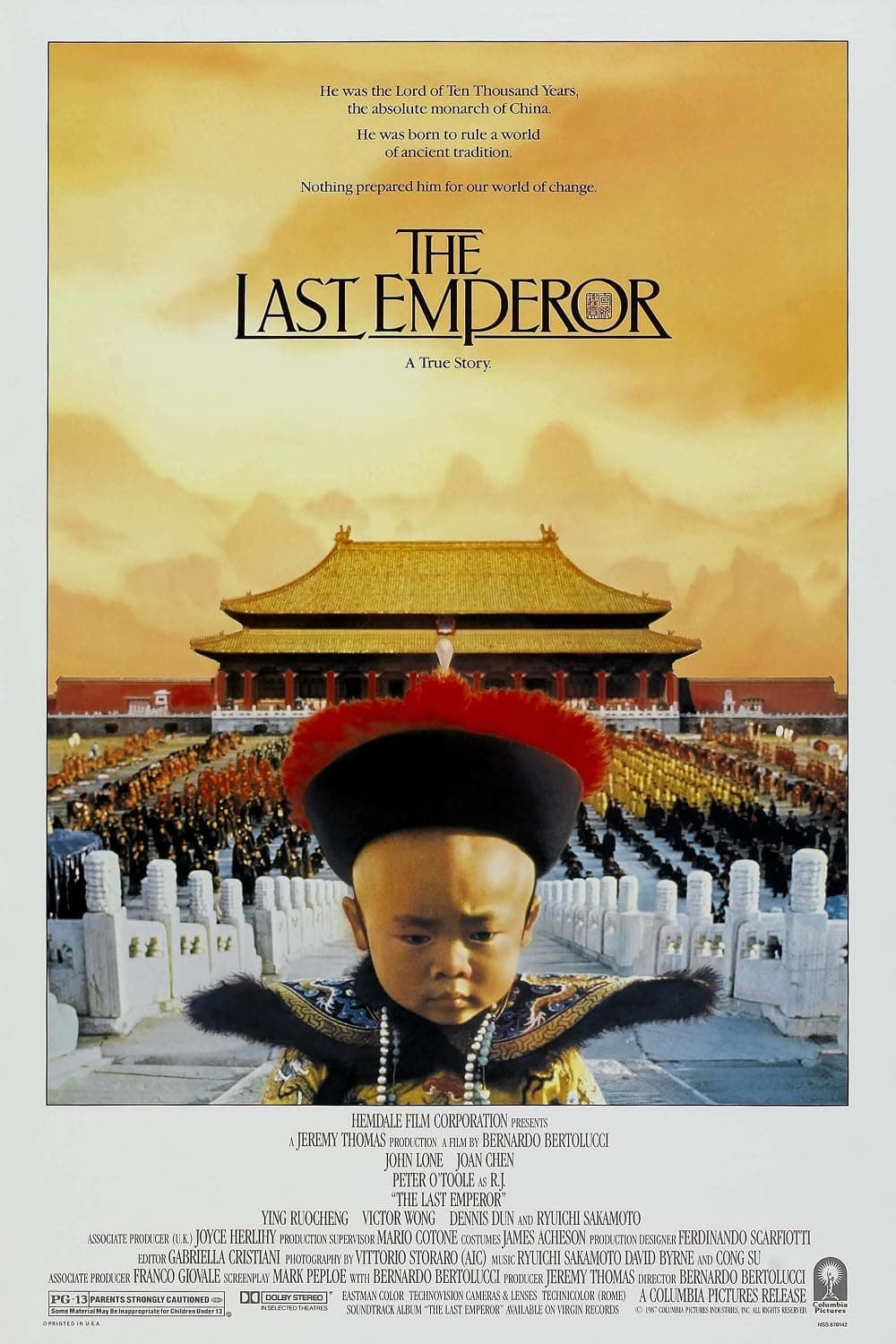
A large part of the film’s feel comes from its visual and production choices. Vittorio Storaro served as director of photography and the film’s visual design; those choices, backed by Ferdinando Scarfiotti’s production design and James Acheson’s costumes, gave the movie a distinctive look that contemporary coverage praised.
That praise is not just puffery; the movie’s visual world is one of its arguments. The design work frames Puyi’s life as a series of stages — palace, exile, puppet court, prison — each with its own visual logic, which helps the audience track what is lost and what is imposed.
Editing also plays a role in how the story unfolds: the film deliberately stitches together episodes rather than pushing for tidy continuity, which reinforces the sense of memory and retrospective construction.
Taken together, the credited creative team turned a long biography into a cinematic experience that feels built rather than merely filmed — the craftsmanship is part of the point.
PRACTICAL EFFECTS
The effects work that gives The Last Emperor its physical personality
When the film needs scale, it builds scale physically. The production staged very large crowd scenes, filling the Forbidden City sequences with thousands of costumed extras to create the sense of a living imperial world.
Those crowds are not background wallpaper; they act as a measure of Puyi’s isolation. He sits surrounded by people who perform deference, which underlines how power in his life is ceremonial rather than political.
Using real crowds also keeps the film tactile. Large numbers of extras give scenes a human texture that a smaller production would have struggled to fake convincingly at this scale.
So the physicality of the production — bodies, procession, ceremonial motion — becomes a storytelling device in itself.
PURE 80S
The Last Emperor could not belong to any other decade
Made and released in 1987, The Last Emperor arrived at a moment when China was opening limited doors to Western film partners. The production’s rare permission to shoot inside the Forbidden City was possible because of that particular late-1980s window of cooperation.
The movie’s financing and production route also reflect 1980s shifts: large historical epics were no longer the exclusive territory of big Hollywood studios, and international independent productions were starting to stitch together cross-border money and access.
That context matters because the film’s scale — location access plus an international crew — was a byproduct of the decade’s changing film economics and geopolitics. It’s a film that could only have been made where the world of 1987 allowed those pieces to meet.
Finally, The Last Emperor sits alongside other 1980s historical epics that used childhood as a way to stage larger geopolitical stories; the decade loved big canvases that tried to make sense of the 20th century by focusing on individuals caught in its tides.
THE LEGACY
Why The Last Emperor still matters
Part of the film’s continued presence comes from the tangible recognition it received: at the 1988 Academy Awards it won in every category it was nominated for, including Best Picture and Best Director. That sweep cemented its status in film conversation of the period.
The film’s rare access to the Forbidden City and the scale of its production helped renew international attention on Sino-Western film collaborations in the late 1980s. That practical achievement became part of the movie’s story as much as its narrative content.
Its afterlife has been curated carefully: a director-approved restoration and a multi-disc special edition from the Criterion Collection, plus a 3D conversion and screenings in Cannes Classics, have kept it in circulation for cinephiles and scholars.
So The Last Emperor remains a film people return to not just for its story but because it represents a specific moment when filmmaking, politics and access aligned in a way that still feels notable.
THE VERDICT
Does The Last Emperor still hold up?
Yes — with a rider. The Last Emperor remains a powerful exercise in showing how history happens to a person. Its frame, which begins in a Fushun prison and then unfolds in long flashbacks, makes the film less about dramatic agency and more about the slow accretion of identity.
The choice to cast multiple actors across Puyi’s life and to include key episodes — life in the Forbidden City, his English tutor Reginald Johnston, the puppet role in Manchukuo, Wanrong’s decline, and the Communist re-education — gives the film depth. It’s a long-form biography that rewards patient viewing.
John Lone as the adult Puyi anchors the film’s argument by embodying a character who is acted-upon; the presence of figures like the prison governor who oversee re-education and a Japanese official involved in collaboration underscore the film’s interest in culpability and transformation.
If you’re willing to be led rather than cheer a protagonist on, and if you enjoy films that treat spectacle as a setting for intimacy rather than an end in itself, The Last Emperor is absolutely worth revisiting. It’s not a crowd-pleaser in the muscular, active sense — it’s a study of what happens when power becomes a role and the person inside it has to be rebuilt.
Share this movie
Keep watching
More movies from the 80s
1987
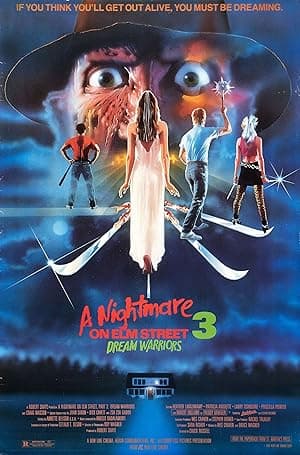
A Nightmare on Elm Street 3: Dream Warriors
Nancy comes back to teach a new generation to fight Freddy — and she brings a team.
Read our take →
1987
Au revoir les enfants
Au revoir les enfants: family and friendship, and why this 1987 movie still matters.
Read our take →
1987
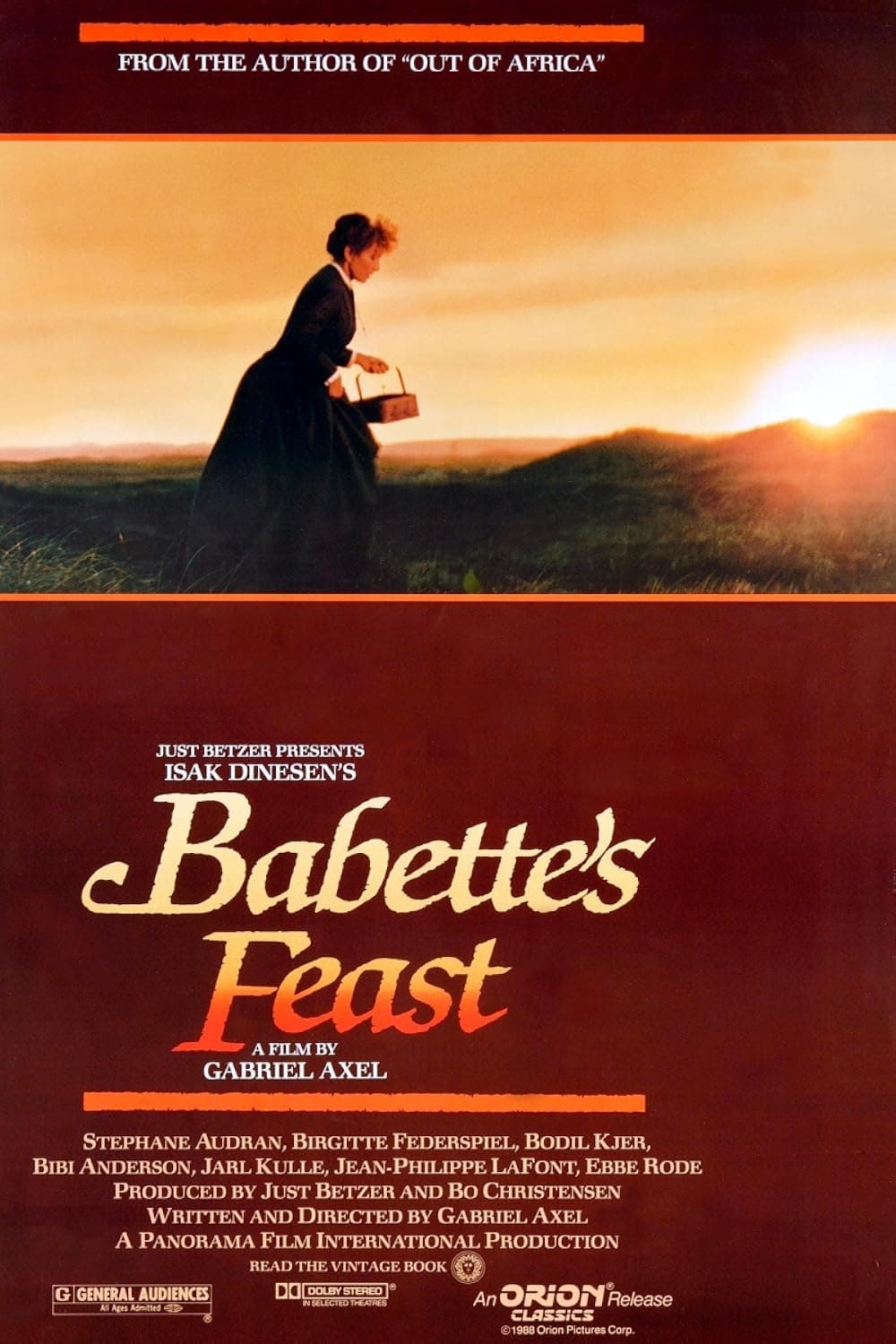
Babette's Feast
A refugee, a single extravagant dinner and the curious way generosity becomes a kind of worship.
Read our take →