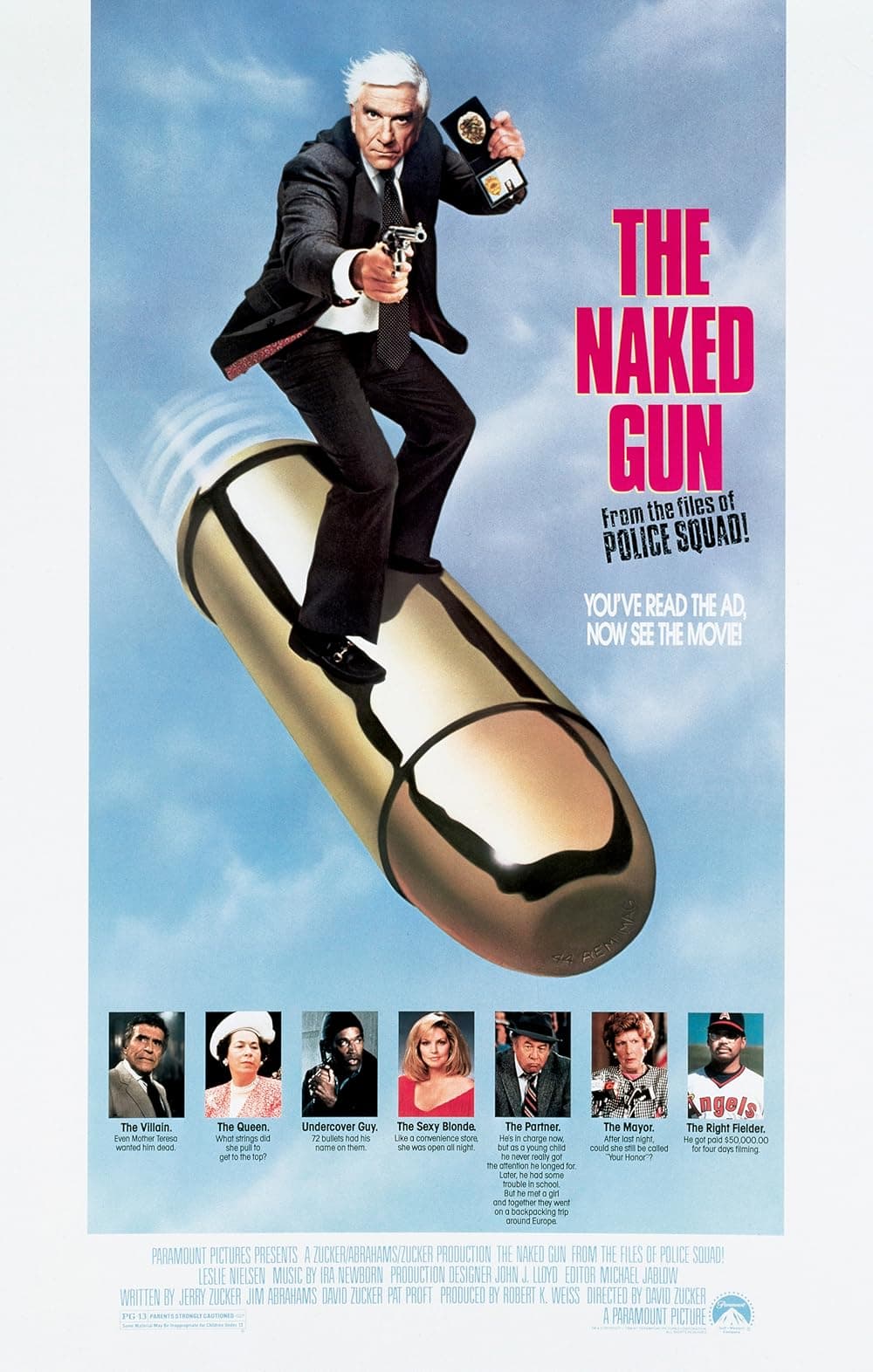
The Naked Gun: From the Files of Police Squad!
A straight-faced detective, a ridiculous assassination plot and enough sight gags to make you snort tea through your nose.
The setup
You know the kind of joke this film loves: delivered with grave seriousness, timed like a metronome, then allowed to explode into absurdity. The Naked Gun: From the Files of Police Squad! takes that approach and runs it through an entire feature — with Frank Drebin at the centre, taking everything horribly seriously while the world around him collapses into comic chaos.
THE MOVIE
Frank Drebin is still the reason this movie works
The engine of this film is a very simple mismatch: a cop who behaves as if every situation demands solemn, procedural authority, placed inside a story that's determined to be silly. That mismatch is what gives the jokes teeth — and Leslie Nielsen's Frank Drebin is the fulcrum.
On paper the plot is cartoonish — an attempt on a colleague's life leads Drebin into a larger conspiracy to assassinate Queen Elizabeth II during a visit to Los Angeles — and the movie never pretends otherwise. The seriousness of the investigation is used as the straight line for endless comic tangents.
David Zucker and his collaborators stretched their TV idea into an 85-minute feature in 1988, and what makes it worth revisiting now is how consistently the film keeps Drebin earnest, procedural and utterly out of sync with the nonsense around him.
THE SETUP
The idea that sets The Naked Gun: From the Files of Police Squad! in motion
The basic engine is neatly economical. Drebin investigates the shooting of his colleague Nordberg and, by following the breadcrumbs, uncovers a mind-control assassination plan aimed at a royal visit. It’s an obviously preposterous premise, and the film never tries to dress it up as anything else.
That setup gives the writers a clear mission: gather seemingly serious evidence, then let a cascade of misunderstandings and bureaucratic obstacles turn every clue into a gag. Drebin is often working against official constraints — a useful way to justify clandestine capers and daft improvisation.
The filmmakers also lean on recurring mechanics to fuel laughs. Gags often arise from Drebin taking things literally or misreading the moment — and set pieces are engineered so the comedy escalates logically from a single, absurd decision (Drebin’s disguise as 'Enrico Pallazzo' to get onto the baseball field is a perfect example).
Tying the investigation to a romantic subplot with Jane Spencer — who happens to be close to the villain — gives Drebin plausible access and a private stake in the mess. It's a tidy device: it keeps the plot moving while allowing the film to return to relationship-based jokes between the leads.
THE CHARACTER
Why Frank Drebin matters
Frank Drebin is memorable because he refuses to notice how ridiculous everything is. He treats every development as if it were a matter of law and procedure, which means the film can fling any nonsense at him and the laughs come from how dead serious he remains.
That straight-faced approach — the earnest, incompetent lieutenant who doesn't know he's out of step — gives the movie a hinge. Without a protagonist who insists on genuineness, the parody would risk collapsing into mere silliness.
Casting matters in a different sense here: Drebin is written and played to be the reliable 'straight man' amid chaos, and that structural clarity keeps the rapid jokes from turning into noise. The character holds the centre while the world around him tilts.
It’s also a character built to return. Drebin’s shape and tone are what allowed the filmmakers to carry him into two sequels, because the central joke — seriousness in the face of absurdity — is repeatable and elastic.
THE PERFORMANCE
Why Leslie Nielsen's performance matters
Contemporary critics noticed what the film depends on: a deadpan centre. Roger Ebert singled out Leslie Nielsen's straight-faced delivery as the comic core, arguing that the jokes land because the performance treats them as if they were serious business.
That observation is useful because it explains how the film's brand of comedy is achieved. The material is often absurd, but when the lead behaves as if he's filing paperwork, the contrast turns the absurd into comedy with a clear direction.
Saying the performance matters is not the same as heroic praise; it's simply to note that Nielsen's tone is the mechanism the movie uses to convert written gags into sustained laughs. The actor’s delivery gives the film a consistent comic register.
Put another way: the film's timing owes a great deal to having a single, unflappable center who refuses to admit that anything is ever ridiculous.
UNDER THE SURFACE
The Naked Gun: From the Files of Police Squad! has more on its mind than the plot suggests
On the surface it's a spoof of police procedurals: the film sends up the rituals and language of detective stories by applying them to nonsense, showing how the trappings of seriousness can be hilarious when their logic is bent.
A second, closely related idea is the movie's delight in inverting authority. Drebin behaves like an officer with gravitas, and that deadpan inversion — treating incompetent acts as official procedure — is where much of the comedy comes from.
And beneath those two impulses there’s a softer note: the romantic subplot. Linking Drebin to Jane Spencer gives the film a repeatable human beat, so the laughter isn't only gag-driven but also occasionally tied to small personal stakes.
Put together, these threads mean the movie isn’t only a string of jokes. It's a sustained game: parodying a genre while keeping one sincerely behaved character at its heart and, on occasion, letting him stumble into real feeling.
THE FILMMAKING
How The Naked Gun: From the Files of Police Squad! was put together
The film looks and moves like a feature version of a TV parody because it deliberately references the visual language of older police-detective shows. That production choice keeps the joke grounded: the movie feels like an affectionate send-up rather than a shapeless spoof.
Physically staging the set pieces required experienced stunt and second-unit teams. That wasn’t window dressing — it let the comedy include genuine physical set pieces that could escalate without collapsing into chaos on set.
The movie also wears its Zucker–Abrahams–Zucker origins on its sleeve. The rapid-fire sight-gag approach is the same engine that powered their other comedies; here it’s adapted to a police template rather than an airline or spy story.
All of this adds up to a film that is carefully constructed to let one-liners, visual jokes and pratfalls coexist without trampling each other — and that balance is a direct result of deliberate filmmaking choices rather than random silliness.
PRACTICAL EFFECTS
The effects work that gives The Naked Gun: From the Files of Police Squad! its physical personality
The film relied on an experienced stunt coordinator to stage its physical-business and action beats. Naming Conrad E. Palmisano in the credits reflects that this was a stunt-forward production.
Credits for special-effects and visual-effects supervisors, plus a matte painter, show that some sequences used optical and practical techniques rather than being entirely camera-trick free. Those touches were chosen to support comic set pieces that needed believable staging.
One sequence in particular — the big baseball-stadium bit — was filmed with cooperation from Major League Baseball and specific teams, which meant the crew had to integrate crowd staging and on-field action into the comedy.
In short, the movie's physical humour was supported by practical, organised effects and stunt work, not improvised chaos: the production values exist to keep the gags readable and safe for performers.
PURE 80S
The Naked Gun: From the Files of Police Squad! could not belong to any other decade
This is very much a late-1980s animal: a feature expansion of the 1982 TV series Police Squad! and another entry in the Zucker team’s run of broad, referential parodies. Turning a small, sharp TV idea into a punchier, longer joke was a familiar 80s move.
The film also leans on the era’s willingness to mix celebrity cameo culture with comedy. Bringing in major-league baseball figures and broadcasters as part of a comedy sequence shows how potential crossover between sports and film was a late-80s preoccupation.
So while the jokes aim for timeless absurdity, the way the movie packages itself — as a TV-to-feature expansion that invites real-world celebrities into the gag — feels very specific to that moment.
That combination of TV roots and starry cameos is one reason the film sits comfortably in its year of release: it’s a product of an era that loved expanding small ideas into bigger, broader spectacles.
THE LEGACY
Why The Naked Gun: From the Files of Police Squad! still matters
The movie's immediate success, which helped it spawn two sequels, proved that the TV idea could sustain a feature-length appetite for jokes. That commercial follow-up is part of why the film remains a remembered entry in late-80s comedy.
It also helped to cement a particular association: the film established a durable franchise identity and played a large role in making Leslie Nielsen a leading figure in American spoof comedies in this period.
Beyond box office and casting, the screenplay and gag style are repeatedly returned to in discussions about comedy craft; its approach to rapid-fire visual and verbal jokes is often mentioned when critics and industry retrospectives map influential comic techniques.
So its legacy rests on three things at once: a franchise that kept the tone alive, a clear star persona built around straight-faced absurdity, and a script style that became a reference point for later conversations about spoofing and sight gags.
THE VERDICT
Does The Naked Gun: From the Files of Police Squad! still hold up?
Yes — if your idea of a good time is a film that treats its silliness as solemn business. The plot (a shooting of Nordberg leading Drebin to uncover a mind-control assassination plot against a visiting monarch) gives the movie a sturdy spine, and the comedy works because the spine is taken seriously.
The movie celebrates its own mechanics: set pieces built from misunderstandings, Drebin disguising himself to gain access to key locations, and a romantic thread with Jane Spencer that keeps the stakes just human enough to matter amid the madness.
Leslie Nielsen is central to the equation; contemporary critics specifically noted that his deadpan delivery is what makes the jokes land. Without that tonal anchor the film would be scattershot; with it, the rapid gags have shape.
So if you want a fast, lean comedy that privileges gag construction and a single, unshakable comic tone, this is still worth a watch. It's a film that assumes you enjoy deliberate silliness — and, crucially, that you like it delivered as if it were a serious case file.
Share this movie
Keep watching
More movies from the 80s
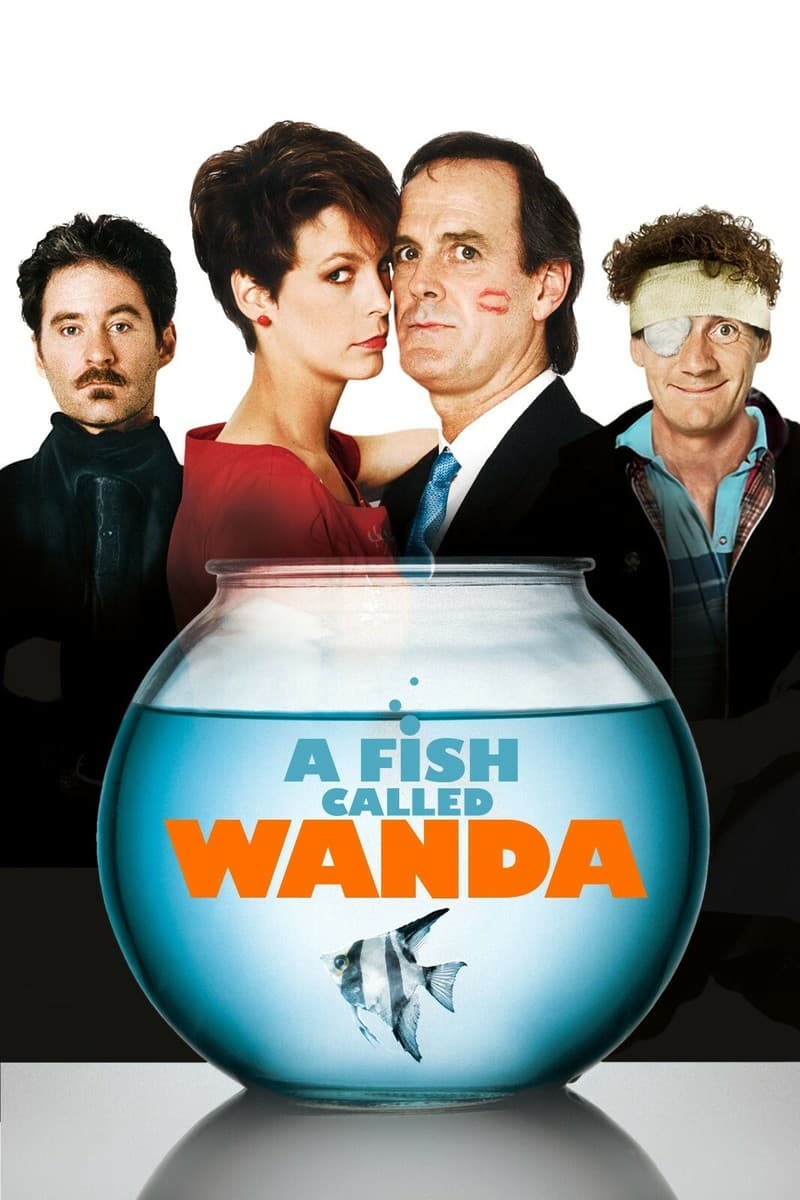
1988
A Fish Called Wanda
Manners, mendacity and a key hidden in fish food — a very English heist with teeth.
Read our take →
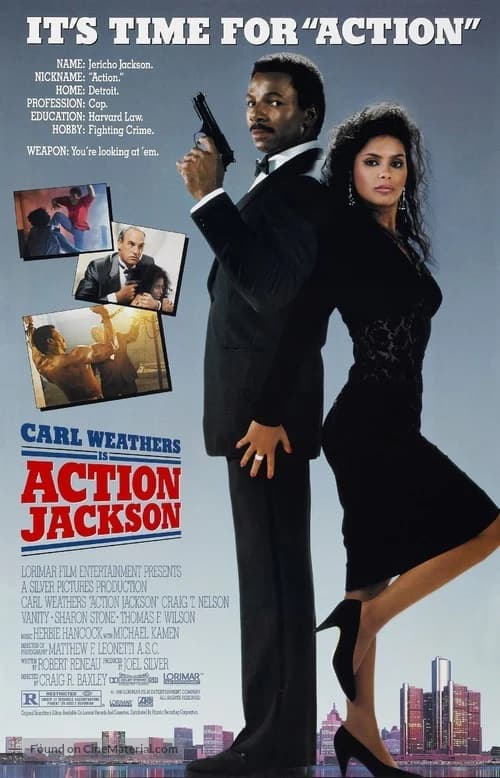
1988
Action Jackson
Action Jackson: heroism and courage, and why this 1988 movie still matters.
Read our take →
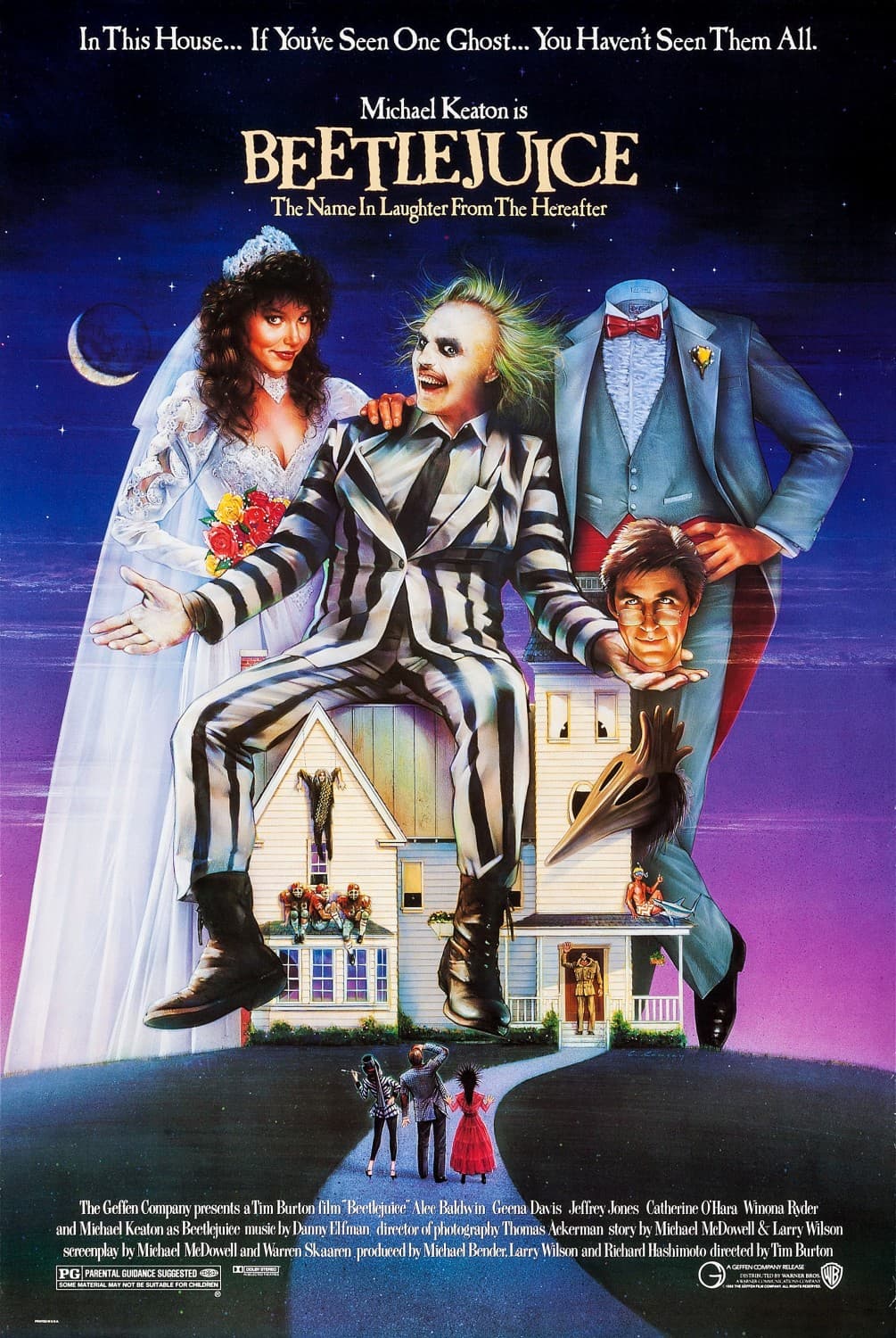
1988
Beetlejuice
A haunted house, a rules-bound afterlife and one gloriously unhelpful bio‑exorcist.
Read our take →