Weekend at Bernie's
A corpse, two clueless juniors and a weekend full of pretending — and Larry Wilson is the motor that makes the joke run.
The setup
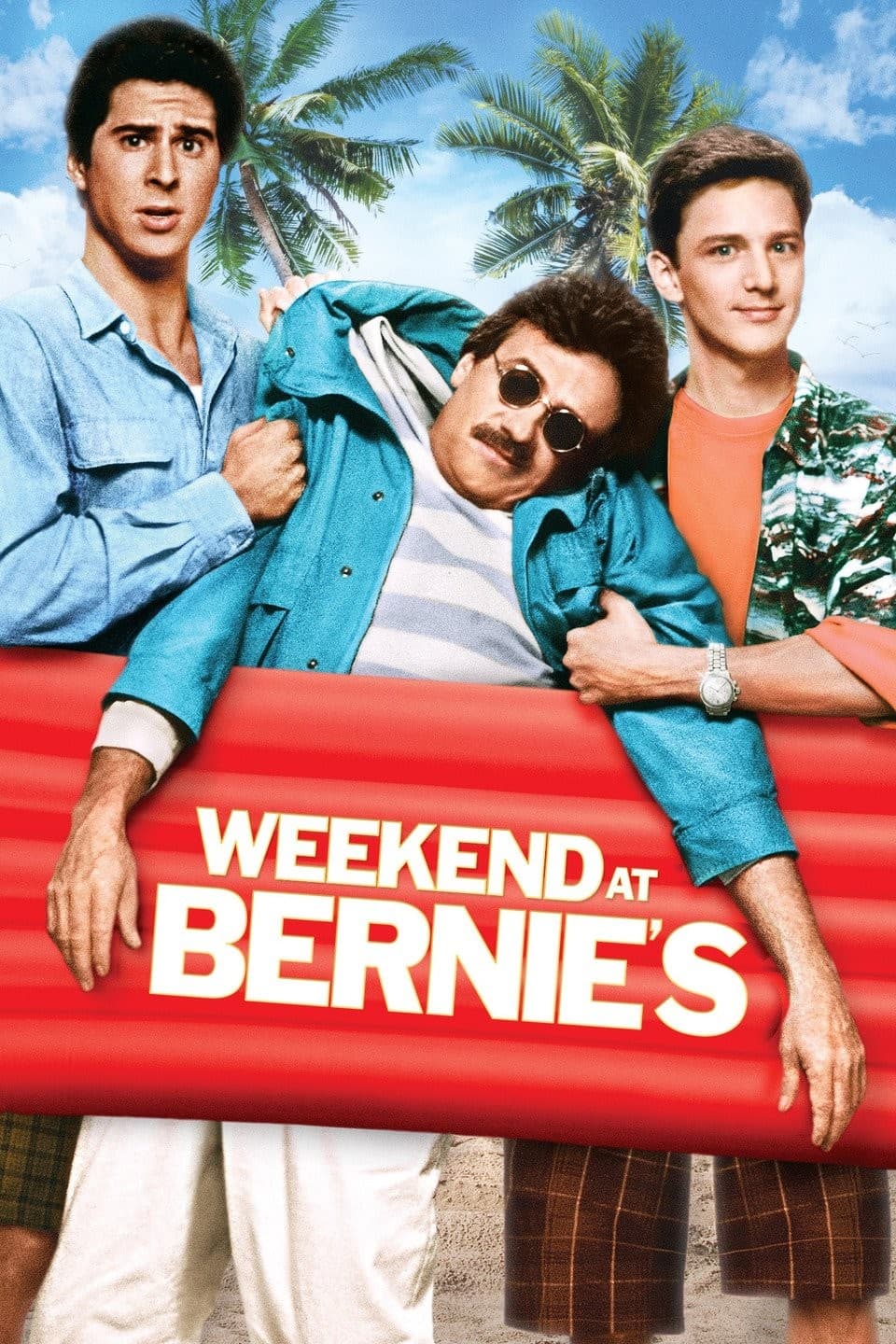
Weekend at Bernie's has one of those hooks you can explain in a single sentence and then watch people argue about for hours: two junior insurance men find their boss dead and decide it’s easier to pretend he’s alive than admit anything. It’s a daft idea, brilliantly stubborn. Ted Kotcheff directs the chaos, but it’s Larry Wilson — the confidently opportunistic half of the buddy duo — who keeps the whole contraption moving.
THE MOVIE
Larry Wilson is still the reason this movie works
There’s a simple, dangerous confidence to Weekend at Bernie's that comes from its premise: two junior insurance employees uncover a large embezzlement and are summoned by their boss to his beach house for the weekend. When they arrive they don’t find a welcoming host — they find a dead man. Rather than call it in, they decide to keep up the appearance that Bernie is alive.
That decision is the film. It lands the tone — a black-comedy game that trades on appearances and how far people will go to avoid consequences. And it’s driven by one specific character energy: Larry Wilson, the outgoing, opportunistic half of the pair whose swagger pushes the plot forward.
Ted Kotcheff directs with a lightness that never lets the set-up linger too long — Weekend at Bernie's is compact (it runs roughly 97 minutes) and clear about the gag it wants to sustain. The directors’ choices and the central conceit mean the movie doesn’t have to be subtle; it has to be committed. Larry supplies that commitment.
THE SETUP
The idea that sets Weekend at Bernie's in motion
The engine is straightforward: two junior insurance-company employees stumble onto evidence of fraud. Their boss, Bernie, invites them to his beach house — which, by the time they get there, has turned into a very awkward crime scene. The inciting incident is the discovery of the insurance fraud, and the central problem becomes how to hide the death while avoiding blame.
That single choice — conceal the body and fake normality — is both practical and comic. Practically, it gives our leads a clear, urgent objective: leave the island without being accused. Comically, it supplies an escalating series of lies and physical manipulations that the movie can return to whenever it needs a laugh.
Complications arrive as you’d expect in a crime comedy: other parties with competing aims close in (including a hitman and mob figures), turning every attempt at escape into another improvisation. Each new threat raises the stakes for the pair’s increasingly elaborate charade.
A final, small production note that explains the film’s feel: Bernie’s two-storey beach house was a set constructed for filming at Fort Fisher and then dismantled after production. It’s a deliberately contained playground for the movie’s mechanical joke.
THE CHARACTER
Why Larry Wilson matters
Larry Wilson is not the moral heart of the movie. He’s its accelerator. As the opportunistic, outgoing half of the buddy pair, his energy turns panic into plotting and panic into pratfall. When something needs to be done — or faked — Larry is the one ready to try it first.
That matters because Weekend at Bernie's depends on people doing the wrong thing for the right reasons. Larry’s confidence makes those choices believable within the film’s comic logic: he sees a way out and commits, even when the choice is bonkers.
Larry also makes the tone conversational. The film’s jokes often come from his willingness to push an illusion until it blunders into truth. He keeps the story moving; without him, the premise would be a clever headline rather than a sustained comedy.
And, crucially, Larry’s presence makes the film watchable as a buddy movie. This is a story about two men forced into an absurd complicity, and Larry is the half most determined to make the complicity pay off.
UNDER THE SURFACE
Weekend at Bernie's has more on its mind than the plot suggests
On the surface it’s a gag about a corpse and the logistics of pretending he isn’t one. Underneath, the film keeps returning to appearance versus reality — people staging a false normality to protect themselves. Every lie the protagonists tell is a small performance aimed at staying safe.
That connects directly to corporate corruption. The whole weekend begins because of Bernie’s embezzlement; the comic farce is rooted in the consequences of that theft. The film’s humour comes from watching ordinary people try to navigate a world warped by someone else's greed.
Survival through deception becomes a recurring rule: deception isn’t a one-off; it’s the only tool the characters have. The tonality makes those lies feel like pragmatic choices rather than merely immoral ones, which is why you can laugh and still feel an edge of unease.
Finally, the movie leans into slapstick that’s derived from taboo — physical comedy built around a subject we’re usually told to treat with solemnity. Making that choice is bold: it’s what keeps the film on the uncomfortable side of comedy and what gives it an odd vitality.
THE FILMMAKING
How Weekend at Bernie's was put together
Kotcheff stages the material with economy. The editing and continuity choices are conventional — the film wants to be readable, not artful for its own sake — and that clarity helps the gag work because you’re never guessing what the characters are trying to hide.
Production design leans glossy; the party-ready lagoon of the house plays against the macabre centrepiece, accentuating the absurdity whenever the corpse becomes a prop. Brightness and polish make the film’s jokes feel deliberately at odds with their subject.
That balance — clean storytelling plus a glossy setting — lets the humour play in broad daylight. You can see the wiring of each joke, which is precisely the point: the movie offers a clean stage for its repeated bit.
Taken together, the choices give Weekend at Bernie's a recognisable identity: tidy filmmaking that prioritises the comic mechanics over stylistic distraction.
PRACTICAL EFFECTS
The effects work that gives Weekend at Bernie's its physical personality
A surprising amount of the movie’s humour is earned in the nuts-and-bolts of moving a body around. The production mixed the actor in the role with stunt performers and specially made props and dummies for the trickier or dangerous moments.
That trade-off is practical: when a scene needed precise physicality — a boat sequence or a dragging moment, for instance — the film switched to stunt performers and props rather than risk injury. In one boating stunt a stuntman was reported injured during filming, which shows how physical some of the comedy got.
Alternating between the actor and stand-ins kept the visual continuity of Bernie-as-prop while allowing the crew to pull off stunts that would be unsafe for a single performer. It’s an old-school approach that makes the gags feel tangible.
In short: much of the movie’s personality comes from physical work behind the scenes. The laughs don’t float on effects so much as depend on careful, sometimes risky, practical solutions.
PURE 80S
Weekend at Bernie's could not belong to any other decade
This is very much a late-1980s film. Produced and released in 1989, its glossy Hamptons-style setting and plot rooted in embezzlement connect it to a period preoccupied with wealth, excess and the consequences of financial shenanigans.
The movie’s black-comedy premise — taking a dead boss and making him a comic prop — fits into a strand of 1980s dark comedies that were happy to test how far a mainstream audience would follow them into discomfort.
The result is a picture that feels like its era without needing gimmicks: the story’s interest in money, status and the lengths people will go to save themselves is textbook late-80s territory.
Put another way, Weekend at Bernie's wears its decade on its sleeve through subject matter and appetite rather than through visual shorthand alone.
WATCHING IT NOW
What has aged — and what hasn't
Weekend at Bernie's found a second life beyond cinemas. After its run it kept appearing on home video and on cable television, which helped it settle into a kind of cult visibility that later viewers could discover at their leisure.
Part of why it plays for some audiences today is that its central set-up remains simple and pliable: two men fake a live person to escape blame while external threats — a hitman and mob figures — close in. The mechanics of that joke are still easy to follow and still provide a fertile source of physical comedy.
Some later observers have said the film has, over time, been reassessed and has ‘aged into something close to respectability’ for viewers who approach it on its own terms. That’s not the same as saying it’s been canonised; rather, people find the commitment to the gag oddly admirable.
That said, the basic conceit is an acquired taste. If the idea of slapstick built around a corpse sits badly with you, the film won’t be redeemed by nostalgia. Its survival is more about persistence on home formats than universal re-evaluation.
THE LEGACY
Why Weekend at Bernie's still matters
The film’s afterlife is practical rather than mythic. It generated a sequel in 1993 and, more importantly, remained visible through home video and regular cable airings — the sort of slow-burn presence that builds a cult following.
That steady visibility is the main reason people still remember the movie: repeated exposure on non-theatrical platforms let it become a reference point for a certain kind of black comedy.
There’s also a dry little footnote to its business story: in 2014 the writer and director filed a breach-of-contract lawsuit against studios claiming unpaid profit participation from the film. It reminds us that the movie’s life has been as tangled off-screen as on.
So Weekend at Bernie's matters less as a landmark of cinema than as a persistent piece of late-80s comedy infrastructure — a film you keep seeing, arguing about, and occasionally borrowing from.
THE VERDICT
Does Weekend at Bernie's still hold up?
If you come for high-brow satire, you will leave early. Weekend at Bernie's is an idea movie: the central mechanical joke — repeated physical manipulation of a corpse to simulate life — is what it has and what it needs to succeed. The film commits to that conceit for its 97-minute runtime and rarely lets the focus wander.
That commitment is helped by the energy of Larry Wilson (played by Andrew McCarthy) — his opportunism and willingness to fake normality keep the plot moving — and by the constant pressure of outside threats, such as the hired killer figure Paulie, who turn each improvisation into a perilous gamble.
Contemporary reviewers and later commentators singled out the physical work around Bernie as a key source of the humour; that observation stands as useful context rather than a substitute for your own reaction. The film asks you to accept an unpleasant prop and decide whether the sustained absurdity is funny or merely uncomfortable.
So: should you watch it? Yes, if you’re intrigued by a committed, slightly grotesque joke and the late-80s appetite for black comedy. No, if that premise sounds like an idea you’d rather not spend an evening with. Either way, Weekend at Bernie's still does exactly what it set out to do — it stages a lie and then enjoys watching everyone keep it going.
Share this movie
Keep watching
More movies from the 80s
1989
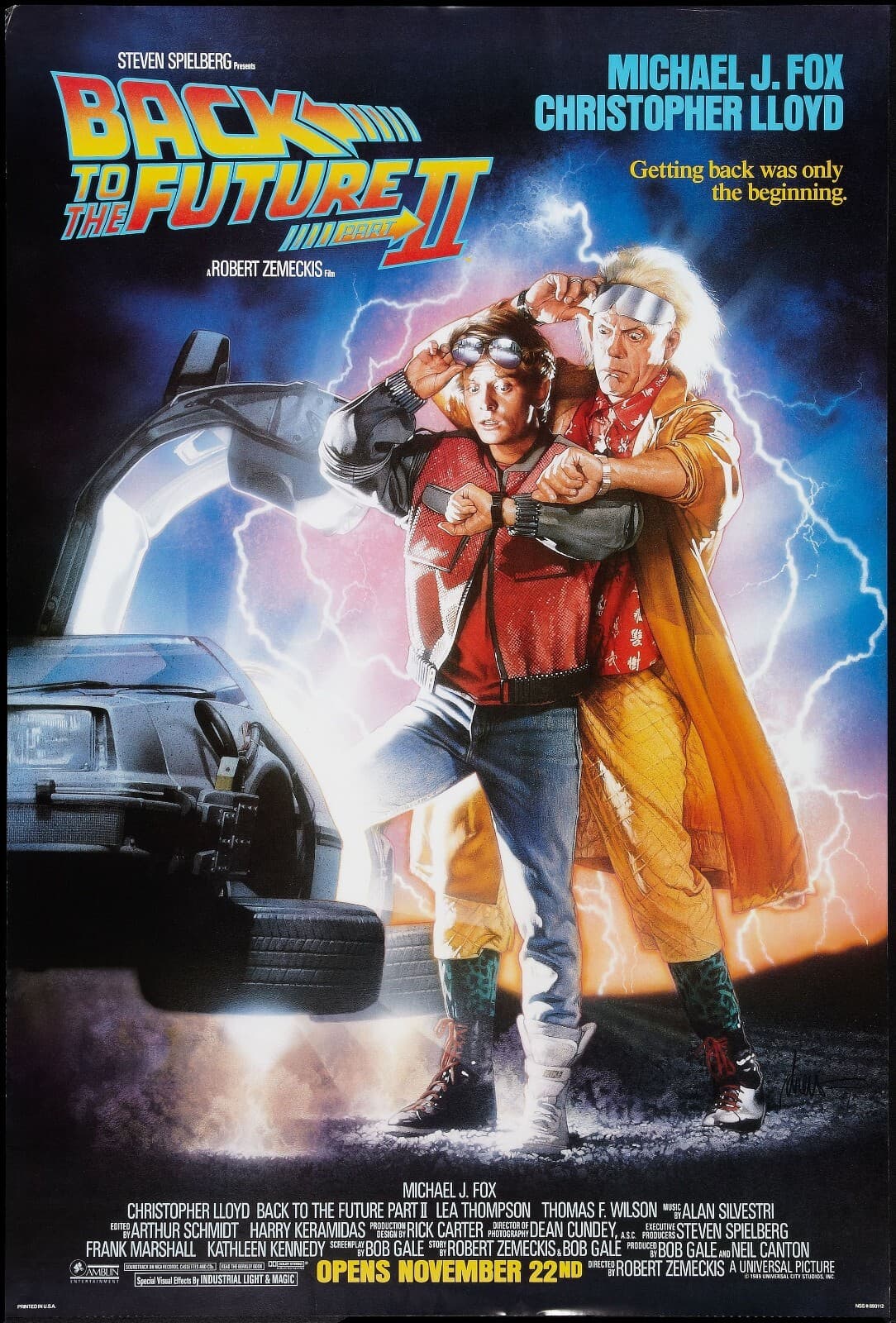
Back to the Future Part II
Hoverboards, alternate 1985s and one man trying to stop his whole family from unravelling—again.
Read our take →

1989
Bill & Ted's Excellent Adventure
A daft time‑travel comedy where being mates saves the world — and yes, Ted matters more than you remember.
Read our take →
1989
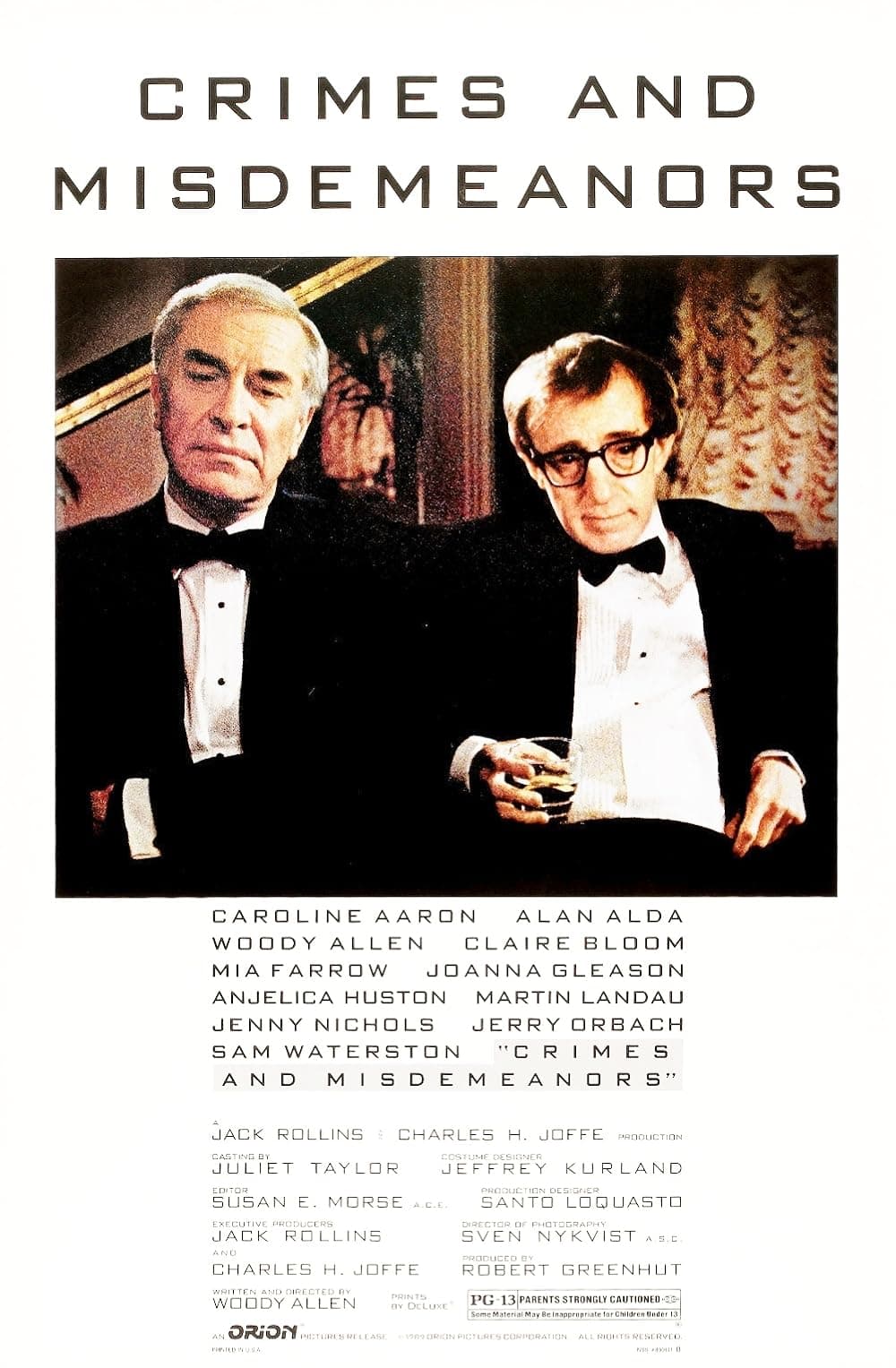
Crimes and Misdemeanors
A genteel New York morality play where privilege meets decision — and conscience is the loudest character.
Read our take →