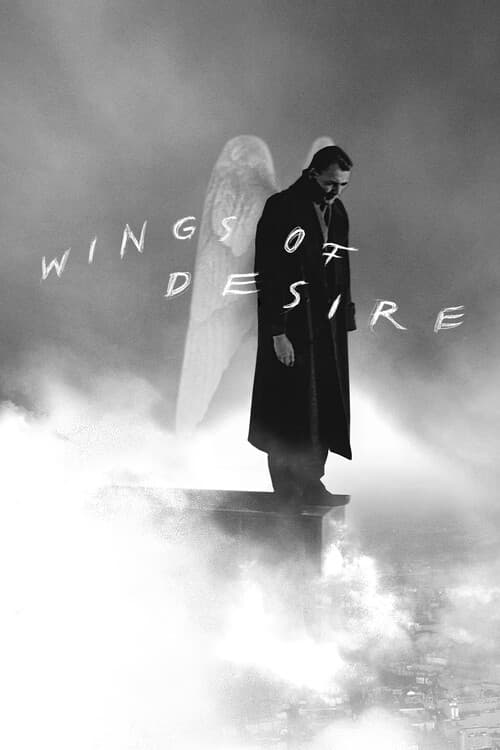
The setup
Wings of Desire is one of those films you remember more as a mood than a plot — a city heard from the rooftops and a man who decides he no longer wants to be a spectator. Wim Wenders’ 1987 fable about angels in West Berlin keeps turning up in conversations because it asks a simple, stubborn question: what happens when longing becomes action?
THE MOVIE
Damiel is still the reason this movie works
The most arresting trick of Wings of Desire is how it makes listening feel like cinema. The film follows guardian angels who glide through West Berlin, overhearing the private thoughts of the living and turning inner monologues into audible, almost intimate moments.
Into that hush steps Damiel, an angel who stops being content with observation. He becomes smitten with Marion, the lonely trapeze artist, and for the first time his yearning for touch and colour pushes the story forward — longing, quite literally, as narrative fuel.
That tension — a being built for contemplation suddenly desperate for corporeal sensation and connection — is why people still circle back to Wim Wenders’ film. It’s not just the premise; it’s the way the film lets longing be complicated and tender rather than neat.
THE SETUP
The idea that sets Wings of Desire in motion
Think of the film as city vignettes with a metaphysical overlay. Angels drift unseen through West Berlin and, because they can hear people’s thoughts, the movie stitches together a chorus of interior lives rather than a conventional plot.
That chorus contains Damiel and his fellow angel Cassiel, but the central hook is simple: Damiel falls for Marion, a trapeze artist, and his wish to taste human life — all the mess and warmth that comes with it — becomes the engine of the film.
The setup works because the angels’ presence allows the film to pause and listen. Instead of pushing action, it collects small, human details until Damiel’s yearning feels inevitable rather than contrived.
Wenders keeps the premise focused and light on mechanism: it’s an angelic point of view and a choice about becoming human, not an origin-story explanation or technical manual.
THE CHARACTER
Why Damiel matters
Bruno Ganz’s Damiel is the film’s emotional pivot: an immortal who has spent so long watching that desire — the need to eat, to touch, to be seen — arrives like weather. It’s a clear, humane hunger rather than a metaphysical crusade.
That hunger gives the movie permission to leave the clouds and talk about things that matter on the ground: conversation, solitude, the ache of proximity. Damiel’s longing reframes every quiet Berlin street and overheard thought as something the audience is suddenly allowed to want.
Cassiel, his companion, matters because he’s the counterweight: a reminder that non‑sensory being has its own integrity. In their difference the film stages a genuine choice rather than a melodramatic conversion.
Damiel’s decision shapes everything that follows — and it’s why Wenders would revisit these characters again: the particular problem of choosing to step inside life is both personal and persistent.
UNDER THE SURFACE
Wings of Desire has more on its mind than the plot suggests
On the surface it’s a fantasy about angels; under the surface it’s interested in what it feels like to be alive. Longing and embodiment aren’t just motifs — they’re the film’s engine. Desire here is not a plot device but a lens on human experience.
There’s a steady argument in the film about observation versus participation. The angels’ listening opens up a way to see people honestly, but the film constantly asks whether honest seeing is enough when the option to act exists.
Wings of Desire is also a movie about urban memory. West Berlin’s streets, scars and repetitions settle into the film like a second character: history that people carry in quiet ways, and a city that remembers its own losses.
Finally, the film treats language with care. Poetry, small talk and internal monologue pile up to create intimacy; solitude, handled tenderly, becomes something the film both mourns and respects.
THE FILMMAKING
How Wings of Desire was put together
Wenders’ decisions are quietly theatrical: the film messes with perception rather than piling on spectacle. One practical example is the way visible 'wing' effects and optical work were handled in‑camera, using semi‑transparent mirror techniques and front‑projection expertise.
Those choices matter because they keep the angels tactile without ever turning them into special‑effects showboaters. The result feels handmade: the movie’s small technical inventions are in service of mood, not display.
There’s a craftsmanship to the production credits that shows in the film’s restraint. Wenders opts for methods that let the audience accept the premise without being reminded of the mechanics.
All of which means the filmmaking reads as a choice to preserve intimacy. The techniques are modest and deliberate, and because the film trusts them, the story can stay human-sized.
PRACTICAL EFFECTS
The effects work that gives Wings of Desire its physical personality
The film’s visual magic is, deliberately, low-key. Optical-effects specialists were brought in for front‑projection work, which features in the film’s visual vocabulary.
Meanwhile the 'wings' and similar visible effects weren’t the product of later digital trickery but were achieved on set — in-camera techniques and semi‑transparent mirrors were used to create that fragile, hovering look.
That approach keeps the supernatural feeling embedded in the same space as the actors; the effect reads like an extension of the scene rather than a layer pasted on afterwards.
It’s a small technical philosophy with a big emotional payoff: by keeping effects practical, the film preserves a sense of touch and presence that suits its themes of embodiment.
PURE 80S
Wings of Desire could not belong to any other decade
You can’t untether Wings of Desire from its moment: it was filmed and set in West Berlin in 1986–87, a city whose division and the presence of the Berlin Wall seep into the film’s everyday vignettes.
That divided-city context gives the movie an argument about memory and loss that’s very specific to its time and place. The Wall isn’t just background — it’s part of the landscape people carry with them.
The film arrived at an international moment too: it premiered at Cannes in May 1987, where Wim Wenders took home the Best Director prize, which helped set the film in high-profile festival conversation that year.
All told, the movie feels rooted in the late‑Cold War era not because of nostalgia for the 1980s but because its concerns — barriers, brokenness, collective memory — were literally written into the city it photographed.
WATCHING IT NOW
What has aged — and what hasn't
A surprising number of small things still feel immediate. The cast list reads comfortably now — Bruno Ganz, Solveig Dommartin, Otto Sander, Curt Bois and even Peter Falk — and their presence anchors the film’s human weight.
The movie’s interest in small, overheard lives and the way it stages intimacy without melodrama still plays. It’s a film that rewards patience; modern viewers used to rapid plotting may find it deliberative, but that deliberation is the point.
Wenders’ return to the story in a 1993 follow-up suggests these characters had more to say, which is a reminder the film’s concerns weren’t a one-off curiosity but something the director kept returning to.
Restoration has helped, too: the film received a 4K restoration and has been shown in retrospectives and restored home‑video releases, which means it’s available to look at in a way closer to how it was originally made.
THE LEGACY
Why Wings of Desire still matters
Part of the film’s continued presence comes from the way it was recognised early on: Wenders won the Cannes Best Director award for the film in 1987 and the movie picked up several European and German awards thereafter, which cemented its visibility in festival circuits.
That institutional recognition matters because it made the film part of festival conversation rather than a private curiosity — it entered a public catalogue of art‑house cinema people still return to.
The existence of a later follow‑up and a loose Hollywood remake shows the story’s flexibility: Wenders’ original proved durable enough to be revisited and reworked, not simply forgotten.
Finally, practical preservation has helped: restorations, retrospectives and restored home‑video releases have kept the film in circulation so that new audiences can find it on something other than memory.
THE VERDICT
Does Wings of Desire still hold up?
Yes — but not for the reasons a casual viewer might expect. This is less a special‑effects showpiece and more a film about choosing to be messy. The story’s engine is simple: angels observe West Berlin, and one, Damiel, falls for Marion and decides that he wants to feel rather than only watch.
The film’s formal moves help that argument. Wenders and his cinematographer make the angels’ existence legible by rendering their viewpoint largely in black‑and‑white, switching to colour when human sensory experience takes over; that device keeps the emotional stakes visible without spelling them out.
The divided‑city setting and recurring appearances of the Berlin Wall give the film a geography of memory and loss that still feels potent: the city isn’t wallpaper, it’s part of what the characters carry. And the relationship between Damiel and his fellow angel Cassiel — the foil who remains an observer — preserves a sense of genuine choice.
If you watch it now, expect something patient and humane. If you want a neat plot, look elsewhere. If you want a film that listens, lets longing breathe and then asks what you’d risk to stop being a spectator, Wings of Desire still answers.
Share this movie
Keep watching
More movies from the 80s

1987
A Nightmare on Elm Street 3: Dream Warriors
Nancy comes back to teach a new generation to fight Freddy — and she brings a team.
Read our take →
1988
Big
Big: our relationship with technology and friendship, and why this 1988 movie still matters.
Read our take →
1986
Peggy Sue Got Married
Peggy Sue Got Married: family and growing up, and why this 1986 movie still matters.
Read our take →