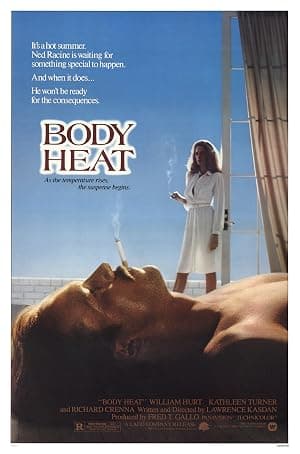
The setup
Body Heat is the kind of sultry, sharp-edged thriller that makes you sweat on the sofa. Lawrence Kasdan’s 1981 neo‑noir hinges on a single, ruinous liaison: a morally compromised lawyer who lets desire write his brief. Revisit it for the slow burn — and for the chemistry that turns a straight-up crime plot into something stranger and nastier.
THE MOVIE
Ned Racine is still the reason this movie works
If you remember one thing about Body Heat, remember Ned Racine: a Florida lawyer who takes a temperature check on his life, decides he likes it hot, and proceeds to make catastrophically bad decisions. What begins as a sexual relationship with Matty Walker becomes the film’s ignition point — their affair is not a subplot, it is the plot.
The pair conspire to kill Matty’s wealthy husband so they can walk off with his money. That tidy crime premise borrows the bones of classic noir, but Kasdan drops it into an early‑1980s, erotic‑thriller frame: sex as motive, lust as logic, and consequences delayed until the last act.
William Hurt’s Ned and Kathleen Turner’s Matty are the engine. Kasdan, directing his first feature, deliberately riffs on the femme‑fatale tradition and leans on the film’s sustained ‘heat’ motif to keep the engine running for 113 minutes.
THE SETUP
The idea that sets Body Heat in motion
The film’s basic engine is compact and relentless: Ned and Matty’s affair turns into a murder plot aimed at freeing Matty from an unhappy marriage and the husband’s wealth. It’s a simple escalation — desire turns into conspiracy.
What gives that idea teeth is how the screenplay stages the mechanics. Matty pulls strings, Ned slides from reluctant to complicit, and a cast of other characters supply the professional and criminal help required to make the scheme work.
Kasdan keeps much of the payoff under wraps until late in the picture. The screenplay teases staged accidents, arson elements and the legal peril for its protagonist rather than laying everything out early, which keeps the tension wound tight.
If it sounds familiar, that’s deliberate: the film updates the femme‑fatale insurance/murder template that classic noirs perfected, but it does so in a modern, steamier key.
THE CHARACTER
Why Ned Racine matters
Ned Racine isn’t a hardboiled hero or a detective; he’s a working lawyer who lets his appetite write his briefs. William Hurt plays him as a man nudged over the line by attraction and the promise of money — a professional undone by personal weakness.
That moral slipperiness is precisely why the movie depends on him. Ned is the audience’s point of entry: when he compromises himself, we feel the drag of every poor decision. The film is less interested in proving him wrong than in cataloguing how he gets there.
He isn’t alone in the fall. Secondary figures — the likes of Peter Lowenstein, Oscar Grace and Teddy Lewis — supply both the practical muscle and the friction that push Ned further. They’re the cogs that make the scheme doable and the situation combustible.
Kasdan had come to directing with a screenwriter’s appetite for character and dialogue, and Ned is where that appetite pays off. As a criminal‑in‑training, he’s far more interesting than a neat moral lesson ever would be.
THE PERFORMANCE
Why Kathleen Turner's performance matters
Contemporary reviewers were clear about one thing: the film rides on the chemistry between its leads. The dynamic between Ned and Matty is the movie’s motor, and Matty’s presence is what makes Ned swerve off the road.
That observation is worth stressing because we’re not talking about stunt casting or flash: this was a breakout role that gave Kathleen Turner a visible cinematic foothold. The part announces itself and, in the eyes of the period press, marked her arrival.
Because the film trades on sexual tension, Matty’s scenes have to sell both desire and calculation. The reviews of the day homed in on that interplay as central to Body Heat’s propulsion — it’s the friction you feel watching the plot start to smoke.
So when you watch the film now, pay attention less to gimmicks and more to how the pair’s chemistry sets the engine running. It’s what keeps a straight murder plot feeling like a private, dangerous thing rather than a mere procedural.
UNDER THE SURFACE
Body Heat has more on its mind than the plot suggests
On the surface, Body Heat is a murder scheme. Underneath it’s a study in how sex, money and vanity erode judgement. The femme‑fatale tradition is obvious: Matty’s pull is destructive because it rewires Ned’s priorities.
Greed holds equal billing. The promise of money sharpens everyone’s instincts; it’s frequently the practical reason otherwise ordinary people cross lines they might not have crossed for passion alone.
There’s moral ambiguity at every turn. Ned isn’t a villain in the classic sense — he’s someone who keeps choosing himself, and the film watches that erosion closely rather than pointing a blunt finger.
And then there’s the heat. The movie uses South Florida humidity not as background colour but as metaphor: escalating desire and recklessness are given a weather system, and the film is all the better for it.
THE FILMMAKING
How Body Heat was put together
One tidy factual hook explains a lot: Richard H. Kline shot the picture, and the film consciously borrows 1940s noir traits while being shot in contemporary colour. That choice gives Body Heat a look that feels both familiar and dissonant.
The net effect is simpler than a technical boast: Kasdan borrows noir’s dialogue rhythms and moral framing, but he stages them in a world that reads like the present — which keeps the old tropes feeling dangerous rather than antique.
It’s a clever balancing act. The reference points are visible, but they don’t feel like pastiche; instead the movie uses noir grammar to put a modern, erotic twist on the old formulas.
So when the plot leans on classic devices — the femme‑fatale, the compromised narrator — the filmmaking choices make those devices feel lived‑in rather than museum pieces.
PRACTICAL EFFECTS
The effects work that gives Body Heat its physical personality
The production went hands‑on where it counted. For one sequence, the crew actually built a boathouse on the Intracoastal Waterway expressly to blow it up for the camera — a practical decision that anchors the film’s action in real stuff, not cardboard.
Elsewhere, the production treated the South Florida heat as something to manufacture when winter shoots threatened to betray the setting. Steam, fans and water spray were used on actors to create the look of humidity and perspiration.
Those are small, practical choices with big consequences: the film sells its atmosphere because the crew made the environment feel physical and oppressive, rather than merely suggested it in post.
In short, the movie’s physical personality is a mixture of built sets and on‑set tricks designed to sustain that oppressive, sweaty mood the story relies on.
PURE 80S
Body Heat could not belong to any other decade
Released in 1981, Body Heat is a textbook early‑1980s neo‑noir: it takes the skeleton of Double Indemnity and fits it with the era’s more explicit approach to sex and moral ambiguity.
Kasdan’s move into directing here is also emblematic of the period. He arrived after an established screenwriting career, part of a small wave of writer‑directors who wanted to keep control of character and dialogue as they moved behind the camera.
The film’s erotic emphasis and its morally ambiguous protagonists squarely place it alongside other early‑80s crime melodramas that dusted off noir themes and asked how they'd play in a modern, less prudish world.
That combination — a classic template retooled by contemporary sensibilities and a director determined to keep the human stuff up front — is why Body Heat feels of its moment rather than merely indebted to an earlier one.
THE LEGACY
Why Body Heat still matters
Body Heat matters because it launched people. It marked Kathleen Turner’s theatrical film debut and was Lawrence Kasdan’s first outing as a director — the sort of beginning that changes careers.
The film raised the profiles of several actors who would go on to larger things: William Hurt, Kathleen Turner, Ted Danson and Mickey Rourke all found new attention here.
It has also found a place in later curation: the picture has appeared on AFI lists that collect notable thrillers and passions, a sign that institutions continue to regard it as a notable example of the form.
Most concretely, the movie has been given a director‑approved 4K restoration and a Criterion Collection edition packed with archival materials — the sort of afterlife that keeps a film available to curious viewers and students of the craft.
THE VERDICT
Does Body Heat still hold up?
Yes — but with a caveat. If you watch it for the central relationship, you’ll get what the original reviewers did: the chemistry between William Hurt’s Ned and Kathleen Turner’s Matty is the thing that powers the whole picture. When that motor runs, the film feels taut and dangerous.
The plot — two lovers plotting to kill Matty’s husband to get at his money — still makes for a neat machine. Kasdan’s screenplay keeps crucial outcomes under wraps until late in the run, and the inclusion of staged accidents, arson sequences and legal jeopardy preserves suspense rather than dissolving it into mere melodrama.
The sustained South Florida heat is more than window dressing: it’s used repeatedly as an atmospheric device that mirrors the characters’ escalating desires and recklessness. That stylistic choice still reads as an effective shorthand for the film’s moral temperature.
So if you enjoy a noir re‑working that trusts character and chemistry over spectacle, Body Heat is worth the time. It’s a study in how a man’s appetite can be the most dangerous thing in the room — and Kasdan knew to let the room get very, very hot.
Share this movie
Keep watching
More movies from the 80s
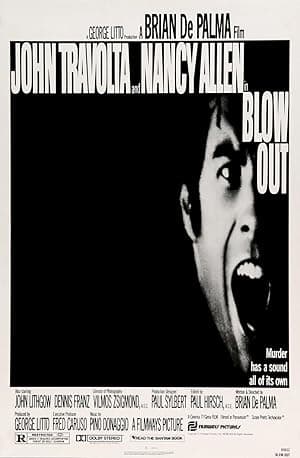
1981
Blow Out
A detective story where the clues are on a tape, and the investigator listens harder than anyone else.
Read our take →

1981
Ms. 45
Ms. 45: family and the safety of home, and why this 1981 movie still matters.
Read our take →
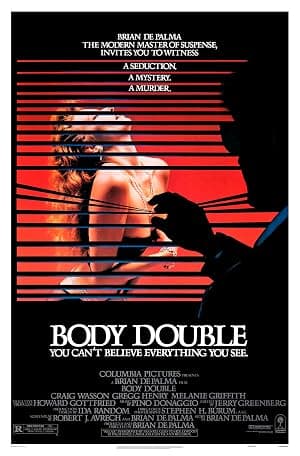
1984
Body Double
A film about watching — and about what watching does to the watcher.
Read our take →