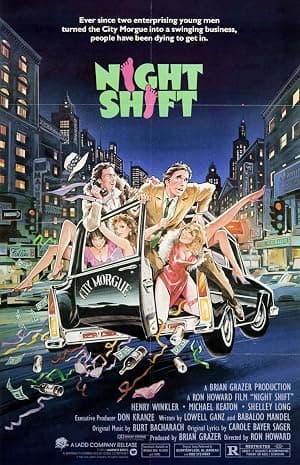
The setup
Night Shift arrived in 1982, directed by Ron Howard. Charles "Chuck" Lumley, formerly a successful stockbroker, has found a refuge from the ulcer-inducing Wall Street rat race in his job as an attendant at a New York City morgue. Decades later, it is worth looking at why the film still connects with audiences.
THE MOVIE
Chuck Lumley is still the reason this movie works
Night Shift was released in 1982 and directed by Ron Howard. Rather than simply retelling the plot, the film is worth revisiting for the characters, conflicts and ideas that give its story its identity.
Authority and Love emerge through what the characters face and the choices they make, giving the story more to explore beyond its immediate plot.
Chuck Lumley, Bill Blazejowski and Belinda Keaton do not begin the film seeing one another clearly, and watching those first impressions break down is a big part of why Night Shift still works.
THE SETUP
The idea that sets Night Shift in motion
Charles "Chuck" Lumley, formerly a successful stockbroker, has found a refuge from the ulcer-inducing Wall Street rat race in his job as an attendant at a New York City morgue.
His displeasure at being "promoted" to night-shift supervisor to make room for his boss' nephew, Leonard, is exacerbated by the irrational exuberance of Bill "Blaze" Blazejowski, his new co-worker. That detail matters because it shapes the way the characters initially see one another.
They are inspired by the plight of Chuck's prostitute neighbor, Belinda, to apply Chuck's financial acumen and Bill's entrepreneurial spirit to open a prostitution service headquartered at the morgue. From there, the film can concentrate less on explaining the setup and more on what happens between the people inside it.
Chuck's passiveness keeps him from telling Belinda he loves her.
Meanwhile, Chuck and Bill's foray into the prostitution business draws the ire of dangerous pimps who come to the morgue and threaten to kill Chuck.
THE CHARACTER
Why Chuck Lumley matters
Henry Winkler plays Chuck Lumley. Chuck falls in love with Belinda, but their relationship becomes complicated when Belinda refuses to quit prostitution.
That relationship helps define Chuck Lumley beyond the immediate plot mechanics.
Bill inadvertently leads two undercover police officers to the morgue where Chuck is being assaulted by the pimps.
UNDER THE SURFACE
Night Shift has more on its mind than the plot suggests
Night Shift has more on its mind than the basic setup suggests. authority sits close to the centre of the film, but it is explored through the characters rather than treated like a lesson.
love matters just as much. The film keeps challenging the assumptions its characters make about one another, which is where much of its emotional weight comes from.
PURE 80S
Night Shift could not belong to any other decade
Night Shift could hardly be separated from the decade that produced it. Released in 1982, it carries the attitudes, style and filmmaking rhythms of the 1980s without needing to announce them.
It also sits comfortably within the era's comedy filmmaking, even if the movie itself is more interesting than any single genre label suggests.
That is part of why it still appears in conversations about 1980s movies and 1980s comedy movies. The film has become tied not only to its own story but to the wider memory of what 1980s movies felt like.
WATCHING IT NOW
What has aged — and what hasn't
Watching Night Shift now means seeing both what has lasted and what unmistakably belongs to 1982.
Elsewhere, chuck falls in love with Belinda, but their relationship becomes complicated when Belinda refuses to quit prostitution. That kind of character-driven idea tends to survive changes in fashion far better than surface-level nostalgia.
Some moments inevitably land differently for a modern audience. Revisiting an older film properly means enjoying what still works without pretending every choice has aged equally well.
THE LEGACY
Why Night Shift still matters
A large part of that staying power comes from the characters. Chuck Lumley, Bill Blazejowski and Belinda Keaton are still useful shorthand for the personalities and pressures the film explores.
Night Shift has lasted because people continue to recognise something in it. Nostalgia helps, but nostalgia alone does not keep a movie in the conversation for decades.
THE VERDICT
Does Night Shift still hold up?
So, does Night Shift still hold up? Yes — although watching a film from 1982 honestly means accepting that not every moment will land exactly as it once did.
The film still has something recognisable to say about authority and love, and its characters stop those ideas from feeling abstract.
Night Shift remains worth revisiting because characters such as Chuck Lumley, Bill Blazejowski, Belinda Keaton, Charlotte Koogle and Edward Koogle still feel like people rather than labels once the film gets underneath the stereotypes.
Share this movie
Keep watching
More movies from the 80s
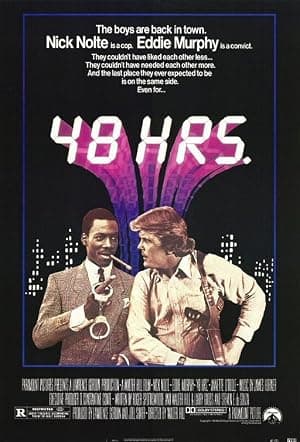
1982
48 Hrs.
Two days, one cop who cuts corners, and the partner he absolutely didn't ask for.
Read our take →
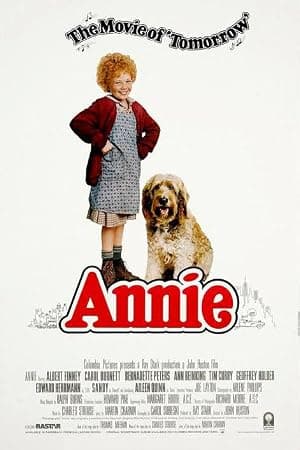
1982
Annie
Annie: family and freedom, and why this 1982 movie still matters.
Read our take →
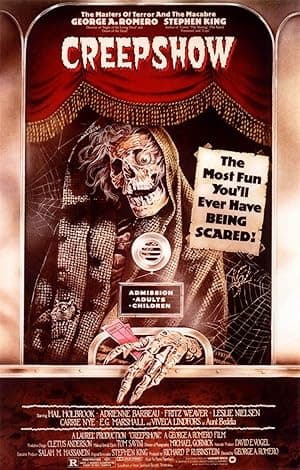
1982
Creepshow
Five nasty little tales, a comic-book wrapper and one perfectly awkward professor.
Read our take →