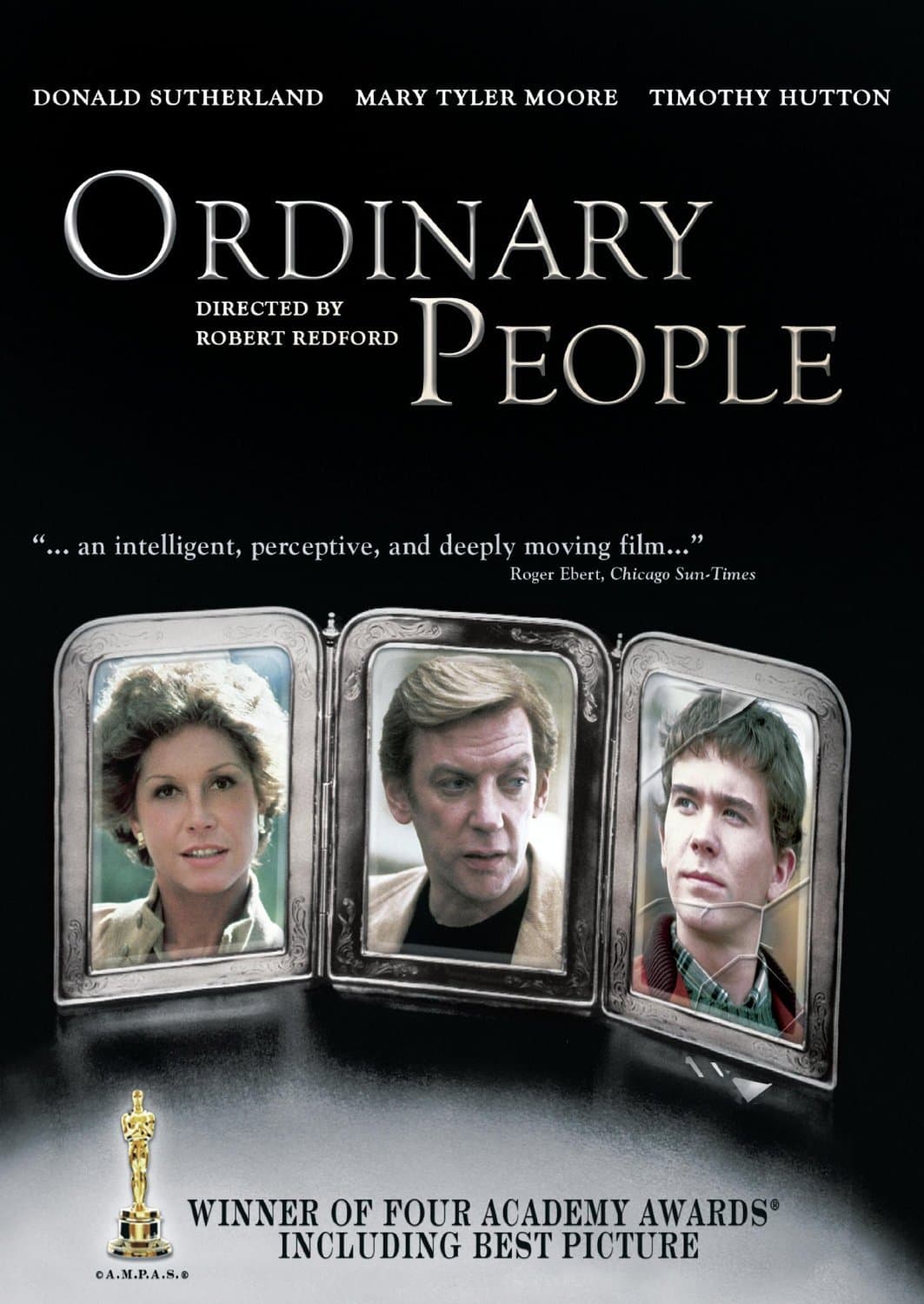
The setup
There are plenty of reasons to revisit Ordinary People — not least because it treats family collapse as an interior, stubborn thing rather than a melodramatic event. Robert Redford’s debut as a director keeps the camera where arguments quietly escalate: in kitchen corners, in therapy rooms, and most of all between a father and his son. Calvin Jarrett is the small, steady pressure that makes the rest of the film move.
THE MOVIE
Calvin Jarrett is still the reason this movie works
Ordinary People isn’t about a single event so much as the way people try to live around one. The film opens after a family has already been broken by a boating accident and a subsequent suicide attempt, and most of the drama is the slow, awkward negotiation of what that means for the people left behind.
Conrad’s time in hospital and his outpatient sessions with Dr. Berger give the movie a clear way into his mind and, by extension, the family’s unraveling. Therapy becomes the film’s main device for showing what people say and what they mean — and what they avoid saying entirely.
At the centre of it all is Calvin Jarrett: the father who’s trying to hold the family together while confronting his own grief and uncertainty. That position — squeezed between a son in recovery and a wife determined to preserve appearances — is the engine that keeps the film honest.
THE SETUP
The idea that sets Ordinary People in motion
The film begins after the Jarrett family have already lost Buck in a boating accident and after Conrad has survived his own suicide attempt. That aftermath is the dramatic territory: reintegration, small humiliations and the work of not collapsing.
Conrad’s outpatient therapy with Dr. Berger gives the story a steady spine. Sessions are not just exposition; they’re where Conrad unpacks survivor guilt, depression and how to be a son again — or whether he wants to be.
Around those scenes, the film threads domestic moments: friendships Conrad forms after hospital, a choir acquaintance called Jeannine, and the memory of Karen, another patient he met in hospital. These relationships remind us that recovery is social as much as it is personal.
A later development — the suicide of Karen — acts as a jolting crisis. It forces Conrad back toward urgent help and makes the private choices of the family impossible to ignore.
THE CHARACTER
Why Calvin Jarrett matters
Calvin Jarrett is the film’s stabiliser. He’s the parent pulled in two directions: a son trying to get better and a wife who wants to keep the house intact as if nothing cracked. That tension turns him into the movie’s most interesting problem.
He isn’t simply a mediator. Calvin is coping with his own sorrow while attempting to reach Conrad and, crucially, to understand a wife who refuses to meet grief on the same terms. The push-and-pull of those loyalties is where his scenes gain gravity.
The film repeatedly places him between Conrad and Beth, and that middle position makes visible what silence does in a family — how avoiding an honest conversation can be as destructive as any argument.
Because the story chooses to sit with this negotiation rather than resolve it neatly, Calvin becomes memorable: not for a heroic line or gesture, but for the steady work of trying to keep people talking.
UNDER THE SURFACE
Ordinary People has more on its mind than the plot suggests
On the surface the movie maps grief, survivor guilt and a family’s breakdown. Underneath, it’s more interested in the brittle mechanics that make those things last: silence, duty and the maintenance of appearances.
Emotional repression runs through the Jarrett household. When feelings are contained for the sake of a tidy life, they fester. The film shows how a refusal to confront pain can harden relationships almost by accident.
Therapy here is not a narrative gimmick; it’s a way of modelling alternatives. Where the home favours composure, the sessions invite messy honesty. That contrast is the film’s moral tension.
Finally, suburbia’s neat exterior is constantly at odds with the private reality inside the house. Ordinary People is interested in the difference between what people show and what they carry.
THE FILMMAKING
How Ordinary People was put together
The film’s look and rhythm are quietly deliberate. John Bailey’s cinematography has a restrained, unobtrusive quality that keeps the drama interior-focused rather than theatrical.
Editing by Jeff Kanew matches that approach: scenes breathe, and the cutting privileges therapy moments and domestic beats over any attempt at spectacle. The effect is a film that feels intimate without being staged.
Those choices serve Redford’s first feature as director. Rather than grand gestures, the film earns its emotion in small shifts — a pause, a glance, a choice not to speak — and the filmmaking supports that economy.
Put simply: Ordinary People relies on understatement as a formal choice, and the crew’s restrained approach keeps the focus where it should be — on what the characters are not saying.
PURE 80S
Ordinary People could not belong to any other decade
Released at the start of 1980, Ordinary People arrived when psychotherapy and mental-health conversations were becoming more visible in mainstream cinema. The movie helped fold those subjects into a family drama that a general audience could engage with.
This was also Robert Redford’s shift into making films from behind the camera. That move mattered at the time and is part of why the film occupied a prominent place in early-1980s film conversations.
Because it treats therapy as a central, serious mechanism for story, the film feels very much of its moment: a mainstream picture willing to let clinical talk and self-examination drive emotion rather than relying on plot contrivance.
In short, Ordinary People looks like an early-’80s film because it channels the decade’s willingness to discuss interior life in public ways.
WATCHING IT NOW
What has aged — and what hasn't
The film’s focus on family dysfunction still lands. Arguments that creep from a lack of language rather than explosive rows feel recognisable today: people still do damage by not naming feelings.
Calvin’s position between Conrad and Beth retains its power because the dilemma is timeless: what do you do when the person you love refuses to see what’s wrong? That predicament doesn’t belong to any single era.
The scenes that revolve around Conrad’s hospitalisation and therapy still feel purposeful because they map a process of recovery instead of offering tidy shortcuts. The logistics of healing — friendships, setbacks, and hard conversations — remain convincing.
Where it might feel dated is in assumptions about privacy and public appearance; the film’s investment in keeping up appearances is a specific social texture, but the human costs of that impulse remain hauntingly current.
THE LEGACY
Why Ordinary People still matters
The film’s awards haul is an unavoidable part of its afterlife: it won four Academy Awards out of six nominations, including Best Picture and Best Director. That recognition helped fix the movie in the conversation about serious family drama.
Timothy Hutton’s supporting-actor win — he was 20 at the time — is a factual part of that legacy and marks the film as a breakthrough moment for its young lead.
The screenplay also received its due: Alvin Sargent won the Oscar for Best Adapted Screenplay, and the script has continued to appear in later screenplay-canon listings.
Taken together, the accolades show a film that appealed to both audiences and the industry for treating domestic pain with careful attention rather than spectacle.
THE VERDICT
Does Ordinary People still hold up?
Yes — if you want a film that takes grief seriously and looks for its effects in the small, weary moments rather than in climactic scenes. The movie’s use of Conrad’s outpatient therapy as a structural device keeps the focus on recovery as a process, which still feels intelligent and humane.
Its central dramatic engine — the emotional distance between Conrad and his mother, and a father trying to mediate while dealing with his own sorrow — remains a potent setup. Those relations give the film a clarity of purpose that doesn’t rely on period detail.
Some viewers may find the tone deliberate and restrained in a way that isn’t to every taste. But if you respond to careful, character-first storytelling, Ordinary People still rewards patience: the crisis points land because their build-up feels earned.
In the end, the film works now because its questions are simple and stubborn: how do you speak to someone who won’t hear you, and what happens when silence becomes a household habit? That’s a movie you can watch and still feel the ache.
Share this movie
Keep watching
More movies from the 80s

1980
Altered States
A head-trip that never forgets the man at its centre: curiosity, marriage and a tank of trouble.
Read our take →
1980
American Gigolo
Armani, a hit single and a loneliness you can almost wear.
Read our take →
1980
Brubaker
Brubaker: mortality and greed, and why this 1980 movie still matters.
Read our take →