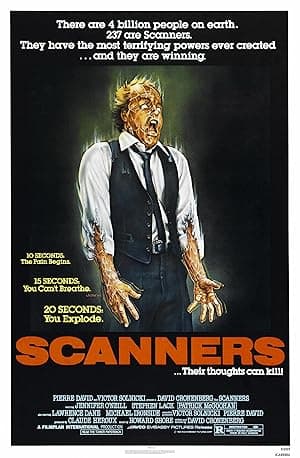
The setup
Scanners still hooks you because it centres on a man who would rather forget what he can do. David Cronenberg’s second-wave body-horror sci-fi gives us Cameron Vale — a reluctant, streetwise scanner dragged back into a world that wants to weaponise minds. Watch it for the ideas; stay for the moments that make people talk about it decades later.
THE MOVIE
Cameron Vale is still the reason this movie works
It’s tempting to open with the spectacle — the moment a public demonstration goes horribly wrong and a volunteer’s head fragments — because that image is the shorthand most people bring to Scanners. But the sequence lands only because the story gives it somebody to hit; Cameron Vale is the person who carries the film through the shock value.
Vale isn’t a superhero. He’s a homeless man whose unwanted gift lets him read and influence minds, and he’s recruited by ConSec to find a dangerous rival, Darryl Revok. The setup gives us two competing projects: one that wants to control scanners and one that wants to overthrow control, and Vale sits between them, reluctant and oddly vulnerable.
That uncomfortable position — a man who wants to forget what he is, pulled back into a world that wants to use him — is what makes David Cronenberg’s 1981 film more than a string of effects-driven set pieces. Scanners runs to a lean 103 minutes, but it earns its shocks by keeping the human friction front and centre.
THE SETUP
The idea that sets Scanners in motion
At its simplest, Scanners gives us a world where a handful of people can read minds and push thoughts into other heads. That conceit lets the film slide across genres: it’s science fiction by premise, horror by consequence, and thriller by the way suspicion and secrets unwrap.
ConSec is the machine at the heart of the film’s tension — a security/weapon contractor that finds scanners, tries to control them and would like to bend their powers to institutional ends. Opposing that is Darryl Revok, a renegade scanner whose public reversal of a demonstration scan turns a volunteer into a walking calamity and marks Revok as lethally dangerous.
Cameron Vale is the recruitment hook: a homeless scanner pulled into ConSec’s orbit specifically to locate and stop Revok. That setup gives the movie a spy-ish throughline — Vale has to move between institutions and underground scanner communities, collecting access and information.
Ephemerol, a recurring plot mechanic, is the story’s pharmaceutical lever: a drug shown to suppress or alter scanner abilities and, by extension, a direct tool of corporate and medical control. It’s a neat, economical way for the film to make power feel like something that can be bought, regulated or denied.
THE CHARACTER
Why Cameron Vale matters
Cameron Vale matters because he’s not a blank vessel for psychokinetic spectacle; he’s written and positioned as someone who would rather not be remarkable. That wish to disappear — shaped by life on the streets and a desire to forget his scanner identity — makes his choices interesting.
The film gives Vale obligations he didn’t ask for. ConSec recruits him into a political and ethical fight he has no appetite for, which forces him to act against his instinct to retreat. That tension — wanting normalcy while being plunged into moral and physical conflict — is a good engine for a thriller.
Kim Obrist’s presence as a scanner community ally matters here too: Vale isn’t simply an instrument of ConSec. The network of other scanners and the people who understand his condition provide him routes of belonging and resistance that keep the story from being only about institutional control.
All told, Vale’s usefulness comes from his limitations. He’s neither omnipotent nor comfortably heroic; he’s the audience’s foothold in a world that treats minds as terrain to be mapped and conquered.
UNDER THE SURFACE
Scanners has more on its mind than the plot suggests
On the surface Scanners is about telepathy and knife-edge violence. Underneath it’s a film asking who gets to decide what a human mind should do. The ethical knot of weaponising psychic power is the movie’s recurring moral itch.
Alongside that is a naked worry about corporate and medical control — institutions that would catalogue and medicate difference until it’s usable. The film treats pharmaceutical intervention as a blunt instrument of governance rather than a cure.
Identity and exposure are constant pressures: being a scanner is a state you can be monitored for, an abnormality that invites containment. The story repeatedly puts characters into positions where their innermost selves are vulnerable to being seen, altered or controlled.
And because this is early-Cronenberg territory, body horror threads through those ideas: the invasion isn’t just mental, it feels physical. The film links psychic violation to bodily rupture, so the emotional stakes are never purely abstract.
THE FILMMAKING
How Scanners was put together
A big part of what gives Scanners its personality is production design. Carol Spier’s art direction leans clinical where ConSec operates and more communal where scanner communities gather, so the environments themselves do some of the storytelling.
That contrast helps sell the film’s power politics: institutional spaces feel engineered to contain, while the scanner spaces feel messy and lived-in — visually underscoring the tension between control and resistance.
Cronenberg’s shoot and afterwards were shaped by the effects the story demanded. The film required extended post-production and reshoots to accommodate those sequences, which left a clear footprint on how the finished film was assembled.
The result is a film that sometimes feels constructed around its stunts, but in a way that’s visible and purposeful: the practical needs of the effects influenced editorial choices rather than merely decorating them.
PRACTICAL EFFECTS
The effects work that gives Scanners its physical personality
If Scanners has a calling card it’s the way it makes psychic violence physically explicit. Makeup legend Dick Smith supplied prosthetics for the climactic duel and helped shape the film’s most talked-about moments.
Special-effects artist Chris Walas choreographed the famous exploding-head sequence and other practical bits, which are not simple cutaway tricks but carefully staged mechanical and photographic setups.
The trick relied on crafted prosthetic skulls—with organic-looking materials inside—and high-speed photography to make the burst feel sudden and grotesquely real. It’s the kind of effect that invites you to look away and then watch again.
Those practical choices make the film feel tactile: the shocks are built from real materials that behave on camera in a way that’s viscerally immediate rather than abstract.
PURE 80S
Scanners could not belong to any other decade
Scanners is very much a product of 1981: it emerged from Canada’s late-1970s/early-1980s tax-shelter era when genre films could get made and find international audiences. That production context helped the film punch above its budgetary weight.
It also sits inside an early-Cronenberg phase that fused body horror with science-fiction setups. That combination is what helped the director move from local genre-maker to someone with an international profile in the early 1980s.
The film’s modest runtime and economical plotting reflect the period’s appetite for tight, idea-forward genre pictures — films that could be marketed on a single striking premise and a handful of memorable sequences.
Put simply: Scanners feels like a movie from a moment when Canadian genre cinema was experimenting with how far a writer-director could push physical and psychological discomfort on a mid-range budget.
WATCHING IT NOW
What has aged — and what hasn't
The single clearest thing that still works is the practical effects: the exploding-head and other prosthetic moments are repeatedly singled out in later retrospectives and reissues as viscerally effective, the kind of shock cinema that still makes viewers flinch.
That physical shock value gives the film a durable memory — even if, on first viewing now, what surprised you in 1981 may not have the same theatre-shock, it still reads as aggressively handmade rather than lazily digital.
Narratively, the story’s focus on a reluctant central figure keeps it anchored. Having a protagonist who resists the plot’s calls to arms gives the movie texture; it isn’t just spectacle for spectacle’s sake.
What doesn’t age as neatly are the parts of the film that depend on tightly plotted institutional manoeuvring and exposition — those beats can feel functional rather than deeply dramatic, but they serve the film’s purpose of making the ethical stakes clear.
THE LEGACY
Why Scanners still matters
At the time of release Scanners was David Cronenberg’s best-known film internationally, and much of its afterlife rests on the handful of special-effects sequences that made people talk — most famously the head-explosion scene.
That notoriety translated into a modest franchise in the following decade: sequels, spin-offs and takes on the scanner idea kept the concept alive, even if those later works weren’t Cronenberg productions.
The film’s continued presence on home-video reissues and in curated retrospectives — often with documentary extras digging into the effects work — has helped keep it in circulation for new audiences and critics interested in genre craft.
THE VERDICT
Does Scanners still hold up?
Yes — but with a caveat. If you come for the ideas around mind control, corporate and medical authority, and the uneasy exposure of private thought, Scanners still has bite. The film’s central conceit (people who can read and influence minds) and its narrative about ConSec’s attempts to weaponise that ability remain compelling.
And yes, the practical work rewards viewing. The exploding-head and other prosthetic moments are still talked about because they deliver a physical shock that the film structures around real stakes rather than gratuitous gore.
That said, the film is not flawless armoury. Some viewers and critics have pointed out that the lead turn can read restrained, and parts of the plot lean on functional exposition to keep the institutional stakes clear. Those are real limits if you expect a flawless balance of character and spectacle.
But if you want a compact, idea-driven thriller that pairs ethical questions about power with visceral practical effects — and if you’re curious to see Cameron Vale as a reluctant centre in a messy world of secrecy and control — Scanners is still worth watching.
Share this movie
Keep watching
More movies from the 80s
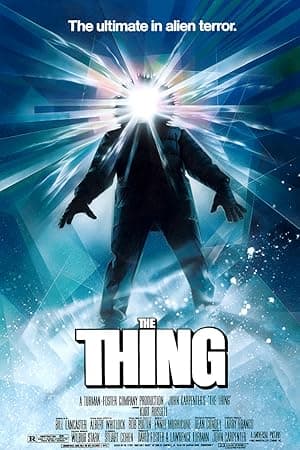
1982
The Thing
A frozen outpost, a dog, and a man who must choose who to trust — The Thing still knows how to make suspicion feel like a physical thing.
Read our take →
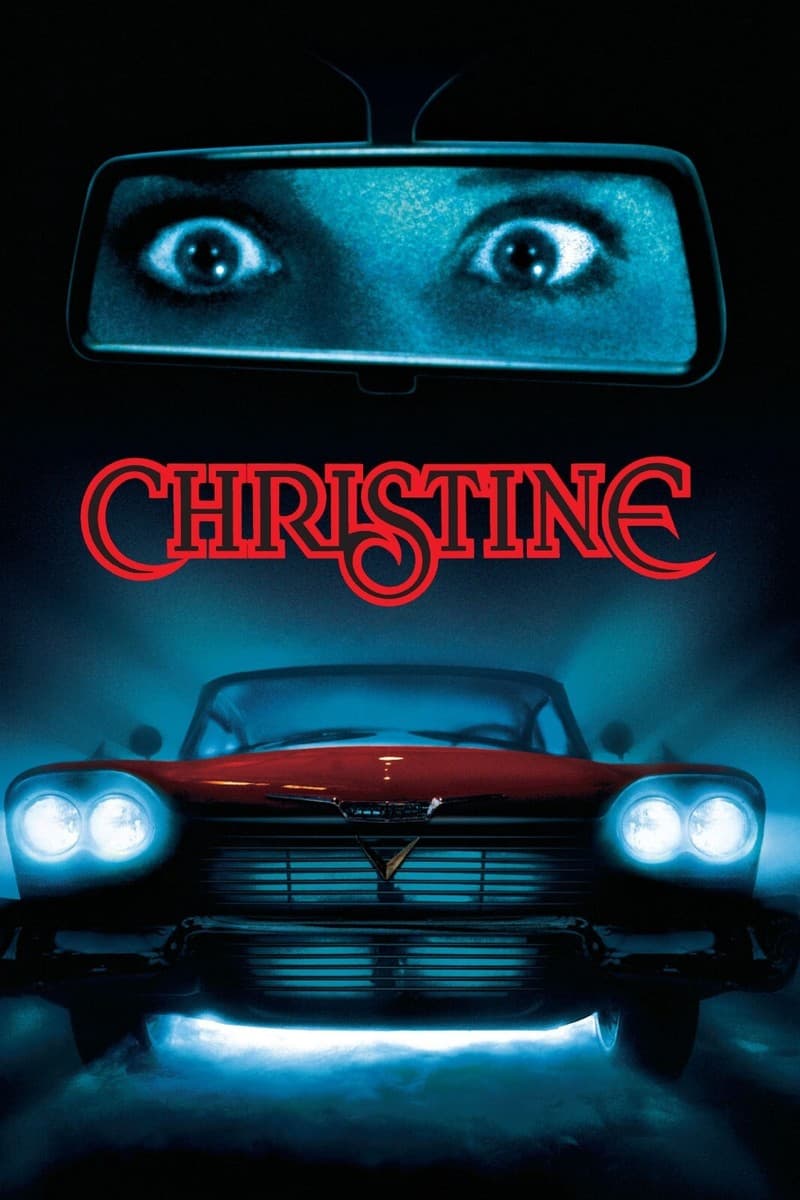
1983
Christine
Obsession, adolescence and a car that won't let go.
Read our take →
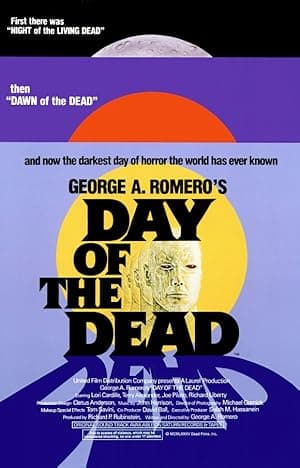
1985
Day of the Dead
A bunker drama with zombies, a scientist who won a festival, and a soldier who won't listen.
Read our take →