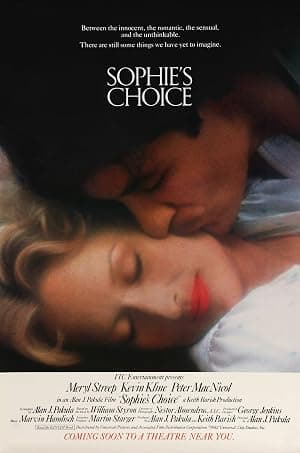
Sophie's Choice
A woman's past refuses to stay in the past — and Zofia keeps pulling the film with her.
The setup
Sophie's Choice is the sort of movie you remember because of one person: Zofia 'Sophie' Zawistowska. Alan J. Pakula builds a moody, patient drama around her — a Brooklyn boarding-house triangle that only makes sense once Sophie's past surfaces in the film's long, narrated flashbacks. If you want to revisit something from 1982 that still demands attention, start here.
THE MOVIE
Zofia 'Sophie' Zawistowska is still the reason this movie works
You don't come away from Sophie's Choice thinking about plot mechanics so much as about one person who won't let you forget her. The film opens in 1947 Brooklyn with Stingo, a young writer, meeting Sophie and her increasingly volatile lover, Nathan — a configuration that feels ordinary until Sophie's past insists on being seen.
Pakula lets Sophie's memory do the heavy lifting. Her traumatic years in Nazi concentration camps arrive through extended flashbacks, framed and narrated by Stingo's recollections, so the story is always two things at once: the life Sophie is trying to live and the life that will not stop speaking.
That tension — a Polish survivor shaped by long-term trauma and survivor's guilt trying to protect herself while others try to understand her — is the engine of the whole 151-minute film. Meryl Streep plays Sophie, and Pakula's film is structured around finding out who she is and what she has had to carry.
THE SETUP
The idea that sets Sophie's Choice in motion
At its simplest, the film gives us a three-person triangle: Stingo, the naïve young writer; Sophie, the Polish immigrant with a hidden past; and Nathan, Sophie's magnetic but unstable lover. They meet in a Brooklyn boarding house and life proceeds — except for everything Sophie keeps below the surface.
What steadies the film is the slow reveal. The narrative unfolds through Stingo's point of view, with flashbacks used to lift fragments of Sophie's wartime history into the present. The structure keeps you guessing about who Sophie was and why certain details wound her so deeply.
On top of that personal mystery sits a domestic pressure: Nathan's jealousy and rising instability begin to destabilise the household, forcing Sophie into choices that are both private and explosive.
So the setup works because the movie marries a mystery about identity with a tense domestic triangle, and then lets those two pressures press on each other until the true stakes are visible.
THE CHARACTER
Why Zofia 'Sophie' Zawistowska matters
Sophie isn't a cipher for trauma; she's a person who has learned, painfully, how to live with what she knows she cannot say. The film gives us her in pieces through Stingo's admiration and through the memories that keep returning.
That device — Stingo as participant and observer — matters because it means Sophie's story is both intimate and mediated. We see her through another character's affection, which makes the revelations feel like discoveries rather than lectures.
Pakula was already interested in character-driven psychological drama, and here he places Sophie at the centre of everything. The film measures itself against her: her silences, her attempts to protect herself and the way those attempts ripple through the people who love her.
You leave the movie thinking about the work of carrying memory — how it shapes behaviour, relationships and, in Sophie's case, the terrible moral choices history forced on her.
THE PERFORMANCE
Why Meryl Streep's performance matters
Contemporary critics singled out Meryl Streep's portrayal of Sophie as a central strength — and that recognition became concrete when she won the Academy Award for Best Actress. The film really does hinge on her ability to make Sophie's secrets feel lived-in rather than staged.
Streep arrived at Sophie's Choice having already made a name for herself in high-profile roles, and this film is frequently cited when people look back at her early career. It's one of those parts that other performances in an actor's resume tend to orbit, partly because of the awards attention and partly because of what the role asks for.
It's also worth saying what the facts already show: the story's weight is distributed mostly through Sophie. Without a portrayal that gives the character a sense of inner history and continued resistance to explanation, the film would be structurally weaker.
So, whether you call it a career-defining moment or not, the film's claims on the viewer depend on the performance being taken seriously — as critics and the Academy clearly did.
UNDER THE SURFACE
Sophie's Choice has more on its mind than the plot suggests
On the surface it's a domestic drama; under that surface it's a study of survivor's guilt. The film keeps returning to how memory and trauma continue to shape Sophie's decisions long after the events themselves.
Those flashbacks are not mere backstory. They are the emotional ballast of the picture — the reason Sophie's present-day choices carry the weight they do. The film repeatedly asks whether anyone can live with certain kinds of knowledge and what that knowledge requires of them.
There's also a moral knot at the centre: choices made under the pressure of atrocity leave difficult moral questions in their wake, and the movie forces you to hold that discomfort without easy answers.
Finally, destructive love is threaded through the narrative: relationships here can be protective and ruinous at once, with Sophie caught between the shelter she seeks and the damage it sometimes brings.
THE FILMMAKING
How Sophie's Choice was put together
One of the clearest production choices is the way the film separates memory from the present. Cinematographer Néstor Almendros used contrasting colour strategies — desaturated, sepia-like tones for the camp flashbacks and warmer, more painterly lighting elsewhere — to keep Sophie’s memories visually distinct from her life in Brooklyn.
That kind of visual signalling helps the audience move between timeframes without needing heavy-handed exposition. It makes the flashbacks feel like a different kind of space: not fantasy, not theatrical re-enactment, but remembered life.
Evan A. Lottman is credited as the editor and George Jenkins as the production designer, contributions that together shape how the story breathes across its 151 minutes.
Put simply, these filmmaking choices make clear that the movie is as much about how the past looks and feels in the present as it is about what actually happened.
PURE 80S
Sophie's Choice could not belong to any other decade
Releasing a major literary adaptation in December 1982 placed Sophie's Choice squarely in awards season. That positioning matters: this was a prestige picture from a bestselling novel, presented in a way that invited serious critical attention.
The film is a distinctly early-1980s animal — not because of style tricks but because of how the industry then treated heavyweight adaptations as Oscar-calibre vehicles. Its premiere at the Samuel Goldwyn Theater and the theatrical opening in December are part of that deliberate strategy.
Alan J. Pakula's decision to adapt William Styron's 1979 novel also fits the period's appetite for adult, character-led cinema that addressed difficult historical material.
So the movie belongs to 1982 not as a fashion statement but as a production and release strategy: this was how serious American dramas were presented to audiences and the Academy at that moment.
THE LEGACY
Why Sophie's Choice still matters
One reason the film endures is straightforward: Meryl Streep won the Academy Award for Best Actress for her role, and the picture earned nominations in major craft categories including Adapted Screenplay, Cinematography and Original Score. Those honours anchored the film in the cultural conversation.
Institutions and retrospective programming have continued to include the film among notable American pictures, which keeps it on the map for new viewers and cinephiles revisiting the era.
Critics and commentators also repeatedly point to Sophie's Choice as one of Streep's career-defining roles. Whether you're tracking an acting career or studying how films handle trauma, the movie remains a reference point.
All of which is to say: its afterlife is partly institutional and partly personal — the kind of movie that turns up in curated programmes and in conversations about difficult adaptations.
THE VERDICT
Does Sophie's Choice still hold up?
Yes — but with a clear rider. If you want to watch a serious, adult drama that treats memory, survivor's guilt and impossible moral choices as subjects worth sustained attention, Sophie's Choice delivers. The film is structured around Stingo's recollections and the flashbacks that reveal Sophie's wartime experiences, and that structure still gives the story a measured power.
The domestic tensions remain persuasive on paper: Sophie's attempt to live with the psychological aftermath of the camps sits uneasily beside Nathan's increasing instability and possessiveness, while Stingo records and tries to make sense of it all. That triangle still provides dramatic momentum.
Practically speaking, the film's length and deliberate pacing require patience. But the elements that justify that patience are present: a frame-narrator that keeps the story reflective, a narrative built on gradual revelation, and a climactic moral revelation about Sophie's past that the whole film is moving toward.
So should you watch it today? If you care about films that refuse easy comfort and are prepared for a long, serious evening of story and memory, Sophie's Choice remains worth your time. It asks hard questions and keeps Sophie at the centre until the credits — and that's why it still matters.
Share this movie
Keep watching
More movies from the 80s
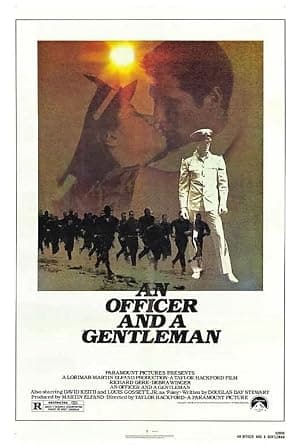
1982
An Officer and a Gentleman
A hard-edged coming-of-age wrapped in military drill, unexpected tenderness and one stubborn loner.
Read our take →
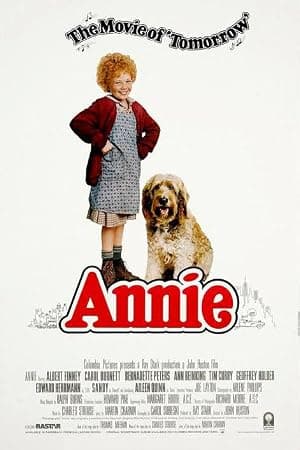
1982
Annie
Annie: family and freedom, and why this 1982 movie still matters.
Read our take →
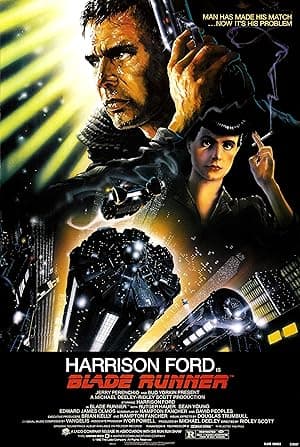
1982
Blade Runner
Four engineered years, a handful of memories and a detective who isn’t sure he wants to do his job.
Read our take →