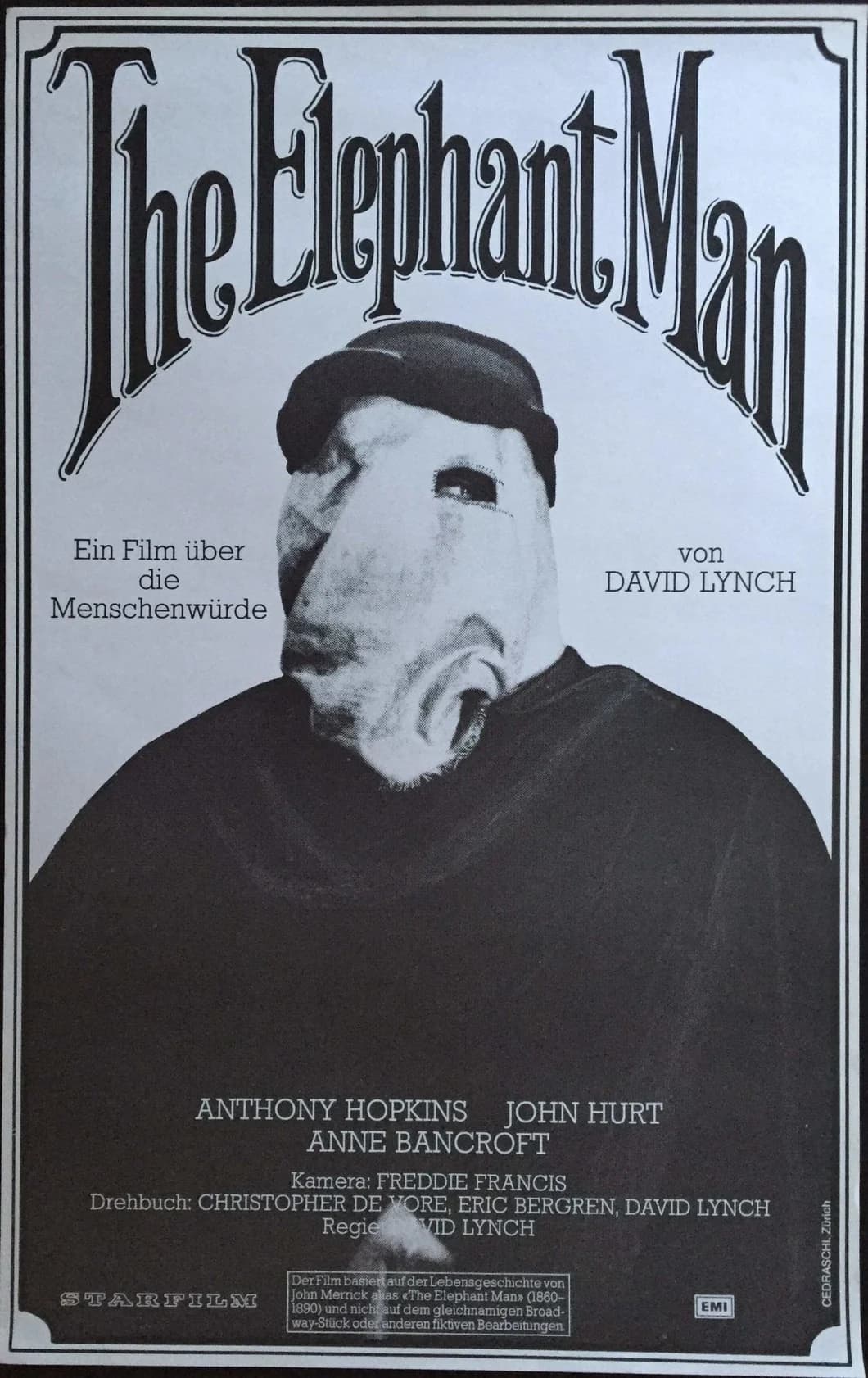
The setup
There are plenty of reasons people still bring up The Elephant Man: its stark photography, the prosthetic marvels, David Lynch’s unlikely detour into Victorian melodrama. But none of those things explain why the film keeps snagging attention. It’s John Merrick — who moves from a freak show to the London Hospital, who reads and listens and refuses to be reduced to a curiosity — who still makes the film hard to forget.
THE MOVIE
John Merrick is still the reason this movie works
The Elephant Man is one of those films that lives or dies by a single presence: John Merrick. The story carries him from an exploitative freak show into the supposedly kinder confines of the London Hospital, and nearly every scene is measured against what he asks of the people who see him.
What keeps the film tense is the contrast between Merrick’s inner life and the way others reflexively treat him. The picture quietly makes the point that he is literate, gentle and lucid at odds with the public’s urge to gawk — a moral mismatch that drives much of the drama.
All of this is framed by David Lynch’s choice to shoot in black-and-white and to make the hospital and the stage feel like parts of the same public theatre. The visual choices, the prosthetic work and the performances sit around Merrick like a frame — they matter because they make you look at him, not because they distract from him.
THE SETUP
The idea that sets The Elephant Man in motion
The basic engine of the film is straightforward: a severely deformed man is removed from a life of public exploitation and brought into the hospital. That change of address shifts the moral question from who is exploiting him to how polite society will treat him in a more respectable setting.
Dr Frederick Treves is the catalyst. He finds Merrick in the freak show and brings him into the London Hospital, where Treves becomes both his medical guardian and the figure who narrates — and thereby shapes — much of Merrick’s public life.
From there the film stages a series of encounters: careful medical observation sits beside the prying curiosity of visitors, and the hospital becomes a new sort of theatre where compassion and spectacle sit uncomfortably close to one another.
THE CHARACTER
Why John Merrick matters
John Merrick isn’t a cipher. The film deliberately refuses the easy route of making him into a blank object of pity. Instead he reads, listens and behaves with a surprising gentleness; the story stakes itself on the dissonance between that interior life and the way the world tries to strip him of personhood.
His importance isn’t only sentimental. Merrick forces other characters to confront their own reflexes: whether Treves’s attention is clinical curiosity or genuine protection, whether society’s sympathies are real or merely another kind of display. That friction is what keeps scenes alive.
There’s also a practical truth behind Merrick’s presence on screen: his physical look is the result of painstaking prosthetic work. The make-up was constructed from life-casts and skeletal reference, and the transformation was intense enough to require many separate pieces and very lengthy daily application and removal.
THE PERFORMANCE
Why John Hurt's performance matters
Contemporary notice homed in on John Hurt’s work simply because he had to act through a huge physical disguise. Reviews singled out his portrayal, particularly how he inhabited the role while concealed beneath layers of make-up.
That attention is part of why the character registers: the screen still recognises a person, not an effect, and period critics made much of the fact that Hurt’s Merrick remained legible even when hidden under extensive appliances.
UNDER THE SURFACE
The Elephant Man has more on its mind than the plot suggests
On the surface the film follows Merrick’s movement from the freak show into a hospital. Underneath that narrative it is quietly obsessive about how we look at other people: whether our curiosity is humane, exploitative or something in between.
The film stages dignity against spectacle again and again. Public compassion often arrives mixed with a taste for the sensational, so sympathy frequently slides into performance.
Medical authority is another recurring pressure. Treves’s role tilts between protector and observer, which raises awkward ethical questions about who gets to manage Merrick’s life and how medical care can become another form of control.
Finally, the movie refuses to let the audience forget that Merrick is othered by everyone he meets. That persistent dehumanization is less a plot point than the social condition the film wants you to notice and resist.
THE FILMMAKING
How The Elephant Man was put together
Some of the film’s identity comes from production choices that deliberately point back to the past. The production design was overseen by established designers and a good deal of the interior work was done at Lee International/Lee Studios in the London area.
On top of that, Freddie Francis’s decision to photograph the film in black-and-white was used as more than a period flourish. The monochrome look is explicitly meant to evoke period photography and to set a restrained visual tone.
Those choices give the movie a documentary-like clarity. It doesn’t feel showy; it feels like an act of looking framed to remind you that you’re looking at a man, not a curiosity.
PRACTICAL EFFECTS
The effects work that gives The Elephant Man its physical personality
Christopher Tucker supervised the make‑up and prosthetic construction, working from life-casts and Merrick’s skeletal material held at the Royal London Hospital to shape the appliances.
The Merrick make-up wasn’t a single mask but many separate prosthetic pieces. Contemporary accounts report that applying the appliances took seven to eight hours each day, and careful removal took around two hours.
Tucker’s construction relied on foam‑latex appliances plus dental and teeth plates to reshape Hurt’s face and head, a painstaking process that produced the physical reality the film needed.
PURE 80S
The Elephant Man could not belong to any other decade
The Elephant Man arrived in 1980 and landed in a moment when seriously minded studios and filmmakers were still making historically set prestige dramas aimed at awards attention.
Its release late in the year — premiering in early October 1980 — and its 123‑minute running time place it in that early‑1980s orbit of films designed for critical rather than flashy commercial appeal.
David Lynch’s film fits that pattern: a carefully mounted British–American historical drama that offered the sort of material the awards world tended to reward at the time.
THE LEGACY
Why The Elephant Man still matters
There are straightforward reasons the film keeps being discussed: it earned wide awards recognition, receiving eight Academy Award nominations and winning several BAFTAs, including Best Film.
It also enjoys a careful afterlife on home video: the picture has been restored and released in supervised restorations, including a 4K treatment, and it turns up frequently in retrospective lists of strong 1980s films.
Finally, it’s a reference point in conversations about prosthetic make-up and performance. Hurt’s award attention despite being concealed beneath extensive appliances means the film still comes up when people talk about how to act through heavy make‑up.
THE VERDICT
Does The Elephant Man still hold up?
Short answer: yes. The film’s central thread — Merrick’s move from spectacle to a new kind of social curiosity — still reads as a tight, uncomfortable sequence of encounters that show both compassion and voyeurism.
Several elements keep it honest. Lynch frames much of the drama in a largely realist style but punctuates it with brief, surreal bookends related to Merrick’s private visions; that balance prevents the picture from becoming mere social melodrama.
Technically, the black‑and‑white photography and the painstaking prosthetic work give the story the exact distance it needs: an echo of period photographs and a physical presence for Merrick that won contemporary notice and award attention for the performance.
If you’re wondering whether to watch it today, see it for Merrick’s human clarity, for the ethical oddities around Treves’s guardianship, and for a film that insists you look carefully — and then asks what you will do with what you see.
Share this movie
Keep watching
More movies from the 80s
1980
Altered States
A head-trip that never forgets the man at its centre: curiosity, marriage and a tank of trouble.
Read our take →
1980
American Gigolo
Armani, a hit single and a loneliness you can almost wear.
Read our take →
1980
Brubaker
Brubaker: mortality and greed, and why this 1980 movie still matters.
Read our take →