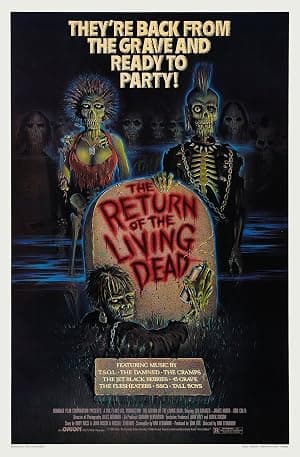
The setup
The Return of the Living Dead launches not with a scream but with a leak: army drums, a warehouse and a problem that stubbornly refuses to stay dead. Dan O'Bannon's 1985 mash-up of horror, black comedy and punk attitude still feels like a film that knows which rules it plans to break. Revisit it and you'll find a tight 90-minute shock clock powered by personality — and one man who keeps everyone moving when things go sideways.
THE MOVIE
Burt is still the reason this movie works
Something leaks and everything changes. The Return of the Living Dead starts in a medical-supply warehouse on July 3, 1984, where sealed army drums fail and a chemical agent gets out. That neat, almost logistical inciting incident is the film’s engine: it makes catastrophe feel avoidable and therefore, cruelly, preventable.
The gas — 2-4-5 Trioxin — does what you dread in every zombie movie except it arrives as an industrial misstep rather than fate or plague. Corpses come back. They chant for brains. One of them even explains, disturbingly plainly, that eating brains 'makes the pain go away.' The result is horror with a nasty, very human cause behind it: an error in the military/industrial chain.
And while there’s an ensemble, it’s Burt — the pragmatic warehouse owner-manager — who gives the survival story its immediate shape. His knowledge of the building, his decisions under pressure and his no-nonsense logic are what the other characters orbit. It’s a film about an outbreak, yes, but it’s also about people having to improvise when institutions fail, and Burt is the axis of that improvisation.
THE SETUP
The idea that sets The Return of the Living Dead in motion
The movie keeps its premise brisk and mechanical: a chemical leak reanimates bodies, attempts to stop them in the conventional way fail, and even trying to destroy the problem can make it worse. That chain — leak, reanimation, failed destruction, contaminated fumes spreading the disaster — gives the film a stubborn internal logic.
It’s not subtle about the zombies’ needs. The chanting for 'brains' and the blunt line about eating brains ending pain turn the undead into creatures with a single, grotesque appetite. That repeated gag keeps returning to the same spine: these monsters are hungry, and their hunger has a reason in the film’s world.
Tonally, this isn’t a Romero pastiche. The Return of the Living Dead is connected to the Living Dead family of stories on paper, but it deliberately changes tempo and rules. Where Romero’s films take a different route, O'Bannon’s script prefers a sharper comic edge and new, stranger mechanics for the dead.
Finally, the movie’s shape is a product of its maker. Dan O'Bannon took over and refashioned earlier drafts, relocating the action and deliberately adding a punk-rock sensibility that tilts the whole setup toward a younger, louder energy.
THE CHARACTER
Why Burt matters
Burt isn’t the sentimental lead; he’s the practical one. Played by Clu Gulager, he owns and runs the warehouse that becomes ground zero, and when the smoke clears and people need direction, he’s the person with the building’s layout and the first sensible plan.
That matters because the movie’s stakes are often logistical: how to get out, where to fortify, how to stop the spread. Burt’s familiarity with the place and straightforward problem-solving give the film a believable centre. When everyone else is oscillating between panic and punk posturing, Burt does the unglamorous work of keeping things together.
He’s the peg the script hangs its quick tactical choices on. Without someone who actually knows the building and can make the call, the outbreak would feel less immediate and more chaotic — which would suit a different movie, but not this one.
So yes, this is a film about monsters, but Burt is the human hand that translates the chaos into decisions the audience can follow.
THE PERFORMANCE
Why James Karen's performance matters
Frank is the mortuary man who, early on, has to explain the situation and its odd science to both characters and audience. Contemporary reviewers and later assessments frequently point to James Karen as doing the heavy lifting in that first act, carrying exposition with a comic steadiness that helps sell the movie’s stranger beats.
That kind of work — making the strange feel conversational — is exactly what the film needs as it moves from warehouse leak to full-blown outbreak. Frank’s exposition is the bridge from premise to panic, and the criticism that singled him out emphasises how crucial that bridge is.
Put simply: when a film gives you weird rules about undead behaviour, you want someone who can tell you those rules without the tone collapsing. James Karen’s contribution is what lets the audience buy into the world long enough for the lunacy to do its work.
UNDER THE SURFACE
The Return of the Living Dead has more on its mind than the plot suggests
On the surface it’s a gory comedy-horror about reanimated corpses. Below that, it’s very much a movie about consequences: industrial and military experiments spill into ordinary life and the people left to mop up are not the generals or the bureaucrats but local workers and kids. The cause being human error gives the horror a political edge without the film ever becoming a lecture.
Then there’s the punk angle. Punk and underground music culture sit in the film as a generational counterpoint to authority — loud, defiant and uninterested in neat solutions. That counterpoint isn’t just decorative; it sets up a clash between institutional figures and youth who respond differently to crisis.
A darker thread runs through the zombies themselves. Their demand for brains — and the line about consumption easing pain — turns undeath into an explicit, miserable hunger. It’s a grim metaphor about relief through consumption, the idea that the undead find a terrible solace in what they take.
All of this is wrapped in black comedy and satire. The film laughs at institutions and at human attempts to control catastrophe, even as it stages some very unpleasant, physical consequences. It’s funny and ugly in nearly the same breath.
THE FILMMAKING
How The Return of the Living Dead was put together
This was Dan O'Bannon's feature directing debut, and he stamped it with a clear tone: less straight horror, more punk-tinged mischief. He took over earlier drafts and deliberately steered the script toward a louder, black-comic rhythm and a youth-oriented sensibility.
That shift changes how the film uses its environments. With William Stout credited as production designer, the team leaned on practical set dressing to make the warehouse and mortuary feel like functional spaces where people work and where disaster can logically unfold.
The combination — a director reshaping the material and production design that keeps things grounded — is what lets the movie move quickly between comedy, exposition and gore without losing the audience.
In short: the film’s identity comes from someone reworking the material to be sharper and a production that committed to making interior spaces feel operational rather than merely atmospheric.
PRACTICAL EFFECTS
The effects work that gives The Return of the Living Dead its physical personality
The film’s physical nastiness isn’t an illusion. Fantasy II Film Effects and a credited practical-effects team provided model, optical and visual work, with prosthetic makeup and animatronics used to bring corpses to life — or un-life, as the case may be.
Specialists handled half-corpse animation and puppetry alongside traditional makeup, so the gore reads as tactile: exposed brains, dismemberment and the mechanical movements of partially ruined bodies are executed in the flesh, not as obvious digital tricks.
Those practical choices also reinforce one of the story’s stranger rules: conventional head destruction does not reliably stop reanimation. The script stages sequences where heads are removed and the threat continues, and the effects work sells that unpleasant idea.
Because the movie commits to physical solutions, its shocks feel immediate and a little claustrophobic — you can almost sense the materials and the effort that went into each grim beat.
PURE 80S
The Return of the Living Dead could not belong to any other decade
Released in August 1985, the film sits squarely in a mid-80s current where horror was flirting with self-awareness and contemporary youth culture. That timing matters: it’s part of a wave that mixed punk/new-wave energy with genre smarts.
Music is not window dressing here. The soundtrack collects Los Angeles punk and deathrock acts of the era and uses that music to anchor the film culturally. The soundscape acts like a generational stamp, signalling who the movie is for and who it is poking at.
There’s also a production reality that ties it to the period: principal photography took place in 1984 and the film emerges from a set of production companies and distribution arrangements typical of the decade’s mid-range genre cinema.
All told, this is a mid-80s horror movie in tone and texture: unapologetically of its moment and impatient with older genre manners.
WATCHING IT NOW
What has aged — and what hasn't
If you’re tuning in now, one clear thing is that the film’s tonal blend — gore mixed with black comedy and punk attitude — still finds an audience. Retrospectives and home-video releases frequently describe it as a cult favourite; that continuing interest says the mix still lands for many viewers.
The punk and youth identity elements age differently depending on what you expect from a modern horror film. For some, the soundtrack and the film’s generational thrust feel like an honest time capsule; for others it might come across as a period flourish that needs no apology.
Where it retains punch is in its storytelling economy. A tight running time and a confined set of locations keep the pressure on and stop the film from sprawling into dullness.
If you’re less sold on gore-as-comedy, those practical shocks may feel more abrasive than amusing today. But if you like your horror loud and a bit smart-alecky, the film still offers a particular kind of guilty pleasure.
THE LEGACY
Why The Return of the Living Dead still matters
Part of the film’s persistence comes from the way it pushed a few memorable ideas into the culture. The recurring 'brains' gag and the film’s depiction of zombies who speak and feel the misery of undeath have been repeatedly noted in genre commentary as shaping later parodic and pop-culture portrayals.
That memorable cruelty — brains as both joke and existential relief — gave later creators a new vocabulary for undead behaviour distinct from other Living Dead stories.
Commercially and critically the film has enjoyed afterlives: boutique labels and speciality distributors have issued restored and collector editions, which is a tidy indicator that curators and fans continue to find it worth preserving.
Finally, the fact that it generated sequels cements its place as a movie that reached an audience willing to come back for more of the same messy, clever business.
THE VERDICT
Does The Return of the Living Dead still hold up?
Yes — for a particular kind of viewer. The film’s premise is concise: an accidental Trioxin leak in a warehouse reanimates corpses and turns a contained industrial problem into a public-health nightmare. That tidy causality keeps the story moving and gives its shocks a domestic nastiness that still bites.
It helps that the film is economical — roughly 90 minutes and largely confined to a handful of interior locations — so it doesn’t outstay its welcome. The confined geography makes the escalation feel urgent rather than sprawling, and the rules the script invents (brains, the futility of simple headshots) keep the danger strangely specific.
Performance and tone matter. Burt’s practical leadership anchors the group’s choices, and critical attention to James Karen’s work as Frank underlines how the film needed a reliable voice to deliver exposition and make the world believable long enough for the lunacy to land. The punk soundtrack and youth counterpoint give the film bite; they set up a generational friction that still reads well.
If you’re in for elegant filmmaking, this won’t be your pick. But if you want a film that combines black humour, sharp premise, tactile effects and a cast that can sell the strangeness — and you don’t mind a little gore with your laughs — The Return of the Living Dead remains a singular, enjoyable piece of 1985 mischief. It’s a reminder that sometimes all a good horror-comedy needs is a sensible man who knows where the exits are.
Featured in
Explore more about The Return of the Living Dead
Share this movie
Keep watching
More movies from the 80s
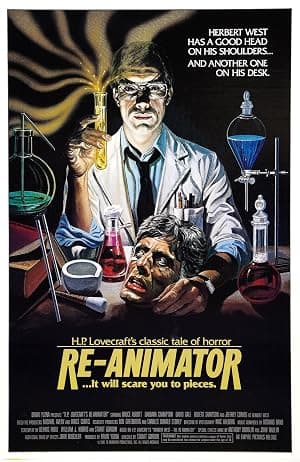
1985
Re-Animator
A medical-school madman, a glowing green reagent and enough stage blood to cause moral indigestion.
Read our take →
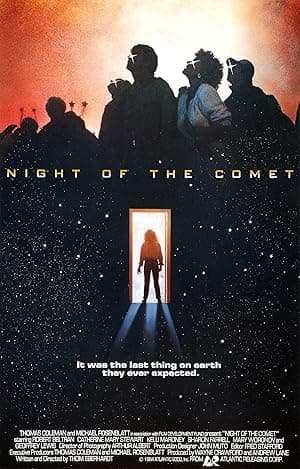
1984
Night of the Comet
Sisters, malls and a comet — Night of the Comet is a B-movie that learned how to be fun and oddly wise about survival.
Read our take →
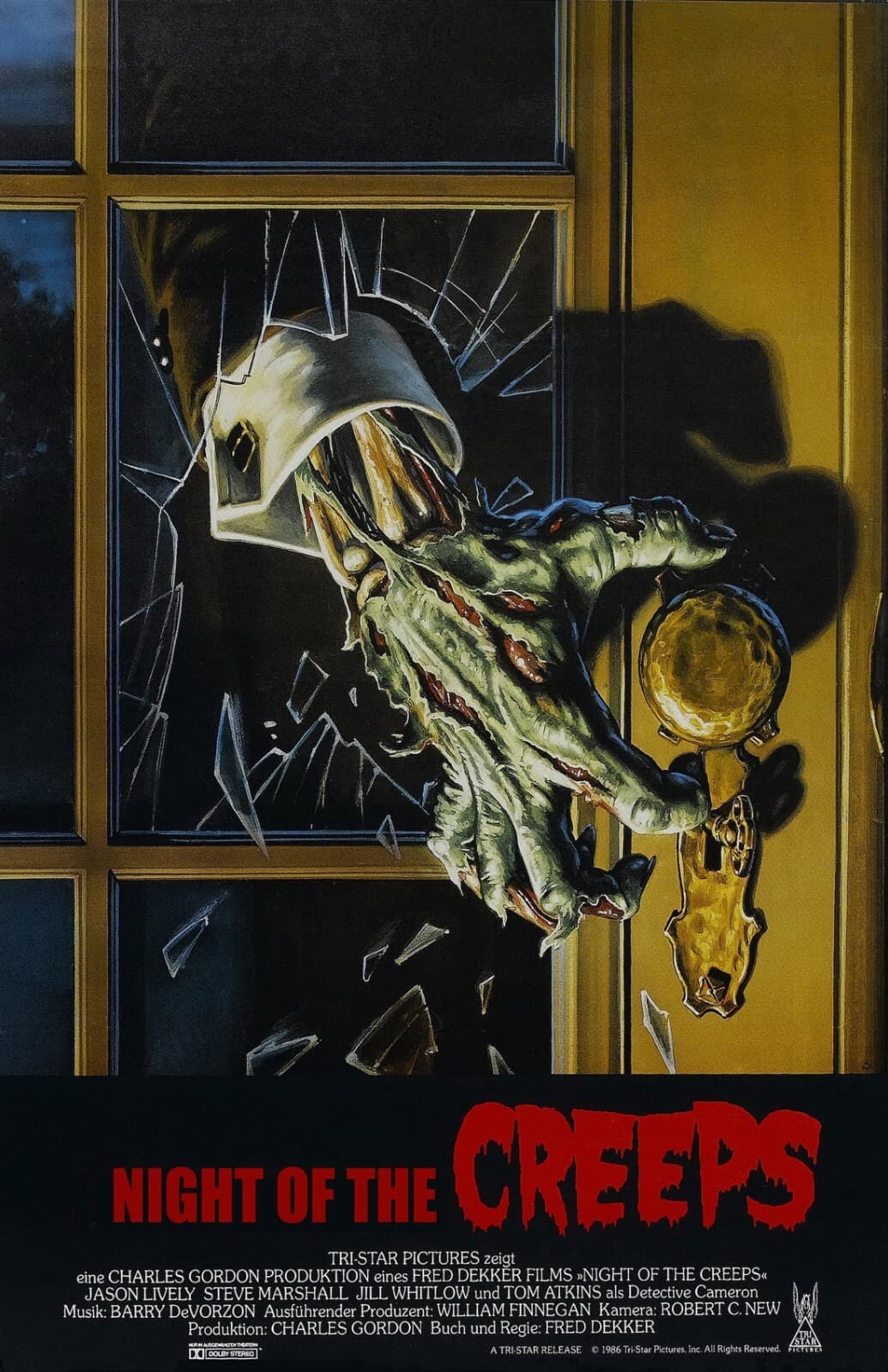
1986
Night of the Creeps
Night of the Creeps: the safety of home and mortality, and why this 1986 movie still matters.
Read our take →