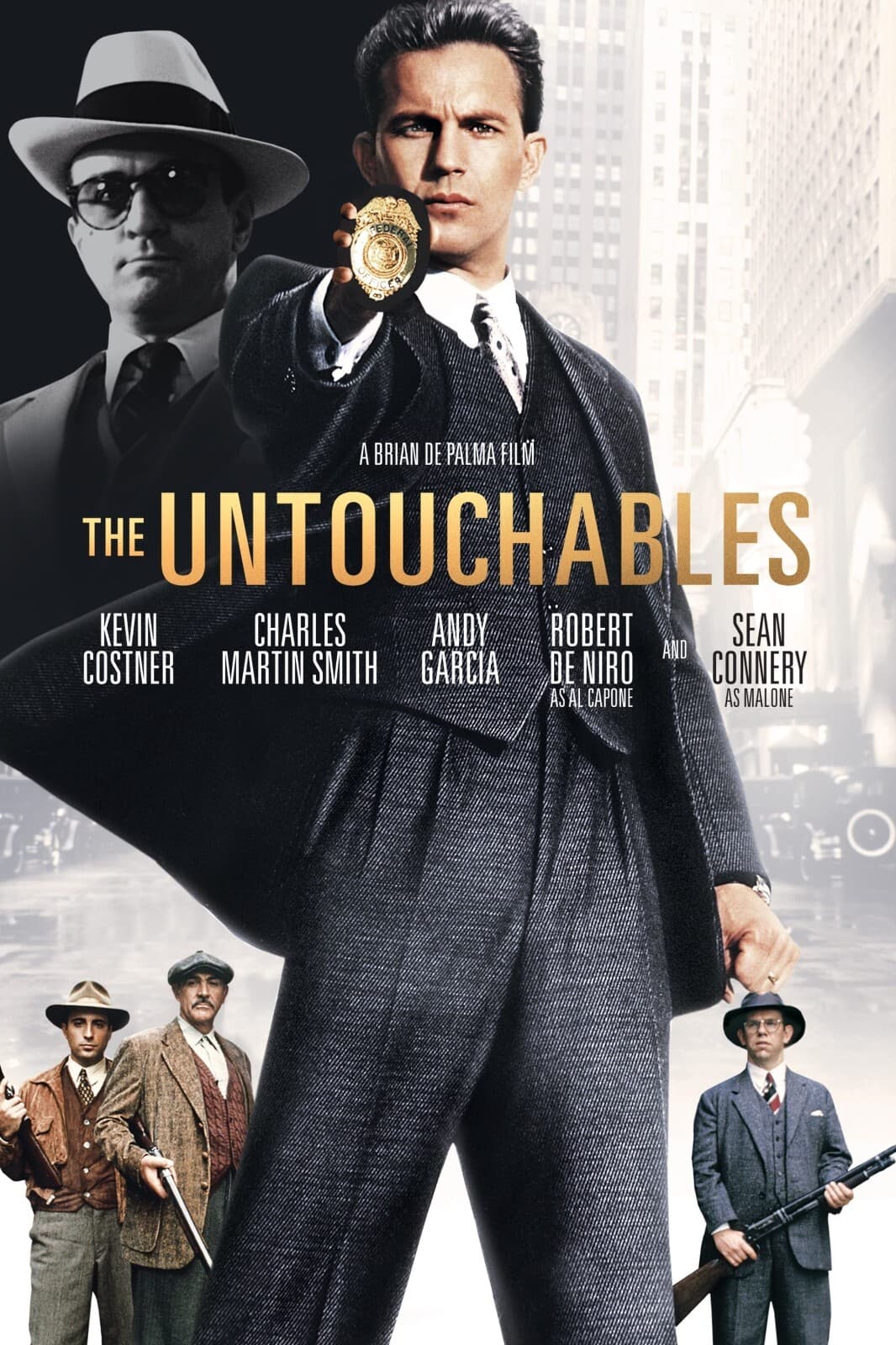
The setup
Brian De Palma’s The Untouchables is the sort of 1980s studio picture that still fences with the idea of heroism. It’s a period gangster movie built around Eliot Ness’s decision to recruit a small, incorruptible squad and teach them how to fight a city that’s rotten at its core. Watch it again and you’ll see a film that stages the making of a hero as much as it stages its set pieces.
THE MOVIE
Eliot Ness is still the reason this movie works
You remember the stairwell. The pram tumbling. The way the sequence feels orchestrated rather than simply chaotic. That very public bit of cinematic theatre has become shorthand for what The Untouchables is trying to do: turn crime cinema into a series of operatic set pieces and, through them, tell a moral story.
At the movie’s centre is Eliot Ness — a by-the-book federal agent who decides he cannot trust the usual institutions and assembles a handful of incorruptible people to take on Al Capone. That decision — to go outside the broken system and build a tiny, accountable team — is the emotional engine. It’s earnest, simple and human enough to carry the film under all the smoke and spectacle.
And then there’s De Palma. He directs with a taste for carefully staged action and theatrical composition, which gives the picture its personality. Toss in a cast that includes Kevin Costner as Ness, Sean Connery as his grizzled mentor and Robert De Niro as Capone, plus a score that leans into classical drama, and you have a studio movie that wasn’t shy about being big and definite.
THE SETUP
The idea that sets The Untouchables in motion
The film’s engine is straightforward: Eliot Ness forms a small, incorruptible squad to take the fight to Al Capone. It’s not a sprawling detective epic; it’s a focused tale of a few people refusing to play along with a corrupt city.
That compactness is why the film’s set pieces matter. Each confrontation isn’t just action for its own sake — it’s a tactical beat in a fight against a system that controls police, politics and commerce. The stakes are structural, not merely personal.
A crucial mechanic that keeps those stakes human is the mentor/mentee relationship between Ness and veteran cop Jimmy Malone. That bond shapes Ness’s tactical moves and his moral development; the film is as much about how Ness learns to operate in the real world as it is about bringing down Capone.
THE CHARACTER
Why Eliot Ness matters
Eliot Ness matters because he’s the film’s moral compass and its experiment. He starts as an earnest, by-the-book federal agent who believes rules and paperwork will save the day. The story tests that belief — and, crucially, his willingness to change tactics when the rules are being gamed.
That shift is the heart of his arc. The film asks: what does an honest man do when the institutions designed to enforce honesty are rotten? Ness’s answer is practical and uncomfortable — he builds a small team and accepts that confronting organised crime may require means that differ from his original ideals.
Ness is also anchored by a domestic life. His wife offers a quieter, personal counterpoint — a reminder that his choices have consequences beyond headline arrests. That private life helps keep him human in scenes that otherwise risk becoming pure procedure.
And remember the screenplay’s source: David Mamet adapted the story from Ness’s book and other material, compressing and fictionalising events to make a leaner, more dramatic tale. This isn’t a documentary of Ness’s life; it’s a dramatized portrait shaped to serve a cinematic argument about law and compromise.
UNDER THE SURFACE
The Untouchables has more on its mind than the plot suggests
On the surface the film is a crime drama: good guys versus bad guys. Underneath, it’s preoccupied with how heroism is forged. The mentor/mentee dynamic — Jimmy Malone teaching Ness the ropes — is the mechanism through which the young agent is shaped into someone who can operate in a corrupt world.
Those lessons are ethical as well as tactical. Ness must convert abstract principle into action. The point isn’t that rules are useless; it’s that rules alone don’t win when every institution is compromised. Learning practical methods becomes a moral project as much as a professional one.
There’s a second recurring idea: the theatricality of policing. De Palma stages policing as spectacle — public confrontations and highly choreographed set pieces that invite spectatorship. Violence in the film is often presented as something performed, which complicates the audience’s appetite for justice.
Finally, the movie is interested in myth-making. It wants to show the construction of heroism: how a small group, disciplined and visible, can stand against a corrupt machine and, in doing so, create a story people remember. The film both builds a myth and asks, quietly, what that myth costs.
THE FILMMAKING
How The Untouchables was put together
A lot of the film’s personality comes from how it’s put together. Patrizia von Brandenstein’s production design sets the period world — streets, interiors and vehicles that say Chicago in the 1920s and early ’30s — so that the drama can play out in convincing surroundings.
Brian De Palma treats action like choreography. He compresses time, arranges movement and composes sequences so that each beat reads as a clear, operatic moment. The result is a film that feels staged on purpose rather than merely observed.
Stephen H. Burum served as cinematographer, and that collaboration with De Palma is part of why the picture has a distinctive look. The photography and design work together to create a period atmosphere that supports the film’s moral drama rather than obscuring it.
Put simply: these are studio-scale, deliberate choices. The filmmaking leans into spectacle while keeping a careful eye on the story the film wants to tell.
PRACTICAL EFFECTS
The effects work that gives The Untouchables its physical personality
The film’s most talked-about physical moment is the Union Station sequence — a set piece built from staged stunt choreography and controlled slow-motion, with the pram on the stairs as its most chilling image. It’s the kind of moment that depends on precise staging rather than computer trickery.
Those choices are practical in the old-fashioned sense: stunt work, choreography and carefully timed camera choices deliver the drama. The pause of slow-motion here isn’t a gimmick; it’s a device that forces the audience to confront the violence as spectacle.
Alongside the stunt work, De Palma and Burum used photographic and optical techniques — deliberate depth-of-field choices and split-focus approaches — to layer action and control what the viewer notices in a close-up. The effect is a visual architecture where foreground and background carry different story duties.
PURE 80S
The Untouchables could not belong to any other decade
This is very much a late-1980s studio picture. Coming after a run of De Palma’s crime work in the earlier part of the decade, the film fits a mid-’80s pattern: big directors revisiting American crime stories with glossy production values and clear star casting.
Paramount’s involvement matters: the studio was investing in star-driven, high-production-value historical and genre films at the time, and The Untouchables was presented as a major, definite statement rather than a small art-house piece.
The production itself was rooted in Chicago — principal photography began there in August 1986 and the city’s locations were used to represent 1920s–1930s urban spaces. The film then opened in 1987, at a moment when Hollywood was comfortable bankrolling a picture of this scale.
It’s also worth noting how the movie was positioned: it received multiple Academy Award nominations and stands as one of De Palma’s most prominent studio releases from the decade. That pedigree explains a lot about why it was made the way it was.
THE LEGACY
Why The Untouchables still matters
Part of the film’s afterlife is tangible: it cleaned up in awards terms in key areas. Sean Connery won the Academy Award for Best Supporting Actor for his role, and Ennio Morricone’s original score won a Grammy the following year. Those honours fixed the film in a certain critical conversation.
Beyond trophies, the movie was recognised by the Academy in multiple categories and remains one of De Palma’s more prominent studio releases from the era — the sort of picture that sits in a director’s mainstream catalogue rather than on its fringes.
Paramount’s continued interest in the title — reissuing the film for anniversary home-video editions — also shows there’s an institutional memory around the picture. The studio has kept it visible in a way that helps new audiences find it.
All of this explains why the film keeps being talked about: awards, a memorable central relationship and production that aimed for spectacle combine to keep it in circulation.
THE VERDICT
Does The Untouchables still hold up?
Yes — on its own terms. The Untouchables is a 1987 studio film about a straight-arrow agent who decides the only way to beat a crooked system is to build a small, incorruptible team and learn to fight on its terms. That premise still has bite: it’s a story about moral formation as much as law enforcement.
The film’s particular strengths are structural. David Mamet’s screenplay compresses and fictionalises episodes to produce a string of set-piece confrontations, and those moments work because they’re disciplined around a clear narrative question: what must a decent man do when the rules won’t help him?
There are things the movie asks you to accept — stylised spectacle, staged action, a hero remade by a mentor — but those are part of its design rather than accidents. The mentor/mentee relationship with Jimmy Malone gives the film emotional grounding, and the Union Station stair sequence is the kind of deliberate, heavily cut set piece that defines the film’s approach.
So if you want precise historical accuracy, this isn’t that film. If you want a mid-’80s, director-driven crime drama that stages moral choices as theatre and doesn’t apologise for its spectacle, it’s worth your time. The Untouchables still shows how a film can build a myth and, in doing so, ask awkward questions about what that myth costs.
Featured in
Explore more about The Untouchables
Share this movie
Keep watching
More movies from the 80s
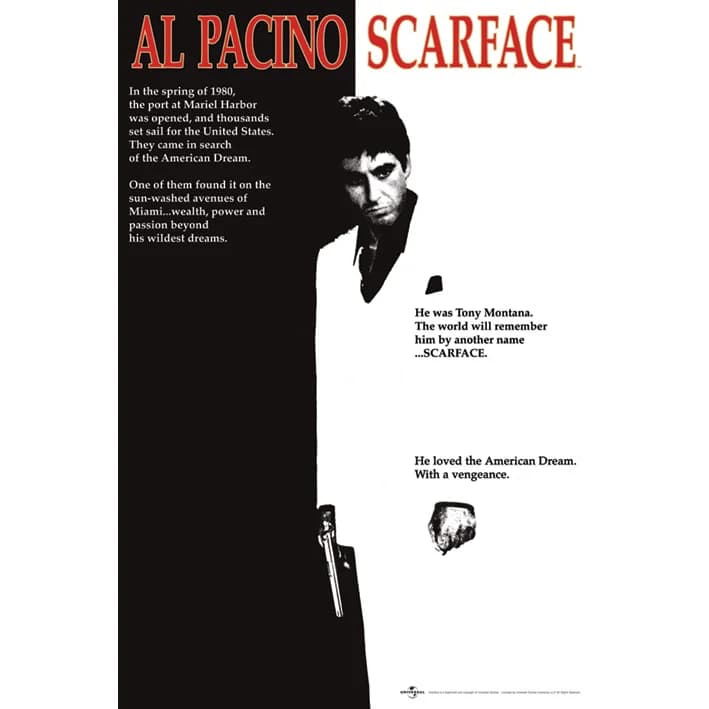
1983
Scarface
A refugee's hunger for respect turns into reckless rule — and a very expensive mess.
Read our take →
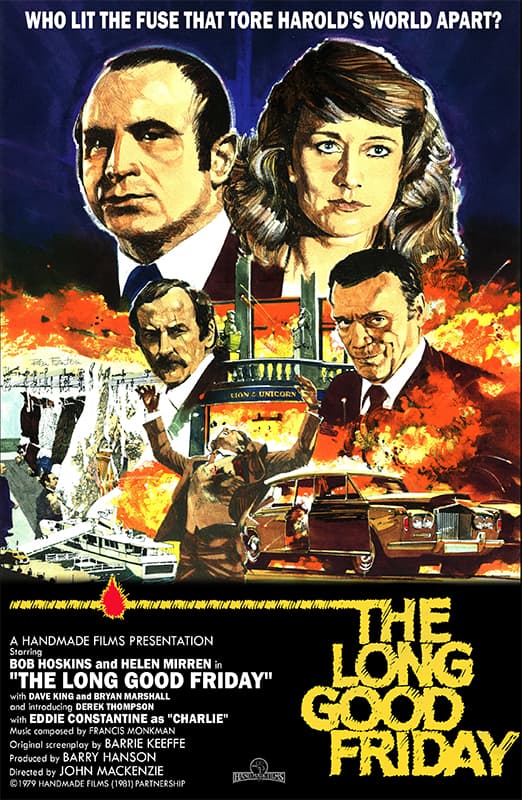
1980
The Long Good Friday
A gangster who wants a boardroom as much as a fiefdom — and pays for both.
Read our take →
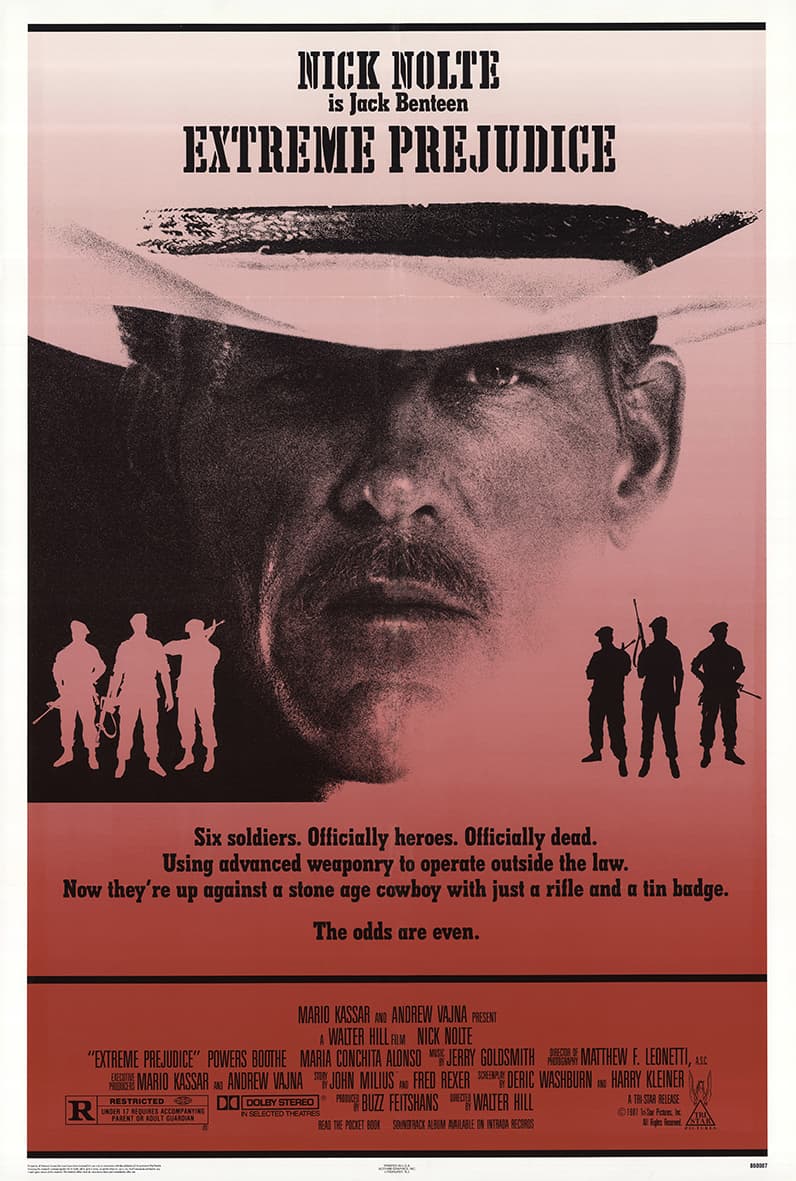
1987
Extreme Prejudice
Extreme Prejudice: greed and authority, and why this 1987 movie still matters.
Read our take →