The setup
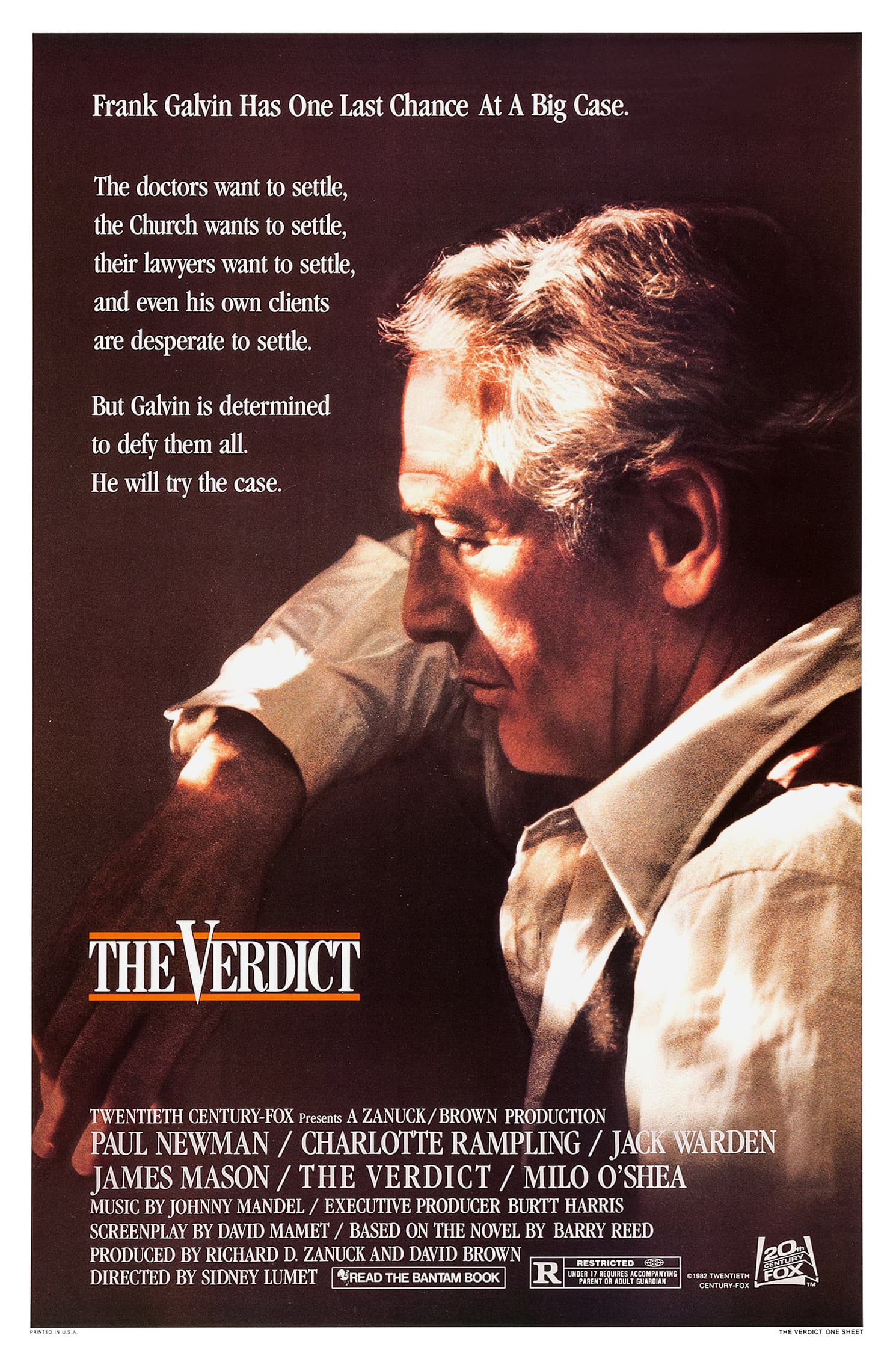
You remember Frank Galvin first and everything else second. Paul Newman’s fallen lawyer — drunk, sharp and desperate for one clean victory — is the engine that drives Sidney Lumet’s courtroom drama. The Verdict dresses a legal fight as a personal do-over, and that simple centre keeps the film taut from start to finish.
THE MOVIE
Frank Galvin is still the reason this movie works
Talk about The Verdict and people land on a face first: Frank Galvin. He’s a once-promising Boston lawyer who’s been eating his mistakes and his bottle for some time, and the film hands him a medical-malpractice suit that suddenly looks like a way back.
That case is the inciting engine — the thing that gives Galvin a route to salvage a reputation and, more importantly, a chance at redemption. The story is arranged around that single consequential gamble: take the file, take the risk, make the fight.
Sidney Lumet directs, Paul Newman plays Galvin, and the whole film is tuned to that collision between personal failure and the legal system. It’s a trial drama that keeps its eyes on the man standing to lose or win more than a verdict.
THE SETUP
The idea that sets The Verdict in motion
At its most basic, The Verdict gives a damaged lawyer a single big case and watches what happens when he treats it like the chance of his life. Frank Galvin picks up a medical-malpractice suit against a hospital and its doctors; that’s the plot’s simple promise.
The dramatic friction comes from how stacked the courtroom is against him. Galvin is up against a well-resourced defense, institutional resistance and the usual procedural roadblocks that turn every courtroom moment into a negotiation.
A lot of the story is built from tactical scraps: settlement offers, fights about which documents get seen, and the slow assembling of witnesses. Those legal mechanics aren’t wallpaper — they’re the moves Galvin must make if he wants to turn this into something more than a lost cause.
Lumet chose David Mamet’s screenplay to shape the film, which helps keep the legal manoeuvres sharp and the stakes focused on one man’s attempt to make things right.
THE CHARACTER
Why Frank Galvin matters
Frank Galvin isn’t a textbook hero. He’s written — and played — as self-destructive: an alcoholic lawyer who has squandered early promise and now hauls his shame into the courtroom.
That makes Galvin interesting because the case isn’t merely professional work; it’s the architecture for a personal gamble. If he wins, he doesn’t just get a verdict. He gets a shot at redeeming himself.
Because the story is so centred on this one character and one case, every choice Galvin makes carries weight. He’s allowed to be fallible, which is what turns a procedural into a human drama.
And yes: Paul Newman is the face in whom the writers placed that vulnerability and stubbornness — the man at the movie’s emotional centre.
THE PERFORMANCE
Why Paul Newman's performance matters
Contemporary critics made a consistent point: Paul Newman’s turn as Frank Galvin was the film’s central strength. Reviewers singled his work out as one of the best things in the movie.
That attention matters because the entire structure of the film depends on the audience leaning into Galvin’s flaws and hopes. If the lead didn’t convince, the case around him would feel thin.
The practical effect of that critical praise was to anchor the movie’s seriousness around a single human presence — not a legal puzzle, not a flashy argument, but a man trying to regain footing.
So any conversation about The Verdict quickly becomes a conversation about Newman’s role — the film rises and falls with how believable and compelling you find that attempt at redemption.
UNDER THE SURFACE
The Verdict has more on its mind than the plot suggests
On the surface it’s a legal battle. Underneath it’s a story about redemption and moral recovery: a man trying to repair a life by doing one consequential thing right.
Alcoholism is not decorative here; the movie shows how drinking corrodes Galvin’s professional standing and personal life, and how that corrosion shapes his choices in court and out of it.
There’s also a sustained worry about professional failure and integrity. The lawyers and institutions around the case test where responsibility lies, and whether one person can push against systemic complacency.
Finally, institutional corruption sits at the film’s edges. Lumet — who spent the late 1970s and early 1980s on films about moral compromise — uses the courtroom as place to probe justice and moral responsibility rather than just legal victory.
THE FILMMAKING
How The Verdict was put together
Sidney Lumet is the director of record, and the film’s technical backroom names are worth noting: Andrzej Bartkowiak handled cinematography and Peter Frank edited the picture.
Those collaborations are the nuts and bolts of how the movie holds itself together. The director, camera and editor are the team that shape the pacing of legal fights and personal moments alike.
Mentioning them isn’t just credit-listing; it’s a reminder that The Verdict was built with a straightforward, professional crew whose job was to make a character-driven trial play clearly on screen.
PURE 80S
The Verdict could not belong to any other decade
Released in December 1982, The Verdict sits in an early-80s moment that had a taste for courtroom and institutional dramas: films that used legal frameworks to talk about civic responsibility.
Part of what makes it feel of its time is the way the screenplay brings a literary, playwright’s voice into a mainstream legal picture — David Mamet’s adaptation gives the proceedings a sharp, almost theatrical edge.
It was packaged for awards season and seen that way; the timing and tone place it among other serious, adult dramas that studios still pushed in late-year releases.
All of that makes The Verdict feel like a product of its era — not because of fashion or music, but because of what the cinema of that moment was trying to do with questions of justice and institutional power.
THE LEGACY
Why The Verdict still matters
The Verdict walked into awards season with attention: it received five Academy Award nominations, including Best Picture and Best Actor. That level of recognition helped cement its reputation as a serious drama of its day.
Beyond trophies, the film’s afterlife is practical: it’s regularly included in retrospectives and curator programmes as a model for courtroom and civil-trial storytelling.
That reputation rests on a mix of factors the evidence supports: a focused screenplay adapted from a novel, Lumet’s steady direction and a lead role that critics felt anchored the whole enterprise.
So its legacy isn’t myth; it’s a catalogue fact: nominations then, and repeated return visits from programmers and critics since — a courtroom template people still study or programme alongside similar dramas.
THE VERDICT
Does The Verdict still hold up?
Yes — if your yardstick is character-driven legal drama. The film is inherently tied to the idea of Frank Galvin as a man trying to salvage his career and his conscience by taking a malpractice case to trial. That single, personal focus keeps it alive.
It’s not a detective story; the screenplay concentrates on courtroom procedure, witness testimony and the climactic summation rather than on procedural legwork. If you enjoy watching strategy play out in court, the film still delivers.
Paul Newman’s presence matters here — contemporary critics singled his performance out as a central strength — and the romance and moral counterpoint provided by Laura Fischer help stop the movie feeling like one man shouting into the void.
So should you watch it today? If you want a sober, well-assembled drama about redemption, professional failure and institutional resistance, this is worth your time. It’s a focused, purposeful picture: one case, one man, and enough at stake to make every hearing feel consequential.
Share this movie
Keep watching
More movies from the 80s
1982
An Officer and a Gentleman
A hard-edged coming-of-age wrapped in military drill, unexpected tenderness and one stubborn loner.
Read our take →
1982
Annie
Annie: family and freedom, and why this 1982 movie still matters.
Read our take →
1982
Blade Runner
Four engineered years, a handful of memories and a detective who isn’t sure he wants to do his job.
Read our take →