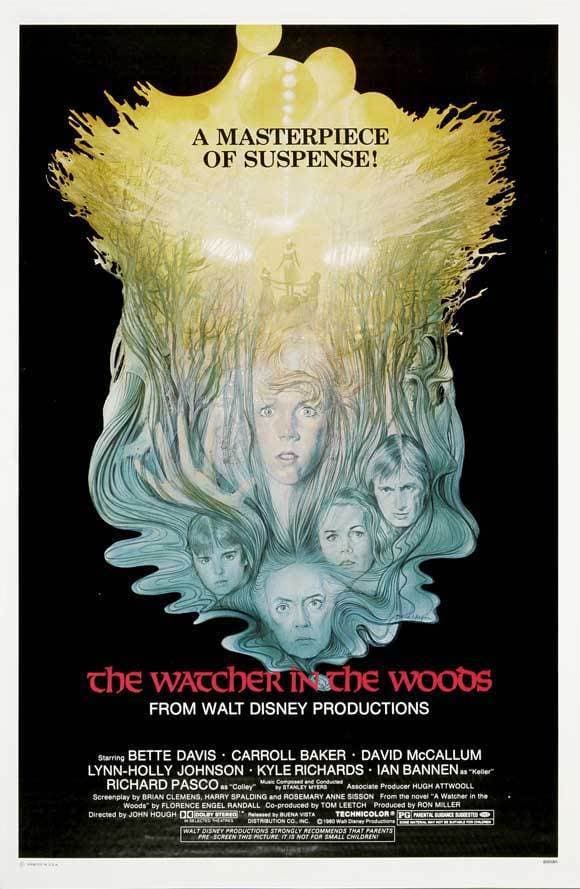
The Watcher in the Woods
The Watcher in the Woods: family and parents protecting their children, and why this 1980 movie still matters.
The setup
The Watcher in the Woods arrived in 1980, directed by John Hough. Americans Helen and Paul Curtis and their daughters, Jan and Ellie, move into a manor in rural England. Decades later, it is worth looking at why the film still connects with audiences.
THE MOVIE
Mrs. Aylwood is still the reason this movie works
The Watcher in the Woods was released in 1980 and directed by John Hough. Rather than simply retelling the plot, the film is worth revisiting for the characters, conflicts and ideas that give its story its identity.
Family, Parental protection and Home and safety emerge through what the characters face and the choices they make, giving the story more to explore beyond its immediate plot.
Mrs. Aylwood, Helen Curtis and Paul Curtis do not begin the film seeing one another clearly, and watching those first impressions break down is a big part of why The Watcher in the Woods still works.
THE SETUP
The idea that sets The Watcher in the Woods in motion
Americans Helen and Paul Curtis and their daughters, Jan and Ellie, move into a manor in rural England.
Mrs. Aylwood, the owner of the residence who now lives in the guest house next door, notices that Jan bears a striking resemblance to her daughter, Karen, who disappeared inside an abandoned chapel in the woods thirty years earlier. That detail matters because it shapes the way the characters initially see one another.
Jan senses something unusual about the property almost immediately and begins to see strange blue lights in the woods, as well as triangles and glowing objects. From there, the film can concentrate less on explaining the setup and more on what happens between the people inside it.
THE CHARACTER
Why Mrs. Aylwood matters
Bette Davis plays Mrs. Aylwood. Mrs. Aylwood brings Jan and Ellie to her home, and recounts the night her daughter disappeared.
Mrs.
After seeing the reflection of the name "Nerak" (Karen spelled backwards), Jan is told about the mystery of Mrs. Aylwood's missing daughter by Mike Fleming, the teenage son of a local woman, Mary.
UNDER THE SURFACE
The Watcher in the Woods has more on its mind than the plot suggests
The movie has more on its mind than the basic setup suggests. family sits close to the centre of the film, but it is explored through the characters rather than treated like a lesson.
parents protecting their children matters just as much. The film keeps challenging the assumptions its characters make about one another, which is where much of its emotional weight comes from.
There is also plenty here about the safety of home and loss. Those ideas overlap rather than sitting in separate boxes, which helps the movie feel like a story about people rather than a checklist of themes.
PURE 80S
The Watcher in the Woods could not belong to any other decade
The film could hardly be separated from the decade that produced it. Released in 1980, it carries the attitudes, style and filmmaking rhythms of the 1980s without needing to announce them.
It also sits comfortably within the era's horror, science fiction, mystery and ghost filmmaking, even if the movie itself is more interesting than any single genre label suggests.
That is part of why it still appears in conversations about The Watcher in the Woods 1980 and 1980s movies. The film has become tied not only to its own story but to the wider memory of what 1980s movies felt like.
WATCHING IT NOW
What has aged — and what hasn't
Watching The Watcher in the Woods now means seeing both what has lasted and what unmistakably belongs to 1980.
What still works best is the human material. Ideas around family, parents protecting their children and the safety of home have not stopped being relevant simply because the clothes, language and cultural references belong to another era.
Some moments inevitably land differently for a modern audience. Revisiting an older film properly means enjoying what still works without pretending every choice has aged equally well.
THE LEGACY
Why The Watcher in the Woods still matters
A large part of that staying power comes from the characters. Mrs. Aylwood, Helen Curtis and Paul Curtis are still useful shorthand for the personalities and pressures the film explores.
Carpenter's film has lasted because people continue to recognise something in it. Nostalgia helps, but nostalgia alone does not keep a movie in the conversation for decades.
THE VERDICT
Does The Watcher in the Woods still hold up?
So, does The Watcher in the Woods still hold up? Yes — although watching a film from 1980 honestly means accepting that not every moment will land exactly as it once did.
The Watcher leaves Ellie's body, manifesting as a pillar of light, fueled by the "circle of friendship". That is the part that survives better than any hairstyle, soundtrack cue or piece of period slang.
The film still has something recognisable to say about family, parental protection and home and safety, and its characters stop those ideas from feeling abstract.
The Watcher in the Woods remains worth revisiting because characters such as Mrs. Aylwood, Helen Curtis, Paul Curtis, Jan Curtis and Ellie Curtis still feel like people rather than labels once the film gets underneath the stereotypes.
Share this movie
Keep watching
More movies from the 80s

1981
Dead & Buried
Dead & Buried: mortality and fear, and why this 1981 movie still matters.
Read our take →
1981
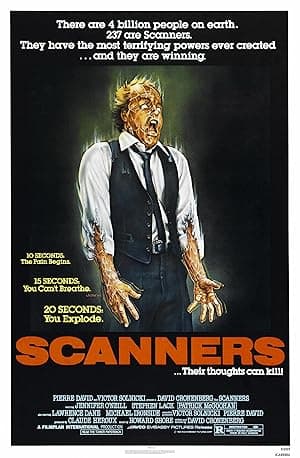
Scanners
Telepathy, corporate control and one of cinema’s most unforgettable practical stunts.
Read our take →

1982
The Thing
A frozen outpost, a dog, and a man who must choose who to trust — The Thing still knows how to make suspicion feel like a physical thing.
Read our take →