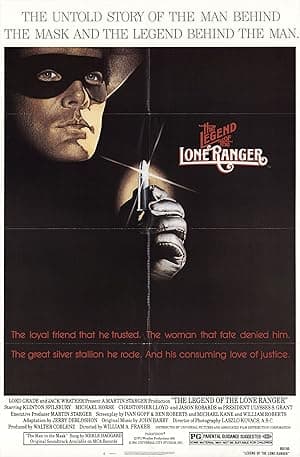
The Legend of the Lone Ranger
The Legend of the Lone Ranger: courage and heroism, and why this 1981 movie still matters.
The setup
The Legend of the Lone Ranger arrived in 1981, directed by William A. Fraker. In 1854 in Texas, the outlaw Butch Cavendish and his gang of outlaws are chasing a young Comanche boy named Tonto. Decades later, it is worth looking at why the film still connects with audiences.
THE MOVIE
Lone Ranger is still the reason this movie works
The Legend of the Lone Ranger was released in 1981 and directed by William A. Fraker. Rather than simply retelling the plot, the film is worth revisiting for the characters, conflicts and ideas that give its story its identity.
Courage and Heroism emerge through what the characters face and the choices they make, giving the story more to explore beyond its immediate plot.
Lone Ranger, Tonto and Ulysses S. Grant do not begin the film seeing one another clearly, and watching those first impressions break down is a big part of why The Legend of the Lone Ranger still works.
THE SETUP
The idea that sets The Legend of the Lone Ranger in motion
He rides into a thicket and falls off his horse and down an embankment. That detail matters because it shapes the way the characters initially see one another.
John Reid, a boy who was already there, hides Tonto, and the outlaws kill everyone in the small village but John. From there, the film can concentrate less on explaining the setup and more on what happens between the people inside it.
Tonto takes Reid to his reservation and teaches him to shoot a bow and arrow with precision, and Reid learns how the tribe lives and fights.
The two become blood brothers, and once grown up, Reid leaves the reservation for Detroit where he becomes a lawyer.
He leaves Detroit by stagecoach to set up a new law practice, and the coach is robbed by Cavendish’s gang.
When the driver is wounded and the shotgun rider killed, Reid stops the coach and surrenders a mailbag containing property deeds.
A beautiful young woman named Amy Striker is another passenger on the coach.
THE CHARACTER
Why Lone Ranger matters
Klinton Spilsbury plays Lone Ranger. Reid dedicates himself to fighting crime and becomes the great masked western hero, The Lone Ranger.
That tension is central to how Lone Ranger works within the film.
Collins, posing as one of the Rangers, orchestrates an ambush of a Ranger posse by Cavendish’s gang.
THE PERFORMANCE
Why Tonto matters
Michael Horse plays Tonto. Tonto gifts Reid silver bullets for his pistol, and Reid captures and tames a white horse that he names Silver.
Elsewhere, in 1854 in Texas, the outlaw Butch Cavendish and his gang of outlaws are chasing a young Comanche boy named Tonto.
UNDER THE SURFACE
The Legend of the Lone Ranger has more on its mind than the plot suggests
The movie has more on its mind than the basic setup suggests. courage sits close to the centre of the film, but it is explored through the characters rather than treated like a lesson.
heroism matters just as much. The film keeps challenging the assumptions its characters make about one another, which is where much of its emotional weight comes from.
PURE 80S
The Legend of the Lone Ranger could not belong to any other decade
The film could hardly be separated from the decade that produced it. Released in 1981, it carries the attitudes, style and filmmaking rhythms of the 1980s without needing to announce them.
It also sits comfortably within the era's western filmmaking, even if the movie itself is more interesting than any single genre label suggests.
That is part of why it still appears in conversations about 1980s movies and 1980s western movies. The film has become tied not only to its own story but to the wider memory of what 1980s movies felt like.
WATCHING IT NOW
What has aged — and what hasn't
Watching The Legend of the Lone Ranger now means seeing both what has lasted and what unmistakably belongs to 1981.
What still works best is the human material. Ideas around courage and heroism have not stopped being relevant simply because the clothes, language and cultural references belong to another era.
Some moments inevitably land differently for a modern audience. Revisiting an older film properly means enjoying what still works without pretending every choice has aged equally well.
THE LEGACY
Why The Legend of the Lone Ranger still matters
A large part of that staying power comes from the characters. Lone Ranger, Tonto and Ulysses S. Grant are still useful shorthand for the personalities and pressures the film explores.
Carpenter's film has lasted because people continue to recognise something in it. Nostalgia helps, but nostalgia alone does not keep a movie in the conversation for decades.
THE VERDICT
Does The Legend of the Lone Ranger still hold up?
So, does The Legend of the Lone Ranger still hold up? Yes — although watching a film from 1981 honestly means accepting that not every moment will land exactly as it once did.
The film still has something recognisable to say about courage and heroism, and its characters stop those ideas from feeling abstract.
The Legend of the Lone Ranger remains worth revisiting because characters such as Lone Ranger, Tonto, Ulysses S. Grant, Wild Bill Hickok and John Reid/The Lone Ranger still feel like people rather than labels once the film gets underneath the stereotypes.
Share this movie
Keep watching
More movies from the 80s
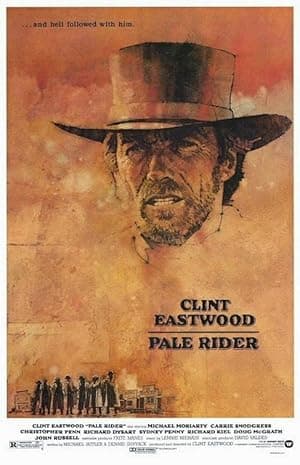
1985
Pale Rider
A pale horse, a stranger and a town asked to stand or sell — Eastwood's late-Western handshake with Shane.
Read our take →
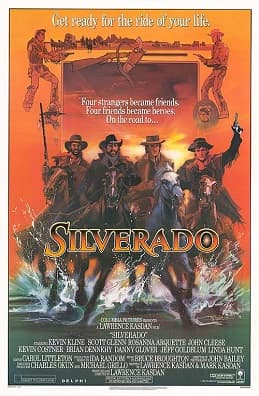
1985
Silverado
Four strangers ride into town. One of them makes you care.
Read our take →
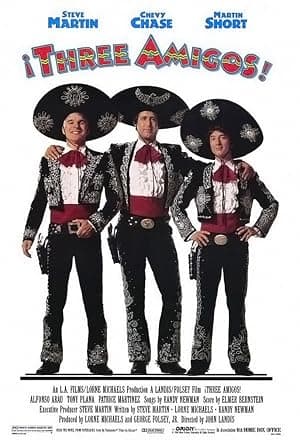
1986
Three Amigos
A vaudeville-sized comedy about showmen who must learn to be something more than a good performance.
Read our take →